Terrestrial History: A Novel
by Joe Mungo Reed
On This Page
Description
Longlisted for 2026 Andrew Carnegie Medal for Excellence in Fictio One of the best books of 2025: New York Public Library * Chicago Public Library A family saga following four generations on a time-bending journey from coastal Scotland to a colony on Mars. Hannah is a fusion scientist working alone at a remote cottage off the coast of Scotland when she sees a figure making his way from the sea. It is a visitor from the future, a young man from a human settlement on Mars, traveling backwards show more through time to try to make a crucial intervention in the fate of our dying planet, and he needs Hannah's help. Laboring in the warmth of a Scottish summer, Hannah and the stranger are on the path towards a breakthrough--and then things go terribly wrong. Joe Mungo Reed's intricately crafted novel expands from this extraordinary event, drawing together the stories of four lives reckoning with what it means to take fate into their own hands, moving from the last days of civilization on Earth through the birth of another on Mars. Roban lives in the Colony, one of the first generation born to this sterile new outpost, where he is consumed by longing for the lost wonders of a home planet he never knew. Between Hannah and Roban, two generations, a father and a daughter, face an uncertain future in a world that is falling apart. Andrew is a politician running to be Scotland's First Minister. Andrew believes there is still time for the human spirit to triumph, if only he can persuade people to band together. For his starkly rationalist daughter Kenzie, this idealism doesn't offer the hard tools needed to keep the rising floods at bay. And so, she signs on to work for a company that would abandon Earth for the promise of a world beyond--in contravention of all Andrew stands for. In considering which concerns should guide us in a time of crisis--social, technological, or familial--and reckoning with the question of whether there is meaning to be found in the pursuit of salvation beyond success itself, Joe Mungo Reed has written a novel of elegiac wonder and beauty. show lessTags
Recommendations
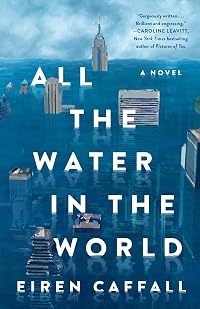
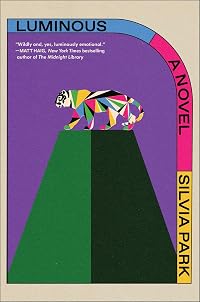
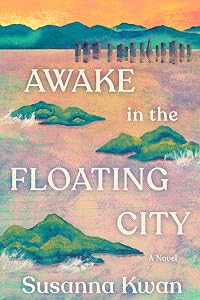
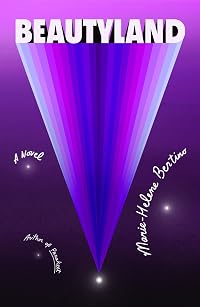







Member Recommendations
Member Reviews
This book focuses on several generations of one family as climate change makes earth uninhabitable and humans set out for other worlds. That makes it sound like a very dramatic book, but it is actually very slow and contemplative. Instead of directly telling the story of catastrophe and response, the book mostly focuses on quiet moments in people's lives. If this were a movie, it would have a lush soundtrack and there would be a lot of wide shots of people standing by the oceanside or staring out the window of a spaceship. This focus on individuals and their inner worlds is a wonderful way to ground the story. Even people who dramatically change the world just go through their daily lives, focusing on their own personal dramas of show more relationships and grant funding.
There are a lot of characters, and it took some concentration to keep them all straight - this might have been more difficult in the audiobook than it would have been on paper. There are a lot of threads in the book that finally come together in the end in a way that is both very satisfying and also leaves the reader a bit uncertain. show less
There are a lot of characters, and it took some concentration to keep them all straight - this might have been more difficult in the audiobook than it would have been on paper. There are a lot of threads in the book that finally come together in the end in a way that is both very satisfying and also leaves the reader a bit uncertain. show less
I enjoyed this a lot. It spans four generations and takes plenty of time developing each narrative. I don't think I read it quickly enough, so I had to keep refreshing myself of who was narrating at a given point and what had happened to them so far.
It's a time travel story but not in a heady sci-fi way. I had to think about the ending for a while because it wasn't until the final few pages that everything really clicked for me.
It's a time travel story but not in a heady sci-fi way. I had to think about the ending for a while because it wasn't until the final few pages that everything really clicked for me.
Did Not Finish 40 percent
Please note that I received this book via NetGalley. This did not affect my rating or review.
I tried. But with the world and my current job the way it is. I am not doing one blessed thing this year that is not bringing me joy. Heck, sometimes I can read a book that I am not exactly hate reading, but I go into a "I am finishing this because what in the world is happening here and where is the author going?" mode. But sometimes, like this, I hit an, "I just don't care. I don't care about the characters, the journey, the ending. I refuse to keep reading this because it's doing my head in." mode.
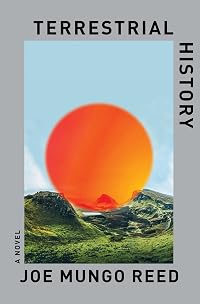
I really did love the cover of this book when I saw it. I don't know with the world the way it is right now, it spoke to show more me. The book synopsis did too. I liked the idea of following four people in really separate timelines that end up being the key from humankind moving on from an Earth that is growing more inhabitable to a settlement on Mars.
"Terrestrial History" follows Hannah, who is working off the coast of Scotland and is a scientist working on fusion. Roban lives in the Colony (big C every time it is discussed which was jarring) where he dreams of Earth. And then you have Andrew and his daughter Kenzie who are taking up different sides about whether Earth can really come back the way it needs to for humankind to survive. Throw some time travel in (which honestly this book did not need that at all) and that's this book.
I have to say this upfront. This book was pretentious as hell. I don't know. It didn't hit me the right way at all. And I got tired of honestly just wading though paragraphs upon paragraphs about ethics, morality, etc. It didn't help the story is out of order. Just to let you readers know, the book plot is not written chronologically which made it hard to follow. I had to hunt to to look for who was speaking and what year it was at all times which was jarring. For example, Hannah is in whatever year. I can't tell you. At one point it just says Hannah no year so I assume that's present day? Roban is in year 2103, Kenzie and Andrew are in year 2071.
Hannah's chapters/perspectives were easier to wade into than Roban/Andrew/Kenzie. Each character perspective is told first person point of view and yet they all sound the same. And honestly that is what really did me in. I would assume these people in different points of time would "sound different" and they did not. At the 40 percent mark I gave up. show less
Please note that I received this book via NetGalley. This did not affect my rating or review.
I tried. But with the world and my current job the way it is. I am not doing one blessed thing this year that is not bringing me joy. Heck, sometimes I can read a book that I am not exactly hate reading, but I go into a "I am finishing this because what in the world is happening here and where is the author going?" mode. But sometimes, like this, I hit an, "I just don't care. I don't care about the characters, the journey, the ending. I refuse to keep reading this because it's doing my head in." mode.
I really did love the cover of this book when I saw it. I don't know with the world the way it is right now, it spoke to show more me. The book synopsis did too. I liked the idea of following four people in really separate timelines that end up being the key from humankind moving on from an Earth that is growing more inhabitable to a settlement on Mars.
"Terrestrial History" follows Hannah, who is working off the coast of Scotland and is a scientist working on fusion. Roban lives in the Colony (big C every time it is discussed which was jarring) where he dreams of Earth. And then you have Andrew and his daughter Kenzie who are taking up different sides about whether Earth can really come back the way it needs to for humankind to survive. Throw some time travel in (which honestly this book did not need that at all) and that's this book.
I have to say this upfront. This book was pretentious as hell. I don't know. It didn't hit me the right way at all. And I got tired of honestly just wading though paragraphs upon paragraphs about ethics, morality, etc. It didn't help the story is out of order. Just to let you readers know, the book plot is not written chronologically which made it hard to follow. I had to hunt to to look for who was speaking and what year it was at all times which was jarring. For example, Hannah is in whatever year. I can't tell you. At one point it just says Hannah no year so I assume that's present day? Roban is in year 2103, Kenzie and Andrew are in year 2071.
Hannah's chapters/perspectives were easier to wade into than Roban/Andrew/Kenzie. Each character perspective is told first person point of view and yet they all sound the same. And honestly that is what really did me in. I would assume these people in different points of time would "sound different" and they did not. At the 40 percent mark I gave up. show less
Ratings
Members
- Recently Added By
Lists

Books Read in 2025
4,091 works; 97 members
Author Information

5 Works 204 Members
Some Editions
Awards and Honors
Awards
Distinctions
Common Knowledge
- Dedication
- In memory of Will Reed
(1954–2016) - First words
- He came out of the ocean. He walked up the seabed until the seabed became a beach, strode through the waves as if water weren't even there. He stopped only when he stood before me. -Chapter 1, Hannan
- Last words
- (Click to show. Warning: May contain spoilers.)Now, I tell myself. Now. Now.
- Blurbers
- Williams, Joy; Spiotta, Dana
- Canonical DDC/MDS
- 823.92
- Canonical LCC
- PR6118
Classifications
Statistics
- Members
- 90
- Popularity
- 360,167
- Reviews
- 3
- Rating
- (3.73)
- Languages
- English
- Media
- Paper, Audiobook, Ebook
- ISBNs
- 3
- ASINs
- 3