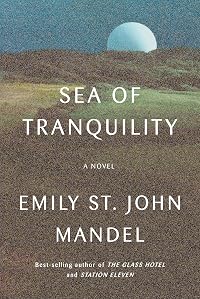
Sea of Tranquility
by Emily St. John Mandel 
On This Page
Description
"Edwin St. Andrew is eighteen years old when he crosses the Atlantic by steamship, exiled from polite society following an ill-conceived diatribe at a dinner party. He enters the forest, spellbound by the beauty of the Canadian wilderness, and suddenly hears the notes of a violin echoing in an airship terminal--an experience that shocks him to his core. Two centuries later a famous writer named Olive Llewellyn is on a book tour. She's traveling all over Earth, but her home is the second moon show more colony, a place of white stone, spired towers, and artificial beauty. Within the text of Olive's best-selling pandemic novel lies a strange passage: a man plays his violin for change in the echoing corridor of an airship terminal as the trees of a forest rise around him. When Gaspery-Jacques Roberts, a detective in the black-skied Night City, is hired to investigate an anomaly in the North American wilderness, he uncovers a series of lives upended: The exiled son of an earl driven to madness, a writer trapped far from home as a pandemic ravages Earth, and a childhood friend from the Night City who, like Gaspery himself, has glimpsed the chance to do something extraordinary that will disrupt the timeline of the universe"--From the publisher's web site. show lessTags
Recommendations


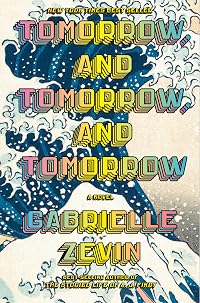
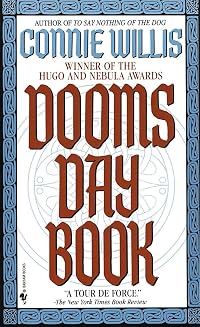



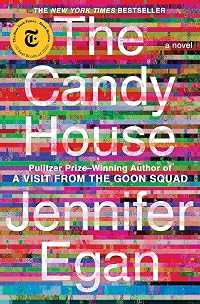
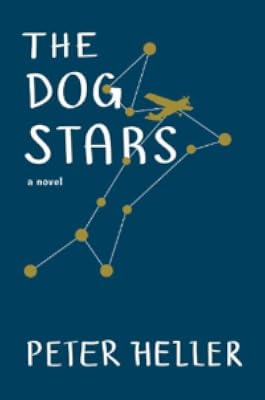
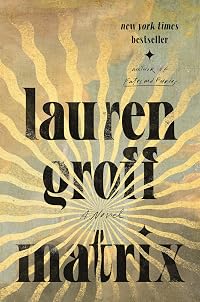

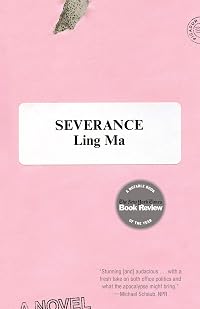
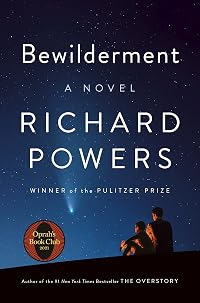

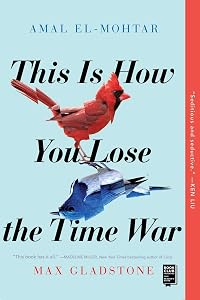



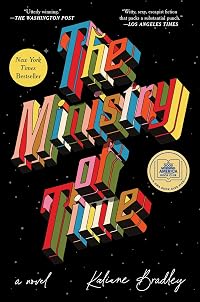
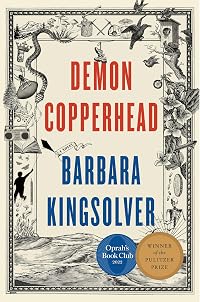
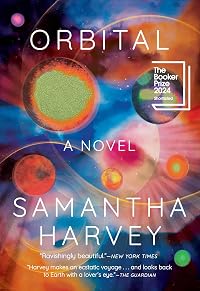
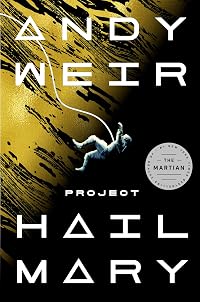




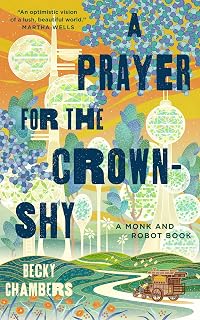
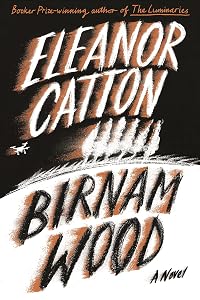
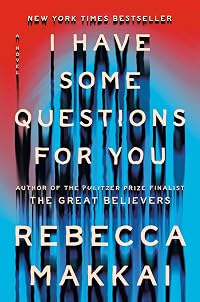
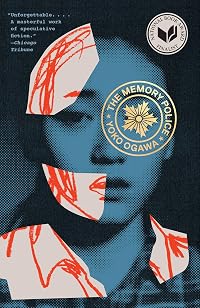



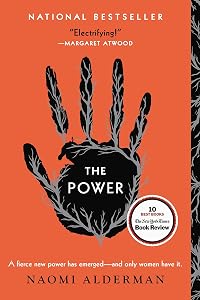
Member Recommendations


by anonymous user

Member Reviews
The prose is beautiful and never overdone. Even when Mandel is describing a moon colony, she’s somehow writing about loneliness more than technology.
That’s the charm — and also the limitation.
The first ~150 pages feel fresh, eerie, lightly uncanny. Then all of a sudden, you can practically hear the sci-fi furniture creaking:
• the paradox
• the anomaly
• the fixed loop
It’s not that it’s bad — it’s just familiar.
The book is more vibes-based time travel than mechanics-based time travel.
She treats physics like an optional side salad.
Which is fine artistically, but it could leave some readers hungry.
Possible alternatives the book ignores:
• dimensional bleed
• quantum overlap
• cosmic echo
• temporal show more artifact
• hallucination
• memory imprint
• observer effect
• hell, even bad audio equipment
Etc.
But no, they go straight to: “We live in The Matrix.”
It’s philosophically interesting but scientifically flimsy.
Mandel is more interested in the metaphor of a simulation than the argument for one.
The nepotism angle (“he’s her brother so he gets the job”) is not super believable for a timeline-policing agency. They just let some laid-back dude wander through centuries because he’s chill and his sister vouched for him? It would have been more interesting had he been involved directly.
I liked the language, the mood, the structural elegance, and the character intimacy. I just wish it had the intellectual bite of its premise. show less
That’s the charm — and also the limitation.
The first ~150 pages feel fresh, eerie, lightly uncanny. Then all of a sudden, you can practically hear the sci-fi furniture creaking:
• the paradox
• the anomaly
• the fixed loop
It’s not that it’s bad — it’s just familiar.
The book is more vibes-based time travel than mechanics-based time travel.
She treats physics like an optional side salad.
Which is fine artistically, but it could leave some readers hungry.
Possible alternatives the book ignores:
• dimensional bleed
• quantum overlap
• cosmic echo
• temporal show more artifact
• hallucination
• memory imprint
• observer effect
• hell, even bad audio equipment
Etc.
But no, they go straight to: “We live in The Matrix.”
It’s philosophically interesting but scientifically flimsy.
Mandel is more interested in the metaphor of a simulation than the argument for one.
The nepotism angle (“he’s her brother so he gets the job”) is not super believable for a timeline-policing agency. They just let some laid-back dude wander through centuries because he’s chill and his sister vouched for him? It would have been more interesting had he been involved directly.
I liked the language, the mood, the structural elegance, and the character intimacy. I just wish it had the intellectual bite of its premise. show less
As usual, Emily St. John Mandel leaves me a bit speechless. There's absolutely no doubt about the beauty of her writing, but she has lost none of her ability to surprise until the very end, not so much with the "what" as with a thriller (although the book isn't lacking for whats), but in the "how" and "why", which makes it all the more fulfilling. Her unique style of haunting sadness and reflection fills the pages, and my only wish is that there were more of them.
Emily St. John Mandel's new novel is a hard one to pigeonhole. It begins as a straight-forward historical novel about the second son of a prominent English family sent to Canada (a novel which I would have been quite happy to stay in, by the way), then changes to one set roughly near our own time and involving characters from [The Glass Hotel] (I was also happy to see these characters again, and from this slightly different angle) and finally a new story, one that will eventually, and wonderfully, draw all the threads together.
Yes, this is a novel about time travel, but it's also about people and hope and what joins us together. And it poses some interesting questions as it ranges through the centuries. Mandel writes so well about show more human emotions. She's playing with complex ideas and creating imaginative worlds, but really she's writing about people and the connections they make. And the answer to a question she asks in the book is really the only answer that can be given. I will be thinking about aspects of this novel for a long time. show less
Yes, this is a novel about time travel, but it's also about people and hope and what joins us together. And it poses some interesting questions as it ranges through the centuries. Mandel writes so well about show more human emotions. She's playing with complex ideas and creating imaginative worlds, but really she's writing about people and the connections they make. And the answer to a question she asks in the book is really the only answer that can be given. I will be thinking about aspects of this novel for a long time. show less
I adored Station Eleven, but The Glass Hotel didn't click for me. I was a bit nervous about this one, but I shouldn't have worried. I loved this sci-fi meditation on humanity and the threads that connect us. The novel is equal parts hauntingly beautiful and heartbreakingly familiar. A pandemic, time travel, a book tour, a moon colony, so many topics are explored and it left me reeling. Layer after layer is revealed in the plot, all while maintaining an eerie sense of loneliness and longing for something that’s just out of reach.
"I think, as a species, we have a desire to believe that we are living at the climax of the story. It’s a kind of narcissism. We want to believe that we are uniquely important, that we are living at the end show more of history, but now, after all these millennia of false alarms, now it’s finally the worst that it has ever been, that finally we have reached the end of the world."
"This is a strange lesson of living in a pandemic: life can be tranquil in the face of death."
"Illness frightens us because it’s chaotic. There’s an awful randomness about it."
** I never reread books quickly, but I just couldn’t stop thinking about this quiet time-traveling novel. The ending left me reeling the first time around and the plot felt completely different, knowing how it all played out. I listened to it on audio this time, which allowed me to process it in a new way. The book tour chapter was my favorite. Mandel’s observations swing from big picture issues to simple personal reflections. Just beautiful. show less
"I think, as a species, we have a desire to believe that we are living at the climax of the story. It’s a kind of narcissism. We want to believe that we are uniquely important, that we are living at the end show more of history, but now, after all these millennia of false alarms, now it’s finally the worst that it has ever been, that finally we have reached the end of the world."
"This is a strange lesson of living in a pandemic: life can be tranquil in the face of death."
"Illness frightens us because it’s chaotic. There’s an awful randomness about it."
** I never reread books quickly, but I just couldn’t stop thinking about this quiet time-traveling novel. The ending left me reeling the first time around and the plot felt completely different, knowing how it all played out. I listened to it on audio this time, which allowed me to process it in a new way. The book tour chapter was my favorite. Mandel’s observations swing from big picture issues to simple personal reflections. Just beautiful. show less
Six-word review: Space-time dream shimmers in watercolor layers.
Sea of Tranquility is a beautiful novel. It has a certain mystical quality. Watching it unfold is not like watching an artist at work--Mandel's touch is too subtle for that--but like watching a wind-stirred diaphanous veil alternately conceal and reveal the landscape beyond. The prose is spare but not naked, just very carefully pruned: nothing superfluous, digressive, or self-indulgent. I can see a firm yet delicate hand trimming frills away.
The story is multilayered and multidimensional, yet it has a deceptive simplicity owing to the author's exquisite command of the language. Like a Japanese brush painting, her rendering of scenes and dialogue does more in a single show more sentence than many writers can achieve in paragraphs. You see one stroke and it conveys an entire image. Where in another author's hands I would see smoke and mirrors, in Mandel's I see expert control of her material with a light touch and a clear instinct for pacing and revelation.
The incorporation of a pandemic into the plotline affords some very relevant observations, notwithstanding the fact that in her narrative it occurs several centuries hence. Even beyond that, I find the author's exploration of classic what-if style conjectures both brilliant and stimulating.
She integrates intriguing philosophical questions, mostly in the voice of her fictional counterpart, novelist Olive Llewellyn. Some of those quotes are transcribed below.
I salute Mandel's courage in using the author as character. I have groaned many a time on meeting this trope in film and fiction, sometimes barely veiled as artist or musician, because it usually plays out as some sort of self-serving self-justification or, equally, self-mortification. Here, to the contrary, I believe she has broadened its dimensions even while anchoring it in the domain of mortal humanity.
A few choice excerpts:
"There's a low-level, specific pain in having to accept that putting up with you requires a certain generosity of spirit in your loved ones." (page 116)
"It's shocking to wake up in one world and find yourself in another by nightfall, but the situation isn't actually all that unusual. You wake up married, then your spouse dies over the course of the day; you wake in peacetime and by noon your country is at war; you wake in ignorance and by evening it's clear that a pandemic is already here." (page 173)
"I think, as a species, we have a desire to believe that we’re living at the climax of the story. It’s a kind of narcissism. We want to believe that we’re uniquely important, that we’re living at the end of history, that now, after all these millennia of false alarms, now is finally the worst that it’s ever been, that finally we have reached the end of the world. ... What if it always is the end of the world? ... Because we might reasonably think of the end of the world as a continuous and never-ending process.” (pages 189-190)
“My personal belief is that we turn to postapocalyptic fiction not because we’re drawn to disaster, per se, but because we’re drawn to what we imagine might come next. We long secretly for a world with less technology in it.” (page 191)
I gave it five stars, a rare rating in my scheme of things. show less
Sea of Tranquility is a beautiful novel. It has a certain mystical quality. Watching it unfold is not like watching an artist at work--Mandel's touch is too subtle for that--but like watching a wind-stirred diaphanous veil alternately conceal and reveal the landscape beyond. The prose is spare but not naked, just very carefully pruned: nothing superfluous, digressive, or self-indulgent. I can see a firm yet delicate hand trimming frills away.
The story is multilayered and multidimensional, yet it has a deceptive simplicity owing to the author's exquisite command of the language. Like a Japanese brush painting, her rendering of scenes and dialogue does more in a single show more sentence than many writers can achieve in paragraphs. You see one stroke and it conveys an entire image. Where in another author's hands I would see smoke and mirrors, in Mandel's I see expert control of her material with a light touch and a clear instinct for pacing and revelation.
The incorporation of a pandemic into the plotline affords some very relevant observations, notwithstanding the fact that in her narrative it occurs several centuries hence. Even beyond that, I find the author's exploration of classic what-if style conjectures both brilliant and stimulating.
She integrates intriguing philosophical questions, mostly in the voice of her fictional counterpart, novelist Olive Llewellyn. Some of those quotes are transcribed below.
I salute Mandel's courage in using the author as character. I have groaned many a time on meeting this trope in film and fiction, sometimes barely veiled as artist or musician, because it usually plays out as some sort of self-serving self-justification or, equally, self-mortification. Here, to the contrary, I believe she has broadened its dimensions even while anchoring it in the domain of mortal humanity.
A few choice excerpts:
"There's a low-level, specific pain in having to accept that putting up with you requires a certain generosity of spirit in your loved ones." (page 116)
"It's shocking to wake up in one world and find yourself in another by nightfall, but the situation isn't actually all that unusual. You wake up married, then your spouse dies over the course of the day; you wake in peacetime and by noon your country is at war; you wake in ignorance and by evening it's clear that a pandemic is already here." (page 173)
"I think, as a species, we have a desire to believe that we’re living at the climax of the story. It’s a kind of narcissism. We want to believe that we’re uniquely important, that we’re living at the end of history, that now, after all these millennia of false alarms, now is finally the worst that it’s ever been, that finally we have reached the end of the world. ... What if it always is the end of the world? ... Because we might reasonably think of the end of the world as a continuous and never-ending process.” (pages 189-190)
“My personal belief is that we turn to postapocalyptic fiction not because we’re drawn to disaster, per se, but because we’re drawn to what we imagine might come next. We long secretly for a world with less technology in it.” (page 191)
I gave it five stars, a rare rating in my scheme of things. show less
It’s interesting to see what an author who made a name for herself writing a book about a pandemic will do when thrust in the middle of an actual pandemic. [author:Emily St. John Mandel|2786093], who made a name for herself with her debut novel, [book:Station Eleven|20170404], appears to have put her months in lockdown to good use. I loved the idea that here was an author who made a name for herself writing a book about a pandemic who then finds herself living through an actual pandemic and spending her time writing about an author who made a name for herself writing a book about a pandemic who then finds herself living through an actual pandemic. [brain goes kerpow!]
[book:Sea of Tranquility|58446227] is a short novel of a genre that show more I refer to as wibbly, wobbly, timey-whimey type stuff (apologies to Doctor Who) whose settings range from England before the Great War to a 25th-century lunar colony. It started out at a very leisurely pace, describing a series of events that I thought could not possibly relate to each other. Before long, though, the reader will see that the subject of pandemics touches on almost every scene. How the author ties the events in the story together is a delight to read, but that enjoyment is surpassed by the appreciation for the insights the author shares about pandemics: how we live during them, and how the world is changed by them. She is certain, as am I, that life will be fundamentally altered by what we have lived through these last three years. Sometimes for the worse, but not always.
My appreciation for this book came fairly late in it. If you are reading it and are unsure about whether or not you want to finish it, I encourage you to keep going. It is well worth the effort. show less
[book:Sea of Tranquility|58446227] is a short novel of a genre that show more I refer to as wibbly, wobbly, timey-whimey type stuff (apologies to Doctor Who) whose settings range from England before the Great War to a 25th-century lunar colony. It started out at a very leisurely pace, describing a series of events that I thought could not possibly relate to each other. Before long, though, the reader will see that the subject of pandemics touches on almost every scene. How the author ties the events in the story together is a delight to read, but that enjoyment is surpassed by the appreciation for the insights the author shares about pandemics: how we live during them, and how the world is changed by them. She is certain, as am I, that life will be fundamentally altered by what we have lived through these last three years. Sometimes for the worse, but not always.
My appreciation for this book came fairly late in it. If you are reading it and are unsure about whether or not you want to finish it, I encourage you to keep going. It is well worth the effort. show less
Although I found Mandel's Station Eleven underwhelming in terms of story, I enjoyed her prose enough that I was more than willing to give her another shot--particularly when I read the blurb for this one and it sounded far more up my alley. Unfortunately, the end result is that I now believe I likely won't pick up another book by this author in the future, as this story was even more underwhelming, albeit told in often gorgeous prose.
As best I can tell, Mandel must be getting such attention both because of her prose and because she's bringing something of an MFA sensibility to SFF genre tropes--in this case, time travel. And while I guess I can appreciate that, I read widely enough in both literary fiction and SFF that just adding a MFA show more sensibility to well-worn tropes isn't enough for me to be satisfied with a story. That's especially the case when it comes to a book like this, where the structure itself is so off-putting as to make engagement with particular characters and storylines more difficult than necessary. Perhaps I'd have been more impressed if I hadn't already seen similar structures employed elsewhere, but since the structure itself wasn't all that fresh, I instead found it predictable and underwhelming.
All told, I have to say that the book is more clever than enjoyable, and while the second half read far more smoothly than the first half, once it finally found its footing and stopped playing games with the reader, I simply didn't enjoy it, and was more bored than anything. No matter how much a blurb appeals to me, I don't see myself picking up another work by this author in the future. show less
As best I can tell, Mandel must be getting such attention both because of her prose and because she's bringing something of an MFA sensibility to SFF genre tropes--in this case, time travel. And while I guess I can appreciate that, I read widely enough in both literary fiction and SFF that just adding a MFA show more sensibility to well-worn tropes isn't enough for me to be satisfied with a story. That's especially the case when it comes to a book like this, where the structure itself is so off-putting as to make engagement with particular characters and storylines more difficult than necessary. Perhaps I'd have been more impressed if I hadn't already seen similar structures employed elsewhere, but since the structure itself wasn't all that fresh, I instead found it predictable and underwhelming.
All told, I have to say that the book is more clever than enjoyable, and while the second half read far more smoothly than the first half, once it finally found its footing and stopped playing games with the reader, I simply didn't enjoy it, and was more bored than anything. No matter how much a blurb appeals to me, I don't see myself picking up another work by this author in the future. show less
Members
- Recently Added By
Published Reviews
An ambitious time-travelling panorama of pandemics and parallel worlds
One of her finest novels and one of her most satisfying forays into the arena of speculative fiction yet
Bold and exciting . . . Sea of Tranquility is Mandel’s most ambitious novel yet. Inventing and mind-bending
added by Dariah
Lists

Best Time Travel Novels
165 works; 125 members

2023 Tournament of Books
18 works; 13 members

Top Five Books of 2022
736 works; 272 members

2023 Hugo Awards -- Eligible Works -- Novels
70 works; 21 members

Recommend the 20 best books you've read in the last five years
2,168 works; 606 members

Books Set in Canada
80 works; 16 members

Female Author
1,234 works; 67 members

Speculative Fiction to Read
706 works; 32 members

Books Read in 2023
5,638 works; 147 members

Favorite Science Fiction
456 works; 218 members

Dublin Literary Award 2023 Longlist
67 works; 5 members

Globe and Mail | Canadian Fiction: May 5, 2023
10 works; 1 member

Books to Read
95 works; 2 members

Books We Discovered On LibraryThing
530 works; 130 members

Favourite Books
1,819 works; 316 members
Barack Obama's Summer Reading List 2022
14 works; 2 members

Evergreen Award™ Winners and Nominees 2005–2024
200 works; 3 members

Books Read in 2024
4,727 works; 128 members

Canadian Women Writers
14 works; 1 member

Fiction Published in 2022
21 works; 1 member

Books With Place Names in the Title
257 works; 11 members

Top Five Books of 2023
767 works; 317 members

KayStJ's to-read list
1,616 works; 11 members
Best-Reviewed Books of 2022
10 works; 1 member

Globe and Mail | Canadian Fiction: May 14, 2022
10 works; 1 member

Indie Next Picks
196 works; 4 members

Globe and Mail | Canadian Fiction: April 9, 2022
10 works; 1 member
Globe and Mail | Canadian Fiction: April 16, 2022
10 works; 1 member
Globe and Mail | Canadian Fiction: April 23, 2022
10 works; 1 member
Globe and Mail | Canadian Fiction: April 30, 2022
10 works; 1 member

Books Read in 2022
5,226 works; 115 members
Globe and Mail | Canadian Fiction: May 7, 2022
10 works; 1 member
Globe and Mail | Canadian Fiction: May 21, 2022
10 works; 1 member

Anticipated 2022 & Early 2023 Releases
209 works; 4 members

Globe and Mail | Canadian Fiction: May 28, 2022
10 works; 1 member

Books With Water Words in the Title
186 works; 12 members

I See the Moon and the Moon Sees Me
24 works; 7 members

Netgalley Reads
468 works; 3 members

COVID in literature
96 works; 9 members

Barak Obama's Summer Reads
14 works; 1 member

Books recommended by Barack Obama
295 works; 28 members

Obama Reads
181 works; 3 members

Books published and read in 2022
82 works; 5 members
Author Information

Emily St. John Mandel was born in British Columbia, Canada. She is a staff writer for The Millions. She has written several novels including Last Night in Montreal, The Singer's Gun, The Lola Quartet, and Station Eleven. Her work has appeared in numerous anthologies including The Best American Mystery Stories 2013 and Venice Noir. In 2015, her show more novel, Station Eleven, was on the New York Times bestseller list and was nominated for the PEN/Faulkner Award for Fiction 2015. In the same year she won the 2015 Arthur C. Clarke Award for science-fiction writing for her novel Statio Eleven. (Bowker Author Biography) show less
Emily St. John Mandel is a LibraryThing Author, an author who lists their personal library on LibraryThing.
Some Editions
Awards and Honors
Awards
Distinctions
The Guardian Book of the Day (2022-04-20)
Work Relationships
Common Knowledge
- Canonical title
- Sea of Tranquility
- Original publication date
- 2022-04-05
- People/Characters
- Edwin St. John St. Andrew; Olive Llewellyn; Gaspery Roberts; Vincent Smith; Zoey Roberts; Paul Smith (show all 19); Reginald; Gilbert St. Andrew; Father Roberts; Louisa; Mirella Kessler; Vincent; Aretta; Dion; Talia Anderson; Natalia Anderson; Ephram; Clara; Miriam
- Important places
- British Columbia, Canada; Ohio, USA; Earth; Colony Two, the Moon; Night City, the Moon; Oklahoma City, USA (show all 16); Time Institute; Oklahoma City Airship Terminal; Vancouver Island, British Columbia, Canada; Colony One, the Moon; Atlantic Republic; Texas Republic; Brooklyn Academy of Music; Halifax, Nova Scotia, Canada; Caiette, British Columbia, Canada; Victoria, British Columbia, Canada
- Dedication
- For Cassia and Kevin
- First words
- Edwin St. John St. Andrew, eighteen years old, hauling the weight of his double-sainted name across the Atlantic by steamship, eyes narrowed against the wind on the upper deck: he holds the railing with gloved hands, impatien... (show all)t for a glimpse of the unknown, trying to discern something--anything!--beyond sea and sky, but all he sees are shades of endless gray.
- Quotations
- Illness frightens us because it's chaotic. There's an aweful randomness about it. (p. 83)
But doesn't everything seem obvious in retrospect? (p. 92)
Was the death of the prophet in "Marienbad" too anticlimatic? It seemed possible ... -- but on the other hand, isn't that reality? Won't most of us die in fairly unclimatic ways, our passing unremembered by almost everyone, o... (show all)ur deaths becoming plot points in the narrative of the people around us? (p. 95)
You can say "It's the end of the world" and mean it, but what gets lost in that kind of careless usage is that the world will eventually literally end.... But then they found the grave of another four-year-old girl.... "If he... (show all)r parents loved ," Meiying said, "it would have felt like the end of the world." (p. 103-104)
If we were living in a simulation, how would we know it was a simulation? (p. 129)
I think, as a species we have a desire to believe that we're living at the climax of the story. It's a kind of narcissism. We want to believe that we're uniquely important, that we're living at the end of history, that now, a... (show all)fter all these millennia of false alarms, now is finally the worst that it's ever been, that finally we have reached the end of the world. (p. 189)
But what makes a world real? (p. 206)
... if definite proof emerges that we're living in a simulation, the correct response to that news will be "So what". A life lived in a simulatio is still a life. (p. 246) - Last words
- (Click to show. Warning: May contain spoilers.)I've been thinking a great deal about time and motion lately, about being a still point in a ceaseless rush.
- Publisher's editor
- Jackson, Jennifer; Jonathan, Sophie; Lambert, Jennifer
- Original language
- English
- Canonical DDC/MDS
- 813.6
- Canonical LCC
- PR9199.4.M3347
Classifications
Statistics
- Members
- 4,985
- Popularity
- 2,811
- Reviews
- 235
- Rating
- (3.98)
- Languages
- 13 — Catalan, Danish, Dutch, English, Estonian, Finnish, French, German, Greek, Italian, Portuguese, Spanish, Ukrainian
- Media
- Paper, Audiobook, Ebook
- ISBNs
- 41
- ASINs
- 9