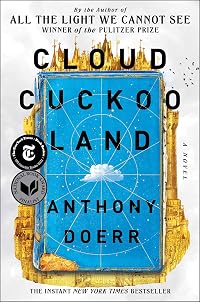
Cloud Cuckoo Land
by Anthony Doerr
On This Page
Description
"From the Pulitzer Prize-winning author of perhaps the most bestselling and beloved literary fiction of our time comes a triumph of imagination and compassion, a soaring novel about children on the cusp of adulthood in a broken world, who find resilience, hope, and story. The heroes of Cloud Cuckoo Land are children trying to figure out the world around them, and to survive. In the besieged city of Constantinople in 1453, in a public library in Lakeport, Idaho, today, and on a spaceship show more bound for a distant exoplanet decades from now, an ancient text provides solace and the most profound human connection to characters in peril. They all learn the story of Aethon, who longs to be turned into a bird so that he can fly to the paradise of Cloud Cuckoo Land, a better world. Twelve-year-old Anna lives in a convent where women toil all day embroidering the robes of priests. She learns to read from an old Greek tutor she encounters on her errands in the city. In an abandoned priory, she finds a stash of old books. One is Aethon's story, which she reads to her sister as the walls of Constantinople are bombarded by armies of Saracens. Anna escapes, carrying only a small sack with bread, salt fish-and the book. Outside the city walls, Anna meets Omeir, a village boy who was conscripted, along with his beloved pair of oxen, to fight in the Sultan's conquest. His oxen have died; he has deserted. In Lakeport, Idaho, in 2020, Seymour, a young activist bent on saving the earth, sits in the public library with two homemade bombs in pressure cookers-another siege. Upstairs, eighty-five-year old Zeno, a former prisoner-of-war, and an amateur translator, rehearses five children in a play adaptation of Aethon's adventures. On an interstellar ark called The Argos, Konstance is alone in a vault with sacks of Nourish powder and access to all the information in the world-or so she is told. She knows Aethon's story through her father, who has sequestered her to protect her. Konstance, encased on a spaceship decades from now, has never lived on our beloved Earth. Alone in a vault with sacks of Nourish powder and access to "all the information in the world," she knows Aethon's storythrough her father. Like Marie-Laure and Werner in All the Light We Cannot See, Konstance, Anna, Omeir, Seymour, the young Zeno, the children in the library are dreamers and misfits on the cusp of adulthood in a world the grown-ups have broken. They through their own resilience and resourcefulness, and through story. Dedicated to "the librarians then, now, and in the years to come," Anthony Doerr's Cloud Cuckoo Land is about the power of story and the astonishing survival of the physical book when for thousands of years they were so rare and so feared, dying, as one character says, "in fires or floods or in the mouths of worms or at the whims of tyrants." It is a hauntingly beautiful and redemptive novel about stewardship-of the book, of the Earth, of the human heart"-- show lessTags
Recommendations
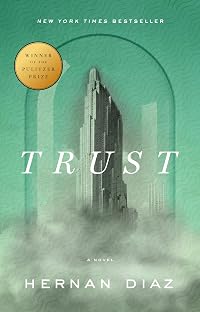


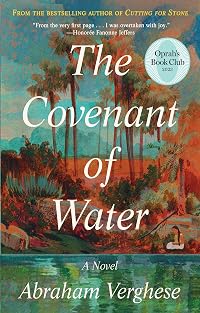
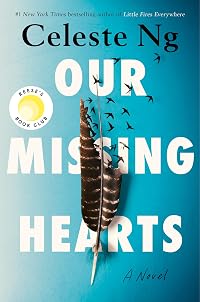
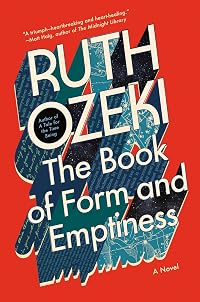

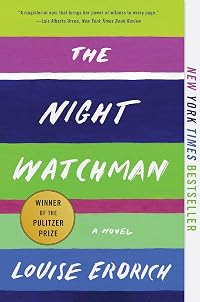
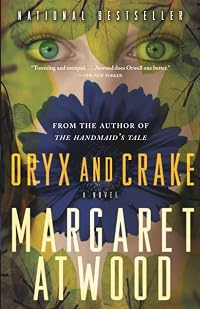
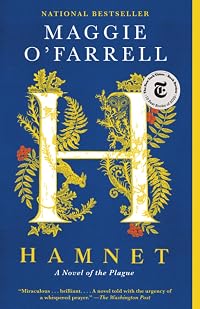

Member Recommendations
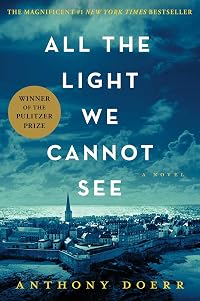
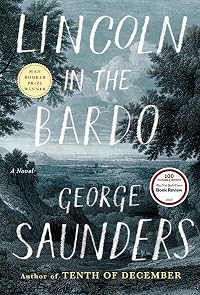
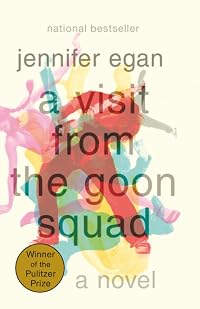
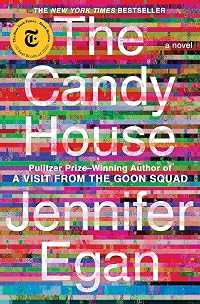
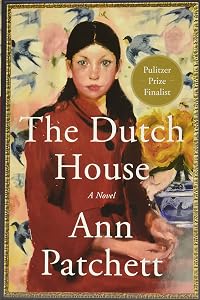
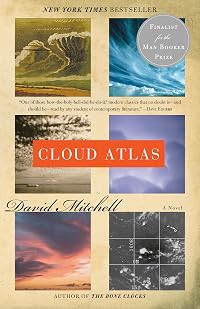
nicole_a_davis Both have stories that span multiple time periods and are seemingly unconnected until the end.
60

M_Clark The Golden Ass is the basis, together with The Birds, for the ancient story Cloud Cuckoo Land. It also happens to be a tremendously entertaining novel from the days of the Roman Empire.
20
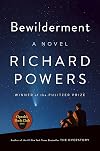
Tinwara Seymour in Cloud Cuckoo Land strongly reminded me of the young Robin in Bewilderment. If Seymour was your favorite character in Cloud Cuckoo Land, go for Bewilderment next!
Member Reviews
Consider Doerr’s epic novel concrete proof that wonderful books sometimes require readers to make a significant effort. This ambitious work intertwines multiple storylines that span different eras, jumping between time periods so often that it could cause frustrations for those readers who prefer more “linear” literary treks. I must admit that my attention waned in a few spots, forcing me to return to certain sections merely to understand what had happened. But I quibble. “Cloud Cuckoo Land” is a delightful, thought-provoking and beautifully written work that celebrates all-things-books. Doerr skillfully delivers compelling messages about resiliency, hope and the astounding power of books.
Doerr's story incorporates several contemporary issues, almost memes, yet the characters and plots are seamless so the resulting story feels nothing like a jeremiad or manifesto. Frankly the lighthanded marketing almost beggars belief: typically, several plot points and identities would be spoiled in jacket copy and cover design, but for whatever reason that was not the case here. (I deliberately avoided the flap jacket copy until completing the novel, fortunately so as it revealed a major plot point and hinted at other spoilers.) The novel is all the more impactful for going in blind.
Doerr's subtlety in handling separate genre storylines impressed me, not only incorporating genres traditionally marketed separately but which don't hold show more particularly affinity for one another: this isn't a mashup of detective fiction and science fiction, for example. I was impressed at how fully what started as unrelated genre subplots felt like a wholly-realized story by the end. Initially I found the story structure distracting, and took separate pages of notes: one page as usual, recording anything I found interesting; the other to systematically track the POV-storyline of each chapter, and timeframes across storylines. This second quickly situated me, allowing each chapter to whisk me wherever it wanted without worry I'd lose the thread. I settled on that fairly early on, and once established any distraction was easily sorted.
When describing to family and friends, I take care not to specify too much about plot or character: not only would such shortcuts spoil the experience, they'd be cheap. The unorthodox structure asks a little effort from readers, but they're rewarded. A summary I would be content to share: "Cloud Cuckoo Land has a complex structure, at the heart of which is the story of a book, and the wonder that book brings to those willing to hear its story. And by its story I don't mean, the story told in the book, though that's interesting enough; rather, the story of the book."
On the strength of Cloud Cuckoo Land, suspect Doerr will be an author whose work I can be confident of enjoying but which I won't feel compelled to seek out. show less
Doerr's subtlety in handling separate genre storylines impressed me, not only incorporating genres traditionally marketed separately but which don't hold show more particularly affinity for one another: this isn't a mashup of detective fiction and science fiction, for example. I was impressed at how fully what started as unrelated genre subplots felt like a wholly-realized story by the end. Initially I found the story structure distracting, and took separate pages of notes: one page as usual, recording anything I found interesting; the other to systematically track the POV-storyline of each chapter, and timeframes across storylines. This second quickly situated me, allowing each chapter to whisk me wherever it wanted without worry I'd lose the thread. I settled on that fairly early on, and once established any distraction was easily sorted.
When describing to family and friends, I take care not to specify too much about plot or character: not only would such shortcuts spoil the experience, they'd be cheap. The unorthodox structure asks a little effort from readers, but they're rewarded. A summary I would be content to share: "Cloud Cuckoo Land has a complex structure, at the heart of which is the story of a book, and the wonder that book brings to those willing to hear its story. And by its story I don't mean, the story told in the book, though that's interesting enough; rather, the story of the book."
On the strength of Cloud Cuckoo Land, suspect Doerr will be an author whose work I can be confident of enjoying but which I won't feel compelled to seek out. show less
I RECEIVED A DRC FROM THE PUBLISHER VIA NETGALLEY. THANK YOU.
My Review: My rating seems mingy, doesn't it. It did to me...I was fully expecting to five-star this bad boy. I wanted to five-star it. I didn't five-star All the Light We Cannot See, and it was (like this book) a braided-perspectives structure telling a deeply felt and emotionally fraught story.
I blame it on the sci-fi bona fides I have learned to demand of mainstream writers.
Author Doerr's gorgeous sentences are all here:
His gift for the pithy aperçu is on display, too:
That last is particularly resonant to me. Cloud-cuckoo Land, invented by Aristophanes in his play The Birds, never existed (as far as I am aware) in the form posited by Author Doerr in this story. Big ups to him for actually fooling me into looking up "Antonius Diogenes Cloud Cuckoo Land" to be absolutely sure of it, though.
So what was the problem? It was the generation-ship element in which Konstance, in all our future, resides. An Earth that can muster the resources to create such a massive object, which has AIs as sophisticated as Sybil (I had to check...I'd've named it "Sibyl," so I verified that it wasn't before typing this), would not need to flee their home world. (Also, is running away from home because we've made a mess really all that hopeful a message in the first place?) It's part of the charm of 1950s sci fi that there were generation ships launched to escape nuclear-war ravaged Earth without anyone saying, "waitaminnit waitaminnit all those resources would be just ducky used on Earth to help people!" but it's 2021 and those sorts of naïve assumptions are scrapheap-of-history material. And yes, I got to the end... I know about the twist...but it comes very late and, for me at least, doesn't change the jarring code-switch from its intended if not entirely successfully sold hope-full to hope-less. The point of making this last-minute course correction was simply lost on me. It ended up making the whole narrative line feel like a cheat.
Another thing that *needs* to be scrapheap-of-history'd is the coding of villains as neurodivergent. One entire star vanished for that. This is all I will say on the subject.
In the end, though, it's the gestalt that doesn't happen that costs this beautifully told tale another of my stars. I expect, if I'm following five (or six, depending on your take on Aethon in the ancient play) main threads, to experience a coming-together, a thematic unity that makes each strand of the story stronger after I've reached it. This was, I'm very sad to say, missing in my reading experience, much as it was in my unhappy read of Cloud Atlas. A much more successfully gestalted example from my own reading is the near-future India of SF chunkster River of Gods, or the outstandingly exciting present-day crime-story chunkster also set in India, Sacred Games.
It verges on misery porn to use children's PoVs in highlighting the cost to innocents of the great human-caused upheavals of History. I'm very glad Author Doerr presented the misery of unnatural change from both sides of the 1450s fall-of-Constantinople story; no triumphalism allowed here. I was less convinced that the overarching thematic reach for Hope was successful, in that these children are all facing the awful, wrenching adjustments whether or not the world actually collapses around them. I mean by that, that the collapses are hard-wired and the survivors are going to be powerless to do more than respond to the New World Order. This vitiates any real hope, at least to my mind it does. That's more than the usual problem for me in this book's case because by its very nature...a story about stories and libraries and words in their eternally exciting welter of meaning, connotation, metaphorical freight...Hope should be the one thing that each character finds, retains, develops, has by the end of the tale.
In the final analysis, this is an Anthony Doerr book. Reams and reams of printer paper, a metric ton of toner, all used to commit the MS's supremely descriptive language to the page. Deeply felt and beautifully written dialogue. Thought-provoking and well-presented explorations of significant thematic concerns of the world right now. But this many pages in the present tense? I felt pummelled with the immediacy! urgency! of that choice, the sense that I was being asked to move through the story at far too rapid a clip. Your book club will, I am pretty sure, love it anyway or even because of this, will discuss it for the required hour and probably go over.
I needed things I didn't get...a faster pace in each timeline, fewer flowery passages (though they are gorgeous!)...got things I didn't want (coughSeymourcough), and yet read the book from giddy-up to whoa. Never once did I so much as contemplate abandoning the read, and that is saying something.
This title is a FINALIST for the 2021 Best Fiction National Book Award! The winner will be announced on 17 November 2021. My most sincere well-wishes to the author and the publisher for their success in this contest. show less
My Review: My rating seems mingy, doesn't it. It did to me...I was fully expecting to five-star this bad boy. I wanted to five-star it. I didn't five-star All the Light We Cannot See, and it was (like this book) a braided-perspectives structure telling a deeply felt and emotionally fraught story.
I blame it on the sci-fi bona fides I have learned to demand of mainstream writers.
Author Doerr's gorgeous sentences are all here:
Almost overnight, the streets glow with meaning. She reads inscriptions on coins, on cornerstones and tombstones, on lead seals and buttress piers and marble plaques embedded into the defensive walls—each twisting lane of the city a great batteredshow more
manuscript in its own right.
–and–
“Repository… you know this word? A resting place. A text—a book—is a resting place for the memories of people who have lived before. A way for the memory to stay fixed after the soul has traveled on.”
–and–
There is magic in this place, the owl seems to say. You just have to sit and breathe and wait and it will find you. He sits and breathes and waits and the Earth travels another thousand kilometers along its orbit. Lifelong knots deep inside the boy loosen.
His gift for the pithy aperçu is on display, too:
“Fear of the thing,” Maher murmurs, more to himself than to Omeir, “will be more powerful than the thing itself.”
–and–
"Boil the words you already know down to their bones," Rex says, "and usually you find the ancients sitting there at the bottom of the pot, staring back up."
That last is particularly resonant to me. Cloud-cuckoo Land, invented by Aristophanes in his play The Birds, never existed (as far as I am aware) in the form posited by Author Doerr in this story. Big ups to him for actually fooling me into looking up "Antonius Diogenes Cloud Cuckoo Land" to be absolutely sure of it, though.
So what was the problem? It was the generation-ship element in which Konstance, in all our future, resides. An Earth that can muster the resources to create such a massive object, which has AIs as sophisticated as Sybil (I had to check...I'd've named it "Sibyl," so I verified that it wasn't before typing this), would not need to flee their home world. (Also, is running away from home because we've made a mess really all that hopeful a message in the first place?) It's part of the charm of 1950s sci fi that there were generation ships launched to escape nuclear-war ravaged Earth without anyone saying, "waitaminnit waitaminnit all those resources would be just ducky used on Earth to help people!" but it's 2021 and those sorts of naïve assumptions are scrapheap-of-history material. And yes, I got to the end... I know about the twist...but it comes very late and, for me at least, doesn't change the jarring code-switch from its intended if not entirely successfully sold hope-full to hope-less. The point of making this last-minute course correction was simply lost on me. It ended up making the whole narrative line feel like a cheat.
Another thing that *needs* to be scrapheap-of-history'd is the coding of villains as neurodivergent. One entire star vanished for that. This is all I will say on the subject.
In the end, though, it's the gestalt that doesn't happen that costs this beautifully told tale another of my stars. I expect, if I'm following five (or six, depending on your take on Aethon in the ancient play) main threads, to experience a coming-together, a thematic unity that makes each strand of the story stronger after I've reached it. This was, I'm very sad to say, missing in my reading experience, much as it was in my unhappy read of Cloud Atlas. A much more successfully gestalted example from my own reading is the near-future India of SF chunkster River of Gods, or the outstandingly exciting present-day crime-story chunkster also set in India, Sacred Games.
It verges on misery porn to use children's PoVs in highlighting the cost to innocents of the great human-caused upheavals of History. I'm very glad Author Doerr presented the misery of unnatural change from both sides of the 1450s fall-of-Constantinople story; no triumphalism allowed here. I was less convinced that the overarching thematic reach for Hope was successful, in that these children are all facing the awful, wrenching adjustments whether or not the world actually collapses around them. I mean by that, that the collapses are hard-wired and the survivors are going to be powerless to do more than respond to the New World Order. This vitiates any real hope, at least to my mind it does. That's more than the usual problem for me in this book's case because by its very nature...a story about stories and libraries and words in their eternally exciting welter of meaning, connotation, metaphorical freight...Hope should be the one thing that each character finds, retains, develops, has by the end of the tale.
In the final analysis, this is an Anthony Doerr book. Reams and reams of printer paper, a metric ton of toner, all used to commit the MS's supremely descriptive language to the page. Deeply felt and beautifully written dialogue. Thought-provoking and well-presented explorations of significant thematic concerns of the world right now. But this many pages in the present tense? I felt pummelled with the immediacy! urgency! of that choice, the sense that I was being asked to move through the story at far too rapid a clip. Your book club will, I am pretty sure, love it anyway or even because of this, will discuss it for the required hour and probably go over.
In a life you accumulate so many memories, your brain constantly winnowing through them, weighing consequence, burying pain, but somehow by the time you're this age you still end up dragging a monumental sack of memories behind you, a burden as heavy as a continent, and eventually it becomes time to take them out of the world.
–and–
It's never easy. Past tense literally causes him back pain, the way it flings all the verbs into the dark. Then there's the aorist tense, a tense unbound by time, that makes him want to crawl into a closet and huddle in the darkness.
–and–
Each morning comes along and you assume it will be similar enough to the previous one—that you will be safe, that your family will be alive, that you will be together, that life will remain mostly as it was. Then a moment arrives and everything changes.
I needed things I didn't get...a faster pace in each timeline, fewer flowery passages (though they are gorgeous!)...got things I didn't want (coughSeymourcough), and yet read the book from giddy-up to whoa. Never once did I so much as contemplate abandoning the read, and that is saying something.
This title is a FINALIST for the 2021 Best Fiction National Book Award! The winner will be announced on 17 November 2021. My most sincere well-wishes to the author and the publisher for their success in this contest. show less
This is a novel spanning centuries by the author of 2014's book of the moment, The Light We Cannot See. There are several interwoven stories, ranging from the mid-fifteen century siege of Constantinople, to a girl on a spaceship traveling to what is hoped to be a hospitable planet. All share a knowledge of an Ancient Greek story about a simple shepherd searching for the [Cloud Cuckoo Land] in the clouds, an avian version of Big Rock Candy Mountain. As the stories alternate, connections between them are revealed.
This is an unabashedly sentimental book, but somehow I loved it. Doerr has a knack of creating characters for whom the reader immediately cares about, even when that character is doing bad things. He also manages to write a show more novel involving several different times and characters and make each equally interesting, from a young man caring for a pair of oxen, drafted into working for the sultan besieging the city of Constantinople, to an elderly man helping a group of children put on a play, to life on a spaceship where everyone aboard knows they won't be the ones to reach the planet they hope will save them. Doerr knows what he's doing and does a masterful job with an intricate and interwoven collection of plots and his writing is a joy to read. It is a novel designed with the intention of making the reader feel, but somehow I didn't feel manipulated, even as I so clearly was. show less
This is an unabashedly sentimental book, but somehow I loved it. Doerr has a knack of creating characters for whom the reader immediately cares about, even when that character is doing bad things. He also manages to write a show more novel involving several different times and characters and make each equally interesting, from a young man caring for a pair of oxen, drafted into working for the sultan besieging the city of Constantinople, to an elderly man helping a group of children put on a play, to life on a spaceship where everyone aboard knows they won't be the ones to reach the planet they hope will save them. Doerr knows what he's doing and does a masterful job with an intricate and interwoven collection of plots and his writing is a joy to read. It is a novel designed with the intention of making the reader feel, but somehow I didn't feel manipulated, even as I so clearly was. show less
I thoroughly enjoyed Doerr's *All the Light We Cannot See* but *Cloud Cuckoo Land* is considerably more ambitious in terms of its historical, genre, and philosophical scope. With a narrative spanning thousands of years and blending genres of thriller, historical fiction and science-fiction there is a lot to juggle here but Doerr blends it beautifully in what he describes in the afterword as an unabashed "paean to books." It is then, by extension, also a love letter to those who value books and especially those who have valued them sufficiently in the past to try and preserve them. As such, the book is timely for several reasons. Endless talk about "the cloud" and data centers blah blah blah has inured us to one of the fundamental facts show more about information (let alone that information aggregated into knowledge and then knowledge further refined into wisdom): its precarity. Human beings love to think that they can defeat time, but even our best efforts to do so have the odds stacked against them, something that Doerr captures beautifully in this passage: "The manuscript you brought us before?. . . .For it to reach us in this room, in this hour, the lines within it had to survive a dozen centuries. A scribe had to copy it, and a second scribe, decades later, had to recopy that copy, transform it from a scroll to a codex, and long after that second scribe's bones were in the earth, a third came along and recopied it again, and all this time the book was being hunted. One bad-tempered abbot, one clumsy friar, one invading barbarian, an overturned candle, a hungry worm--and all those centuries are undone." Every age thinks that it has improved on our ability to defeat time, to preserve everything forever. In the first flush of the information revolution this led to the impulse to digitize everything. But those efforts soon ran into the problem of proprietary formats, the restless innovation for innovation's sake of capitalism, that meant that some records were effectively unreadable as little as a decade later, when their print versions could still be read by virtually everyone. . .except that. flushed with digital hubris, we destroyed a lot of those originals. Now we are placing an almost religious level of faith in the cloud, in physical data centers that are no more immune to the ravages of human fury and time (EMP pulses, power grid collapses, civil war).
The artifacts themselves are of course nothing without people to safeguard them and interpret them and who try to make them accessible as widely as possible (another reason not to put our faith in data centers owned by private companies rather than public institutions). A great companion piece for this book is Susan Orlean's fantastic *The Library Book,* another love letter to libraries but more so to the often thankless work undertaken by librarians of all stripes. This is the second reason this book feels so timely. With libraries and librarians under sustained assault across the US from MAGA meatheads, this book is a reminder how much can be lost when we don't fight back against not just attempts to censor reading, but the barbarian crusades against the very infrastructure that makes the preservation and transmission of knowledge possible. show less
The artifacts themselves are of course nothing without people to safeguard them and interpret them and who try to make them accessible as widely as possible (another reason not to put our faith in data centers owned by private companies rather than public institutions). A great companion piece for this book is Susan Orlean's fantastic *The Library Book,* another love letter to libraries but more so to the often thankless work undertaken by librarians of all stripes. This is the second reason this book feels so timely. With libraries and librarians under sustained assault across the US from MAGA meatheads, this book is a reminder how much can be lost when we don't fight back against not just attempts to censor reading, but the barbarian crusades against the very infrastructure that makes the preservation and transmission of knowledge possible. show less
Reading this book felt like doing a puzzle with beautiful, imaginatively drawn pieces. You don't know what the final picture will be, but you know it's got to be something fantastic. The book requires some close attention to recognize all the puzzle pieces, but your patience and attention are well worth it, as it all comes together to form an intricate and unexpected picture.
Made up of three stories from different time periods that intertwine and spiral together, each story contains elements of homecoming, identity, and searching. Anna and Omeir are on opposite sides of the siege of Constantinople in 1453. Seymore and Xeno are on opposite sides of an accidental hostage situation at a library in Idaho in 2020. Konstance is the only show more survivor on a generation ship in 2145 (or so she thinks). Wrapping around and running through each separate story is the tale of Cloud Cuckoo Land, a fictional ancient Greek comedy that is found and lost and found again throughout history.
Anna finds a codex in a ruin on which is written the tale of Cloud Cuckoo Land, in which Diogenes tells the tale of his attempt to find the mystical world of the birds. Anna keeps the codex safe, and it disappears until it is next discovered some 500 years later in a vault of the Vatican. It is very degraded, but Xeno attempts to translate it as the pages are scanned in and released to the public. He tells the story to a group of children, who decide to create a play based on the story. Konstance is told the story by her father, one of the few members of the generation ship crew who remember Earth, which has become an environmental disaster. When the rest of the crew is killed by a plague, she pieces the story together on scraps of fabric, and ultimately pieces together the reality of her world. It is primarily Xeno's and Konstance's stories that weave together, but no part of any of the stories could exist without the rest.
This is truly one of the most creative and intricate books I've ever read. Doerr puts all the pieces together very well. And not only does he keep the whole puzzle together in his head, he writes lines like:
(on learning Greek) "Boil the words you already know down to their bones, and usually you find the ancients sitting there at the bottom of the pot, starting back up."
(describing the frozen north) "...it was so cold that when the hairy wildmen who lived there spoke, their words froze and their companions would have to wait for spring to hear what had been said." show less
Made up of three stories from different time periods that intertwine and spiral together, each story contains elements of homecoming, identity, and searching. Anna and Omeir are on opposite sides of the siege of Constantinople in 1453. Seymore and Xeno are on opposite sides of an accidental hostage situation at a library in Idaho in 2020. Konstance is the only show more survivor on a generation ship in 2145 (or so she thinks). Wrapping around and running through each separate story is the tale of Cloud Cuckoo Land, a fictional ancient Greek comedy that is found and lost and found again throughout history.
Anna finds a codex in a ruin on which is written the tale of Cloud Cuckoo Land, in which Diogenes tells the tale of his attempt to find the mystical world of the birds. Anna keeps the codex safe, and it disappears until it is next discovered some 500 years later in a vault of the Vatican. It is very degraded, but Xeno attempts to translate it as the pages are scanned in and released to the public. He tells the story to a group of children, who decide to create a play based on the story. Konstance is told the story by her father, one of the few members of the generation ship crew who remember Earth, which has become an environmental disaster. When the rest of the crew is killed by a plague, she pieces the story together on scraps of fabric, and ultimately pieces together the reality of her world. It is primarily Xeno's and Konstance's stories that weave together, but no part of any of the stories could exist without the rest.
This is truly one of the most creative and intricate books I've ever read. Doerr puts all the pieces together very well. And not only does he keep the whole puzzle together in his head, he writes lines like:
(on learning Greek) "Boil the words you already know down to their bones, and usually you find the ancients sitting there at the bottom of the pot, starting back up."
(describing the frozen north) "...it was so cold that when the hairy wildmen who lived there spoke, their words froze and their companions would have to wait for spring to hear what had been said." show less
I'm rarely impressed with novels about writers, but novels about readers and their books ... we are all readers, and this is a book. It's about how we cling to stories and are inspired by them, how we value them to the point of preserving them through trials spanning centuries. Doerr goes as far back as the siege of Constantinople in reaching for examples, and emphasizes the inspiration theme in our present. It's hard to imagine any text that's existed to the present going missing from this point forward, now that we have achieved our electronic information age, but Doerr imagines exactly one such threat. I like these books that jump forward and backward in time, leaving you guessing how their scenes will eventually relate and then show more drawing the strings together in a tidy bow.
There's magic in smaller touches, for instance the repeated references to things like Scheria, mentioned in 1453 and again on that interstellar ride, that can only happen because books have survived. And in the deep sense of time being conveyed, as when the starship looks back on the fall of Constantinople as so long ago, and yet even its citizens already regarded the ancient Greeks as ancient. I don't frequently use the world "lovely", but there's a measure of loveliness in the dreamy way that the novel's opening chapters unfold, and it's reflected again in how it ends, like a flower that opens its petals in the morning and then closes at night.
One thing I might have done differently. As a google exercise I recommend trying "Did Islam preserve or destroy western knowledge?" and see what you get. It feels disingenuous to centrally profile an instance where their culture was a threat to its preservation while when looked at more generally the world is deeply in its debt, and when the miracle of literature's preservation is this novel's central theme. show less
There's magic in smaller touches, for instance the repeated references to things like Scheria, mentioned in 1453 and again on that interstellar ride, that can only happen because books have survived. And in the deep sense of time being conveyed, as when the starship looks back on the fall of Constantinople as so long ago, and yet even its citizens already regarded the ancient Greeks as ancient. I don't frequently use the world "lovely", but there's a measure of loveliness in the dreamy way that the novel's opening chapters unfold, and it's reflected again in how it ends, like a flower that opens its petals in the morning and then closes at night.
One thing I might have done differently. As a google exercise I recommend trying "Did Islam preserve or destroy western knowledge?" and see what you get. It feels disingenuous to centrally profile an instance where their culture was a threat to its preservation while when looked at more generally the world is deeply in its debt, and when the miracle of literature's preservation is this novel's central theme. show less
Members
- Recently Added By
Published Reviews
Yes, libraries are awesome, and we all love books. But the artificial convolutedness of “Cloud Cuckoo Land” is not enough to confer any additional depth on Doerr’s simple, belabored theme, a theme that thumps through the novel insisting that every character kneel in reverent submission.
added by Lemeritus
Doerr does not overstate the importance of the story-within-a-story. If anything, he makes a point of reminding us again and again how easy it is for books to be lost across the ages — the staggering number of histories, tales, songs, account books, speeches, poems and stories that never made it through the meatgrinder of history....There are no heroes or villains, no global plots, no secret show more societies bent on controlling this lost manuscript. There's just a book thief, a boy and his ox, a messed-up kid who lost his best friend, a man putting on a children's play, a girl talking to a supercomputer....It is a book about books, a story about stories. It is tragedy and comedy and myth and fable and a warning and a comfort all at the same time. It says, Life is hard. Everyone believes the world is ending all the time. But so far, all of them have been wrong.It says that if stories can survive, maybe we can, too. show less
added by Lemeritus
This is a novel so full that, if it can be said to be 'about' anything, perhaps it is about how things survive by chance, and through love. But the book is also keenly aware of the fact that humans have basically exhausted our chances, and it is time for a fierce and tenacious love to step up – by sharing and passing on what is mended and changed, like Diogenes’s book, with its delights show more and consolations – to save what we still have on Earth, and what is ours, as well as what we enjoy here, though it isn’t ours ... With all its tenderness for human life and animal life, and libraries, this novel nevertheless acknowledges that civilisation continues to insist on not going anywhere without packing its poisons. show less
added by Lemeritus
Lists

Recommend the 20 best books you've read in the last five years
2,168 works; 608 members

Top Five Books of 2021
604 works; 181 members

Top Five Books of 2022
736 works; 272 members

Books recommended by Barack Obama
295 works; 29 members

Best 21st Century Books (So Far)
679 works; 86 members

National Book Award Finalists - Fiction
377 works; 12 members

Books Read in 2023
5,638 works; 147 members

Phi Beta Kappa reading list
260 works; 8 members

2022 Notable Books for Adults
25 works; 3 members

Obama Reads
181 works; 3 members

Indie Next Picks
196 works; 4 members

FAB 2022
16 works; 1 member

Books Read in 2022
5,226 works; 115 members

NYT Readers best of 21st C
100 works; 8 members

Still to Read 2022
5 works; 1 member

History
37 works; 1 member

Top Five Books of 2024
795 works; 264 members

2023 Update: The Best Twenty Books You've Read in the Past Five Years
40 works; 3 members

2023 Reads
26 works; 1 member

Top Five Books of 2023
767 works; 317 members

READ IN 2022
206 works; 2 members

Summer Reading 2023
14 works; 1 member

Dublin Literary Award 2023 Longlist
67 works; 5 members

Books Read in 2021
5,361 works; 114 members

Top Five Books of 2025
954 works; 304 members
Author Information

Anthony Doerr was born on October 27, 1973 in Cleveland, Ohio. He is the author of The Shell Collector, About Grace, Four Seasons in Rome, Memory Wall, and All the Light We Cannot See. His fiction has won four O. Henry Prizes and has been anthologized in several anthologies. He has won the Barnes and Noble Discover Prize, the Rome Prize, the New show more York Public Library's Young Lions Award, the National Magazine Award for Fiction, three Pushcart Prizes, two Pacific Northwest Book Award, three Ohioana Book Awards, the 2010 Story Prize, which is considered the most prestigious prize in the U.S. for a collection of short stories, and the Sunday Times EFG Short Story Award, which is the largest prize in the world for a single short story. His novel, All the Light We Cannot See, won the Adult Fiction Award for the Indies Choice Book Awards in 2015, the International Book of the Year at the ABIA Awards and the Pulitzer Prizes for Fiction in 2015. Anthony Doerr also won the 2015 Andrew Carnegie Medal for Excellence in Fiction for this same title. (Bowker Author Biography) show less
Some Editions
Awards and Honors
Awards
Distinctions
Notable Lists
Series
Belongs to Publisher Series
Common Knowledge
- Canonical title
- Cloud Cuckoo Land
- Original title
- Cloud cuckoo land
- Original publication date
- 2021
- People/Characters
- Anna; Omeir; Seymour Stuhlman; Zeno Ninis; Konstance; Aethon
- Important places
- Constantinople, Byzantine Empire; Lakeport, Idaho
- Important events
- Fall of Constantinople (1453-05)
- Epigraph
- Chorus Leader: To work, men. How do you propose to name our city?
Peisetairos: How about Sparta? That’s a grand old name with a fine pretentious ring.
Euelpides: Great Hercules, call my city Sparta? I wouldnâ€... (show all)™t even insult my mattress by giving it a name like Sparta.
Peisetairos: Well, what do you suggest instead?
Chorus Leader: Something big, smacking of the clouds. A pinch of fluff and rare air, a swollen sound.
Peisetairos: I’ve got it! Listen—Cloud Cuckoo Land!
—Aristophanes, The Birds, 414 B.C.E. - Dedication
- For the librarians
then, now, and in the years to come/ - First words
- Prologue
For my dearest niece with hope that this brings you health and light
A fourteen-year-old girl sits cross-legged on the floor of a circular vault. A mass of curls haloes her head; her socks are full of holes. This is Konstance. - Quotations
- But books, like people, die. They die in fires or floods or in the mouths of worms or at the whims of tyrants. If they are not safeguarded, they go out of the world. And when a book goes out of the world, the memory dies a se... (show all)cond death.
Or maybe, like all lunatics, the shepherd made his own truth, and so for him, true it was.
Each sign signifies a sound, and to link sounds is to form words, and to link words is to construct worlds.
“Boil the words you already know down to their bones,” Rex says, “and usually you find the ancients sitting there at the bottom of the pot, staring back up.”
Anna remembers something Licinius said: that a story is a way of stretching time.
That's what the gods do, they spin threads of ruin through the fabric of our lives, all to make a song for generations to come.
We don't know how the old Greeks sounded when they spoke; we can scarcely map their words onto ours; from the very start, we're doomed to fail. But in the attempt, Rex said, in trying to drag something across the river from t... (show all)he murk of history into our time, into our language: that was, he said, the best kind of fool's errand.
Sometimes the things we think are lost are only hidden, waiting to be rediscovered.
“In the hospital,” Sharif says, as he lights a cigarette, “before she died, my mother used to say, ‘Hope is the pillar that holds up the world.' ” “Who said that?” He shrugs. “Some days she said Aristotle, s... (show all)ome days John Wayne. Maybe she made it up.”
. . . he realizes that the truth is infinitely more complicated, that we are all beautiful even as we are all part of the problem, and that to be a part of the problem is to be human, - Last words
- (Click to show. Warning: May contain spoilers.)“And the tale I have to tell is so ludicrous, so incredible, that you’ll never believe a word of it, and yet”—she taps the end of his nose—“it’s true.”
- Publisher's editor
- Graham, Nan
- Original language
- English
- Canonical DDC/MDS
- 813.6
- Canonical LCC
- PS3604.O34
Classifications
Statistics
- Members
- 6,011
- Popularity
- 2,140
- Reviews
- 216
- Rating
- (4.21)
- Languages
- 13 — Danish, Dutch, English, Finnish, French, German, Italian, Japanese, Polish, Russian, Spanish, Swedish, Portuguese (Portugal)
- Media
- Paper, Audiobook, Ebook
- ISBNs
- 52
- ASINs
- 12