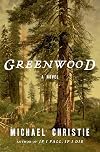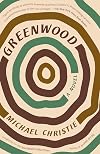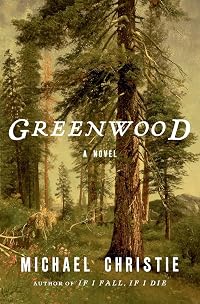
Greenwood: A Novel
by Michael Christie
On This Page
Description
"It's 2034 and Jake Greenwood is a storyteller and a liar, an overqualified tour guide babysitting ultra-rich vacationers in one of the world's last remaining forests. It's 2008 and Liam Greenwood is a carpenter, fallen from a ladder and sprawled on his broken back, calling out from the concrete floor of an empty mansion. It's 1974 and Willow Greenwood is out of jail, free after being locked up for one of her endless series of environmental protests: attempts at atonement for the sins of her show more father's once vast and violent timber empire. It's 1934 and Everett Greenwood is alone, as usual, in his maple syrup camp squat when he hears the cries of an abandoned infant and gets tangled up in the web of a crime that will cling to his family for decades. And throughout, there are trees: thrumming a steady, silent pulse beneath Christie's effortless sentences and working as a guiding metaphor for withering, weathering, and survival. A shining, intricate clockwork of a novel, Greenwood is a rain-soaked and sun-dappled story of the bonds and breaking points of money and love, wood and blood--and the hopeful, impossible task of growing toward the light"-- show lessTags
Recommendations












Member Recommendations
by anonymous user
Member Reviews
The novel, Greenwood, by Michael Christie, is top-notch eco-fiction that spans 130 years from 1908 to 2038.
The characters are interesting, their stories well-crafted, the role of trees in each of their lives startling, and the concept of how a family's brokenness, its lies, its myths, and its self-sacrifices are passed from one generation to the next binding the characters inexorably together and sometimes wounding them deeply, much as most families do.
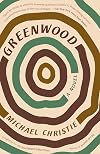
Not to be overlooked is the careful structure that has gone into crafting the hardcover edition. The book's edging mimics the yearly rings growing trees produce. Much heavier than most hardcovers, the book's paper is recycled from consumer waste, its ink is vegetable-based, and its show more adhesives are water-based and recyclable.
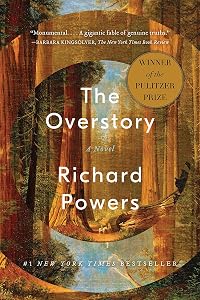
This book belongs on your shelf as companion-literature that envisions the collapse of the human species forewarned in Richard Powers', The Overstory. The novel left me understandably troubled and remarkably hopeful at the same time. show less
The characters are interesting, their stories well-crafted, the role of trees in each of their lives startling, and the concept of how a family's brokenness, its lies, its myths, and its self-sacrifices are passed from one generation to the next binding the characters inexorably together and sometimes wounding them deeply, much as most families do.
Not to be overlooked is the careful structure that has gone into crafting the hardcover edition. The book's edging mimics the yearly rings growing trees produce. Much heavier than most hardcovers, the book's paper is recycled from consumer waste, its ink is vegetable-based, and its show more adhesives are water-based and recyclable.
This book belongs on your shelf as companion-literature that envisions the collapse of the human species forewarned in Richard Powers', The Overstory. The novel left me understandably troubled and remarkably hopeful at the same time. show less
Thank goodness this book was on the 2019 Giller Prize longlist since I am not sure it would have come to my attention otherwise. It didn't make it onto the shortlist which I think is a shame because more people should read this book which is a family saga running from 1908 to 2038. In each generation the family members have a strong attachment to forests and trees. Some want to cut them down and some want to save them. As you can imagine this leads to conflicts.
The Greenwood name was actually made up as a last name for two boys orphaned when two trains collided near Kingston Ontario. The boys were not related but they stayed together after that traumatic event that killed everyone else on the train. Harris and Everett and everyone in show more the community treated the two boys as brothers. They were given the name Greenwood because they sold firewood they cut from the woodlot they lived in before it had been cured so it was green wood. When World War I started Harris enlisted but Everett wanted to stay on the property they now owned. After Harris finished basic training he came back home to wait for deployment and his eyesight deteriorated. In order to prevent him getting killed overseas Everett restrained him in their cabin the night before the unit was to leave and he joined using Harris's name. Everett survived the war but he was so badly affected by what he had seen and heard that he became a drunk and a hobo. Harris meanwhile had gone to university to learn forestry and he started a lumber company. He wanted to share it with Everett but he could not find him. The succeeding generations of Greenwoods (Willow, Liam and Jacinda) continued the family's involvement with trees. Willow was an eco-warrior who targeted big forestry companies. Her son, Liam, became a carpenter who did beautiful work with reclaimed lumber. Liam's daughter Jacinda was a dedrologist who wanted to study old growth forests but to pay off her student debt she took a job as a guide in a fancy resort on Greenwood Island guiding rich people through one of the last stands of big Douglas firs.
I loved the structure of this book which starts with Jake (as Jacinda likes to be called) in 2038, then goes to Liam's story in 2008, then to Willow's story in 1974, then to Everett's story in 1934 (the height of the Depression), back to the beginning in 1908 and then forward through all the years, ending with Jake in 2038. As Christie said in an interview in the Winnipeg Free Press, the form is like the rings of a tree. There is even a drawing of a tree cross section at the front of the book.
You can tell Christie is passionate about trees from reading this book but he has also put out a call for Canada to start a national tree-planing program to combat climate change. After reading this book and seeing the world he imagines in just 20 years I'm ready to sign on. show less
The Greenwood name was actually made up as a last name for two boys orphaned when two trains collided near Kingston Ontario. The boys were not related but they stayed together after that traumatic event that killed everyone else on the train. Harris and Everett and everyone in show more the community treated the two boys as brothers. They were given the name Greenwood because they sold firewood they cut from the woodlot they lived in before it had been cured so it was green wood. When World War I started Harris enlisted but Everett wanted to stay on the property they now owned. After Harris finished basic training he came back home to wait for deployment and his eyesight deteriorated. In order to prevent him getting killed overseas Everett restrained him in their cabin the night before the unit was to leave and he joined using Harris's name. Everett survived the war but he was so badly affected by what he had seen and heard that he became a drunk and a hobo. Harris meanwhile had gone to university to learn forestry and he started a lumber company. He wanted to share it with Everett but he could not find him. The succeeding generations of Greenwoods (Willow, Liam and Jacinda) continued the family's involvement with trees. Willow was an eco-warrior who targeted big forestry companies. Her son, Liam, became a carpenter who did beautiful work with reclaimed lumber. Liam's daughter Jacinda was a dedrologist who wanted to study old growth forests but to pay off her student debt she took a job as a guide in a fancy resort on Greenwood Island guiding rich people through one of the last stands of big Douglas firs.
I loved the structure of this book which starts with Jake (as Jacinda likes to be called) in 2038, then goes to Liam's story in 2008, then to Willow's story in 1974, then to Everett's story in 1934 (the height of the Depression), back to the beginning in 1908 and then forward through all the years, ending with Jake in 2038. As Christie said in an interview in the Winnipeg Free Press, the form is like the rings of a tree. There is even a drawing of a tree cross section at the front of the book.
You can tell Christie is passionate about trees from reading this book but he has also put out a call for Canada to start a national tree-planing program to combat climate change. After reading this book and seeing the world he imagines in just 20 years I'm ready to sign on. show less
Multi-generational saga that explores themes of family, environmental preservation, and the relationship between humans and nature over time. It starts in 2038 and moves backward in stages to 1908, then moves forward again, picking up where it started. The 2038 sections depict a world ravaged by environmental collapse. Earlier sections show the roots of this devastation through logging and exploitation of resources. The storyline follows the Greenwood family's history, which is full of lies, deceptions, and secrets.
In 2038, the protagonist works as a tour guide in one of the last remaining old growth forests in Canada. Other family members take the leading role as the scenes shift to previous generations, and their occupations reflect show more the changing attitudes toward nature (especially forests and trees), working in such occupations as a carpenter, an environmental activist, and a timber tycoon. It covers a wide geographic swath of Canada, and an island off the coast of British Columbia plays a key role in the plot.
It touches on many topics that are relevant in today’s world, such as climate change, intergenerational responsibility, and wealth inequality. The author examines how the actions of the past shape the present and how human actions (or inactions) reverberate through generations. The novel suggests that understanding our roots - both familial and environmental - is crucial for facing an uncertain future. It is unevenly paced, and I found parts of it more engrossing than others, but it is one of those rare books that succeeds as both a family saga and an environmental parable. show less
In 2038, the protagonist works as a tour guide in one of the last remaining old growth forests in Canada. Other family members take the leading role as the scenes shift to previous generations, and their occupations reflect show more the changing attitudes toward nature (especially forests and trees), working in such occupations as a carpenter, an environmental activist, and a timber tycoon. It covers a wide geographic swath of Canada, and an island off the coast of British Columbia plays a key role in the plot.
It touches on many topics that are relevant in today’s world, such as climate change, intergenerational responsibility, and wealth inequality. The author examines how the actions of the past shape the present and how human actions (or inactions) reverberate through generations. The novel suggests that understanding our roots - both familial and environmental - is crucial for facing an uncertain future. It is unevenly paced, and I found parts of it more engrossing than others, but it is one of those rare books that succeeds as both a family saga and an environmental parable. show less
“There is drama in the opening of a log--to uncover for the first time the beauty in the bole, or trunk, of a tree hidden for centuries, waiting to be given this second life." (Epigraph) ~ George Nakashima, The Soul of a Tree
This intriguing book begins and ends with a futuristic environmental catastrophe called The Great Withering. Most of the trees of the world are dead or in great distress. Much of the book is set in a British Columbia island preserve that still has a canopy of ancient Douglas Firs called the Greenwood Arboreal Cathedral.
I loved the structure based upon the concentric rings found in a cross-section of a tree. The Greenwood "family" is an amalgam of people related more by their ties to nature than a shared blood show more line. Their family saga chronicles a tangled history "like a forest, a collection of individuals pooling their resources through intertwined roots." This was a sprawling story that made me think deeply about our natural world and its profound impact on our lives. Recommended to other "tree lovers" or just those who enjoy a well-told story. show less
This intriguing book begins and ends with a futuristic environmental catastrophe called The Great Withering. Most of the trees of the world are dead or in great distress. Much of the book is set in a British Columbia island preserve that still has a canopy of ancient Douglas Firs called the Greenwood Arboreal Cathedral.
I loved the structure based upon the concentric rings found in a cross-section of a tree. The Greenwood "family" is an amalgam of people related more by their ties to nature than a shared blood show more line. Their family saga chronicles a tangled history "like a forest, a collection of individuals pooling their resources through intertwined roots." This was a sprawling story that made me think deeply about our natural world and its profound impact on our lives. Recommended to other "tree lovers" or just those who enjoy a well-told story. show less
The writing was beautiful, the characterization was great, the structure and concept of the story were perfect. I love that his conception of family is forest rather than bloodline--all of these unrelated individuals twining their roots, as it were, with a common surname, largely for reasons of accident. It was nearly a perfect story; but that "nearly" was an important exception for me: climate change and the coming impacts are repeatedly compared to the great depression, with the characters concluding that, after all, if we made it through the dust bowl, humanity will emerge from these coming disasters as well.
But the depression has as much in common with global heating as a lake has with an ocean. Sure, yes, they are both water bodies show more large enough to take a boat across, but you could lose a lake in an ocean and not miss it. Similarly, an economic depression more serious than the 30s and more or less permanent is one of the proposed impacts of climate change if we go much over 2C. That's not counting the wars, lost countries, mass extinctions, etc. And the depression was about human-made changes to a human-built system, whereas climate change is about human changes to every natural system on the planet. The depression lasted for ten years, and the impacts of carbon in the atmosphere will last at least for centuries simply because the carbon cycle is very slow. It is not the same. We cannot take our emergence from the depression or the 30s as any kind of guide to approaching the climate crisis.
That might seem a minor quibble, but my impression is that this comparison is a large part of why he wrote the book.
I'm also a bit mystified on the ending. No spoilers, but that is 100% not what I expected Jake to do, and given her character and values, and that the entire book is about a family that is almost entirely unrelated by blood, why she's worrying so much about WG's parentage doesn't make sense to me.
So, recommend with caveats. show less
But the depression has as much in common with global heating as a lake has with an ocean. Sure, yes, they are both water bodies show more large enough to take a boat across, but you could lose a lake in an ocean and not miss it. Similarly, an economic depression more serious than the 30s and more or less permanent is one of the proposed impacts of climate change if we go much over 2C. That's not counting the wars, lost countries, mass extinctions, etc. And the depression was about human-made changes to a human-built system, whereas climate change is about human changes to every natural system on the planet. The depression lasted for ten years, and the impacts of carbon in the atmosphere will last at least for centuries simply because the carbon cycle is very slow. It is not the same. We cannot take our emergence from the depression or the 30s as any kind of guide to approaching the climate crisis.
That might seem a minor quibble, but my impression is that this comparison is a large part of why he wrote the book.
I'm also a bit mystified on the ending. No spoilers, but that is 100% not what I expected Jake to do, and given her character and values, and that the entire book is about a family that is almost entirely unrelated by blood, why she's worrying so much about WG's parentage doesn't make sense to me.
So, recommend with caveats. show less
So good, so many gems in the heartwood of this multigenerational story of a complicated family tree, or family forest as Christie calls it. Christie has crafted the perfect book for a pandemic read, especially for British Columbians. “During hard times people crave the consolation of other hard times, whether those of the past or an imagined ruined future to ease the pain of the present day they are stuck with (60).” This book has both.
It's 2038 and most of the trees in the world have died in The Withering. Jake Greenwood works as tourist guide in one of the last remaining forests on the planet which wealthy tourists from all over the world come to visit. She has no family. One day, an old friend comes to visit and informs that he has proof that she is not who she thinks she is but actually someone else. The story then works backwards in time to cover the history of Jake's family right up to her great grandfather's childhood in 1908. The book then reverses course and moves forward to 2038 where Jake must make a decision that will affect the rest of her life. Most of the characters' lives are marked with unfairness, tragedy, bad decisions, and natural disasters
Trees show more are a main character of the book and the theme that ties the story and the characters together.
This book was well-written and hard to put down. I was invested in the characters and found myself cringing at what was coming next hoping that characters would escape the tragedy that was coming their way. The use of trees to tie together ideas, themes, characters was particularly well done. Well worth reading. show less
Trees show more are a main character of the book and the theme that ties the story and the characters together.
This book was well-written and hard to put down. I was invested in the characters and found myself cringing at what was coming next hoping that characters would escape the tragedy that was coming their way. The use of trees to tie together ideas, themes, characters was particularly well done. Well worth reading. show less
Members
- Recently Added By
Lists

Top Five Books of 2020
982 works; 350 members

Canada Reads Winners and Nominees
129 works; 9 members

Books Read in 2020
4,379 works; 124 members

Books Read in 2022
5,168 works; 114 members

Globe and Mail | Canadian Fiction: April 8, 2023
10 works; 1 member

Evergreen Award™ Winners and Nominees 2005–2024
200 works; 3 members

Globe and Mail | Canadian Fiction: May 13, 2023
10 works; 1 member
Globe and Mail | Canadian Fiction: April 29, 2023
10 works; 1 member

Globe and Mail | Canadian Fiction: April 22, 2023
10 works; 1 member
Globe and Mail | Canadian Fiction: April 15, 2023
10 works; 1 member
Globe and Mail | Canadian Fiction: March 25, 2023
10 works; 1 member
Globe and Mail | Canadian Fiction: April 1, 2023
10 works; 1 member

Globe and Mail | Canadian Fiction: March 18, 2023
10 works; 1 member

Globe and Mail | Canadian Fiction: March 11, 2023
10 works; 1 member

Globe and Mail | Canadian Fiction: February 11, 2023
10 works; 1 member

Books Read in 2021
5,361 works; 114 members

Time is out of joint
19 works; 3 members

Top Five Books of 2024
795 works; 264 members
Author Information

5 Works 1,153 Members
Some Editions
Awards and Honors
Awards
Distinctions
Little Free Library Action Book Club Selection (Advanced and Adult Readers – In Our Nature)
Common Knowledge
- Canonical title*
- Lorsque le dernier arbre
- Original title
- Greenwood
- Original publication date
- 2019
- People/Characters
- Jacinda "Jake" Greenwood; Everett Greenwood; Harvey Lomax; Liam Greenwood; Willow Greenwood; Harris Greenwood (show all 10); Liam Feeney; R.J. Holt; Temple; Euphemia Baxter
- Important places
- British Columbia, Canada; St. John, New Brunswick, Canada; Estevan, Saskatchewan, Canada
- Dedication
- For my family
- First words
- They come for the trees.
- Quotations
- Buy we rarely get what we want in life, he said, There isn't enough room for it all to fit.
Because even after you cut a piece of wood and lay it straight, it lives on after you're finished, soaking up moisture, twisting, bowing, and warping into unintended forms. Our lives are no different.
There aren't any normal lives, son. That's the lie the hurts us the most.
What if a family isn't a tree at all? Jake thinks as they walk in silence. What if it's more like a forest? A collection of individuals pooling their resources through intertwined roots, sheltering one another from wind and... (show all) weather and drought. - Last words
- (Click to show. Warning: May contain spoilers.)But I am strong & you give me courage & a forest has always ben the best place for a person to escape into.
- Original language*
- Engels
*Some information comes from Common Knowledge in other languages. Click "Edit" for more information.
Classifications
- Genres
- Fiction and Literature, General Fiction, Historical Fiction, Science Fiction
- DDC/MDS
- 813.6 — Literature & rhetoric American literature in English American fiction in English 2000-
- LCC
- PR9199.4 .C48825 .G74 — Language and Literature English English Literature English literature: Provincial, local, etc.
- BISAC
Statistics
- Members
- 814
- Popularity
- 33,930
- Reviews
- 38
- Rating
- (4.05)
- Languages
- 5 — Dutch, English, French, German, Italian
- Media
- Paper, Audiobook, Ebook
- ISBNs
- 25
- ASINs
- 7