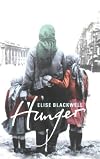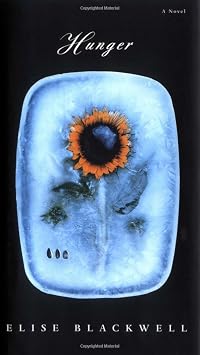
Hunger
by Elise Blackwell
On This Page
Description
Scouring the world's most remote fields and valleys, a dedicated Soviet scientist has spent his life collecting rare plants for his country's premiere botanical institute in Leningrad. From Northern Africa to Afghanistan, from South America to Abyssinia, he has sought and saved seeds that could be traced back to the most ancient civilizations. And the adventure has set deep in him. Even at home with the wife he loves, the memories of his travels return him to the beautiful women and strange show more foods he has known in exotic regions. When German troops surround Leningrad in the fall of 1941, he becomes a captive in the siege. As food supplies dwindle, residents eat the bark of trees, barter all they own for flour, and trade sex for food. In the darkest winter hours of the siege, the institute's scientists make a pact to leave untouched the precious storehouse of seeds that they believe is the country's future. But such a promise becomes difficult to keep when hunger is grows undeniable. Based on true events from World War II, Hunger is a private story about a man wrestling with his own morality. This beautiful debut novel ask us what is the meaning of integrity show lessTags
Recommendations
















Member Reviews
Hunger is a short novel, but one that has a powerful voice to tackle issues of history, life at the edge of survival, and what happens to ethical and intelligent people when the things they care about are torn asunder. Set during the Siege of Leningrad from 1941-1944, the book focuses on issues of survival that go beyond the immediate needs of the protagonists themselves, ultimately leading to ruminations on betrayal, duplicity, and what it really means to be a moral person. Given the short length, the narrative is tight and relatively fast-paced, leaving the reader to fill in some of the blanks. But that's all to the good - Elise Blackwell does indeed manage to turn her story into something of a mirror, asking the reader to reflect on show more what they might do in similarly extreme situations. A solid piece of literature all around. show less
"Voltaire got it right in Candide, I believe: a bit of decency and the physical labor and small rewards of cultivating a garden from seed are the best we can strive or hope for to dull the pain of lost expectation, or to cover our vices of weakness, boredom and need"
A retelling of the great hunger in Leningrad in 1941 is particularly poignant as the world faces severe food shortages and the United Nations call for an international response. It is a reminder of the pain and horror and de-humanizing effect of hunger. Will the scientists preserve the precious seeds for their nation or will they, like the main character, give in to tempation and in the end does it really matter?
This is a lovely short read but I wondered why the main show more character's sex life seemed to be as important as his struggle with hunger? Perhaps it was as important to him, it just doesn't seem very likely to me nor is it likely that starving women kept throwing themselves at his feet.
Having reflected on that last statement I think I withdraw it as a criticism. It is rather a part of the author's careful crafting of this character, and we can jump up at any point and yell selfish for any number of reasons. The author actually points out through her character that hunger does not generally bring out the best in people. It is an aching primal pain and though short, this story brings it to life.
The pacing is lovely, and the memories of previous trips collecting seeds for wonderful plants and delicious food is a vivid contrast to the starvation in Leningrad. The richness and variety of melons in South America, for example, is lovingly described and I remembered being in Ecuador in 2000 and being stunned by exactly the same thing, melons and fruit I had never seen before, beautiful and ripened on the vine. Then we are back in Leningrad.
A great first novel by a very accomplished writer. show less
A retelling of the great hunger in Leningrad in 1941 is particularly poignant as the world faces severe food shortages and the United Nations call for an international response. It is a reminder of the pain and horror and de-humanizing effect of hunger. Will the scientists preserve the precious seeds for their nation or will they, like the main character, give in to tempation and in the end does it really matter?
This is a lovely short read but I wondered why the main show more character's sex life seemed to be as important as his struggle with hunger? Perhaps it was as important to him, it just doesn't seem very likely to me nor is it likely that starving women kept throwing themselves at his feet.
Having reflected on that last statement I think I withdraw it as a criticism. It is rather a part of the author's careful crafting of this character, and we can jump up at any point and yell selfish for any number of reasons. The author actually points out through her character that hunger does not generally bring out the best in people. It is an aching primal pain and though short, this story brings it to life.
The pacing is lovely, and the memories of previous trips collecting seeds for wonderful plants and delicious food is a vivid contrast to the starvation in Leningrad. The richness and variety of melons in South America, for example, is lovingly described and I remembered being in Ecuador in 2000 and being stunned by exactly the same thing, melons and fruit I had never seen before, beautiful and ripened on the vine. Then we are back in Leningrad.
A great first novel by a very accomplished writer. show less
A slim volume of impressive power and beauty. A botanist suffers through the "hunger winter" of the seige of Leningrad and survives...but only by sacrificing his values and his allegiance to his work. Based on a real historical event, "Hunger" plumbs the depth of guilt and explores the possibility of redemption.
It's not until you finish this story and think about it for a while that it hits you what it was all really about. When a novel can do that, then it's a good one -- and this novel will probably have me thinking for a while.
The story is told from the perspective of an elderly man, looking out his window in an apartment in New York. The man, whose name I don't believe was ever mentioned, is reliving a horrible time in history: the siege of Leningrad (the modern city of St. Petersburg), which lasted nearly three years from 1941 to 1944. During the first year, after the Nazis had blockaded all but one route in and out of the city, and because nothing of this sort had ever happened before, and people were unprepared, thousands froze and show more starved to death because of the lack of any way to leave. This is the backdrop of the novel; the story is about a group of scientists who worked in a genetics laboratory under the directorship of Nikolai I. Vavilov. As the time of starvation set in, Vavilov & his assistants made a pact to preserve the hundreds of thousands of seeds that they had gathered from all over the world, no matter what happened. Many of them starved to death surrounded by these seeds, but the story is told by one man who focused on survival and doing what he felt had to be done in order to live.
The story also draws interesting parallels between ancient Babylon and Leningrad during the siege -- read these parts very carefully because they also highlight, as the author notes, "what does and does not change about human life with changing leaders and gods -- and on the tragedies of mighty civilizations." (from the book, Reading Group Guide)
I really enjoyed this book and I definitely recommend it. No one ever knows what they would or would not do in desperate times and desperate situations - and this book really brings that point across. An excellent story. show less
The story is told from the perspective of an elderly man, looking out his window in an apartment in New York. The man, whose name I don't believe was ever mentioned, is reliving a horrible time in history: the siege of Leningrad (the modern city of St. Petersburg), which lasted nearly three years from 1941 to 1944. During the first year, after the Nazis had blockaded all but one route in and out of the city, and because nothing of this sort had ever happened before, and people were unprepared, thousands froze and show more starved to death because of the lack of any way to leave. This is the backdrop of the novel; the story is about a group of scientists who worked in a genetics laboratory under the directorship of Nikolai I. Vavilov. As the time of starvation set in, Vavilov & his assistants made a pact to preserve the hundreds of thousands of seeds that they had gathered from all over the world, no matter what happened. Many of them starved to death surrounded by these seeds, but the story is told by one man who focused on survival and doing what he felt had to be done in order to live.
The story also draws interesting parallels between ancient Babylon and Leningrad during the siege -- read these parts very carefully because they also highlight, as the author notes, "what does and does not change about human life with changing leaders and gods -- and on the tragedies of mighty civilizations." (from the book, Reading Group Guide)
I really enjoyed this book and I definitely recommend it. No one ever knows what they would or would not do in desperate times and desperate situations - and this book really brings that point across. An excellent story. show less
This book is not about hunger, unless the hunger you think of is the hunger of a soul for forgiveness. Indeed, there is a great deal about food hunger in this book as it takes place during the "hunger winter" in 1941 in Leningrad. If I ever learned of this event in Russian history, it faded from memory. I can't imagine what the suffering was like.
There is one line I have copied to my reading pillow (a small pyramid shaped pillow made of plain muslin that I write quotes all over).
She was a woman who cared more about what she was right about than about being right. That I knew about her, though I could not claim to understand her. Even now, I cannot claim to have understood her. (page 121)
There is also a bit about Voltaire's Candide show more about gardens that reminds me I want to someday read the book, but also that I need to understand gardening.
And then there is the book's format...slender in pages and width. Slender but not sparse. Not like the people who lived through the hunger winter, or the memory that still lives. show less
There is one line I have copied to my reading pillow (a small pyramid shaped pillow made of plain muslin that I write quotes all over).
She was a woman who cared more about what she was right about than about being right. That I knew about her, though I could not claim to understand her. Even now, I cannot claim to have understood her. (page 121)
There is also a bit about Voltaire's Candide show more about gardens that reminds me I want to someday read the book, but also that I need to understand gardening.
And then there is the book's format...slender in pages and width. Slender but not sparse. Not like the people who lived through the hunger winter, or the memory that still lives. show less
A very short, rather sad novel about a man who did not die of starvation during the siege of Leningrad though others around him did.
He finds ways to eat and he survives but not without a cost. His memories meander from happy times spent traveling the world to bittersweet remembrances of his wife.
This truly seems like a horrible thing to have endured and those that made it through are scarred.
He finds ways to eat and he survives but not without a cost. His memories meander from happy times spent traveling the world to bittersweet remembrances of his wife.
This truly seems like a horrible thing to have endured and those that made it through are scarred.
So, this book was okay. Beautiful writing but once I finished I just kind of forgot about it. I didn't dwell on it like one should with a book like this. Plus, though I know that it was the point, I just could not stand the narrator.
Members
- Recently Added By
Lists

BingoDOG - Scientists in Fiction
111 works; 17 members

A Smorgasbord of Culinary Fiction
221 works; 94 members
Author Information

Common Knowledge
- Original publication date
- 2003
- Epigraph
- "We were aware that the visible earth is made of ashes, and that ashes signify something. Through the obscure depths of history we could make out the phantoms of great ships laden with riches and intellect; we could not co... (show all)unt them. But the disasters that had sent them down were, after all, none of our affair.
Elam, Nineveh, Babylon were but beautiful vague names,and the total ruin of those worlds had as little significance for us as their very existence. But France, England, Russia . . . these too would be beautiful names . . . And we see now that the abyss of history is deep enough to hold us all."
--Paul Valery
"You may have noticed the bush that it pushes to air,
Comical-delicate, sometimes with second-rate
flowers
Awkward and milky and beautiful only to hunger."
--Richard Wilbur
Potato - First words
- The celebrated biologist Nikolai Vavilov collected hundreds of thousands of seed and plant specimens from around the world, housing them at the Research Institute of Plant Industry in Leningrad.
------------------
<... (show all)br>It is not so uncommon for those near the end of their lives to run their mind's hand over the contours of those lives. - Last words
- (Click to show. Warning: May contain spoilers.)Shaking these seeds that mean my life, I see that they are beautiful.
Classifications
Statistics
- Members
- 158
- Popularity
- 208,092
- Reviews
- 8
- Rating
- (3.67)
- Languages
- English, French, Spanish
- Media
- Paper, Ebook
- ISBNs
- 9
- ASINs
- 2