The Life to Come: And Other Stories
by E. M. Forster
On This Page
Description
Representing every phase of E. M. Forster's career as a writer, the fourteen stories in this book span six decades-from 1903 to 1957 or even later. Only two were published in his lifetime. Most of the other stories remained unpublished because of their overtly homosexual themes; instead they were shown to an appreciative circle of friends and fellow writers, including Christopher Isherwood, Siegfried Sassoon, Lytton Strachey, and T. E. Lawrence. The stories differ widely in mood and setting. show more One is a cheerful political satire; another has, most unusually for Forster, a historical setting; others give serious and powerful expression to some of Forster's profoundest concerns. show lessTags
Recommendations
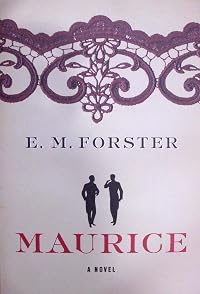



















Member Recommendations
Member Reviews
Although primarily known for his novels, EM Forster (1879 - 1970) wrote several short stories, nearly half of which were not published during his lifetime. This collection brings to light 14 such stories, spanning six decades. Among them are some gems that certainly deserve to be recognized as part of Forster’s literary portfolio, and others of value for what they reveal about the author’s psyche and sexuality.
The short stories in The Life to Come fall into two categories by subject and chronology. The first group consists of five stories written between 1903 and 1906. These predate Forster’s recognition as a novelist, and only one (Albergo Empedocle) was originally published. Although some of these stories are forgettable, show more Ansell stands out for its melancholy humor, as a tragic- comic exploration of the incompatibility of academic values with values of the world at large. This is a theme that Forster revisited in his later published work.
Most stories of the second group deal with an adult theme -- male homosexuality. They were written between 1922 and 1958, and thus largely post-date Forster’s most fertile period as a novelist. Forster wrote these stories for his own entertainment and catharsis; he had no intention of exposing himself to the public disapproval (and prosecution for homosexuality) that they could have elicited, had their publication even been possible. Although Forster privately referred to his writings of this genre as “indecent,” by contemporary standards, these stories are mild and euphemistic. They are also depressing in tone; their common theme is the secrecy and danger entailed by the expression of homosexuality in a repressive culture. Among them, a few stand out as particularly engaging. Arthur Snatchfold , The Obelisk , and Doctor Woolacott are as good as any short stories he ever wrote.
This collection also includes Three Courses and a Dessert, a sequence of stories in which each of four authors (Christopher Dilke, Forster, AE Coppard, and James Laver) build on the story of their predecessor. Forster fans will be delighted by his own contribution, as well as James Laver’s surprise ending.
This short story collection seems likely to appeal to readers of two overlapping categories: those who have come to love EM Forster’s novels and other writings, and those who want to understand the sensitive human being behind this literary figure's mild - mannered, public persona. Those who know Forster only from fine works such as Howard’s End, A Passage to India, and the veiled, autobiographical The Longest Journey will discover explanations for the dynamic tensions and psychological conflict of his published work. show less
The short stories in The Life to Come fall into two categories by subject and chronology. The first group consists of five stories written between 1903 and 1906. These predate Forster’s recognition as a novelist, and only one (Albergo Empedocle) was originally published. Although some of these stories are forgettable, show more Ansell stands out for its melancholy humor, as a tragic- comic exploration of the incompatibility of academic values with values of the world at large. This is a theme that Forster revisited in his later published work.
Most stories of the second group deal with an adult theme -- male homosexuality. They were written between 1922 and 1958, and thus largely post-date Forster’s most fertile period as a novelist. Forster wrote these stories for his own entertainment and catharsis; he had no intention of exposing himself to the public disapproval (and prosecution for homosexuality) that they could have elicited, had their publication even been possible. Although Forster privately referred to his writings of this genre as “indecent,” by contemporary standards, these stories are mild and euphemistic. They are also depressing in tone; their common theme is the secrecy and danger entailed by the expression of homosexuality in a repressive culture. Among them, a few stand out as particularly engaging. Arthur Snatchfold , The Obelisk , and Doctor Woolacott are as good as any short stories he ever wrote.
This collection also includes Three Courses and a Dessert, a sequence of stories in which each of four authors (Christopher Dilke, Forster, AE Coppard, and James Laver) build on the story of their predecessor. Forster fans will be delighted by his own contribution, as well as James Laver’s surprise ending.
This short story collection seems likely to appeal to readers of two overlapping categories: those who have come to love EM Forster’s novels and other writings, and those who want to understand the sensitive human being behind this literary figure's mild - mannered, public persona. Those who know Forster only from fine works such as Howard’s End, A Passage to India, and the veiled, autobiographical The Longest Journey will discover explanations for the dynamic tensions and psychological conflict of his published work. show less
The stories in this collection range from very good to brilliant and span the first six decades of the twentieth century. Only two have been published previous to this collection, "Alberto Empedocle" and "Three Courses and a Desert".. The rest of the stories are primarily ones with homosexuality as a theme and were thus not considered publishable in Forster's lifetime.
The short stories are not my favorite thing ever; their view on being gay is often very depressing. Poor Forster.
Ratings
Members
- Recently Added By
Lists

Pre-1969 LGBTQ Literature
184 works; 67 members
Author Information

189+ Works 57,090 Members
Edward Morgan Forster was born on January 1, 1879, in London, England. He never knew his father, who died when Forster was an infant. Forster graduated from King's College, Cambridge, with B.A. degrees in classics (1900) and history (1901), as well as an M.A. (1910). In the mid-1940s he returned to Cambridge as a professor, living quietly there show more until his death in 1970. Forster was named to the Order of Companions of Honor to the Queen in 1953. Forster's writing was extensively influenced by the traveling he did in the earlier part of his life. After graduating from Cambridge, he lived in both Greece and Italy, and used the latter as the setting for the novels Where Angels Fear to Tread (1905) and A Room with a View (1908). The Longest Journey was published in 1907. Howard's End was modeled on the house he lived in with his mother during his childhood. During World War I, he worked as a Red Cross Volunteer in Alexandria, aiding in the search for missing soldiers; he later wrote about these experiences in the nonfiction works Alexandria: A History and Guide and Pharos and Pharillon. His two journeys to India, in 1912 and 1922, resulted in A Passage to India (1924), which many consider to be Forster's best work; this title earned the James Tait Black Memorial Prize. Forster wrote only six novels, all prior to 1925 (although Maurice was not published until 1971, a year after Forster's death, probably because of its homosexual theme). For much of the rest of his life, he wrote literary criticism (Aspects of the Novel) and nonfiction, including biographies (Goldsworthy Lowes Dickinson), histories, political pieces, and radio broadcasts. Howard's End, A Room with a View, and A Passage to India have all been made into successful films. (Bowker Author Biography) show less
Some Editions
Series
Belongs to Publisher Series
Alianza Tres (21)
Common Knowledge
- Original publication date
- 1972
- Disambiguation notice
- 0140038523 1979 Penguin
0140433090 1987 Penguin Classics
0140180842 1989 Penguin
Classifications
Statistics
- Members
- 574
- Popularity
- 51,634
- Reviews
- 3
- Rating
- (3.99)
- Languages
- 6 — Dutch, English, German, Italian, Norwegian, Spanish
- Media
- Paper, Ebook
- ISBNs
- 17
- ASINs
- 5