On This Page
Description
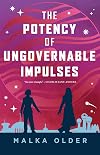
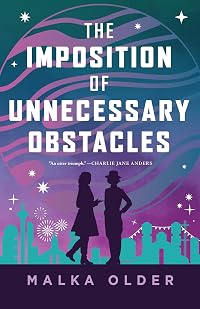
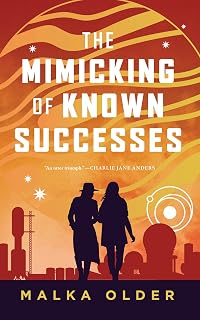
"A brand-new entry in the Hugo, Nebula, and Ignyte Award-nominated sapphic, cozy space-opera mystery series The Investigations of Mossa and Pleiti, which Charlie Jane Anders calls "an utter triumph." When a former classmate begs Pleiti for help on behalf of her cousin-who's up for a prestigious academic position at a rival Jovian university but has been accused of plagiarism on the eve of her defense-Pleiti agrees to investigate the matter. Even if she has to do it without Mossa, her partner show more in more ways than one. Even if she's still reeling from Mossa's sudden isolation and bewildering rejection. Yet what appears to be a case of an attempted reputational smearing devolves into something decidedly more dangerous-and possibly deadly. The Investigations of Mossa and Pleiti The Mimicking of Known Successes The Imposition of Unnecessary Obstacles The Potency of Ungovernable Impulses The Centenal Cycle Infomocracy Null States State Tectonics"-- show lessTags
Recommendations
















Member Reviews
This is the third in a sci-fi mystery/Sapphic romance series, set on Giant, the Jovian planet now occupied by the descendants of the ruined planet of Earth. I had not read the two previous books, but for the most part it did not present a problem.
The story begins when Valdegeld University Scholar Pleiti is approached by Petanj, a friend from her undergraduate days, to help her and her cousin Villette. Villette, a scholar at the rival college of Stortellen, is up for a donship because of her groundbreaking research on a small device to help breathe in their inhospitable environment without having to wear an atmoscarf. Someone has been anonymously slandering Villette, accusing her of plagiarism, and possibly posing a physical threat to show more her. Pleiti now has a reputation as an investigator because of her work with Mossa, an official Investigator who let Pleiti, her lover, help her in the past. Petanj hoped Pleiti would come to Stortellen with her and help find out what was going on.
Pleiti agreed, in part because for some reason Mossa was not communicating with her. So she made the two-day trip to Stortellen - “about as far away as it was possible to get on the network of geo-synchronized rings and platforms that formed humanity’s habitat on Giant.”
Soon after Pleiti arrived, the threats to Villette intensified. Pleiti sent missives to Mossa about the case hoping she would come help; Villette and possibly even Pleiti were in mortal danger.
This is a standard mystery on one level, but the scifi world-building makes it marvelously fun.
First there is the amusing fact of the sci-fi twist to a “closed-door” mystery. (This is one in which the possibility of suspects is limited by physical circumstances.). In this case, it almost has to be someone on the Stortellen platform rather than, say, from other outposts in and around Giant.
Second, the typical rivalries among academics is given the sci-fi treatment with an underlying plot strand about the division in academics between “Classicists” (who study old Earth in the hope of one day returning there) and “Modernists” who focus on life on Giant. There is an interesting antagonism between the two approaches, with Classicists considering Modernists lightweight - “studying what was right there in front of us . . . could hardly be the same as teasing out numbers and relationships from sources writing about an obsolete world…. while Modernists reviled Classicists for wanting to cosplay Earth.
Third, one must give plaudits to Older’s integration into the story of the evolution of language and culture that would have certainly taken place on a new world comprised of an amalgam of people. She never defines new words, but their meanings are clear. As an example: “Villette got off to the lab early, of course, sarariman that she is.” Then there is Pleiti asking “Dafuq?” in a context making clear this would mean, to us, “What the fuck?” Sometimes rather than neologisms, Older throws in words from other languages: “Villette gestured around at the walls and the floor, apparently too verklempt to speak.” And sometimes the words are the same, but the meaning has evolved. For example, because humans destroyed the planet of Earth, calling someone a “human” is to insult that person.
And the story is even amusing about her choice of all the things that stay the same: the sports contests between universities, the pressures on scholars to publish, the social gatherings that highlight fashion and food, and most of all: the awkwardness of relationships, especially being afraid to say how you really feel.
Mystery aficionados may notice similarities (a homage perhaps?) to the novel “Gaudy Night” by Dorothy Sayers (1935). Like that novel, in this book we have a college setting, “poison-pen” messages accompanied by graffiti, vandalism, and personal threats, and a mystery writer (Harriet Vane, whose character in some ways echoes that of Pleiti) calling in an investigator (Lord Peter Wimsey) for help with whom she has a complicated personal relationship.
Evaluation: While the story wasn’t earth-shaking (so to speak) it was very clever and entertaining, and I look forward to reading any new books in the series. show less
The story begins when Valdegeld University Scholar Pleiti is approached by Petanj, a friend from her undergraduate days, to help her and her cousin Villette. Villette, a scholar at the rival college of Stortellen, is up for a donship because of her groundbreaking research on a small device to help breathe in their inhospitable environment without having to wear an atmoscarf. Someone has been anonymously slandering Villette, accusing her of plagiarism, and possibly posing a physical threat to show more her. Pleiti now has a reputation as an investigator because of her work with Mossa, an official Investigator who let Pleiti, her lover, help her in the past. Petanj hoped Pleiti would come to Stortellen with her and help find out what was going on.
Pleiti agreed, in part because for some reason Mossa was not communicating with her. So she made the two-day trip to Stortellen - “about as far away as it was possible to get on the network of geo-synchronized rings and platforms that formed humanity’s habitat on Giant.”
Soon after Pleiti arrived, the threats to Villette intensified. Pleiti sent missives to Mossa about the case hoping she would come help; Villette and possibly even Pleiti were in mortal danger.
This is a standard mystery on one level, but the scifi world-building makes it marvelously fun.
First there is the amusing fact of the sci-fi twist to a “closed-door” mystery. (This is one in which the possibility of suspects is limited by physical circumstances.). In this case, it almost has to be someone on the Stortellen platform rather than, say, from other outposts in and around Giant.
Second, the typical rivalries among academics is given the sci-fi treatment with an underlying plot strand about the division in academics between “Classicists” (who study old Earth in the hope of one day returning there) and “Modernists” who focus on life on Giant. There is an interesting antagonism between the two approaches, with Classicists considering Modernists lightweight - “studying what was right there in front of us . . . could hardly be the same as teasing out numbers and relationships from sources writing about an obsolete world…. while Modernists reviled Classicists for wanting to cosplay Earth.
Third, one must give plaudits to Older’s integration into the story of the evolution of language and culture that would have certainly taken place on a new world comprised of an amalgam of people. She never defines new words, but their meanings are clear. As an example: “Villette got off to the lab early, of course, sarariman that she is.” Then there is Pleiti asking “Dafuq?” in a context making clear this would mean, to us, “What the fuck?” Sometimes rather than neologisms, Older throws in words from other languages: “Villette gestured around at the walls and the floor, apparently too verklempt to speak.” And sometimes the words are the same, but the meaning has evolved. For example, because humans destroyed the planet of Earth, calling someone a “human” is to insult that person.
And the story is even amusing about her choice of all the things that stay the same: the sports contests between universities, the pressures on scholars to publish, the social gatherings that highlight fashion and food, and most of all: the awkwardness of relationships, especially being afraid to say how you really feel.
Mystery aficionados may notice similarities (a homage perhaps?) to the novel “Gaudy Night” by Dorothy Sayers (1935). Like that novel, in this book we have a college setting, “poison-pen” messages accompanied by graffiti, vandalism, and personal threats, and a mystery writer (Harriet Vane, whose character in some ways echoes that of Pleiti) calling in an investigator (Lord Peter Wimsey) for help with whom she has a complicated personal relationship.
Evaluation: While the story wasn’t earth-shaking (so to speak) it was very clever and entertaining, and I look forward to reading any new books in the series. show less
I think this book suffered from my incredibly high expectations for it. I enjoyed book one, LOVED book two, and I think I was hoping that this third book would follow along on that trend. However, I figured out early in the first half of the book that what I like best about the series is Mossa and Pleiti together. Since they spend the first half of the book apart, with Pleiti mooning over Mossa when she's not working on the case (and even sometimes when she is), I had a very good opportunity to learn what I personally like best about the series. (I've seen other reviews where this alone-time is seen as a good thing for Pleiti's growth; perhaps it is, but it wasn't what I personally was here for.)
The mystery itself was enjoyable, though show more as with many good Holmesian reimaginings, the reader doesn't have enough of the facts to properly figure out who the culprit is and so my guesses about whodunnit were way off base.
I still enjoyed the setting, characters and world building, and still plan to pick up the next of the books whenever it's written and published. The mish-mash of languages used in the book still worked for me to show that this is not just an English-speaking country evacuated to Jupiter, and it works well to make this a separate culture. I did have to look up more words than normal at first, but later in book I felt that the meaning of the non-English words were more obvious from the context of the rest of the text. All told, I do think this is a good installment to the series, though I'm a little curious / hesitant about the almost (but not quite) 4th-wall-breaking of the very end of the book. Still, I'll happily read more in the series to find out where Older plans to take her characters! show less
The mystery itself was enjoyable, though show more as with many good Holmesian reimaginings, the reader doesn't have enough of the facts to properly figure out who the culprit is and so my guesses about whodunnit were way off base.
I still enjoyed the setting, characters and world building, and still plan to pick up the next of the books whenever it's written and published. The mish-mash of languages used in the book still worked for me to show that this is not just an English-speaking country evacuated to Jupiter, and it works well to make this a separate culture. I did have to look up more words than normal at first, but later in book I felt that the meaning of the non-English words were more obvious from the context of the rest of the text. All told, I do think this is a good installment to the series, though I'm a little curious / hesitant about the almost (but not quite) 4th-wall-breaking of the very end of the book. Still, I'll happily read more in the series to find out where Older plans to take her characters! show less
Very much in keeping with the rest of the series, but more Pleiti forward. The quirky slang continues. This episode is even more steeped in academia. And Mossa is in the mid of personal turmoil and depression which reads very authentically to me. I do hate it when people in power are horrible just because they can be, and that happens. But I also love the romance of being able to follow ideas and dreams in research. Hoping that some of the new characters will be around again in future, and glad that Pleiti and Mossa are having some hard conversations that bode well for the future of their relationship.
Advanced reader's copy provided by Edelweiss.
Advanced reader's copy provided by Edelweiss.
With this third book dealing with the relationship and adventures of Inspector Mossa and Academician Pleiti, I have a certain sense of diminishing returns setting in, or perhaps I'm just not in the head space to enjoy this book as much as I enjoyed the first two. Still, Older does continue to develop the world these stories are set in, and the book does end with the sense that our dynamic duo are ready for some serious life changs.
Pleiti, asked to help a former classmate and her cousin at a university on another platform, asks Mossa, who hasn't been around much recently, to join them. Mossa, in a depressive withdrawal, declines. Pleiti finds the situation worse than expected and again tries to bring Mossa in. Academic politics are ugly, and interpersonal issues are difficult in this book.
Ratings
Members
- Recently Added By
Lists

2026 Hugo Awards -- Eligible Works -- Novellas
8 works; 2 members
Author Information

28+ Works 2,798 Members
Some Editions
Awards and Honors
Notable Lists
Series

Common Knowledge
- Canonical title
- The Potency of Ungovernable Impulses
- Original publication date
- 2025-06-10
- People/Characters
- Pleiti Weihal; Mossa; Petanj; Villette; Wojo K'tuvi; Maki Benoz (show all 13); Hoghly Katak (Vao's husband, Villette's coauther); Vao (Hoghly's wife); Kenore; Evna Pima; Grelle Vertri; Haxi; Starshka Usuf
- Important places
- Giant (Jupiter); Io (moon of Jupiter); Valdegeld, Io; Stortellen, Io
- Epigraph
- Don't be a comemierda.
- Dedication
- For all the good academics
- First words
- There were not so many places to lurk in the scholars' residence on Thanma Street. (Prologue)
A storm was writhing over Valdegeld, its tendrils churning Giant's ever present fog and pressing sleet and freezing rain through the atmoshield and onto the august buildings of Valdegeld University and auxiliaries, including ... (show all)my less august - but evocative and comfortable - lodgings. - Last words
- (Click to show. Warning: May contain spoilers.)"Not a bad thought at all."
- Publisher's editor
- Brent Lambert
- Blurbers
- Anders, Charlie Jane; Marske, Freya; Wilde, Fran; Emrys, Ruthanna
Classifications
Statistics
- Members
- 151
- Popularity
- 217,405
- Reviews
- 5
- Rating
- (3.85)
- Languages
- English
- Media
- Paper, Audiobook, Ebook
- ISBNs
- 4
- ASINs
- 2