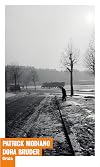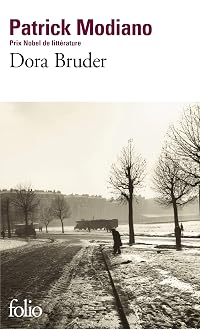
Dora Bruder
by Patrick Modiano
On This Page
Description
2014 Winner of the Nobel Prize in Literature Patrick Modiano opens Dora Bruder by telling how in 1988 he stumbled across an ad in the personal columns of the New Year's Eve 1941 edition of Paris Soir. Placed by the parents of a 15-year-old Jewish girl, Dora Bruder, who had run away from her Catholic boarding school, the ad sets Modiano off on a quest to find out everything he can about Dora and why, at the height of German reprisals, she ran away on a bitterly cold day from the people hiding show more her. He finds only one other official mention of her name on a list of Jews deported from Paris to Auschwitz in September 1942. With no knowledge of Dora Bruder aside from these two records, Modiano continues to dig for fragments from Dora's past. What little he discovers in official records and through remaining family members, becomes a meditation on the immense losses of the peroid-lost people, lost stories, and lost history. Modiano delivers a moving account of the ten-year investigation that took him back to the sights and sounds of Paris under the Nazi Occupation and the paranoia of the Pétain regime as he tries to find connections to Dora. In his efforts to exhume her from the past, Modiano realizes that he must come to terms with the specters of his own troubled adolescence. The result, a montage of creative and historical material, is Modiano's personal rumination on loss, both memoir and memorial. show lessTags
Recommendations











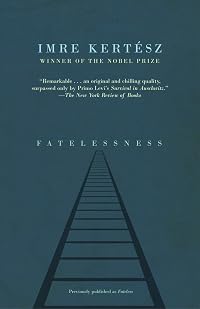
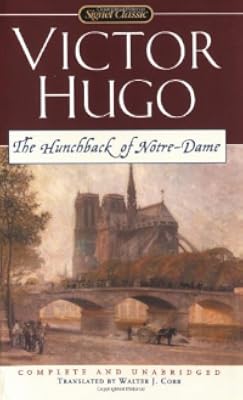
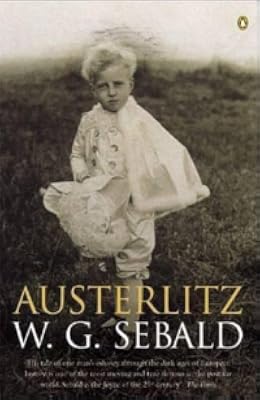

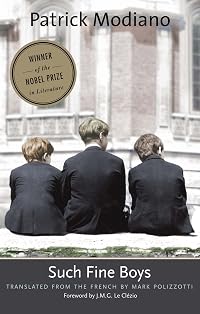


Member Recommendations
Member Reviews
In Dora Bruder Nobel Prize winner Patrick Modiano uses the few surviving traces of a single lost life to tell the story of Paris during the German Occupation.
Little can be known about the real Dora Bruder, except that she was not much like Anne Frank. A rebellious teen from a poor Jewish refugee family, Dora inexplicably ran away from the convent school that could have been her shelter until the end of the war. She was found and returned, then she ran away again. The last mark of her existence was a notation on a list of Jews deported to Auschwitz in September, 1942.
Modiano, who was born in 1945, first learns about Dora through a brief "missing" notice in a wartime newspaper. He searches for the lost girl on the streets of modern-day show more Paris, and feels her presence still, despite France's efforts to forget about its shameful collaboration with the Nazis. Some of the streets and buildings Dora would have known still stand and some have been torn down or renamed. "They have obliterated everything in order to build a sort of Swiss village in order that nobody, ever again, would question [Paris's] neutrality." (p. 113).
This is a very sad, yet beautifully written book. I recommend it. show less
Little can be known about the real Dora Bruder, except that she was not much like Anne Frank. A rebellious teen from a poor Jewish refugee family, Dora inexplicably ran away from the convent school that could have been her shelter until the end of the war. She was found and returned, then she ran away again. The last mark of her existence was a notation on a list of Jews deported to Auschwitz in September, 1942.
Modiano, who was born in 1945, first learns about Dora through a brief "missing" notice in a wartime newspaper. He searches for the lost girl on the streets of modern-day show more Paris, and feels her presence still, despite France's efforts to forget about its shameful collaboration with the Nazis. Some of the streets and buildings Dora would have known still stand and some have been torn down or renamed. "They have obliterated everything in order to build a sort of Swiss village in order that nobody, ever again, would question [Paris's] neutrality." (p. 113).
This is a very sad, yet beautifully written book. I recommend it. show less
It was not until 1995 that France finally accepted responsibility for their treatment of Jews during the years of Nazi occupation. Patrick Modiano’s Search Warrant - Dora Bruder is a book of meta fiction of novella length, in which he once again picks at the sore that has troubled French consciences since 1945. Historical but not hysterical Modiano takes his readers on a kind of mystery tour, but one where the final destination soon becomes all too apparent - Auschwitz and the gas chambers.
In 1988 the author is reading a 1941 edition of the newspaper Paris Soir and is struck by a small notice that appeals for information concerning Dora Bruder a young girl of 15 years, who is described as missing. Modiano has noticed that the address show more of Mr and Mrs Bruder is given as 41 Boulevard Ornano, Paris; an area of the city that he knows well: his mother took him to the flea markets there in the 1950’s when he was a child, in 1958 he remembers the area being deserted when a demonstration in connection with the Algerian war had effectively sealed it off and during the years 1965 to 1968 he had a girlfriend there. Modiano is writing his book in 1996 and since reading the missing persons notice in 1988 he has been trying to find out as much as he can about Dora Bruder; we learn that painstaking research is something that Modiano enjoys doing, he has the necessary temperament and aptitude for this kind of work; he tells us:
“It took me four years to discover her exact date of birth: 25 February 1926. and a further two years to find out her place of birth: Paris 12th arrondissement. But I am a patient man. I can wait for hours in the rain.”
Modiano’s research is not only through the scarce paper work, it is also among people who might have known Dora or her family and more significantly for this novel it is about an area of Paris: a neighbourhood. He revisits Boulevard Ornano, makes enquiries about buildings that would have been familiar to Dora as a child and young adult, he tries to build up a picture using his information and his own life experiences and the novel becomes a sort of palimpsest of a Paris neighbourhood, where if one looks hard enough one can almost see features from the past, a palimpsest of his connections with the city and a palimpsest of issues facing Jewish people. It is no surprise to discover that the author is Jewish and that his own father had a lucky escape when he was picked up by the Nazis in 1942.
Modiano succeeds in painting a picture of the short, tragic life of Dora, he can fill in the gaps of the official records, he is able to portray the desperate situation for Jewish people caught in a net that tightened like a noose during the period 1941 to 1943 and without ever having to state the obvious he is able to show the shame of a city that was only too willing to hold the rope. He reflects on his own life; he was born in 1945 and how much safer it was for him growing up in the 1960’s, but the echoes from the past still resonate through the city, they still affect so many lives and Modiano thinks of some of the writers who but for the war might have been his friends. He has an idea of how the past shapes the future and how collectively a group of people can alter the very fabric of their town, the buildings or its culture. It is the echoes from the past that Modiano’s keen senses pick up. I get the feeling he loves the city of Paris, but he and the city are haunted by past events: In 1966 he remembers walking past the Tourelles barracks, where those people who had fallen foul of the nazi laws were taken in the first instance and still affixed to the old building was a sign: MILITARY ZONE, FILMING OR PHOTOGRAPHY PROHIBITED and he says:
“I told myself that nobody remembers anything anymore. A no-man’s-land lay beyond the wall, a zone of emptiness and oblivion. Unlike the convent in the Rue de Picpus, the twin blocks of Tourelles barracks had not been pulled down, but they might as well have been. And yet, from time to time, beneath this thick layer of amnesia, one can certainly sense something, an echo, distant, muted, but of what, precisely, it is impossible to say. Like finding oneself on the edge of a magnetic field and having no pendulum with which to pick up it’s radiations. The sign had been put up out of suspicion and a guilty conscience.”
The use of historical documents throughout the book gives it an authenticity that grounds Modiano’s own thoughts and conjectures about the fate of Jewish people in occupied Paris. None is more painful to read than a letter from a Jewish man, one Robert Tartakovsky who had been picked to go on a transport train to the German camps. Modiano says that he found the letter two years ago on one of the bookstalls along the Seine: today, fifty years late, on Wednesday 29 January 1997, I reproduce his letter.
This is a quiet, softly spoken book that trades on atmosphere and echoes from the past, but the underlying horror of those years is born out by the extracts from documents and by Modiano’s claustrophobic description of desperation for Jews caught up in the Nazi machine. I rate this as 4.5 stars.
Footnote: I read this last week on the beach when I was on holiday in Collioure a small French town on the Mediterranean coast not far from the Spanish border. On page 91 of my English translation I read:
“In July 1942, on her way back from the beach at Collioure, in the Free Zone, his friend Ruth Kronenberg was arrested. She was deported in the transport of 11 September, a week before Dora Bruder “
Those echoes from the past. show less
In 1988 the author is reading a 1941 edition of the newspaper Paris Soir and is struck by a small notice that appeals for information concerning Dora Bruder a young girl of 15 years, who is described as missing. Modiano has noticed that the address show more of Mr and Mrs Bruder is given as 41 Boulevard Ornano, Paris; an area of the city that he knows well: his mother took him to the flea markets there in the 1950’s when he was a child, in 1958 he remembers the area being deserted when a demonstration in connection with the Algerian war had effectively sealed it off and during the years 1965 to 1968 he had a girlfriend there. Modiano is writing his book in 1996 and since reading the missing persons notice in 1988 he has been trying to find out as much as he can about Dora Bruder; we learn that painstaking research is something that Modiano enjoys doing, he has the necessary temperament and aptitude for this kind of work; he tells us:
“It took me four years to discover her exact date of birth: 25 February 1926. and a further two years to find out her place of birth: Paris 12th arrondissement. But I am a patient man. I can wait for hours in the rain.”
Modiano’s research is not only through the scarce paper work, it is also among people who might have known Dora or her family and more significantly for this novel it is about an area of Paris: a neighbourhood. He revisits Boulevard Ornano, makes enquiries about buildings that would have been familiar to Dora as a child and young adult, he tries to build up a picture using his information and his own life experiences and the novel becomes a sort of palimpsest of a Paris neighbourhood, where if one looks hard enough one can almost see features from the past, a palimpsest of his connections with the city and a palimpsest of issues facing Jewish people. It is no surprise to discover that the author is Jewish and that his own father had a lucky escape when he was picked up by the Nazis in 1942.
Modiano succeeds in painting a picture of the short, tragic life of Dora, he can fill in the gaps of the official records, he is able to portray the desperate situation for Jewish people caught in a net that tightened like a noose during the period 1941 to 1943 and without ever having to state the obvious he is able to show the shame of a city that was only too willing to hold the rope. He reflects on his own life; he was born in 1945 and how much safer it was for him growing up in the 1960’s, but the echoes from the past still resonate through the city, they still affect so many lives and Modiano thinks of some of the writers who but for the war might have been his friends. He has an idea of how the past shapes the future and how collectively a group of people can alter the very fabric of their town, the buildings or its culture. It is the echoes from the past that Modiano’s keen senses pick up. I get the feeling he loves the city of Paris, but he and the city are haunted by past events: In 1966 he remembers walking past the Tourelles barracks, where those people who had fallen foul of the nazi laws were taken in the first instance and still affixed to the old building was a sign: MILITARY ZONE, FILMING OR PHOTOGRAPHY PROHIBITED and he says:
“I told myself that nobody remembers anything anymore. A no-man’s-land lay beyond the wall, a zone of emptiness and oblivion. Unlike the convent in the Rue de Picpus, the twin blocks of Tourelles barracks had not been pulled down, but they might as well have been. And yet, from time to time, beneath this thick layer of amnesia, one can certainly sense something, an echo, distant, muted, but of what, precisely, it is impossible to say. Like finding oneself on the edge of a magnetic field and having no pendulum with which to pick up it’s radiations. The sign had been put up out of suspicion and a guilty conscience.”
The use of historical documents throughout the book gives it an authenticity that grounds Modiano’s own thoughts and conjectures about the fate of Jewish people in occupied Paris. None is more painful to read than a letter from a Jewish man, one Robert Tartakovsky who had been picked to go on a transport train to the German camps. Modiano says that he found the letter two years ago on one of the bookstalls along the Seine: today, fifty years late, on Wednesday 29 January 1997, I reproduce his letter.
This is a quiet, softly spoken book that trades on atmosphere and echoes from the past, but the underlying horror of those years is born out by the extracts from documents and by Modiano’s claustrophobic description of desperation for Jews caught up in the Nazi machine. I rate this as 4.5 stars.
Footnote: I read this last week on the beach when I was on holiday in Collioure a small French town on the Mediterranean coast not far from the Spanish border. On page 91 of my English translation I read:
“In July 1942, on her way back from the beach at Collioure, in the Free Zone, his friend Ruth Kronenberg was arrested. She was deported in the transport of 11 September, a week before Dora Bruder “
Those echoes from the past. show less
Patrick Modiano: Dora Bruder
In 1988, Modiano stumbled across an ad in the New Year's Eve 1941 edition of Paris Soir: "Missing, a young girl, Dora Bruder, age 15, height I m 55, oral-shaped face, gray-brown eyes, gray sports jacket, maroon pullover, navy blue skirt and hat, brown gym shoes." Another official mention, nine months later, in September, 1942 marks the end of Dora's life: her name on a list of Jews deported from Paris to Auschwitz. Modiano was sized with this young girl , unknown to him and to the world. He undertook a ten-year investigation to reconstruct Dora's life through official records, which are scanty, and reminiscences of one family member.
This is book defies categorization. It is not a novel, nor strictly show more non-fiction, nor strictly a biography, nor strictly history. It might be called 'speculative biography'. It situates a person, a life, within a known historical period (the persecution of Jews in Paris under the German occupation in the 1941-42), and uses knowledge of that time to speculate on Dora's actions and motivations as the darkness closed inexorably around her. As unusual as it is, this is a beautiful book. In teasing out as much as he can of Dora's life through investigation and imagination, Modiano makes this young French girl real, and gives recognition of her life beyond a notation on a list, even though the paucity of detail means that we see her through a glass darkly. Modiano makes her an individual among the nameless millions who went to their deaths and are now unheralded, unknown, completely forgotten finally with the deaths of those who may have remembered them. Many did not have even that short, tenuous afterlife and instantly became as if they had never been.
This is a book about identity and memory, about one life exhumed that stands for the millions now unnamed and unknown. It is about the impermanence of everything. It is about the oblivion of individuals, not just in the natural order of things through time, but also because of deliberate efforts, such as the purging and destruction of records to protect the perpetrators. It takes an deliberate, difficult, opposite effort to resurrect a life with all of its unknowns. As Modiano says, " It takes time for what has been erased to resurface. Traces survive in registers, and nobody knows where these registers are hidden, and who has custody of them, and whether or not these custodians are willing to let you see them. Or perhaps they have quite simply forgotten that these registers exist." Seeking that information can also be deliberately blocked by, "those sentinels of oblivion whose role is to guard a shameful secret and deny access to anybody seeking to uncover the least trace of a person's existence."
Houses, hotels, places of work, streets can all situate a time, perhaps help to imagine the life of a person who lived and worked there. But again, nothing is fixed. Buildings are "razed to the ground", new edifices thrown up, roads reconfigured and redirected, so that even the physical environment is gone. The present bears no relation to the past, reflecting the fate of the persons: "They [Dora's parents] are the sort of people who leave few traces. Virtually anonymous. Inseparable from those Paris streets, those suburban landscapes where, by chance, I discovered that they had lived. Often, what I know about them amounts to no more than a simple address. And such topographical precision contrasts with what we shall never know about their life--this blank, this mute block of the unknown." It is this "mute block of the unknown" that Modiano tries to pierce with respect to Dora.
This is also a story about the cumulation of circumstances that channel a life, and in Dora's case, quite probably lead to her death. Dora's father did not include her in the mandatory census of Jewish persons living in France, so she slips below official notice. Dora was placed in a Christian boarding school. Could she have remained hidden there through the war? But we don't know her circumstances: how much was known about her, how did others treat her, how did she react, what did she feel? What we do know is that she was described as independent and head-strong, and she ran away from the school in December, 1941. Her father waited thirteen days before going to the police who advised him to place the notice in the paper. And now he had drawn attention to the fact of Dora's existence:
"A father tries to find his daughter, reports her disappearance at a police station, and a wanted notice is inserted in an evening newspaper. But the father himself is 'wanted'. Parents lose all trace of their daughter and, one 19 March, one of them [Dora's father] disappears in his turn, as if the winter that year was cutting people off from one another, muddying and wiping out their tracks to the point where their existence is in doubt. And there is no redress. The very people whose job it is to search for you are themselves complying dossiers, the better to ensure that, once found, you will disappear again--this time for good."
A sixteen year old girl, beset by who knows what pressures, and hopes, and fears, and desires, and dreams runs away. Not an unheard of occurrence, but for Dora, "everything in the city of December, 1941, its curfews, its soldiers, its police, was hostile, intent on her destruction. At sixteen years old, without knowing why, she had the entire world against her."
A police report from April, 1942 notes that Dora had returned, but we know nothing of the circumstances; perhaps the arrest of her father led to her go home to be with her mother? Modiano could find nothing on where Dora had been, what she had done for the three and half months she had disappeared; but she had survived in some underground world below official notice; could she have continued to do so throughout the war? The next relevant document confirms that on June 15, the police had returned Dora to her home. We don't know how long she had been away this second time, nor how the police had become involved; was she arrested and if so, for what? We don't know what happened after the 15th, but on the 19th of June, Dora was listed with other young women sent to a prison called Tourelles which was a staging area for transfer to the internment camp at Drancy, itself a staging area for transportation to Auschwitz. Dora was sent to Drancy where she reunited with her father. On September 18, father and daughter departed Drancy with thousands of others on a convoy of trains to Auschwitz. Five months after her husband and daughter, Dora's mother was put on a convoy from Drancy to Auschwitz.
Without trying to delve into their lives, in places Modiano also lists the names of other young women arrested and transferred with Dora, as if to pay respect to them, to recognize their existence, their humanity, to give them some memory through the mention of their names in a book. His ten year search also made Modiano reflect on his own youth in Paris, his relationship with his father, and the lives of so many crushed by the war. As he says in an intriguing statement: "So many friends whom I never knew disappeared in 1945, the year I was born."
Modiano ends his book with this:
"I shall never know how she spent her days, where she hid, in who's company she passed the winter months of her first escape, or the few weeks of spring when she escaped for the second time. That is her secret. A poor and precious secret that not even the executioners, the decrees, the occupying authorities, the Depot, the barracks, the camps, History, time--everything that defiles and destroys you--have been able to take away from her."
I disagree with Modiano. I know that he was trying to give Dora something unique and individual that defined her, something beyond the reach of those who defile and destroy, but when they took her life, the defilers and destroyers took it all. Except for Modiano's book, they would have taken the memory of her existence too, as they did for millions.
---------------------------
I think Jenny Erpenbeck captured this sense in her book, Visitation. In this novel, Doris is a 12 year old Jewish girl living in the Lodz ghetto. We have seen her earlier in the house by the lake that is at the centre of the book, but now she is hiding in a wall after the area of the ghetto has been cleared of all inhabitants. She is discovered:
"Of the one hundred and twenty people in the boxcar, approximately thirty suffocate during the two-hour trip. As a motherless child, she is considered an inconvenience that might interfere with things running smoothly, and so the moment they arrive she is herded off to the side along with a few old people who cannot walk any longer and the ones who went mad during the trip, she is ushered past a pile of clothing as high as a mountain--like the Nackliger, she can't help thinking and remembers her own smile that she smiled that day when the gardner told her the funny name of the underwater shoal. For two minutes, a pale, partly cloudy sky arches above her just the way it would look down by the lake right before it rained, for two minutes she inhales the scent of pine trees she knows so well, but she cannot see the pine trees themselves because of the tall fence. Has she really come home? For two minutes she can feel the sand beneath her shoes along with a few pieces of flint and pebbles made of quartz or granite; then she takes off her shoes forever and goes to stand on the board to be shot.
Nothing is nicer than diving with your eyes open. Diving down as far as the shimmering legs of your mother and father who have just come back from swimming and now are wading to shore through the shallow water. Nothing is more fun than to tickle them and to hear, muffled by the water, how they shriek because they know it will make their child happy.
For three years the girl took piano lessons, but now, while her dead body slides down into the pit, the word piano is taken back from human beings, now the backflip on the high bar that the girl could perform better than her schoolmates is taken back, along with all the motions a swimmer makes, the gesture of seizing hold of a crab is taken back, as well as all the basic knots to be learned for sailing, all these things are taken back into uninventedness, and finally, last of all, the name of the girl herself is taken back, the name no one will ever again call her by: Doris." show less
In 1988, Modiano stumbled across an ad in the New Year's Eve 1941 edition of Paris Soir: "Missing, a young girl, Dora Bruder, age 15, height I m 55, oral-shaped face, gray-brown eyes, gray sports jacket, maroon pullover, navy blue skirt and hat, brown gym shoes." Another official mention, nine months later, in September, 1942 marks the end of Dora's life: her name on a list of Jews deported from Paris to Auschwitz. Modiano was sized with this young girl , unknown to him and to the world. He undertook a ten-year investigation to reconstruct Dora's life through official records, which are scanty, and reminiscences of one family member.
This is book defies categorization. It is not a novel, nor strictly show more non-fiction, nor strictly a biography, nor strictly history. It might be called 'speculative biography'. It situates a person, a life, within a known historical period (the persecution of Jews in Paris under the German occupation in the 1941-42), and uses knowledge of that time to speculate on Dora's actions and motivations as the darkness closed inexorably around her. As unusual as it is, this is a beautiful book. In teasing out as much as he can of Dora's life through investigation and imagination, Modiano makes this young French girl real, and gives recognition of her life beyond a notation on a list, even though the paucity of detail means that we see her through a glass darkly. Modiano makes her an individual among the nameless millions who went to their deaths and are now unheralded, unknown, completely forgotten finally with the deaths of those who may have remembered them. Many did not have even that short, tenuous afterlife and instantly became as if they had never been.
This is a book about identity and memory, about one life exhumed that stands for the millions now unnamed and unknown. It is about the impermanence of everything. It is about the oblivion of individuals, not just in the natural order of things through time, but also because of deliberate efforts, such as the purging and destruction of records to protect the perpetrators. It takes an deliberate, difficult, opposite effort to resurrect a life with all of its unknowns. As Modiano says, " It takes time for what has been erased to resurface. Traces survive in registers, and nobody knows where these registers are hidden, and who has custody of them, and whether or not these custodians are willing to let you see them. Or perhaps they have quite simply forgotten that these registers exist." Seeking that information can also be deliberately blocked by, "those sentinels of oblivion whose role is to guard a shameful secret and deny access to anybody seeking to uncover the least trace of a person's existence."
Houses, hotels, places of work, streets can all situate a time, perhaps help to imagine the life of a person who lived and worked there. But again, nothing is fixed. Buildings are "razed to the ground", new edifices thrown up, roads reconfigured and redirected, so that even the physical environment is gone. The present bears no relation to the past, reflecting the fate of the persons: "They [Dora's parents] are the sort of people who leave few traces. Virtually anonymous. Inseparable from those Paris streets, those suburban landscapes where, by chance, I discovered that they had lived. Often, what I know about them amounts to no more than a simple address. And such topographical precision contrasts with what we shall never know about their life--this blank, this mute block of the unknown." It is this "mute block of the unknown" that Modiano tries to pierce with respect to Dora.
This is also a story about the cumulation of circumstances that channel a life, and in Dora's case, quite probably lead to her death. Dora's father did not include her in the mandatory census of Jewish persons living in France, so she slips below official notice. Dora was placed in a Christian boarding school. Could she have remained hidden there through the war? But we don't know her circumstances: how much was known about her, how did others treat her, how did she react, what did she feel? What we do know is that she was described as independent and head-strong, and she ran away from the school in December, 1941. Her father waited thirteen days before going to the police who advised him to place the notice in the paper. And now he had drawn attention to the fact of Dora's existence:
"A father tries to find his daughter, reports her disappearance at a police station, and a wanted notice is inserted in an evening newspaper. But the father himself is 'wanted'. Parents lose all trace of their daughter and, one 19 March, one of them [Dora's father] disappears in his turn, as if the winter that year was cutting people off from one another, muddying and wiping out their tracks to the point where their existence is in doubt. And there is no redress. The very people whose job it is to search for you are themselves complying dossiers, the better to ensure that, once found, you will disappear again--this time for good."
A sixteen year old girl, beset by who knows what pressures, and hopes, and fears, and desires, and dreams runs away. Not an unheard of occurrence, but for Dora, "everything in the city of December, 1941, its curfews, its soldiers, its police, was hostile, intent on her destruction. At sixteen years old, without knowing why, she had the entire world against her."
A police report from April, 1942 notes that Dora had returned, but we know nothing of the circumstances; perhaps the arrest of her father led to her go home to be with her mother? Modiano could find nothing on where Dora had been, what she had done for the three and half months she had disappeared; but she had survived in some underground world below official notice; could she have continued to do so throughout the war? The next relevant document confirms that on June 15, the police had returned Dora to her home. We don't know how long she had been away this second time, nor how the police had become involved; was she arrested and if so, for what? We don't know what happened after the 15th, but on the 19th of June, Dora was listed with other young women sent to a prison called Tourelles which was a staging area for transfer to the internment camp at Drancy, itself a staging area for transportation to Auschwitz. Dora was sent to Drancy where she reunited with her father. On September 18, father and daughter departed Drancy with thousands of others on a convoy of trains to Auschwitz. Five months after her husband and daughter, Dora's mother was put on a convoy from Drancy to Auschwitz.
Without trying to delve into their lives, in places Modiano also lists the names of other young women arrested and transferred with Dora, as if to pay respect to them, to recognize their existence, their humanity, to give them some memory through the mention of their names in a book. His ten year search also made Modiano reflect on his own youth in Paris, his relationship with his father, and the lives of so many crushed by the war. As he says in an intriguing statement: "So many friends whom I never knew disappeared in 1945, the year I was born."
Modiano ends his book with this:
"I shall never know how she spent her days, where she hid, in who's company she passed the winter months of her first escape, or the few weeks of spring when she escaped for the second time. That is her secret. A poor and precious secret that not even the executioners, the decrees, the occupying authorities, the Depot, the barracks, the camps, History, time--everything that defiles and destroys you--have been able to take away from her."
I disagree with Modiano. I know that he was trying to give Dora something unique and individual that defined her, something beyond the reach of those who defile and destroy, but when they took her life, the defilers and destroyers took it all. Except for Modiano's book, they would have taken the memory of her existence too, as they did for millions.
---------------------------
I think Jenny Erpenbeck captured this sense in her book, Visitation. In this novel, Doris is a 12 year old Jewish girl living in the Lodz ghetto. We have seen her earlier in the house by the lake that is at the centre of the book, but now she is hiding in a wall after the area of the ghetto has been cleared of all inhabitants. She is discovered:
"Of the one hundred and twenty people in the boxcar, approximately thirty suffocate during the two-hour trip. As a motherless child, she is considered an inconvenience that might interfere with things running smoothly, and so the moment they arrive she is herded off to the side along with a few old people who cannot walk any longer and the ones who went mad during the trip, she is ushered past a pile of clothing as high as a mountain--like the Nackliger, she can't help thinking and remembers her own smile that she smiled that day when the gardner told her the funny name of the underwater shoal. For two minutes, a pale, partly cloudy sky arches above her just the way it would look down by the lake right before it rained, for two minutes she inhales the scent of pine trees she knows so well, but she cannot see the pine trees themselves because of the tall fence. Has she really come home? For two minutes she can feel the sand beneath her shoes along with a few pieces of flint and pebbles made of quartz or granite; then she takes off her shoes forever and goes to stand on the board to be shot.
Nothing is nicer than diving with your eyes open. Diving down as far as the shimmering legs of your mother and father who have just come back from swimming and now are wading to shore through the shallow water. Nothing is more fun than to tickle them and to hear, muffled by the water, how they shriek because they know it will make their child happy.
For three years the girl took piano lessons, but now, while her dead body slides down into the pit, the word piano is taken back from human beings, now the backflip on the high bar that the girl could perform better than her schoolmates is taken back, along with all the motions a swimmer makes, the gesture of seizing hold of a crab is taken back, as well as all the basic knots to be learned for sailing, all these things are taken back into uninventedness, and finally, last of all, the name of the girl herself is taken back, the name no one will ever again call her by: Doris." show less
The past, even the relatively recent past, is as ephemeral as swamp mist. How then does one reach out to the past to engage with it, to interrogate it, to bring it into the light? And when nearly all evidence of the past has been systematically erased, or carelessly expunged, or judiciously demolished to make way for a future that may wish to pretend the past never was — what then? Patrick Modiano uses the disappearance of single young girl in 1941 as his touchstone to the past. Dora Bruder’s absence from her boarding school in Paris and the note in the New Year’s Eve edition of Paris Soir providing her description activate Modiano’s full novelistic powers of speculation and creation. From excruciatingly small bits of evidence show more pieced together over the course of decades, he constructs a life for this young woman, tracing her through to her eventually deportation to Auschwitz in September 1942. In the process, Modiano unearths the still mouldering remains of the suffocating occupation of Paris by the Nazi Reich and the dehumanization of its Jews, often with collusion of French workers, and the stench that still lingers over this period of French history, no doubt in part because so many of its chorus of dispossessed entered the atmosphere as smoke from the ovens of Auschwitz.
Dora Bruder’s story is by no means unique. By focussing on it, Modiano works against the inertia that overwhelms us when the past is painted by numbers: 1000 arrested on this date, 15000 deported on that date, tens of thousand gassed on some other date. Instead, Modiano seeks to concentrate on Dora as an individual, admittedly one of whom he knows very little. So he supplements his evidence and his speculations with his own tangentially related history as a child himself of Parisian Jews. Perhaps the most affecting moment in his story is when he wonders whether his own father shared a police van with Dora Bruder when he too was rounded up in early 1942. Of course he can never know. There is so much he can never know. And his experience of this loss is what brings Dora’s story fully to life.
This is a very short book and it drifts at times. The first half is more focused than the latter half. But it successfully generates a disquiet that will not be easily satisfied. And it opens your eyes to a Paris that, perhaps, many have wanted to forget, or pretend never existed. Gently recommended. show less
Dora Bruder’s story is by no means unique. By focussing on it, Modiano works against the inertia that overwhelms us when the past is painted by numbers: 1000 arrested on this date, 15000 deported on that date, tens of thousand gassed on some other date. Instead, Modiano seeks to concentrate on Dora as an individual, admittedly one of whom he knows very little. So he supplements his evidence and his speculations with his own tangentially related history as a child himself of Parisian Jews. Perhaps the most affecting moment in his story is when he wonders whether his own father shared a police van with Dora Bruder when he too was rounded up in early 1942. Of course he can never know. There is so much he can never know. And his experience of this loss is what brings Dora’s story fully to life.
This is a very short book and it drifts at times. The first half is more focused than the latter half. But it successfully generates a disquiet that will not be easily satisfied. And it opens your eyes to a Paris that, perhaps, many have wanted to forget, or pretend never existed. Gently recommended. show less
An advert in a 1941 newspaper asking for information about a missing teenage girl sets Modiano off doing what he does best, digging around in half-forgotten memories of the German occupation and the deportation of French Jews. The result is a very powerful and emotionally engaging little book, in which Modiano uses the ordinariness of the suburban Paris streets to focus our attention on the horror of what was going on. Anne Frank for grownups.
I had not heard of Patrick Modiano before he won the Nobel Prize in Literature last year. He was born outside Paris in 1945 to a Sephardic Jewish family with roots originally in Italy, although his ancestors, longtime inhabitants of Thessaloniki, Greece, included eminent rabbis. While he is apparently quite popular in France he is not well-known in the United States. Our Thursday evening reading group chose to read his novel, The Search Warrant (also known as Dora Bruder), this month.
At the core of this poignant novel, published in 1997, is Modiano's real-life investigation into the disappearance of a young Jewish girl-Dora Bruder, announced in a newspaper—back in 1941. Struck by this discovery, haunted by the legacy of this show more mysterious teenager, the author seeks out any tiny scraps of information in an effort to finally come to terms with his own lost adolescence.
What first impressed me was the economical, straightforward, journalistic style of the narrator; basically a stand-in for the author. Yet this was not journalism but rather a sort of fictional historical memoir. The narrative blends both the search for information about Dora with reminiscences of the narrator's own youthful memories. There is so little true information about Dora that the narrator tries to compensate with details about the events and places of the time that Dora was alive. Searching for documents, he describes those that may still exist, that may be remembered or may yield memories of her life and his own. The result is the gradual recreation of the world as it was then with fascinating details that bring the narrative to life.
Among the few specifics about Dora the narrator scatters speculation like this moment:
"My father had barely mentioned this young girl when, for the first and only time in his life, one night in June 1863, he told me about his narrow escape as we were dining in a restaurant off the Champs Elysees almost opposite the one where he had been arrested twenty years before. He gave me no details about her looks or clothes, and I had all but forgotten her until the day I learned of Dor Bruder's existence. Then, suddenly remembering the presence of this young girl among the other unknowns with my father in the Black Maria on that February night, it occurred to me that she might have been Dora Bruder, that she too had just been arrested and was about to be sent to Tourelles."(pp 57-8)
This is noted more than one third of the way through the novel following tidbits from documents, gleanings of register entries, and a brief history of her family. One of the pieces of data is the presence of her name on a list of Jews deported to Auschwitz in September 1942. The book is part meditation on this loss and the greater loss of humans, their stories and their history. There were further moments in the narrative where the subjunctive is suggested with events that could have taken place but about which we do not know anything. Thus we have another theme of this work, the problem of knowledge, that is demonstrated with the blending of bits of historical data with suggestions about what or where Dora fits into the story.
There is also the narrator's own story exemplified by his own youthful episode of running away from boarding school; the intensity about which he writes:
"I remember the intensity of my feelings while I was on the run in January 1960 -- an intensity such as I have seldom known." (p 71). He goes on to compare this personal episode to Dora's experience suggesting that it must have been harder for her in a world dominated by Nazi occupation and the war. The fate of Dora is thus intertwined with that of French Jews as well. Sometimes a whole chapter is spun out of a speculation on the simple question of what happened to Dora at such and such a time. Somehow the speculation, the bits of data, the mix of authorial reflection with Dora's story all combine to create a fascinating and inexplicably suspenseful novel.
It is short and intense and rewards the reader with the urge to start rereading it almost immediately to see if the intensity of the experience might be heightened by doing so. Alice Kaplan, who teaches Patrick Modiano's work at Yale, said that after her first experience of reading him she "devoured all of his books." (Alice Kaplan on Patrick Modiano) This was my first excursion in the writing of Patrick Modiano. It will not be my last. show less
At the core of this poignant novel, published in 1997, is Modiano's real-life investigation into the disappearance of a young Jewish girl-Dora Bruder, announced in a newspaper—back in 1941. Struck by this discovery, haunted by the legacy of this show more mysterious teenager, the author seeks out any tiny scraps of information in an effort to finally come to terms with his own lost adolescence.
What first impressed me was the economical, straightforward, journalistic style of the narrator; basically a stand-in for the author. Yet this was not journalism but rather a sort of fictional historical memoir. The narrative blends both the search for information about Dora with reminiscences of the narrator's own youthful memories. There is so little true information about Dora that the narrator tries to compensate with details about the events and places of the time that Dora was alive. Searching for documents, he describes those that may still exist, that may be remembered or may yield memories of her life and his own. The result is the gradual recreation of the world as it was then with fascinating details that bring the narrative to life.
Among the few specifics about Dora the narrator scatters speculation like this moment:
"My father had barely mentioned this young girl when, for the first and only time in his life, one night in June 1863, he told me about his narrow escape as we were dining in a restaurant off the Champs Elysees almost opposite the one where he had been arrested twenty years before. He gave me no details about her looks or clothes, and I had all but forgotten her until the day I learned of Dor Bruder's existence. Then, suddenly remembering the presence of this young girl among the other unknowns with my father in the Black Maria on that February night, it occurred to me that she might have been Dora Bruder, that she too had just been arrested and was about to be sent to Tourelles."(pp 57-8)
This is noted more than one third of the way through the novel following tidbits from documents, gleanings of register entries, and a brief history of her family. One of the pieces of data is the presence of her name on a list of Jews deported to Auschwitz in September 1942. The book is part meditation on this loss and the greater loss of humans, their stories and their history. There were further moments in the narrative where the subjunctive is suggested with events that could have taken place but about which we do not know anything. Thus we have another theme of this work, the problem of knowledge, that is demonstrated with the blending of bits of historical data with suggestions about what or where Dora fits into the story.
There is also the narrator's own story exemplified by his own youthful episode of running away from boarding school; the intensity about which he writes:
"I remember the intensity of my feelings while I was on the run in January 1960 -- an intensity such as I have seldom known." (p 71). He goes on to compare this personal episode to Dora's experience suggesting that it must have been harder for her in a world dominated by Nazi occupation and the war. The fate of Dora is thus intertwined with that of French Jews as well. Sometimes a whole chapter is spun out of a speculation on the simple question of what happened to Dora at such and such a time. Somehow the speculation, the bits of data, the mix of authorial reflection with Dora's story all combine to create a fascinating and inexplicably suspenseful novel.
It is short and intense and rewards the reader with the urge to start rereading it almost immediately to see if the intensity of the experience might be heightened by doing so. Alice Kaplan, who teaches Patrick Modiano's work at Yale, said that after her first experience of reading him she "devoured all of his books." (Alice Kaplan on Patrick Modiano) This was my first excursion in the writing of Patrick Modiano. It will not be my last. show less
The book isn't even 120 pages long, and yet it took me ages to get through it. I think the problem is that autofiction, Modiano's type of writing, doesn't work for me. I'm always worried about what might be true and what might be fiction. But in fact, in this book the whole thing is so pared down that there is probably little fiction in it. Another reviewer noted that he doesn't sugar coat the horror of the Holocaust and the complicity of the French with any bits of fiction that would make it easier to absorb. The book consists of bits and pieces, the pieces of the puzzle that he is putting together, but all the pieces are never found. Somehow, this partially pieced-together jigsaw makes Dora Bruder's story all the more raw and show more tragic.
For me, a few things stood out. One was when he talked about the the building that once housed the Prefecture of Police during the Occupation and which is now abandoned. But the archives that were in it survive. All "the superintendents and inspectors who hunted down the Jews are long dead," he writes. "Also dead, or far gone in senility, are the street police... who signed transcripts of every interview with those whom they arrested during the roundups. Every one of those transcriipts was destroyed, and we shall never know (their names)." But, all these years later, hundreds and hundreds of letters addressed to the Prefect to which he never replied do remain -- humble letters written by parents, spouses, family, friends, asking for news of or intervention for their loved ones. And he gives us some heart-wrenching examples.
Another is the neighborhood where Dora lived. It was a neighborhood that housed people like Dora and her family. It has been demolished and replaced by large apartment blocks. So now, if you look at the old records from 1942, lists of people who had been rounded up and taken away from their homes, those homes, those buildings are gone, some streets have been changed, and not even the house numbers remain so that nothing there now corresponds to the old records. History and memory obliterated. show less
For me, a few things stood out. One was when he talked about the the building that once housed the Prefecture of Police during the Occupation and which is now abandoned. But the archives that were in it survive. All "the superintendents and inspectors who hunted down the Jews are long dead," he writes. "Also dead, or far gone in senility, are the street police... who signed transcripts of every interview with those whom they arrested during the roundups. Every one of those transcriipts was destroyed, and we shall never know (their names)." But, all these years later, hundreds and hundreds of letters addressed to the Prefect to which he never replied do remain -- humble letters written by parents, spouses, family, friends, asking for news of or intervention for their loved ones. And he gives us some heart-wrenching examples.
Another is the neighborhood where Dora lived. It was a neighborhood that housed people like Dora and her family. It has been demolished and replaced by large apartment blocks. So now, if you look at the old records from 1942, lists of people who had been rounded up and taken away from their homes, those homes, those buildings are gone, some streets have been changed, and not even the house numbers remain so that nothing there now corresponds to the old records. History and memory obliterated. show less
Members
- Recently Added By
Lists

Top Five Books of 2014
1,064 works; 397 members

Livres français
9 works; 1 member

Paris, City of Lights
103 works; 17 members

Les 50 meilleurs livres de langue française de 1900 à aujourd’hui
69 works; 2 members
Author Information

84+ Works 11,102 Members
Paul Modiano is a French writer who was born on July 30, 1945, in Boulogne-Billancourt. He won the Nobel Prize for Literature in 2014 for his lifetime body of work. He previously won the Austrian State Prize for European Literature in 2012 and the Prix mondial Cino Del Duca from the Institut de France for his lifetime achievement in 2010. His show more other awards include the Prix Goncourt in 1978 for his novel Rue des boutiques obscures and the Grand prix du roman de l'Académie française in 1972 for Les Boulevards de ceinture. Modiano's works explore the traumas of the Nazi occupation of France and the puzzle of identity. His preoccupation with the theme of identity can be seen throughout many of his works including his 2005 memoir entitled Un Pedigree. Modiano was greatly influenced by his parents' relationship. His mother and father began their clandestine relationship during occupied France. Growing up, his father was absent for most of his life and his mother was away frequently while on tour acting. He was alone much of the time and went to school because of government aid. His younger brother died of a disease at age 10 and this added to his "lost identity" feelings while growing up. Modiano first came to prominence in France when he wrote the 1968 book La Place de L'Étoile. He has published over 30 works which include novels, screenplays and children's books. His other works include: La Ronde de nuit (1969), English translation: Night Rounds; Rue des boutiques obscures (1978), English translation: Missing Person; and Quartier Perdu (1984), English translation: A Trace of Malice. Although he is well known in France, only about 12 of his works have been translated into English. (Bowker Author Biography) show less
Some Editions
Series
Belongs to Publisher Series
Work Relationships
Is contained in
Has as a student's study guide
Common Knowledge
- Canonical title*
- Dora Bruder
- Original title
- Dora Bruder
- Alternate titles
- The Search Warrant
- Original publication date
- 1997 (French) (French); 1999 (English) (English)
- People/Characters
- Dora Bruder
- Important places
- Paris, France; France
- Important events
- World War II (1939 | 1945); World War II, German Occupation of France (1940 | 1944)
- Epigraph*
- /
- Dedication*
- /
- First words
- Eight years ago, in an old copy of Paris-Soir dated 31 December 1941, a heading on page 3 caught my eye: “From Day to Day.”
- Quotations
- In writing this book, I send out signals, like a lighthouse beacon in whose power to illuminate the darkness, alas, I have no faith. But I live in hope.
It took me four years to discover her exact date of birth: 25 February 1926. and a further two years to find out her place of birth: Paris 12th arrondissement. But I am a patient man. I can wait for hours in the rain.
I think of Dora Bruder. I remind myself that, for her, running away was not as easy as it was for me, twenty years later, in a world that had once again been rendered harmless. To her, everything in that city of December 1941... (show all), its curfews, its soldiers, its police, was hostile, intent on her destruction. At nearly sixteen years old, without knowing why, she had the entire world against her. - Last words
- (Click to show. Warning: May contain spoilers.)That is her secret. A poor and precious secret that not even the executioners, the decrees, the occupying authorities, the Dépôt, the barracks, the camps, History, time—everything that defiles and destroys you—have been able to take away from her.
- Original language
- French
*Some information comes from Common Knowledge in other languages. Click "Edit" for more information.
Classifications
Statistics
- Members
- 952
- Popularity
- 27,910
- Reviews
- 40
- Rating
- (3.75)
- Languages
- 17 — Catalan, Czech, Danish, Dutch, English, Finnish, French, German, Greek, Hungarian, Italian, Malayalam, Portuguese, Romanian, Russian, Spanish, Swedish
- Media
- Paper, Audiobook, Ebook
- ISBNs
- 58
- ASINs
- 14