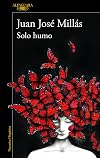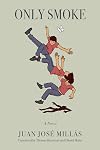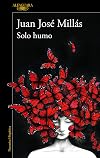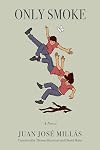
Only Smoke
by Juan José Millás
On This Page
Description
"On his eighteenth birthday, Carols receives a strange gift: his father, whom he never knew, has died and left him his apartment. As he goes though the man's belongings, Carlos comes across a manuscript that tells the unsettling story of a secret affair, a love child, and a butterfly. Is this a confession or pure fiction? As Carlos begins to make the apartment his own, he immerses himself in the tales of the Brothers Grimm left on the nightstand, embarking on a journey that will bring him show more closer to his father and teach him how to navigate the invisible borders between reality, fantasy, sanity, and madness." --page [4] of cover show lessTags
Recommendations
















Member Reviews
On his eighteenth birthday, Carlos learns that the father he never knew has passed and left him money and his apartment. “Such a troubled man” his mother always said about his father.
The apartment was filled with books. Carlos wasn’t a reader. He did bring home a notebook in which his father had written a story that was perhaps a memoir, perhaps a fantasy. Hoping to learn more, Carlos returns to the apartment and decides to live there until school begins. He picks up the book on the bedside table which his father had been reading–Grimm’s Fairy Tales–and opens to Cinderella.
Carlos finds himself transported into another world, “struck by the story’s capacity to remove him from his own life and force him to be the witness show more of another that was totally unconnected.” In the stories, he encounters his father’s ghost.
How, he therefore wondered, might I tell whether I’ve left reality behind and entered a fairy tale or left a fairy tale behind and entered reality? from Only Smoke by Juan José Millás
Carlos dresses in his father’s clothes. Takes as lover his father’s neighbor who had been attracted to his father. And nightly in the tales he searches for his father.
…Sleeping Beauty. It’s got it all: the genetic and emotional burdens we come into the world with, how these get challenged over the course of a life, and the contrast between waking life and the dream world. But above all, the healing power of love. from Only Smoke by Juan José Millás
Fairy tales, especially Grimm’s versions, are lessons in life. Their magical fantasy worlds reflect psychological and worldly truths.
One of the tales Carlos encounters is about a king whose son is born missing an ear, so he commands everyone in the kingdom to cut their ear off so the prince won’t feel different. When the boy grows the ear, the king has everyone sew theirs back on. Bizarre, and so insightful.
Carlos claims his father’s life as a just compensation for having been abandoned, but there is a distinctly Freudian element in his supplanting his father. THe happily ever after ending has a dark twist, as do so Grimm’s tales.
I loved this imaginative, wild book with its humor and darkness. It addresses the power of story to connect and transform lives and questions the intersection of reality and dream.
Thanks to the publisher for a free book. show less
The apartment was filled with books. Carlos wasn’t a reader. He did bring home a notebook in which his father had written a story that was perhaps a memoir, perhaps a fantasy. Hoping to learn more, Carlos returns to the apartment and decides to live there until school begins. He picks up the book on the bedside table which his father had been reading–Grimm’s Fairy Tales–and opens to Cinderella.
Carlos finds himself transported into another world, “struck by the story’s capacity to remove him from his own life and force him to be the witness show more of another that was totally unconnected.” In the stories, he encounters his father’s ghost.
How, he therefore wondered, might I tell whether I’ve left reality behind and entered a fairy tale or left a fairy tale behind and entered reality? from Only Smoke by Juan José Millás
Carlos dresses in his father’s clothes. Takes as lover his father’s neighbor who had been attracted to his father. And nightly in the tales he searches for his father.
…Sleeping Beauty. It’s got it all: the genetic and emotional burdens we come into the world with, how these get challenged over the course of a life, and the contrast between waking life and the dream world. But above all, the healing power of love. from Only Smoke by Juan José Millás
Fairy tales, especially Grimm’s versions, are lessons in life. Their magical fantasy worlds reflect psychological and worldly truths.
One of the tales Carlos encounters is about a king whose son is born missing an ear, so he commands everyone in the kingdom to cut their ear off so the prince won’t feel different. When the boy grows the ear, the king has everyone sew theirs back on. Bizarre, and so insightful.
Carlos claims his father’s life as a just compensation for having been abandoned, but there is a distinctly Freudian element in his supplanting his father. THe happily ever after ending has a dark twist, as do so Grimm’s tales.
I loved this imaginative, wild book with its humor and darkness. It addresses the power of story to connect and transform lives and questions the intersection of reality and dream.
Thanks to the publisher for a free book. show less
On his 18th birthday, Carlos's mother tells him that his father is dead and that she hid it from him for a few days looking for the right moment to tell him. The man walked out on the family years earlier so Carlos had never expected anything from him. But as it turns out, the father left his apartment to his son and despite the mother's objections, Carlos decides to move there.
The apartment is lined with books which does not impress Carlos much - he was never a reader so he cannot even determine if any of the books are good. But then he finds a notebook of his father and then a worn out copy of the Brother Grim fairy tales and they open to him a world he had never known existed.
The notebook first looks like the rambling of a lunatic show more (or the beginning of a novel) but the more Carlos looks into the circumstances, the more it starts feeling like the reality. Had he stumbled on fiction mixing in reality or is reality not exactly what he had always believed? And just when he thinks that things cannot get any more weird, he decides to read the book of fairy tales that he found on his father's night stand and ends up transported inside of the story. And then it happens again and again. Somewhere in there, he will find a way to connect to his dead father and while awake, Carlos will finally find his path to reading and appreciating the written word.
So is that a fantasy novel or are all of those weird happenings part of one's imagination or dreams? That is probably up to the reader - the novel can be read both ways. The author is definitely leaning at least partially towards the imagination and the power of literature and its ability to transport someone to different worlds. But the narrative allows the alternate reading as well.
At the end, I wished that there was a bit more of a resolution to the novel. It seems to close its main narrative line (the missing father is finally confronted) but that line seems almost like a lead into a story that never takes shape. The use of fairy tales to drive the story was interesting and I liked the not so subtle metaphors about reading and the power of storytelling. But it still felt unfinished - more a sketch of a novel than a novel. Or maybe that was the point - it is all about making you part of the story and allowing your imagination to work after all. show less
The apartment is lined with books which does not impress Carlos much - he was never a reader so he cannot even determine if any of the books are good. But then he finds a notebook of his father and then a worn out copy of the Brother Grim fairy tales and they open to him a world he had never known existed.
The notebook first looks like the rambling of a lunatic show more (or the beginning of a novel) but the more Carlos looks into the circumstances, the more it starts feeling like the reality. Had he stumbled on fiction mixing in reality or is reality not exactly what he had always believed? And just when he thinks that things cannot get any more weird, he decides to read the book of fairy tales that he found on his father's night stand and ends up transported inside of the story. And then it happens again and again. Somewhere in there, he will find a way to connect to his dead father and while awake, Carlos will finally find his path to reading and appreciating the written word.
So is that a fantasy novel or are all of those weird happenings part of one's imagination or dreams? That is probably up to the reader - the novel can be read both ways. The author is definitely leaning at least partially towards the imagination and the power of literature and its ability to transport someone to different worlds. But the narrative allows the alternate reading as well.
At the end, I wished that there was a bit more of a resolution to the novel. It seems to close its main narrative line (the missing father is finally confronted) but that line seems almost like a lead into a story that never takes shape. The use of fairy tales to drive the story was interesting and I liked the not so subtle metaphors about reading and the power of storytelling. But it still felt unfinished - more a sketch of a novel than a novel. Or maybe that was the point - it is all about making you part of the story and allowing your imagination to work after all. show less
Going back to the book, he was struck by the story's capacity to remove him from his own life and force him to be the witness to another that was totally unconnected.
Carlos, eighteen, spends most of his time on his computer in his bedroom. He has been raised by his mother, his father having left the family when he was a baby, and never wanted to know his father. But when his father dies, Carlos inherits his apartment. He and his mother visit the apartment with the intention of preparing it to rent it out. It's sparsely furnished, but there are plenty of books, and while his mother cleans, Carlos picks up the book on his father's bedside table, a copy of Grimm's fairy tales, and begins to read the story of Cinderella. A funny thing show more happens--Carlos finds himself physically present in the story, even as he's still lying on his father's bed reading a book. He can't be seen or felt by the character, but he is there, watching as the story progresses. Soon, Carlos is hooked on the experience and moves into his father's apartment and begins to find other surreal and magical things.
This is a book about falling in love with reading and also about finding and coming to terms with an absent father and about moving past that into a future of one's own. The concepts Millás discusses here are interesting and worth thinking about.
"He told me that the characters in novels often meet on one of the blank pages at the end of the book, and they have discussions about the existence of the reader, just like we discuss the existence of God. He said there are some characters who believe in the reader and some who deny the reader's existence. show less
Carlos, eighteen, spends most of his time on his computer in his bedroom. He has been raised by his mother, his father having left the family when he was a baby, and never wanted to know his father. But when his father dies, Carlos inherits his apartment. He and his mother visit the apartment with the intention of preparing it to rent it out. It's sparsely furnished, but there are plenty of books, and while his mother cleans, Carlos picks up the book on his father's bedside table, a copy of Grimm's fairy tales, and begins to read the story of Cinderella. A funny thing show more happens--Carlos finds himself physically present in the story, even as he's still lying on his father's bed reading a book. He can't be seen or felt by the character, but he is there, watching as the story progresses. Soon, Carlos is hooked on the experience and moves into his father's apartment and begins to find other surreal and magical things.
This is a book about falling in love with reading and also about finding and coming to terms with an absent father and about moving past that into a future of one's own. The concepts Millás discusses here are interesting and worth thinking about.
"He told me that the characters in novels often meet on one of the blank pages at the end of the book, and they have discussions about the existence of the reader, just like we discuss the existence of God. He said there are some characters who believe in the reader and some who deny the reader's existence. show less
 This review was written for LibraryThing Early Reviewers.
Millás plays with the role of the reader in fiction, the role of the story in the reader's life. Carlos, the main character, knows his absent father only through his bitter, somewhat overprotective mother. When his father dies, Carlos inherits his apartment in Madrid and his library. The book on his father's nightstand is Grimm's Fairy Tales. As Carlos starts to read it, he finds himself both inside and outside the stories, and sometimes meets his late father wandering about. Carlos reads several of the stories, which largely follow the original Brothers Grimm, with some ellipsis. He and his father sometimes deliberately tinker with the outcome of the tales. The novel follows the interaction of Carlos' life and the fairy tales that he show more reads; the whole becomes itself a sort of fairy tale. show less
Disclaimer: I received a free copy of this book in a LibraryThing giveaway in exchange for a review.
This was a charming book, if a little unusual. The romantic relationship didn't add much to the story in my opinion, but the novelty of the protagonist connecting with his father via Grimms’ Fairy Tales - and how he actually did it - was intriguing to read. I loved the author's way with words. Since I read it in translation, I don't know how much of that is excellent translation vs. the author's original voice, but either way, it's a pleasant read. Maybe before too long, my Spanish will be good enough to read the original text, but in the meantime, this seems like a great translation.
I'd recommend this to anyone interested in modern show more literature from Spain, but also anyone interested in how we as readers interact with stories. Do we influence the stories that we read at all, or is it solely a one-way street? show less
This was a charming book, if a little unusual. The romantic relationship didn't add much to the story in my opinion, but the novelty of the protagonist connecting with his father via Grimms’ Fairy Tales - and how he actually did it - was intriguing to read. I loved the author's way with words. Since I read it in translation, I don't know how much of that is excellent translation vs. the author's original voice, but either way, it's a pleasant read. Maybe before too long, my Spanish will be good enough to read the original text, but in the meantime, this seems like a great translation.
I'd recommend this to anyone interested in modern show more literature from Spain, but also anyone interested in how we as readers interact with stories. Do we influence the stories that we read at all, or is it solely a one-way street? show less
This review was written for LibraryThing Early Reviewers.**reviewed from free ARC courtesy of the publisher via LT Early Reviewers**
adult fiction (originally published in Spain 2023, translated into English 2025) - a modern dark fairy tale, heavily inspired by the Grimms'.
Just the sort of thing to read outdoors while barn swallows swoop overhead, and song sparrows compete with the sound of heavy chainsaws....
I enjoyed the magical realism and the fairytale-esque storytelling. More, please!
adult fiction (originally published in Spain 2023, translated into English 2025) - a modern dark fairy tale, heavily inspired by the Grimms'.
Just the sort of thing to read outdoors while barn swallows swoop overhead, and song sparrows compete with the sound of heavy chainsaws....
I enjoyed the magical realism and the fairytale-esque storytelling. More, please!
This review was written for LibraryThing Early Reviewers.I loved this book! I was transported for a Sunday afternoon. It's a wonderful modern day fantasy. A fantasy on several levels, is how I'd explain it. It would give away too much to say more about what I liked about it. It needs to be read!
This review was written for LibraryThing Early Reviewers.Members
- Recently Added By
Author Information

68+ Works 2,762 Members
Some Editions
Awards and Honors
Distinctions
Notable Lists
Common Knowledge
- Canonical title
- Only Smoke
- Original title
- Solo humo
- Original publication date
- 2023
Classifications
Statistics
- Members
- 56
- Popularity
- 548,268
- Reviews
- 8
- Rating
- (3.63)
- Languages
- English, Spanish
- Media
- Paper, Ebook
- ISBNs
- 5
- ASINs
- 2