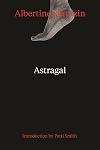
Astragal
by Albertine Sarrazin
On This Page
Description
As if the reader were riding shotgun, this intensely vivid novel captures a life on the lam. "L'astragale" is the French word for the ankle bone Albertine Sarrazin's heroine Anne breaks as she leaps from her jail cell to freedom. As she drags herself down the road, away from the prison walls, she is rescued by Julien, himself a small-time criminal, who keeps her hidden. They fall in love. Fear of capture, memories of her prison cell, claustrophobia in her hideaways: every detail is fiercely show more felt. Astragal burst onto the French literary scene in 1965; its fiery and vivacious style was entirely new, and Sarrazin became a celebrity overnight. But as fate would have it, Sarrazin herself kept running into trouble with the law, even as she became a star. She died from a botched surgery at the height of her fame. Sarrazin's life and work (her novels are semi-autobiographical) have been the subject of intense fascination in France; a new adaptation ofAstragal is currently being filmed. Patti Smith, who broughtAstragal to the attention of New Directions, contributes an enthusiastic introduction to one of her favorite writers. show lessTags
Recommendations






































Member Reviews
19-year-old Anne - old enough to take her pants off, old enough to go to jail, legally still a child - jumps off the 10-metre wall of the jail where she's serving a 7-year sentence. Smashes her ankle, crawls to the highway, is picked up by a small-time crook with a motorcycle who helps her hide with various acquaintances as she recuperates as well as she can, having to depend on others. This is love. This is freedom. This is never being able to walk right again.
Astragal is many things. Largely autobiographical, to take the most obvious, tragic (and in a way least interesting) fact: Sarrazin - orphan, mixed-race, abuse victim - wrote the book, as well as the follow-up, in jail, and eventually married the guy on the motorcycle before show more dying at age 29. One of those books you should read before age 25 for the best effect, probably. A product of its time, for sure: "To live outside the law you must be honest", Week-End, all that jazz; a dream of "freedom" that's already starting to look frayed at the edges, asking the question "...of what? To what? For how long?" The astragal of the title is the ankle bone (specifically the one called "leap bone" in Swedish). The novel is named for the price she pays for freedom: the ability to run, to dance, to drive a car, to walk barefoot, leaving her free to be tied to the same world that saw her end up in jail in the first place. As she limps from hiding place to hiding place, falling in what love is there, trying to unpause, to become.
Of course, none of this would matter much if it wasn't also another thing: Really fucking well-written. Anne narrates the whole thing in a style that never seems like it's trying to be either literary or "street", just is, a jumble of detailed, unflinching but never too deliberate impressions and thoughts and memories that keep the story tumbling along in one long breathless monologue, even during the long stretches where little actually happens beyond bones stitching themselves back together. (No wonder a young Patti Smith loved it and gushes about it in the foreword.) It's not a nice story about how love or freedom or cameraderie fixes everything, or even anything. It's just a book that, somehow, keeps getting lighter even as the things it bears try to weigh it down. show less
Astragal is many things. Largely autobiographical, to take the most obvious, tragic (and in a way least interesting) fact: Sarrazin - orphan, mixed-race, abuse victim - wrote the book, as well as the follow-up, in jail, and eventually married the guy on the motorcycle before show more dying at age 29. One of those books you should read before age 25 for the best effect, probably. A product of its time, for sure: "To live outside the law you must be honest", Week-End, all that jazz; a dream of "freedom" that's already starting to look frayed at the edges, asking the question "...of what? To what? For how long?" The astragal of the title is the ankle bone (specifically the one called "leap bone" in Swedish). The novel is named for the price she pays for freedom: the ability to run, to dance, to drive a car, to walk barefoot, leaving her free to be tied to the same world that saw her end up in jail in the first place. As she limps from hiding place to hiding place, falling in what love is there, trying to unpause, to become.
Of course, none of this would matter much if it wasn't also another thing: Really fucking well-written. Anne narrates the whole thing in a style that never seems like it's trying to be either literary or "street", just is, a jumble of detailed, unflinching but never too deliberate impressions and thoughts and memories that keep the story tumbling along in one long breathless monologue, even during the long stretches where little actually happens beyond bones stitching themselves back together. (No wonder a young Patti Smith loved it and gushes about it in the foreword.) It's not a nice story about how love or freedom or cameraderie fixes everything, or even anything. It's just a book that, somehow, keeps getting lighter even as the things it bears try to weigh it down. show less
She has a very fresh, immediate voice in this book, a semi-autobiographical look at "Anne" who leaps from a third floor to escape prison, shatters her ankle, is randomly (& luckily) picked up by a minor crook (Julien) before her escape is discovered & wanders between hideouts, waiting, healing, & reverting back to her old life (yet at such a young age) of prostitution & thievery. There is freedom of spirit here, but also a lot of hiding, looking over her shoulder (not wanting to be caught), & waiting (sometimes too long) for erstwhile savior & lover Julien. Free & yet never really free.
A fascinating & fresh account from the '60s.
A fascinating & fresh account from the '60s.
I snapped up this novel, which I had never heard of, because of Patti Smith's enthusiastic introduction. Partly autobiographical, it begins when 19-year-old Anne escapes from prison by jumping over a wall, breaking her ankle in the process. (Astragalus is another name for the talus, or ankle bone.) After crawling to the road, she is rescued by Julien, who she soon realizes is a petty criminal himself, who takes her over a period of months to various homes where she can hide from the police while her ankle heals. Needless to say, she falls in love with him, and he with her, although they spend much time apart. (In real life, Albertine was married to Julien Sarrazin.)
So much for the plot. The novel is really the story of Anne, and how she show more finds her way in a world that has treated her badly and forced her into a life of crime, starting, we learn, with having been in some kind of girls' "reform" school. As she shuttles between other people's homes, people who take her in at Julien's request because they too can make some kind of use of her, she is wary and resourceful, and largely keeps to herself; eventually she goes off somewhat on her own, supporting herself through prostitution.
The novel is poetic in its way, and allusive, so the reader has to do a lot of reading between the lines. Nevertheless, it has a lot of power, largely because Anne is very proud and never thinks of herself as a victim. She is very descriptive of the physical pain and disability caused by her injury and the emotional pain caused by her love of Julien. She is perceptive about herself and about the people around her -- what they want, how they present themselves, how they make use of her -- a skill no doubt developed from having to look after herself from a a young age, as well as from having been in prison and around criminals, large and small. As she notes early on in the novel:
"Prison still surrounded me: I found it in my reflexes, the jumpiness, the stealth and the submissiveness of my reactions. You can't wash away overnight several years of clockwork routine and constant dissembling of self. When the body is turned loose, the mind, which up until then had been the only escape, becomes on the contrary the slave of mechanisms; the humility you used to fake turns into genuine embarrassment; me, one with all those loud mouths in there, I no longer dared, now, take the initiative in even the most natural of actions . . pp. 50-51
Or, as she says later, thinking of her relationship with Julien,
The road is as bare and harsh as a desert; later, perhaps calmly, we'll start down magic pathways . . . I used to be pampered, petted, fussed over, too, in the old days: I was intact and able to bite, my cupboard was full and my claws were ingenious.
My equipment was destroyed, I am wounded and begging, and it's I now who offers herself and clings; people don't hold onto me at all, for I have nothing to give them but myself, myself naked, and it will a lot of time and tenderness before some resource, some source springs up in me." p. 111
This book haunted me as I read it, and I don't feel able to really do it justice. I found the ending ambiguous and would be interested in discussing it with anyone else who has read the book.
Finally, I must add that the edition I read was seriously marred by sloppy editing. Some examples: "eyed' for "I'd" in the phrase "eyed balance myself on my new pin"; on the same page saying something happened on Saturdays and then on Sundays; "has acquire" instead of "has acquired"; and more. Very annoying and I would have expected better of New Directions. show less
So much for the plot. The novel is really the story of Anne, and how she show more finds her way in a world that has treated her badly and forced her into a life of crime, starting, we learn, with having been in some kind of girls' "reform" school. As she shuttles between other people's homes, people who take her in at Julien's request because they too can make some kind of use of her, she is wary and resourceful, and largely keeps to herself; eventually she goes off somewhat on her own, supporting herself through prostitution.
The novel is poetic in its way, and allusive, so the reader has to do a lot of reading between the lines. Nevertheless, it has a lot of power, largely because Anne is very proud and never thinks of herself as a victim. She is very descriptive of the physical pain and disability caused by her injury and the emotional pain caused by her love of Julien. She is perceptive about herself and about the people around her -- what they want, how they present themselves, how they make use of her -- a skill no doubt developed from having to look after herself from a a young age, as well as from having been in prison and around criminals, large and small. As she notes early on in the novel:
"Prison still surrounded me: I found it in my reflexes, the jumpiness, the stealth and the submissiveness of my reactions. You can't wash away overnight several years of clockwork routine and constant dissembling of self. When the body is turned loose, the mind, which up until then had been the only escape, becomes on the contrary the slave of mechanisms; the humility you used to fake turns into genuine embarrassment; me, one with all those loud mouths in there, I no longer dared, now, take the initiative in even the most natural of actions . . pp. 50-51
Or, as she says later, thinking of her relationship with Julien,
The road is as bare and harsh as a desert; later, perhaps calmly, we'll start down magic pathways . . . I used to be pampered, petted, fussed over, too, in the old days: I was intact and able to bite, my cupboard was full and my claws were ingenious.
My equipment was destroyed, I am wounded and begging, and it's I now who offers herself and clings; people don't hold onto me at all, for I have nothing to give them but myself, myself naked, and it will a lot of time and tenderness before some resource, some source springs up in me." p. 111
This book haunted me as I read it, and I don't feel able to really do it justice. I found the ending ambiguous and would be interested in discussing it with anyone else who has read the book.
Finally, I must add that the edition I read was seriously marred by sloppy editing. Some examples: "eyed' for "I'd" in the phrase "eyed balance myself on my new pin"; on the same page saying something happened on Saturdays and then on Sundays; "has acquire" instead of "has acquired"; and more. Very annoying and I would have expected better of New Directions. show less
Autobiographical novel of teenaged French-Algerian girl, her escape from a youth reformatory prison, relationship with a petty criminal who picks her up, and carving out of a temporary life on the Parisian streets. Though she is tough and "a stick of dynamite" to quote Patti Smith's notable introduction, the novel is largely an account of things that happen to her; she demonstrates only a precarious ability here to direct the course of her life.
In the first half of the story this is due to the fact that her escape resulted in the shattering of an ankle bone, "l'astragale", which is the sort of thing that can happen when you let go of a high wall and find that, "The sky had lifted at least thirty feet" as you now lay on cracked pavement. show more Picked up by the stranger Julian on a nearby road, he becomes her guardian and her lover. Hiding her first at his mother's house, as any good son would do, he later shifts her around to other hideouts owned by minor criminal acquaintances of his. Eventually Anne's ankle adequately heals, she grows tired of this living arrangement, and she strikes out on her own as a prostitute and thief.
Her move for independence in the latter part of the story is undermined by her dependent love on Julian. Only he can make her happy now. Forced to spend six months in prison on a minor charge, when he is released Anne hands over her money and future to him. She soon weeps, however, when she finds out that he has another woman, and it was she who was symbolically there to meet him at the prison gates. Julian swears to end things with this other woman and commit to Anne, but before he can do so her past catches up to her and she is returned to jail.
The novel's prose is a winding road, here clever and here needlessly obfuscating. Not possible for me to say how much of this is Sarrazin's original and how much the translation. One thing for certain is that this new edition could have used a solid proofreading; while it looks like spell-check caught everything it could, incorrect words sometimes pop up in the text, for instance:
"In the latter case, lied just have to arrange the tables and dust a little" (p.34). Think that should be "he'd just have to...", yeah?
"Julien makes suit of that..." (p.105). Nah, he made sure of it.
"I can't hop, or eyed balance myself..." (p.109). Or even balance herself. show less
In the first half of the story this is due to the fact that her escape resulted in the shattering of an ankle bone, "l'astragale", which is the sort of thing that can happen when you let go of a high wall and find that, "The sky had lifted at least thirty feet" as you now lay on cracked pavement. show more Picked up by the stranger Julian on a nearby road, he becomes her guardian and her lover. Hiding her first at his mother's house, as any good son would do, he later shifts her around to other hideouts owned by minor criminal acquaintances of his. Eventually Anne's ankle adequately heals, she grows tired of this living arrangement, and she strikes out on her own as a prostitute and thief.
Her move for independence in the latter part of the story is undermined by her dependent love on Julian. Only he can make her happy now. Forced to spend six months in prison on a minor charge, when he is released Anne hands over her money and future to him. She soon weeps, however, when she finds out that he has another woman, and it was she who was symbolically there to meet him at the prison gates. Julian swears to end things with this other woman and commit to Anne, but before he can do so her past catches up to her and she is returned to jail.
The novel's prose is a winding road, here clever and here needlessly obfuscating. Not possible for me to say how much of this is Sarrazin's original and how much the translation. One thing for certain is that this new edition could have used a solid proofreading; while it looks like spell-check caught everything it could, incorrect words sometimes pop up in the text, for instance:
"In the latter case, lied just have to arrange the tables and dust a little" (p.34). Think that should be "he'd just have to...", yeah?
"Julien makes suit of that..." (p.105). Nah, he made sure of it.
"I can't hop, or eyed balance myself..." (p.109). Or even balance herself. show less
Brilliantly written: The story is immediate and direct, told through snapshots of the (maybe partly fictional) protagonists prison escape, broken ankle, and forays into a criminal life in Paris. Stylistically unique and intelligent, Sarrazin's life story is bittersweet.
A mid 1960s cult classic about a rebellious young woman who breaks her ankle escaping from prison, and the man she falls for who rescues her. Full review on my blog here: http://annabookbel.net/wit-month-astragal-albertine-sarrazin-serpents-tail
Een mooi boek van de vrouwelijke Genet. Originele, elliptische en suggestieve stijl. Veel sfeer, maar inhoudelijk zwakker. Schitterende dialogen en soms herlees je zinnen wel drie keer...
Oct 28, 2015Dutch
Members
- Recently Added By
Lists

French, female, working-class authors
26 works; 2 members
Author Information

27 Works 507 Members
Some Editions
Series
Belongs to Publisher Series
Common Knowledge
- Canonical title
- Astragal
- Original title
- L'Astragale
- Original publication date
- 1965
- First words
- The sky had lifted at least thirty feet.
- Last words
- (Click to show. Warning: May contain spoilers.)So what, at least I can walk: preceding the cop, I go down the stairs, hardly limping at all.
- Blurbers
- Smith, Patti; Beauvoir, Simone de
- Original language
- French
Classifications
Statistics
- Members
- 342
- Popularity
- 92,936
- Reviews
- 10
- Rating
- (3.62)
- Languages
- 13 — Czech, Danish, Dutch, English, Finnish, French, German, Italian, Norwegian (Bokmål), Portuguese, Russian, Spanish, Swedish
- Media
- Paper, Ebook
- ISBNs
- 29
- ASINs
- 24