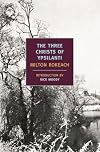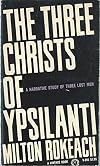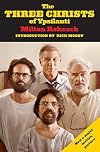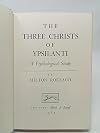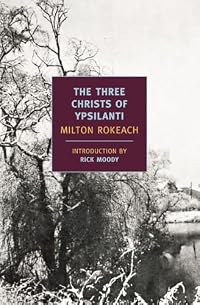
The Three Christs of Ypsilanti
by Milton Rokeach
On This Page
Description
On July 1, 1959, at Ypsilanti State Hospital in Michigan, the social psychologist Milton Rokeach brought together three paranoid schizophrenics: Clyde Benson, an elderly farmer and alcoholic; Joseph Cassel, a failed writer who was institutionalized after increasingly violent behavior toward his family; and Leon Gabor, a college dropout and veteran of World War II. The men had one thing in common: each believed himself to be Jesus Christ. Their extraordinary meeting and the two years they show more spent in one another's company serves as the basis for an investigation into the nature of human identity, belief, and delusion that is poignant, amusing, and at times disturbing. Displaying the sympathy and subtlety of a gifted novelist, Rokeach draws us into the lives of three troubled and profoundly different men who find themselves "confronted with the ultimate contradiction conceivable for human beings: more than one person claiming the same identity." show lessTags
Recommendations


















Member Reviews
It is a well-known fact that I love the hell out of books by and about people who are bat-poop crazy.
Rokeach's account of his 1959-1961 social-psychology research using three paranoid schizophrenics all with Messianic delusions stands out, though. Much of the text is copy of letters written by the patients to people who don't actually exist, and the rest is Rokeach's commentary that, towards the end of the book, begins to have serious second thoughts about the ethics and validity of what he is doing with these three men. Throughout he does an amazing job of keeping his subjects human and not caricatures of mental illness presented only for our entertainment. On the occasions when I laughed, it was at the humor and insight that the men show more showed, and not at their unfortunate situations.
Nice morally heavy stuff that includes serious discussion of how Madam Yeti Woman may actually be a hermaphroditic Great God Morpho married to a man named Doktor Dung. Wonderful stuff! show less
Rokeach's account of his 1959-1961 social-psychology research using three paranoid schizophrenics all with Messianic delusions stands out, though. Much of the text is copy of letters written by the patients to people who don't actually exist, and the rest is Rokeach's commentary that, towards the end of the book, begins to have serious second thoughts about the ethics and validity of what he is doing with these three men. Throughout he does an amazing job of keeping his subjects human and not caricatures of mental illness presented only for our entertainment. On the occasions when I laughed, it was at the humor and insight that the men show more showed, and not at their unfortunate situations.
Nice morally heavy stuff that includes serious discussion of how Madam Yeti Woman may actually be a hermaphroditic Great God Morpho married to a man named Doktor Dung. Wonderful stuff! show less
The Three Christs of Ypsilanti documents a psychological experiment from the early 60s in Ypsilenta Mental Hospital. Dr. Miton Rokeach gathered three mental patients who each believed they were Christ. They were placed in a the same ward, and were brought together for regular meetings. How would each react when confronted with another with the same identity?
Dr. Rokeach had the hope that this would have some curative effect. This hope was prompted in part by a text from Voltaire on the subject of a man who was burned at the stake in 1663 for claiming he was Christ. For a time he was incarcerated in a mental hospital where he encountered another man who thought he was Christ. He could clearly see the other man's folly this helped clear show more him of his own delusions. The effect was temporary, however.
There were some aspects of this experiment, freely admitted by Dr. Rokeach, that were questionable ethically. For instance, the directors of the experiment wrote letters to the patients in the name of characters in the patient's delusional world. This was an attempt to see how far a person with schizophrenia would accept guidance from a trusted referrent. The reason schizophrenics are so hard to treat is that they have withdrawn from the rest of us and no longer see other people as trusted referrents. I found the chapter describing how referrents are formed to be very illuminating.
Also interesting is how identity is formed. In reading this work, I sometimes get the impression that Dr. Rokeach sees the retreat from reality of a schizophrenic as a choice each of these men made in the course of the challenges of their lives. I am not a medical professional, but I thought schizophrenia was something that went awry in the biology/chemistry of the brain, rather than something that went wrong in someone's life. Perhaps it is the collision of these two forces.
In an afterward in this edition, Dr. Rokeach admits that there were really 4 Christs. He himself was playing god with a delusion comparable to that of his patients.
The book has an excellent introduction by Rick Moody, who gives an overview of the experiment and a good history of the treatment of mentally ill in the U.S. since the 1950s.
We may pass these individuals on any major downtown in America. Living on their own, confronting a world with no hope of seeing reality or making peace with it. Reading this book helped me have less fear and more compassion for these souls. They have the same issues of isolation, identity and fear that define the modern age, although their struggles may be more public. show less
Dr. Rokeach had the hope that this would have some curative effect. This hope was prompted in part by a text from Voltaire on the subject of a man who was burned at the stake in 1663 for claiming he was Christ. For a time he was incarcerated in a mental hospital where he encountered another man who thought he was Christ. He could clearly see the other man's folly this helped clear show more him of his own delusions. The effect was temporary, however.
There were some aspects of this experiment, freely admitted by Dr. Rokeach, that were questionable ethically. For instance, the directors of the experiment wrote letters to the patients in the name of characters in the patient's delusional world. This was an attempt to see how far a person with schizophrenia would accept guidance from a trusted referrent. The reason schizophrenics are so hard to treat is that they have withdrawn from the rest of us and no longer see other people as trusted referrents. I found the chapter describing how referrents are formed to be very illuminating.
Also interesting is how identity is formed. In reading this work, I sometimes get the impression that Dr. Rokeach sees the retreat from reality of a schizophrenic as a choice each of these men made in the course of the challenges of their lives. I am not a medical professional, but I thought schizophrenia was something that went awry in the biology/chemistry of the brain, rather than something that went wrong in someone's life. Perhaps it is the collision of these two forces.
In an afterward in this edition, Dr. Rokeach admits that there were really 4 Christs. He himself was playing god with a delusion comparable to that of his patients.
The book has an excellent introduction by Rick Moody, who gives an overview of the experiment and a good history of the treatment of mentally ill in the U.S. since the 1950s.
We may pass these individuals on any major downtown in America. Living on their own, confronting a world with no hope of seeing reality or making peace with it. Reading this book helped me have less fear and more compassion for these souls. They have the same issues of isolation, identity and fear that define the modern age, although their struggles may be more public. show less
Fascinating not as a psychological experiment, and, due to the insuperable solipsism of schizophrenia, only somewhat as a study in group dynamics, I enjoyed this unique book for the wealth of wild and weird expressions of psychotic creativity. I’m not sure you can call them insights into the subjects’ mental state but the speech and writings of Christs Joseph and, especially, Leon — with his Madame Yeti Woman, his squelch chambers, his morphodites — are like the best art, perennially surprising, provoking, allusive, and somehow underpinned by a guiding structure or framework. It feels grubby somehow, peeping at these cracked minds, but I couldn’t look away. As an experiment it was nugatory, and obviously unethical, but as a show more book for reading it’s very excellent. show less
Milton Rokeach, a professor of social psychology, conducted a study at the Ypsilanti State Hospital from 1959 to 1961 of three men, who were all diagnosed with paranoid schizophrenia and each believed that he was Jesus Christ. The purpose of the study, which was based on the limited knowledge and lack of effective treatment options for patients with severe mental illness at the time, was to determine if a person with a deluded personal belief could change that claim, and any behaviors associated with it, if he encountered another person who shared that same, incongruent belief.
Rokeach and his partners, with the blessing of the Medical Superintendent of the hospital (as there were no Institutional Review Boards at that time), transferred show more the three men to a single ward and oversaw interviews and meetings in which the men were confronted with each others' claims. As expected, each man was initially upset and distraught by the presence of two other men who made the same claim as he, and each coped by adopting a view that permitted him to retain his own deeply held belief that he was the true Christ, where the others were either impostors or lesser gods. Interestingly, the men, who were not isolated from others on the hospital ward, preferred the company of the other Christs despite their frequent disagreements, and seemed to get along with each other better than the others.
After realizing that the men altered but did not fundamentally change their belief systems, Rokeach and his team decided to intervene, in a quite intrusive and ethically questionable manner, in the personal lives of each of the men, in order to force them to change their delusional beliefs without specifically addressing each one's view of himself as Christ. The experiments conducted on two of the men were described in detail in second half of the book. One man, who was never married but believed that he was, received letters from his "wife" on the outside, who urged him to give up his adopted name (Dr. Righteous Idealised Dung Sir) Another Christ, who frequently spoke of the Medical Superintendent of the hospital as "Dad", received fake letters from this doctor, who claimed that he loved him like a son, and encouraged him to take a new medication (potent-valuemiocene, which was a placebo) that would cure him of his untrue beliefs. These experiments were ultimately unsuccessful, and were deeply troubling to both men.
After two years, with nothing significant to show for the study, the team disbanded, and Dr. Rokeach left to pursue further study at Stanford and write this book.
Rokeach discusses the different types of personal belief systems prior to each set of experiments, from infancy through adulthood, and in mental health and illness, which provides context to the design of the study and the book, which consists of observations by the team, conversations by the men with the staff and each other, and the letters that were written to the men, and their replies.
The book concludes with an afterword, twenty years after [The Three Christs of Ypsilanti] was initially published in 1964. Rokeach updates us on the (lack of) progress made by each of the men, and reflects on the flawed methodology of the study, realizing that there was a fourth Christ in this experiment—himself:
And I would now also see the book as ending somewhat differently: while I had failed to cure the three Christs of their delusions, they had succeeded in curing me of mine—of my God-like delusion that I could change them by omnipotently and omnisciently arranging and rearranging their daily lives within the framework of a "total institution." I had terminated the project some two years after the initial confrontation when I came to realize—dimly at the time but increasingly more clearly as the years passed—that I really had no right, even in the name of science, to play God and interfere around-the-clock with their daily lives. Also, I became increasingly uncomfortable about the ethics of such a confrontation. I was cured when I was able to leave them in peace, and it was mainly Leon who somehow persuaded me that I should leave them in peace.
I initially gave The Three Christs of Ypsilanti a 3 star rating, as I viewed it with the eyes of a 21st century clinician, and was deeply offended at a study that I viewed as unethical and immoral—which it was. However, I now believe that this book is a valuable addition to the history of medicine, as it describes, in great detail, standards of medical experimentation and treatment of mental illness that modern practitioners and scientists should remember, learn from, and avoid. show less
Rokeach and his partners, with the blessing of the Medical Superintendent of the hospital (as there were no Institutional Review Boards at that time), transferred show more the three men to a single ward and oversaw interviews and meetings in which the men were confronted with each others' claims. As expected, each man was initially upset and distraught by the presence of two other men who made the same claim as he, and each coped by adopting a view that permitted him to retain his own deeply held belief that he was the true Christ, where the others were either impostors or lesser gods. Interestingly, the men, who were not isolated from others on the hospital ward, preferred the company of the other Christs despite their frequent disagreements, and seemed to get along with each other better than the others.
After realizing that the men altered but did not fundamentally change their belief systems, Rokeach and his team decided to intervene, in a quite intrusive and ethically questionable manner, in the personal lives of each of the men, in order to force them to change their delusional beliefs without specifically addressing each one's view of himself as Christ. The experiments conducted on two of the men were described in detail in second half of the book. One man, who was never married but believed that he was, received letters from his "wife" on the outside, who urged him to give up his adopted name (Dr. Righteous Idealised Dung Sir) Another Christ, who frequently spoke of the Medical Superintendent of the hospital as "Dad", received fake letters from this doctor, who claimed that he loved him like a son, and encouraged him to take a new medication (potent-valuemiocene, which was a placebo) that would cure him of his untrue beliefs. These experiments were ultimately unsuccessful, and were deeply troubling to both men.
After two years, with nothing significant to show for the study, the team disbanded, and Dr. Rokeach left to pursue further study at Stanford and write this book.
Rokeach discusses the different types of personal belief systems prior to each set of experiments, from infancy through adulthood, and in mental health and illness, which provides context to the design of the study and the book, which consists of observations by the team, conversations by the men with the staff and each other, and the letters that were written to the men, and their replies.
The book concludes with an afterword, twenty years after [The Three Christs of Ypsilanti] was initially published in 1964. Rokeach updates us on the (lack of) progress made by each of the men, and reflects on the flawed methodology of the study, realizing that there was a fourth Christ in this experiment—himself:
And I would now also see the book as ending somewhat differently: while I had failed to cure the three Christs of their delusions, they had succeeded in curing me of mine—of my God-like delusion that I could change them by omnipotently and omnisciently arranging and rearranging their daily lives within the framework of a "total institution." I had terminated the project some two years after the initial confrontation when I came to realize—dimly at the time but increasingly more clearly as the years passed—that I really had no right, even in the name of science, to play God and interfere around-the-clock with their daily lives. Also, I became increasingly uncomfortable about the ethics of such a confrontation. I was cured when I was able to leave them in peace, and it was mainly Leon who somehow persuaded me that I should leave them in peace.
I initially gave The Three Christs of Ypsilanti a 3 star rating, as I viewed it with the eyes of a 21st century clinician, and was deeply offended at a study that I viewed as unethical and immoral—which it was. However, I now believe that this book is a valuable addition to the history of medicine, as it describes, in great detail, standards of medical experimentation and treatment of mental illness that modern practitioners and scientists should remember, learn from, and avoid. show less
A psychological case study (of sometimes questionable methodology) that reads like modernist fiction, with engagingly eccentric characters revealing the multiple manifest ways that minds can be set aloft by the terrible realization that we are really and finally alone, even among those closest to us.
Group meeting. Joseph puts a book out on the window sill “to give it some air.” This, he says, will make the book healthier for him to read. Leon reads aloud from an article in the Reader’s Digest about voting to select a national flower. Leon votes for dandelions, Joseph and Clyde vote for grass.
Left Hand Polestar Pilsner
Smuttynose Star Island Single
Group meeting. Joseph puts a book out on the window sill “to give it some air.” This, he says, will make the book healthier for him to read. Leon reads aloud from an article in the Reader’s Digest about voting to select a national flower. Leon votes for dandelions, Joseph and Clyde vote for grass.
Left Hand Polestar Pilsner
Smuttynose Star Island Single
The Three Christs of Ypsilanti documents an experiment led by Milton Rocheach in 1959 at the Ypsilanti State Hospital in Michigan, that aimed to explore the processes involved when individual systems of belief are challenged, that is, the behavioural change that may occur as a result of confrontation with the ultimate contradiction for human beings -- when more than one person claims the same identity. A second aim was to observe how messages purporting to come from significant authority figures existing in the imagination of the delusional individuals could influence behaviour.
Rocheach brought together the three Christs into daily contact for a period of two years: Clyde Benson, the oldest of the three, a farmer who succumbed to great show more personal losses; Joseph Cassel, a francophone Canadian, a would-be writer who endured abuse and physical violence as a child; Leon Gabor, the youngest, and the highest functioning in the group, who suffered from the compulsive religiosity and psychotic behaviour of his mother. The daily meetings were meant to bring about a collision of their "primitive beliefs" which could shock the three Christs into recognizing the truth and result in lasting changes in their behaviour, and as Rocheach himself said, to help the men "trancend loneliness." Later, Rocheach attempted to further resolve the dilemma of identity by introducing interventions from the subjects' imagined figures of authority -- such as an imaginary wife for Leon, and a father figure for Joseph, whose identities themselves evolved along the experiment. Rocheach, however, after 25 months concluded that the confrontation approach did not work and so terminated the experiment. Twenty years later (in an afterword to the book), he confesses to regretting writing and publishing when he did, having realized along time that the experiment was not about confrontation among three people, but four, including himself. That while he failed to cure the three Christs of their delusion, they had cured him of his God-like delusion that by his "omniscient and omnipotent" arranging of their daily lives within an institutional framework, he could change them permanently. He also admitted that etchical dilemmas posed by the research was a reason for its termination, and suggested instead that self-confrontation, based on the results of later experiments he did, rather than the confrontational method of the three Christs, was more effective in bringing about long-term behavioural changes, and didn't pose the same ethical issues.
Rocheach's account reads like a well-written novel, it is riveting, and the elegant writing is a surprise. For me, it was harrowing to read the degree of manipulation of these people's lives, especially the second part of the research which led the men to anticipate certain things, raised their hopes, or depressed them accordingly. There were the fake letters, the fake notes, the fake telephone calls. It made me angry to see especially Leon being led to believe that his wife was "just there" to see to his well-being, sending him daily promises of small rewards for certain behaviour. It was heartbreaking to see the men react and respond in all their humanness, with sincerity and utter belief, although Leon and Joseph would sometimes comment on their being merely "instruments." That the subjects saw through it all, in their delusional way, is telling in itself. Rocheach assures us that since the time of the experiment, changes have occurred in the institutional settings and frameworks governing treatment of mental illnesses, which implies that in this new setting, an experimental approach like this might no longer be permissible. The rather naive theoretical suppositions and approach he employed was supported by the prevailing views of introducing novel approaches to treatment of the mentally ill, ideas which were more radical than those of the pyschiatric mainstream then. show less
Rocheach brought together the three Christs into daily contact for a period of two years: Clyde Benson, the oldest of the three, a farmer who succumbed to great show more personal losses; Joseph Cassel, a francophone Canadian, a would-be writer who endured abuse and physical violence as a child; Leon Gabor, the youngest, and the highest functioning in the group, who suffered from the compulsive religiosity and psychotic behaviour of his mother. The daily meetings were meant to bring about a collision of their "primitive beliefs" which could shock the three Christs into recognizing the truth and result in lasting changes in their behaviour, and as Rocheach himself said, to help the men "trancend loneliness." Later, Rocheach attempted to further resolve the dilemma of identity by introducing interventions from the subjects' imagined figures of authority -- such as an imaginary wife for Leon, and a father figure for Joseph, whose identities themselves evolved along the experiment. Rocheach, however, after 25 months concluded that the confrontation approach did not work and so terminated the experiment. Twenty years later (in an afterword to the book), he confesses to regretting writing and publishing when he did, having realized along time that the experiment was not about confrontation among three people, but four, including himself. That while he failed to cure the three Christs of their delusion, they had cured him of his God-like delusion that by his "omniscient and omnipotent" arranging of their daily lives within an institutional framework, he could change them permanently. He also admitted that etchical dilemmas posed by the research was a reason for its termination, and suggested instead that self-confrontation, based on the results of later experiments he did, rather than the confrontational method of the three Christs, was more effective in bringing about long-term behavioural changes, and didn't pose the same ethical issues.
Rocheach's account reads like a well-written novel, it is riveting, and the elegant writing is a surprise. For me, it was harrowing to read the degree of manipulation of these people's lives, especially the second part of the research which led the men to anticipate certain things, raised their hopes, or depressed them accordingly. There were the fake letters, the fake notes, the fake telephone calls. It made me angry to see especially Leon being led to believe that his wife was "just there" to see to his well-being, sending him daily promises of small rewards for certain behaviour. It was heartbreaking to see the men react and respond in all their humanness, with sincerity and utter belief, although Leon and Joseph would sometimes comment on their being merely "instruments." That the subjects saw through it all, in their delusional way, is telling in itself. Rocheach assures us that since the time of the experiment, changes have occurred in the institutional settings and frameworks governing treatment of mental illnesses, which implies that in this new setting, an experimental approach like this might no longer be permissible. The rather naive theoretical suppositions and approach he employed was supported by the prevailing views of introducing novel approaches to treatment of the mentally ill, ideas which were more radical than those of the pyschiatric mainstream then. show less
Horrifying. Reading this book was pure torture, although I did continue of my own free will and volition just to see how bad it got. This is like a how-to manual in how to NOT do psychotherapy. Three poor souls jerked around like marionettes for 2 years so this guy could just see what happened? Every penny his estate is making off this reprint should go directly to a patients' rights fund somewhere in the state of Michigan.
Members
- Recently Added By
Lists

Best Medical Nonfiction
79 works; 29 members

Books in the bibliography of Godel, Escher, Bach by Douglas Hofstadter
97 works; 3 members

KayStJ's to-read list
1,616 works; 11 members

Books Read in 2024
4,623 works; 126 members
Author Information
Some Editions
Series
Belongs to Publisher Series
Common Knowledge
- Canonical title
- The Three Christs of Ypsilanti
- Original publication date
- 1964
- Epigraph
- "Every man would like to be God,
if it were possible; some few find
it difficult to admit the impossiblity."
Bertrand Russell
Power - Dedication
- To three men
who will be herein be called
Clyde Benson
Joseph Cassel
Leon Gabor - First words
- The three Christs met for the first time in a small room off the large ward where they live.
Classifications
Statistics
- Members
- 446
- Popularity
- 68,334
- Reviews
- 21
- Rating
- (3.65)
- Languages
- Dutch, English, Italian, Spanish
- Media
- Paper, Audiobook, Ebook
- ISBNs
- 9
- ASINs
- 9