
Rick Moody
Author of The Ice Storm
About the Author
Novelist Rick Moody was born in Fairfield, Connecticut on October 18, 1962. He is an undergraduate of Brown University and has a Master of Fine Arts Degree from Columbia University. Moody's works often demonstrate the concept that money makes no difference in the problems people face. His first show more novel, Garden State, won Pushcart's Tenth Annual Editor's Book Award. The Ice Storm (1994) was adapted into the 1997 film starring Kevin Kline and Sigourney Weaver. In 1999, The New Yorker chose him as one of America's most talented young writers, listing him on their "20 Writers for the 21st Century" list. He has also won the Addison Metcalf Award and has received a Guggenheim Fellowship. Moody's memoir The Black Veil (2002) won the PEN/Martha Albrand Award for the Art of the Memoir. His other works include The Diviners and The Four Fingers of Death. In 2012 he won Fernanda Pivano Award in Italy. Moody has taught at Yale University, Princeton University, the State University of New York at Purchase and Bennington College, and New York University. (Bowker Author Biography) show less
Image credit: Eye on Books
Works by Rick Moody
The Albertine Notes 6 copies
Twenty-Minute Stories 1 copy
How to be a Christian Artist 1 copy
Confessional Poem 1 copy
Genoa 1 copy
Pirate Station [short story] 1 copy
John O'Connor 1 copy
Livelihoods 1 copy
Phrase Book 1 copy
On 'The Yule Log' 1 copy
The Fear of God Sessions 1 copy
Associated Works
This I Believe: The Personal Philosophies of Remarkable Men and Women (2006) — Contributor — 1,147 copies, 36 reviews
McSweeney's 12: Unpublished, Unknown, and/or Unbelievable (2003) — Contributor — 290 copies, 4 reviews
The Year's Best Fantasy and Horror: Ninth Annual Collection (1996) — Contributor — 258 copies, 3 reviews
A Convergence of Birds: Original Fiction and Poetry Inspired by Joseph Cornell (2001) — Contributor — 208 copies, 2 reviews
Why We Write: 20 Acclaimed Authors on How and Why They Do What They Do (2013) — Contributor — 208 copies, 10 reviews
Maybe Baby: 28 Writers Tell the Truth About Skepticism, Infertility, Baby Lust, Childlessness, Ambivalence, and How They Made the Biggest Decision of Their Lives (2006) — Contributor — 132 copies, 4 reviews
Read Hard: Five Years of Great Writing from the Believer (2009) — Contributor — 87 copies, 2 reviews
Fakes: An Anthology of Pseudo-Interviews, Faux-Lectures, Quasi-Letters, "Found" Texts, and Other Fraudulent Artifacts (2012) — Contributor — 84 copies, 4 reviews
The Good Book: Writers Reflect on Favorite Bible Passages (2015) — Contributor — 44 copies, 3 reviews
The Artists' and Writers' Cookbook: A Collection of Stories with Recipes (2016) — Contributor — 19 copies
Conjunctions: 46, Selected Subversions: Essays on the World at Large (2006) — Contributor — 10 copies
Tagged
Common Knowledge
- Canonical name
- Moody, Rick
- Legal name
- Moody, Hiram Frederick
- Birthdate
- 1961-10-18
- Gender
- male
- Education
- St. Paul's School, Concord, New Hampshire, USA
Brown University
Columbia University (M.F.A, 1986) - Occupations
- novelist
short story writer - Awards and honors
- Addison M. Metcalf Award in Literature (1998)
Guggenheim Fellowship (2000) - Nationality
- USA
- Birthplace
- New York, New York, USA
- Places of residence
- New York, New York, USA (birthplace)
Darien, Connecticut, USA
New Canaan, Connecticut, USA
Brooklyn, New York, USA
Fisher's Island, New York, USA - Associated Place (for map)
- New York, USA
Members
Reviews
(Reprinted from the Chicago Center for Literature and Photography [cclapcenter.com]. I am the original author of this essay, as well as the owner of CCLaP; it is not being reprinted illegally.)
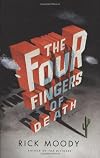
So to understand why I found Rick Moody's newest novel so f-cking deplorable, it's important to understand that buried right in the middle of it is a really great, non-ironic science-fiction novel -- set in 2025, it's about a fully downfalling America trying for one last grab at greatness, by finally show more launching a fabled manned mission to Mars like George W. Bush announced in the years following 9/11; but the same things that have caused America's downfall also turn the mission into a complete disaster (badly designed hardware, ill-trained astronauts, corrupt supervisors, and a corporate mindset overseeing it all), making it a brilliant metaphorical look at what exactly is wrong with the US here in the 21st century, a short but powerful wallop of a book that would've easily garnered a Hugo win if released on its own. But unfortunately, Moody also includes an entire other half, an entire other 300-page cheesy horror tale about how the disconnected but fully alive arm of one of these astronauts (infected with alien bacteria!) makes it back to Earth and goes on a killing spree in the Arizona desert; then he adds this whole bit about how the entire story is supposed to be a novelization of a witty late-21st-century remake of a cheesy 1963 drive-in horror flick; and then he adds this ridiculously pointless introduction, intermission and coda about the guy actually writing this supposed novelization of the witty horror-flick remake, making the whole thing a snotty meta-meta-metafictional project about stories within stories within stories; and then on top of everything else, he writes the entire 700-page trainwreck in this overly cutesy, rambling academic style, a bad attempt at mimicking Kurt Vonnegut (in fact, the book is dedicated to him) that just utterly and completely fails, and that presents to us on a regular basis such unpleasantly postmodernist details as two-page-long single sentences and the like.
F-cking CHR-ST, Moody! Couldn't you have just written the admittedly great sci-fi tale in the middle and left well enough alone? Why is it that every big literary star of the 1990s has felt this uncontrollable urge in the 2000s to write giant, pointless, rambling, pretentious, genre-twisting pomo pieces of f-cking sh-t, of complete f-cking sh-t? (And yes, Jonathan Franzen and Jonathan Lethem and Michael Chabon, I'm looking at all of you too. J'accuse!) Is someone slipping something into the Brooklyn water supply that turns all formerly great writers into endlessly digressing hacks? Whatever the case, I can't even begin to describe what a profound and monumental disappointment this book was; although like I said, I still recommend the tight and disturbing science-fiction novel that's buried in the middle of it, a great symbolic look at post-9/11 America that is unfortunately surrounded by 400 other pages of unreadable horsesh-t.
Out of 10: 4.4, but 8.8 for just pages 63 to 320 show less
So to understand why I found Rick Moody's newest novel so f-cking deplorable, it's important to understand that buried right in the middle of it is a really great, non-ironic science-fiction novel -- set in 2025, it's about a fully downfalling America trying for one last grab at greatness, by finally show more launching a fabled manned mission to Mars like George W. Bush announced in the years following 9/11; but the same things that have caused America's downfall also turn the mission into a complete disaster (badly designed hardware, ill-trained astronauts, corrupt supervisors, and a corporate mindset overseeing it all), making it a brilliant metaphorical look at what exactly is wrong with the US here in the 21st century, a short but powerful wallop of a book that would've easily garnered a Hugo win if released on its own. But unfortunately, Moody also includes an entire other half, an entire other 300-page cheesy horror tale about how the disconnected but fully alive arm of one of these astronauts (infected with alien bacteria!) makes it back to Earth and goes on a killing spree in the Arizona desert; then he adds this whole bit about how the entire story is supposed to be a novelization of a witty late-21st-century remake of a cheesy 1963 drive-in horror flick; and then he adds this ridiculously pointless introduction, intermission and coda about the guy actually writing this supposed novelization of the witty horror-flick remake, making the whole thing a snotty meta-meta-metafictional project about stories within stories within stories; and then on top of everything else, he writes the entire 700-page trainwreck in this overly cutesy, rambling academic style, a bad attempt at mimicking Kurt Vonnegut (in fact, the book is dedicated to him) that just utterly and completely fails, and that presents to us on a regular basis such unpleasantly postmodernist details as two-page-long single sentences and the like.
F-cking CHR-ST, Moody! Couldn't you have just written the admittedly great sci-fi tale in the middle and left well enough alone? Why is it that every big literary star of the 1990s has felt this uncontrollable urge in the 2000s to write giant, pointless, rambling, pretentious, genre-twisting pomo pieces of f-cking sh-t, of complete f-cking sh-t? (And yes, Jonathan Franzen and Jonathan Lethem and Michael Chabon, I'm looking at all of you too. J'accuse!) Is someone slipping something into the Brooklyn water supply that turns all formerly great writers into endlessly digressing hacks? Whatever the case, I can't even begin to describe what a profound and monumental disappointment this book was; although like I said, I still recommend the tight and disturbing science-fiction novel that's buried in the middle of it, a great symbolic look at post-9/11 America that is unfortunately surrounded by 400 other pages of unreadable horsesh-t.
Out of 10: 4.4, but 8.8 for just pages 63 to 320 show less
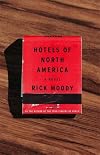
Couched in the form of a series of introspective and oblique reviews of disparate hotels and inns by the mysterious Reginald Edward Morse, suitably prefaced by the improbable director of a society of hoteliers and innkeepers, and with an afterword by none other than Rick Moody himself, Hotels of North America is a tour de force, a virtual Audubon of loneliness. Accompanied most frequently by his companion, K., who takes on the names of various birds as cover, Reginald records the thoughts show more that trouble him whilst staying in temporary lodgings. That these thoughts rarely have much to do with the actual establishments is hardly a criticism. Reginald’s fame, if Internet reviews constitute a substantive basis for fame, is due to his ruminations on his sad life, his failed marriage, his sexual fiascos, his occupation as an erstwhile motivational speaker (freelance), and his love for K. Sometimes funny, sometimes sad, sometimes acting entirely inappropriately, Reginald exists through the two years in which he contributes his online reviews and then, apparently, disappears as though he had never been. All that we are left with — all that “Rick Moody” is left with having been asked to write the afterword — are the reviews themselves, as though a sequence of extended opinions, rants, and ruminations could constitute a man. A man, quite literally, of words.
It is a fascinating performance. Moody sustains the dim illusion with grace and pathos, showing real care for his creation even when Morse reveals himself to be largely unlikeable. The writing, which is naturally first-person and confessional, matches Morse’s character perfectly, with bathetic language and idiosyncratic points of interest. This is not a series of one-off comic turns. It is a deeply considered whole, so bleak in some respects as to be potentially tragic. And yet the archness of the performance, the all-too-obvious framing for apparent verisimilitude, demands that the reader look closer, or perhaps stand further back to see what is really being accomplished here. I’m still pondering that.
Highly recommended. show less
It is a fascinating performance. Moody sustains the dim illusion with grace and pathos, showing real care for his creation even when Morse reveals himself to be largely unlikeable. The writing, which is naturally first-person and confessional, matches Morse’s character perfectly, with bathetic language and idiosyncratic points of interest. This is not a series of one-off comic turns. It is a deeply considered whole, so bleak in some respects as to be potentially tragic. And yet the archness of the performance, the all-too-obvious framing for apparent verisimilitude, demands that the reader look closer, or perhaps stand further back to see what is really being accomplished here. I’m still pondering that.
Highly recommended. show less
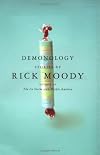
For the novelist, the short story form is often an outlet for momentary inspiration, development of technique, display, and burlesque. But for a writer as talented as Rick Moody, these short forms are more like gems, finely cut, delicately set, polished in the extreme. The range across these thirteen stories is breathtaking. How does the same author who writes, “Surplus Value Books,” or “Wilkie Fahnstock,” also write, “The Double Zero,” or “Demonology”? There is a feast of show more language, insight, acute observation, and silliness available here. Of course the “silliness” is actually in service of a larger ironic, often sadder, end. But that doesn’t stop those stories being fun (at times). And indeed a certain playfulness is present even in the saddest of these stories.
Moody has a predilection for the extended stream of consciousness monologue (sometimes in dialogic form). But he is not wedded to it, and it has the feel of technique rather than empathy. So it is in the stories where he moves away from monologue toward a nuanced close third person that life fills the darker places. Even the easy and (as far as I can tell) proper use of continental philosophical and literary critical terminology that percolates some of the stories seems light and never merely about display or cheap mockery. You’ll see connection, in style and form, to Moody’s successful novels. But I take that as a sign that there is a constant interplay between his work in the short form and that of the longer form narrative. Successfully.
Recommended. show less
Moody has a predilection for the extended stream of consciousness monologue (sometimes in dialogic form). But he is not wedded to it, and it has the feel of technique rather than empathy. So it is in the stories where he moves away from monologue toward a nuanced close third person that life fills the darker places. Even the easy and (as far as I can tell) proper use of continental philosophical and literary critical terminology that percolates some of the stories seems light and never merely about display or cheap mockery. You’ll see connection, in style and form, to Moody’s successful novels. But I take that as a sign that there is a constant interplay between his work in the short form and that of the longer form narrative. Successfully.
Recommended. show less
It's Trip Advisor sprung to life - melancholy life for sure, but hilariously entertaining and affecting, all wrapped up in a meta package. The author plays (or does he?) Reginald Edward Morse, top reviewer for RateYourLodging.com, where in no chronological order, he decimates anywhere but home. Even if home is a car sometimes. Morse has a wife, ex-wife, two lovers, and a daughter, and each drift in and out of his life in various hotels, motels, empty storefronts, and one B&B. Included are show more descriptions of both the stunningly repulsive Capri Whitestone, Bronx, NY, and the equally repellent President's City Inn of Quincy, MA -both ground zero for hordes of richly described bedbugs.
In stupendous Babbitry, the preface by Greenway Davies, he of the notorious interchangeable-first-and-last-names club for men, and Director, North American Society of Hoteliers and Innkeepers, warns you of what you'll find within. If you don't chortle with delight, stay home. show less
In stupendous Babbitry, the preface by Greenway Davies, he of the notorious interchangeable-first-and-last-names club for men, and Director, North American Society of Hoteliers and Innkeepers, warns you of what you'll find within. If you don't chortle with delight, stay home. show less
Lists
Awards


You May Also Like


Associated Authors
Statistics
- Works
- 41
- Also by
- 52
- Members
- 4,759
- Popularity
- #5,271
- Rating
- 3.6
- Reviews
- 91
- ISBNs
- 160
- Languages
- 12
- Favorited
- 10