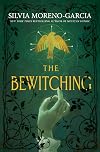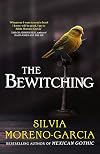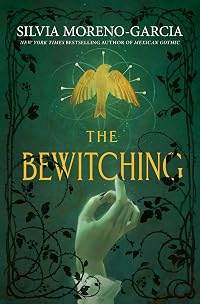
The Bewitching
by Silvia Moreno-Garcia
On This Page
Description
Three women in three different eras encounter danger and witchcraft in this eerie multigenerational horror saga from the New York Times bestselling author of Mexican Gothic.“In Silvia Moreno-Garcia’s sure hands, every uncovered secret is fraught with intrigue and creeping horror.”—Tananarive Due, Bram Stoker Award–winning author of The Reformatory
“Back then, when I was a young woman, there were still witches”: That was how Nana Alba always began the stories she told her show more great-granddaughter Minerva—stories that have stayed with Minerva all her life. Perhaps that’s why Minerva has become a graduate student focused on the history of horror literature and is researching the life of Beatrice Tremblay, an obscure author of macabre tales.
In the course of assembling her thesis, Minerva uncovers information that reveals that Tremblay’s most famous novel, The Vanishing, was inspired by a true story: Decades earlier, during the Great Depression, Tremblay attended the same university where Minerva is now studying and became obsessed with her beautiful and otherworldly roommate, who then disappeared under mysterious circumstances.
As Minerva descends ever deeper into Tremblay’s manuscript, she begins to sense that the malign force that stalked Tremblay and the missing girl might still walk the halls of the campus. These disturbing events also echo the stories Nana Alba told about her girlhood in 1900s Mexico, where she had a terrifying encounter with a witch.
Minerva suspects that the same shadow that darkened the lives of her great-grandmother and Beatrice Tremblay is now threatening her own in 1990s Massachusetts. An academic career can be a punishing pursuit, but it might turn outright deadly when witchcraft is involved. show less
Tags
Recommendations







Member Reviews
I am devoted to the horror novels of Silvia Moreno-Garcia. I think universally, they're exquisitely lush, while being simultaneously gut-churningly suspenseful and horrific. Often she sets her novels in Mexico or populates them with people of Mexican descent, and half the horror is usually just the colonialist, racist mindset her characters encounter. The Bewitching is a great new entry in her oeuvre, with a Mexican foreign transfer student at a college in Massachusetts, studying horror herself, and researching real local events that influenced her favorite writer and that harmonize with the evil witchcraft she's been warned about from her own family history.
Every book I read by Silvia Moreno-Garcia increases my devotion, and THE BEWITCHING is no exception. I appreciate her modern take on gothic storytelling, and I appreciate how well she creates such atmospheric stories - the kind where the setting becomes a character on its own. While THE BEWITCHING is a little too predictable for my taste, I still found plenty to enjoy within its pages.
My favorite thing about THE BEWITCHING was the chance to revel in the late 1990s nostalgia. Just like Minerva, I graduated from college in the late 1990s, so each period relic Minerva uses hit me hard. Yes, we did have laptops in the late 1990s. No, the Internet and email were not really a thing yet, but we used our computers for writing papers. Research show more still had to be done in person in libraries, museums, or through interviews, and you wrote your research notes by hand. Paper was still king. We didn't have MP3 players or iPods yet, so Minerva's use of a Discman is apt. We didn't have cell phones, so you had to borrow someone's phone or use a pay phone. Everything about Minerva's story, aside from the mystery, took me right back to college and those years when the world was at your feet, waiting for you to make your mark.
Maybe because I connected so fiercely with Minerva's story, I read Alba's and Beatrice's stories with a more clinical eye. I was less emotionally invested in their tales, more interested in seeing how the three stories would connect versus appreciating each on its own merits. Alba's story is creepy; Beatrice's is more tragic. Both deal with loss, but Alba's hits harder because her loss was much more personal and included more people. Beatrice's story reads exactly like what it is, a journal of events written long after they happened and with hindsight being colored by love and the selective forgetting of memory. It is easy to dismiss Beatrice's story as nothing more than a tale told to explain the long-ago loss of a friend. You learn Alba's tale as it is happening, and, since it is happening to her, hers is the much more impactful.
Together, the three women's tales combine into one that speaks of power and violence. I've never read anything like the witches found in Alba's tale, so THE BEWITCHING is a new take on witchcraft for me, or at least the how of their witchcraft. THE BEWITCHING is a moody mystery, even if it is predictable in the who and the why. I know my nostalgia plays a large part in my fondness for the story, and that's okay. Take that away, and you still have a decent mystery with plenty of chills and thrills and things that go bump in the night. show less
My favorite thing about THE BEWITCHING was the chance to revel in the late 1990s nostalgia. Just like Minerva, I graduated from college in the late 1990s, so each period relic Minerva uses hit me hard. Yes, we did have laptops in the late 1990s. No, the Internet and email were not really a thing yet, but we used our computers for writing papers. Research show more still had to be done in person in libraries, museums, or through interviews, and you wrote your research notes by hand. Paper was still king. We didn't have MP3 players or iPods yet, so Minerva's use of a Discman is apt. We didn't have cell phones, so you had to borrow someone's phone or use a pay phone. Everything about Minerva's story, aside from the mystery, took me right back to college and those years when the world was at your feet, waiting for you to make your mark.
Maybe because I connected so fiercely with Minerva's story, I read Alba's and Beatrice's stories with a more clinical eye. I was less emotionally invested in their tales, more interested in seeing how the three stories would connect versus appreciating each on its own merits. Alba's story is creepy; Beatrice's is more tragic. Both deal with loss, but Alba's hits harder because her loss was much more personal and included more people. Beatrice's story reads exactly like what it is, a journal of events written long after they happened and with hindsight being colored by love and the selective forgetting of memory. It is easy to dismiss Beatrice's story as nothing more than a tale told to explain the long-ago loss of a friend. You learn Alba's tale as it is happening, and, since it is happening to her, hers is the much more impactful.
Together, the three women's tales combine into one that speaks of power and violence. I've never read anything like the witches found in Alba's tale, so THE BEWITCHING is a new take on witchcraft for me, or at least the how of their witchcraft. THE BEWITCHING is a moody mystery, even if it is predictable in the who and the why. I know my nostalgia plays a large part in my fondness for the story, and that's okay. Take that away, and you still have a decent mystery with plenty of chills and thrills and things that go bump in the night. show less
This is a slow burn, gothic horror that had me reminiscing about my years spent on a haunted college campus in the Northeast. Minerva was on a college campus a few years before me (1998 vs 2001), but like Minerva, I spent summers on campus. I remember walking across campus alone at night, the eeriness, the silence, the old buildings with empty windows. I loved the connections between the time periods: 1908 (Alba), 1934 (Ginny and Beatrice), and 1998 (Minerva) and the strong sense of place. I've been craving more from Sarah Waters - that gothic, atmospheric feel, but not necessarily in Victorian London - and this hit the spot (I've got a new-to-me Waters and Mexican Gothic awaiting me at the library, too).
Silvia Moreno-Garcia's The Bewitching is an intertwined tale of three women, at three different times. In 1908, 19 year old Alba's brother Tomas disappears, not long after a fight with her uncle about his refusal to sell the family farm and share the profits. In the 1930s, Beatrice "Betty" Tremblay, attending Stoneridge, a small private college in New England on scholarship, is worried about her roommate Virginia, who spends weeks muttering about spirits and witches, before disappearing one snowy night. And in 1998, Alba's great-granddaughter, Minerva, a Mexican graduate student at Stoneridge, is writing her thesis on Betty's novel about Virginia's disappearance, titled 'The Bewitching'. Minerva notices that a fellow student has show more vanished, not long after he makes contact with one of Betty and Virginia's surviving friends, an elderly, imperious philanthropist, and starts to investigate. But she keeps in mind her greatgrandmother Alba's warnings about witches, etching marks on her windowsill, carrying a charm in her purse. Is it enough to keep her safe?
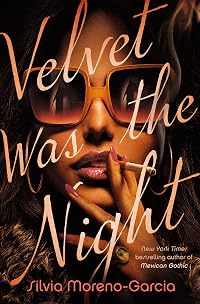
Moreno-Garcia is very skilled at building atmosphere: you are transported to hot, dusty Hidalgo with the townspeople whispering about Alba's cursed family, and to snowy New England, the chill as Minerva sits in the equally dusty library, poring over Betty's papers. It's nicely recursive, too, because Minerva and her fellow students discuss their dissertations, talking about Poe and Gothic fiction, the history of New England witches, and folk magic, while Minerva lives through it. At times this is charming, adding layers to the narrative, but at other times, it feels a bit heavy-handed, as though Minerva is taking you by hand to the Department of Context and saying, here is your background reading to understand why I'm doing what I'm doing. While the narrative is pleasantly engaging, this is not Moreno-Garcia's strongest work (that credit belongs to Untamed Shore and Velvet was the Night). At the end you're left with a feeling 'oh, huh, interesting' because the denoument is so clearly and obviously signalled. I don't know if she's dumbing down the book for the Booktok audience, or if she's just experimenting with style, but I liked her work more when she was less anodyne and more willing to take risks. show less
Moreno-Garcia is very skilled at building atmosphere: you are transported to hot, dusty Hidalgo with the townspeople whispering about Alba's cursed family, and to snowy New England, the chill as Minerva sits in the equally dusty library, poring over Betty's papers. It's nicely recursive, too, because Minerva and her fellow students discuss their dissertations, talking about Poe and Gothic fiction, the history of New England witches, and folk magic, while Minerva lives through it. At times this is charming, adding layers to the narrative, but at other times, it feels a bit heavy-handed, as though Minerva is taking you by hand to the Department of Context and saying, here is your background reading to understand why I'm doing what I'm doing. While the narrative is pleasantly engaging, this is not Moreno-Garcia's strongest work (that credit belongs to Untamed Shore and Velvet was the Night). At the end you're left with a feeling 'oh, huh, interesting' because the denoument is so clearly and obviously signalled. I don't know if she's dumbing down the book for the Booktok audience, or if she's just experimenting with style, but I liked her work more when she was less anodyne and more willing to take risks. show less
Opening line: “Back then, when I was a young woman, there were still witches.” THE BEWITCHING is a soft spine-chilling multi-generational gothic horror tale, three women from distinct time periods face peril and the supernatural forces of witchcraft.
Minerva grew up with tales about witches from her great-grandmother. As a Mexican foreign transfer, she is now a graduate student specializing in the history of horror literature in the state of Massachusetts. Minerva is gathering her thesis on the life of college alumnus and author Beatrice Tremblay. Tremblay’s one and only novel, The Vanishing, released in 1969, was inspired by a true story.
In 1934, during the Great Depression, while Tremblay attended school, she became enamored show more with her beautiful, lyrical roommate, who vanished. As Minerva begins to uncover more clues from Tremblay’s personal papers about her roommate’s final days, she senses a malign force that has turned its sights on Minerva. This force stalking Minerva eerily mirrors the stories from Tramblay’s written accounts and her great-grandmother's tales about the witch she encountered as a young girl.
Verdict:
I’m not going to lie, the beginning is very slow going, but the opening line had me invested. Quickly grabbing me with the three timelines of these women’s stories, which intertwine seamlessly and connect beautifully. Elegantly written story of witches, warlocks, and Mexican supernatural folklore. Not overly frightening, though there are a few scenes that will chill your spine. This book leans more towards historical fiction with a supernatural element. The timeline set in 1908 Mexico, with Alba, is the most chilling, and Nana Alba's stories of witchcraft prove crucial for her great-granddaughter exactly one hundred years later. Excellent representation of Mexican witches, they are not to be messed with. (8.5/10)
Thank you, Libro.fm, Penguin Random House Audio Publishing Group, Silvia Moreno-Garcia, Del Rey, and Penguin Random House. I received an advance review copy for free and am leaving this review voluntarily. All thoughts and opinions are my own.
https://aberstoat.substack.com/p/book-review-the-bewitching-by-silvia show less
Minerva grew up with tales about witches from her great-grandmother. As a Mexican foreign transfer, she is now a graduate student specializing in the history of horror literature in the state of Massachusetts. Minerva is gathering her thesis on the life of college alumnus and author Beatrice Tremblay. Tremblay’s one and only novel, The Vanishing, released in 1969, was inspired by a true story.
In 1934, during the Great Depression, while Tremblay attended school, she became enamored show more with her beautiful, lyrical roommate, who vanished. As Minerva begins to uncover more clues from Tremblay’s personal papers about her roommate’s final days, she senses a malign force that has turned its sights on Minerva. This force stalking Minerva eerily mirrors the stories from Tramblay’s written accounts and her great-grandmother's tales about the witch she encountered as a young girl.
Verdict:
I’m not going to lie, the beginning is very slow going, but the opening line had me invested. Quickly grabbing me with the three timelines of these women’s stories, which intertwine seamlessly and connect beautifully. Elegantly written story of witches, warlocks, and Mexican supernatural folklore. Not overly frightening, though there are a few scenes that will chill your spine. This book leans more towards historical fiction with a supernatural element. The timeline set in 1908 Mexico, with Alba, is the most chilling, and Nana Alba's stories of witchcraft prove crucial for her great-granddaughter exactly one hundred years later. Excellent representation of Mexican witches, they are not to be messed with. (8.5/10)
Thank you, Libro.fm, Penguin Random House Audio Publishing Group, Silvia Moreno-Garcia, Del Rey, and Penguin Random House. I received an advance review copy for free and am leaving this review voluntarily. All thoughts and opinions are my own.
https://aberstoat.substack.com/p/book-review-the-bewitching-by-silvia show less
This is a captivating Gothic horror novel that completely drew me in with its eerie atmosphere and layered storytelling. Silvia Moreno-Garcia weaves together the lives of three women: Minerva in 1990s Massachusetts, Beatrice in 1930s New England, and Alba in early 1900s Mexico, each facing unsettling disappearances linked to witchcraft and folklore. I loved how the timelines gradually connected, building suspense as Minerva uncovers dark secrets buried in her university’s past and her own family history. The mix of academic research, supernatural mystery, and rich Mexican heritage made this story both intellectually engaging and emotionally gripping. Moreno-Garcia’s haunting prose and slow-burning tension kept me hooked. This is show more Gothic fiction at its best, intelligent, atmospheric, and deeply unsettling. Highly recommended. show less
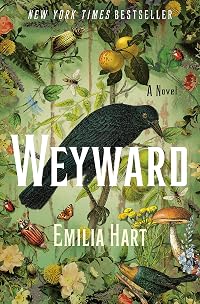
Oh, dear. Another disappointing title from SMG (I think only Mexican Gothic and Signal to Noise actually worked for me). This is flat, predictable, derivative, cliched and actually kind of offensive in places (Flowers in the Attic took the edge off the incest, but the animal deaths? Killing the damn CAT? That's just lazy writing.) It's like setting Weyward in Stephen King's Derry, by way of Scooby Doo.
I knew exactly who was evil and why they were sacrificing people long before the halfway mark, so I didn't have to really read the comical final chapters, which was good for me because this book is also unnecessarily long. The characters are dull and unlikeable, for the most part - when the narrator of the 1930s chapters described her show more friend as a 'radiant creature' who was just so 'alive', I gave up hope. show less
I knew exactly who was evil and why they were sacrificing people long before the halfway mark, so I didn't have to really read the comical final chapters, which was good for me because this book is also unnecessarily long. The characters are dull and unlikeable, for the most part - when the narrator of the 1930s chapters described her show more friend as a 'radiant creature' who was just so 'alive', I gave up hope. show less
Members
- Recently Added By
Published Reviews
At its best, “The Bewitching” is a lush Gothic tale of women and witches, of dark magic and death. But the story is hamstrung by its execution, and ultimately I was left more bewildered than bewitched.
added by rasdhar
With this equally spooky and sophisticated horror novel, bestseller Moreno-Garcia (The Seventh Veil of Salome) proves she’s as adept playing in the tropes of dark academia as any of the other subgenres she’s tried on.
added by rasdhar
Lists

Horror (Owned TBR)
60 works; 1 member
Author Information

69+ Works 20,128 Members
Awards and Honors
Awards
Distinctions
Notable Lists
Common Knowledge
- Original publication date
- 2025-07-15
- People/Characters
- Minerva Contreras; Alba Quiroga; Noah Yates; Arturo Velarde; Carolyn Yates; Beatrice "Betty" Tremblay (show all 9); Virginia "Ginny" Somerset; Valentin Pimentel; Tadeo Quiroga
- Important places
- Stoneridge College; Temperance Landing, Massachusetts, USA; Piedras Quebradas, Mexico
- Dedication
- For Bobby Derie
- First words
- Back then, when I was a young woman, there were still witches. That was what Nana Alba used to say when she told Minerva bedtime stories; it was the preamble that led into a realm of shadows and mysteries. -1998:1
- Last words
- (Click to show. Warning: May contain spoilers.)May it keep me safe on the nights when witches carouse across the sky.
- Blurbers
- Due, Tananarive; Rio, M.L.; Johns, Jessica; Miro, J. M.; Fuentes, Marcela; Atakora, Afia
- Original language
- English
- Canonical DDC/MDS
- 813.0000
- Canonical LCC
- PR9199.M656174 B49
Classifications
- Genres
- Horror, Historical Fiction, Fiction and Literature, Fantasy, General Fiction
- DDC/MDS
- 813.0000 — Literature & rhetoric American literature in English American fiction in English By type
- LCC
- PR9199 .M656174 .B49 — Language and Literature English English Literature English literature: Provincial, local, etc.
- BISAC
Statistics
- Members
- 741
- Popularity
- 38,043
- Reviews
- 26
- Rating
- (3.85)
- Languages
- English
- Media
- Paper, Audiobook, Ebook
- ISBNs
- 14
- ASINs
- 5