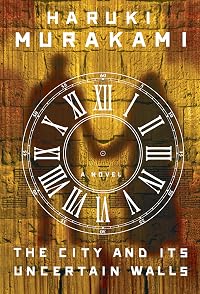
The City and Its Uncertain Walls
by Haruki Murakami
On This Page
Description
"The long-awaited new novel from Haruki Murakami, his first in six years, revisits a town his readers will remember, a place where a Dream Reader reviews dreams and where our shadows become untethered from our selves. A love story, a quest, an ode to books and to the libraries that house them, and a parable for these strange post-pandemic times, The City and Its Uncertain Walls is a singular and towering achievement by one of modern literature's most important writers"--Tags
Recommendations










Member Reviews
Haruki Murakami’s celebrated fame as an accomplished author precedes his work, and this was my first foray into Murakami’s fictional works (I’ve only read Murakami’s memoir Novelist as a Vocation prior to this). This book does not disappoint - I finished this captivating book in the span of 2 days.
The City and Its Uncertain Walls follows a nameless narrator (most of the characters other than the real-world library workers are unnamed), who falls in love with a girl during his teenage years. One day, she confesses that she is not the real her and only a shadow of a person. The real girl lives in a town that can only function via dream-reading, surrounded by an ever-changing wall, with a formidable Gatekeeper, shadow-less people, show more and unicorns.
The first part of the novel alternates between the narrator’s teenage self with his adult self, or so it would seem. As the story progresses, the narrator raises questions on what is real and what is not and how human consciousness and dreams play a role in his version of reality. The explanation of dream reading reminds me a lot of The Giver, one of my favorite books. The City and Its Uncertain Walls is wonderfully written (and translated), imaginative, and makes me feel like I’m living in the real world and the magical world at the same time. As a side note, I rated this 4 stars because the sexual references were a little clunky to me (and in my opinion, not necessary for the story).
Thanks, NetGalley for providing an ARC for review. show less
The City and Its Uncertain Walls follows a nameless narrator (most of the characters other than the real-world library workers are unnamed), who falls in love with a girl during his teenage years. One day, she confesses that she is not the real her and only a shadow of a person. The real girl lives in a town that can only function via dream-reading, surrounded by an ever-changing wall, with a formidable Gatekeeper, shadow-less people, show more and unicorns.
The first part of the novel alternates between the narrator’s teenage self with his adult self, or so it would seem. As the story progresses, the narrator raises questions on what is real and what is not and how human consciousness and dreams play a role in his version of reality. The explanation of dream reading reminds me a lot of The Giver, one of my favorite books. The City and Its Uncertain Walls is wonderfully written (and translated), imaginative, and makes me feel like I’m living in the real world and the magical world at the same time. As a side note, I rated this 4 stars because the sexual references were a little clunky to me (and in my opinion, not necessary for the story).
Thanks, NetGalley for providing an ARC for review. show less
Summary: A young couple falls in love until she disappears to a mysterious city of people without shadows.
A teenage boy meets a girl at a writing competition. They write and are drawn to each other, visiting and cuddling and longing for more. He loses his heart to her but she asks him to be patient, saying she wants to give herself wholly to him. And then she just disappears. But before this happened, she told him that her real self lived in a city with walls, unicorns, a clock tower without hands, and that in that city, she was the librarian. The girl he knew was a mere shadow of that girl.
Understandably, he longs to follow her to that city, but does not know how. He never marries and works in publishing. Then, one day when he is show more forty-five, he falls into a hole and finds himself outside the city with a wall. To enter, the Gatekeeper must remove his shadow, which will live separately. Then he must go through a painful eye treatment to fit him for his job. He will work with the girl at the library reading everything in its collection. Not books, but the dreams of past inhabitants of the city.
So, each day, he arrives, the girl makes a tea to help his eyes, and gives him egg-shaped dreams to hold and “read.” Then he walks her home along the river to the housing where she lives. But she doesn’t recognize him from their relationship outside the wall. However, his shadow interrupts this companionable routine. The shadow is dying and must return to the outside world. Finally, he is convinced, but turns back at the last minute while the shadow departs.
Yet we meet him next, not in the city but back at home. He has a shadow again. But he is dissatisfied with his life. He asks a friend to help him find a different job in a small town. He applies for a job as a director of a small library. After an interview with the founder and retiring director, Mr. Koyasu, he is hired despite his scant qualifications. Mr. Koyasu is unusual. He wears a distinctive beret and a skirt. But he drops by and mentors the man, including taking him to a secret room that is warmer in winter. Only later do we learn that Mr. Koyasu is dead. A shade if not a shadow!
He finds Koyasu’s grave and talks to him on his days off. And he meets a woman who owns a nearby coffee shop. It appears that, if not first love, then some kind of love might be possible. Except a boy turns up who reads at the library every day, and knowing your birthday, can tell you the day on which you were born. Apart from that, he doesn’t communicate. Yet he connects with the director. And one day he overhears him talking to Mr. Koyasu at the grave about the city…
Shadow and substance. What is real? Murakami gives us his own version of Socrates’ Cave. And do we not sometimes feel alien to our own world, and think there might be another where we are more at home? And yet the nameless narrator doesn’t find his real love in the city without shadows–nor in this one. We wonder if he will accept the possibility of love in front of him from the coffee shop owner. Apart from that relationship, one feels he is living a shadow existence, unconnected with others in the town.
This is the second Murakami novel I’ve read, and I find myself drawn to his narrative voice. It is both quiet and evocative without becoming overpowering. He draws the reader into the mental and emotional landscape of his main character. Then he throws enough surprises and twist in to keep it interesting and make you wonder where this is going.
Murakami adds a fascinating postscript. He first wrote this story as a novella forty years ago but never was satisfied with the ending. This work is a re-working as he finally found a way to complete the story. We learn he added parts two and three. I’ve not read the earlier work. I’d like to hear from Murakami fans who have read both this and the earlier novella. Do you think he succeeded? show less
A teenage boy meets a girl at a writing competition. They write and are drawn to each other, visiting and cuddling and longing for more. He loses his heart to her but she asks him to be patient, saying she wants to give herself wholly to him. And then she just disappears. But before this happened, she told him that her real self lived in a city with walls, unicorns, a clock tower without hands, and that in that city, she was the librarian. The girl he knew was a mere shadow of that girl.
Understandably, he longs to follow her to that city, but does not know how. He never marries and works in publishing. Then, one day when he is show more forty-five, he falls into a hole and finds himself outside the city with a wall. To enter, the Gatekeeper must remove his shadow, which will live separately. Then he must go through a painful eye treatment to fit him for his job. He will work with the girl at the library reading everything in its collection. Not books, but the dreams of past inhabitants of the city.
So, each day, he arrives, the girl makes a tea to help his eyes, and gives him egg-shaped dreams to hold and “read.” Then he walks her home along the river to the housing where she lives. But she doesn’t recognize him from their relationship outside the wall. However, his shadow interrupts this companionable routine. The shadow is dying and must return to the outside world. Finally, he is convinced, but turns back at the last minute while the shadow departs.
Yet we meet him next, not in the city but back at home. He has a shadow again. But he is dissatisfied with his life. He asks a friend to help him find a different job in a small town. He applies for a job as a director of a small library. After an interview with the founder and retiring director, Mr. Koyasu, he is hired despite his scant qualifications. Mr. Koyasu is unusual. He wears a distinctive beret and a skirt. But he drops by and mentors the man, including taking him to a secret room that is warmer in winter. Only later do we learn that Mr. Koyasu is dead. A shade if not a shadow!
He finds Koyasu’s grave and talks to him on his days off. And he meets a woman who owns a nearby coffee shop. It appears that, if not first love, then some kind of love might be possible. Except a boy turns up who reads at the library every day, and knowing your birthday, can tell you the day on which you were born. Apart from that, he doesn’t communicate. Yet he connects with the director. And one day he overhears him talking to Mr. Koyasu at the grave about the city…
Shadow and substance. What is real? Murakami gives us his own version of Socrates’ Cave. And do we not sometimes feel alien to our own world, and think there might be another where we are more at home? And yet the nameless narrator doesn’t find his real love in the city without shadows–nor in this one. We wonder if he will accept the possibility of love in front of him from the coffee shop owner. Apart from that relationship, one feels he is living a shadow existence, unconnected with others in the town.
This is the second Murakami novel I’ve read, and I find myself drawn to his narrative voice. It is both quiet and evocative without becoming overpowering. He draws the reader into the mental and emotional landscape of his main character. Then he throws enough surprises and twist in to keep it interesting and make you wonder where this is going.
Murakami adds a fascinating postscript. He first wrote this story as a novella forty years ago but never was satisfied with the ending. This work is a re-working as he finally found a way to complete the story. We learn he added parts two and three. I’ve not read the earlier work. I’d like to hear from Murakami fans who have read both this and the earlier novella. Do you think he succeeded? show less
A listless, uninspired, passive young man. A brooding, unsatisfied, troubled young woman. Unrequited love. Jazz music. Cats. Occasional episodes of unremarkable lovemaking. Books. Unresolved plot strands. Magical realism. Moments of literary flourish that flirt with magnificence. Clocks. Fine writing. Insipid prose. Prolonged solitude. Mysterious circumstances. An earlobe fetish. Bizarre incidents unquestioned and unexplored. Beatles tunes. Ghosts. Quotidian monotony. Fantastical beasts. Technology, conspicuous in its absence. Imaginary OtherWorlds. Sophisticated metaphor. Anticlimactic endings.
If each of these descriptions was lettered on the twenty-five squares of a standard bingo card and you checked them all off, the result would be show more the elements that occur in all or most of the fiction of renowned Japanese author Haruki Murakami. I know this because I have, over the years, read them all. All the novels. All the short stories. For the afficionado like myself, Murakami has become something of an addiction that—like most addictions—begets both pleasure and pain. That is because, as every Murakami cult initiate is aware, the body of his work at once translates to genius and frustration, literature and pulp, the brilliant and the banal. And this is true too for his latest novel, The City and Its Uncertain Walls [published in Japan 2023; English translation 2024], a well-written if meandering and ultimately unsatisfying tale.
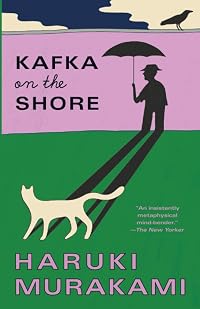
For the most part, the Murakami catalog falls into two distinct categories: standard literary fiction, like Norwegian Wood—his breakout bestseller of nostalgia and loss—and magical realism, such as Kafka on the Shore, an extraordinary fusion of reality and fantasy. Had the former been my first read, I might not have gone back for more, because despite its superb craftmanship, it just didn’t suit my vibe. Instead, a random recommendation from a chatty barista pointed me to Kafka. I bought it. I devoured it. I was hooked.
I have long had a love affair with magical realism, sparked initially by encounters with Gabriel Garcia Marquez (One Hundred Years of Solitude) and nurtured in more recent times by Richard Flanagan (Gould’s Book of Fish). It’s a tricky genre, not easy to pull off elegantly. To my mind, its closest cousin is the objective correlative, a technique popularized by both Hemingway and Garcia Marquez, that has inanimate objects communicate mood and emotion. Magical realism takes a big step beyond that, typically inserting an episode of the fantastical, often teeming with irony and metaphor, into a narrative otherwise grounded in reality. At a certain point in One Hundred Years of Solitude, Garcia Marquez has it persistently rain upon the fictional town of Macondo without respite for four years, eleven months, and two days. In Kafka on the Shore, the main character encounters a pair of youthful World War II era Imperial soldiers in the forest who are stuck in time, decades after Hiroshima.
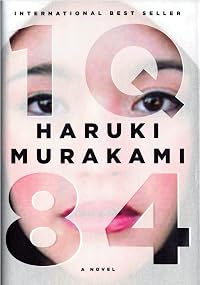
Another manifestation of magical realism constructs an alternate world that has characters slip between dual realities, either or both subject to supernational ingredients that are usually taken for granted by its inhabitants. That is the literary structure for Flanagan’s Gould’s Book of Fish, which blends and blurs the timelines of a twenty-first century Tasmanian con-man and a nineteenth century convict in what was then Van Dieman’s Land. So too in Murakami’s 1Q84, where a female assassin stalks dual dimensions, one remarkable for an earth that hosts two moons.
The latter style forms the framework for The City and Its Uncertain Walls. (Spoiler alert ahead!) This time around, a seventeen year old listless, uninspired, passive young man whose only companion is his pet cat falls for a sixteen year old brooding, unsatisfied, troubled young woman. She describes for him an imaginary OtherWorld of a walled city with shifting boundaries dominated by a large clock with no hands, where people who cast no shadows cohabitate with fantastical beasts—in this case unicorns who perish at an alarming rate and are cremated in burn pits outside the city walls by a powerful figure, the “Gatekeeper.” Then the girl disappears from his life, and he pines for her. Through mysterious circumstances, one version of the protagonist somehow manages to cross over to the dreamscape of the walled city and is admitted by the Gatekeeper, who separates him from his shadow and damages his eyes in such a way that now he is capable of reading dreams stored at the city’s library, where he is installed as the “Dream Reader,” as the girl once predicted. The girl, who has not aged, also works at the library, but has no memory of him. Meanwhile, his other incarnation in the “real” world is so paralyzed by unrequited love that he can never free himself of longing for the girl, even as he turns to middle age in a life marked by prolonged solitude. He quits his job and moves far away to take a position as head librarian in a remote village where he manages a collection of books rather than dreams. Although set in contemporary times where cell phones and computers abound, in this particular library technology is conspicuous in its absence. But magical realism intrudes here too. Bizarre incidents go unquestioned and unexplored. Then it turns out that his predecessor, who frequents the library to offer anecdotes and advice, is actually a ghost, which upon discovery is treated as oddly unremarkable. Ultimately, the novel disappoints. What at first makes for a compelling narrative that promises to blaze a trail of fascinating possibilities within each of the dual worlds, instead wanders around interminably in successive chapters, fine writing punctuated by insipid prose, and finally narrows to multiple paths of unresolved plot strands and a frustrating anticlimax. Along the way, there is Beatles symbolism as well as a bizarre variation on the earlobe fetish. And that’s a BINGO!
For me, it was quite a letdown. The grand attempts at metaphor strike as forced, at times even cliché. Again and again, Murakami seems to try too hard. Early on, I began to compare the boy’s unresolved longing for the girl to the star-crossed lovers of Garcia Marquez’s Love in the Time of Cholera. So I winced when the character Koyasu casually cites Love in the Time of Cholera in conversation, as if rubbing the reader’s nose in it. I then face-palmed when she defined “magical realism” for us. I wondered how Murakami could go so wrong.
A partial explanation can be found in the “Afterword,” where the author reveals that this book is a reworking of a novella he published in 1980 (but never permitted to be reprinted), and the mystical city is closely related to the one he fashioned in his 1985 novel Hard-Boiled Wonderland and the End of the World. He admits he was dissatisfied with the original story and had always hoped to expand it. To my mind, he should have known better. The writer of the novella was in his early thirties; the author of the novel in his early seventies. They are at once the same man but yet very different men, separated by four decades. Vanity projects often fail. Failure is too strong a word here, but this one certainly falls short.
It was Murakami’s first novel in six years, and I had long anticipated it, especially because I rather disliked his previous two, Killing Commendatore, and Colorless Tsukuru Tazaki and His Years of Pilgrimage. I was hoping instead for something along the lines of magnificence found between the covers of The Wind-Up Bird Chronicle, Sputnik Sweetheart, 1Q84, or, of course, Kafka on the Shore. That was not to be. And yet … And yet, it is not a terrible novel. Despite the flaws—and these are manifold—this work remains thought-provoking and, certainly for Murakami fans, well worth the time. While I mourn the missteps and the unrealized potential, I do not regret reading it.
NOTE: I have reviewed other works by Murakami here:
Men Without Women: https://regarp.com/2017/07/12/review-of-men-without-women-by-haruki-murakami/
South of the Border, West of the Sun: https://regarp.com/2015/12/26/review-of-south-of-the-border-west-of-the-sun-by-h...
Hear the Wind Sing & Pinball 1973: https://regarp.com/2015/11/26/review-of-hear-the-wind-sing-and-pinball-1973-by-h...
After the Quake: https://regarp.com/2015/09/09/review-of-after-the-quake-by-haruki-murakami/
Sputnik Sweetheart: https://regarp.com/2015/05/30/review-of-sputnik-sweetheart-by-haruki-murakami/
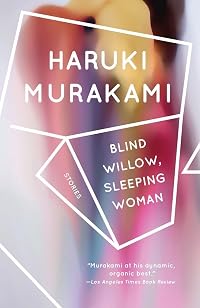
Blind Willow, Sleeping Woman: https://regarp.com/2015/05/17/review-of-blind-willow-sleeping-woman-by-haruki-mu...
Killing Commendatore: https://regarp.com/2018/12/10/review-of-killing-commendatore-by-haruki-murakami/
NOTE: For the uninitiated, a free taste of Murakami—his outstanding 2014 short story “Scheherazade” from Men Without Women—is available online at: http://www.newyorker.com/magazine/2014/10/13/scheherazade-3
Review of The City and Its Uncertain Walls, by Haruki Murakami https://regarp.com/2025/05/01/review-of-the-city-and-its-uncertain-walls-by-haru... show less
If each of these descriptions was lettered on the twenty-five squares of a standard bingo card and you checked them all off, the result would be show more the elements that occur in all or most of the fiction of renowned Japanese author Haruki Murakami. I know this because I have, over the years, read them all. All the novels. All the short stories. For the afficionado like myself, Murakami has become something of an addiction that—like most addictions—begets both pleasure and pain. That is because, as every Murakami cult initiate is aware, the body of his work at once translates to genius and frustration, literature and pulp, the brilliant and the banal. And this is true too for his latest novel, The City and Its Uncertain Walls [published in Japan 2023; English translation 2024], a well-written if meandering and ultimately unsatisfying tale.
For the most part, the Murakami catalog falls into two distinct categories: standard literary fiction, like Norwegian Wood—his breakout bestseller of nostalgia and loss—and magical realism, such as Kafka on the Shore, an extraordinary fusion of reality and fantasy. Had the former been my first read, I might not have gone back for more, because despite its superb craftmanship, it just didn’t suit my vibe. Instead, a random recommendation from a chatty barista pointed me to Kafka. I bought it. I devoured it. I was hooked.
I have long had a love affair with magical realism, sparked initially by encounters with Gabriel Garcia Marquez (One Hundred Years of Solitude) and nurtured in more recent times by Richard Flanagan (Gould’s Book of Fish). It’s a tricky genre, not easy to pull off elegantly. To my mind, its closest cousin is the objective correlative, a technique popularized by both Hemingway and Garcia Marquez, that has inanimate objects communicate mood and emotion. Magical realism takes a big step beyond that, typically inserting an episode of the fantastical, often teeming with irony and metaphor, into a narrative otherwise grounded in reality. At a certain point in One Hundred Years of Solitude, Garcia Marquez has it persistently rain upon the fictional town of Macondo without respite for four years, eleven months, and two days. In Kafka on the Shore, the main character encounters a pair of youthful World War II era Imperial soldiers in the forest who are stuck in time, decades after Hiroshima.
Another manifestation of magical realism constructs an alternate world that has characters slip between dual realities, either or both subject to supernational ingredients that are usually taken for granted by its inhabitants. That is the literary structure for Flanagan’s Gould’s Book of Fish, which blends and blurs the timelines of a twenty-first century Tasmanian con-man and a nineteenth century convict in what was then Van Dieman’s Land. So too in Murakami’s 1Q84, where a female assassin stalks dual dimensions, one remarkable for an earth that hosts two moons.
The latter style forms the framework for The City and Its Uncertain Walls. (Spoiler alert ahead!) This time around, a seventeen year old listless, uninspired, passive young man whose only companion is his pet cat falls for a sixteen year old brooding, unsatisfied, troubled young woman. She describes for him an imaginary OtherWorld of a walled city with shifting boundaries dominated by a large clock with no hands, where people who cast no shadows cohabitate with fantastical beasts—in this case unicorns who perish at an alarming rate and are cremated in burn pits outside the city walls by a powerful figure, the “Gatekeeper.” Then the girl disappears from his life, and he pines for her. Through mysterious circumstances, one version of the protagonist somehow manages to cross over to the dreamscape of the walled city and is admitted by the Gatekeeper, who separates him from his shadow and damages his eyes in such a way that now he is capable of reading dreams stored at the city’s library, where he is installed as the “Dream Reader,” as the girl once predicted. The girl, who has not aged, also works at the library, but has no memory of him. Meanwhile, his other incarnation in the “real” world is so paralyzed by unrequited love that he can never free himself of longing for the girl, even as he turns to middle age in a life marked by prolonged solitude. He quits his job and moves far away to take a position as head librarian in a remote village where he manages a collection of books rather than dreams. Although set in contemporary times where cell phones and computers abound, in this particular library technology is conspicuous in its absence. But magical realism intrudes here too. Bizarre incidents go unquestioned and unexplored. Then it turns out that his predecessor, who frequents the library to offer anecdotes and advice, is actually a ghost, which upon discovery is treated as oddly unremarkable. Ultimately, the novel disappoints. What at first makes for a compelling narrative that promises to blaze a trail of fascinating possibilities within each of the dual worlds, instead wanders around interminably in successive chapters, fine writing punctuated by insipid prose, and finally narrows to multiple paths of unresolved plot strands and a frustrating anticlimax. Along the way, there is Beatles symbolism as well as a bizarre variation on the earlobe fetish. And that’s a BINGO!
For me, it was quite a letdown. The grand attempts at metaphor strike as forced, at times even cliché. Again and again, Murakami seems to try too hard. Early on, I began to compare the boy’s unresolved longing for the girl to the star-crossed lovers of Garcia Marquez’s Love in the Time of Cholera. So I winced when the character Koyasu casually cites Love in the Time of Cholera in conversation, as if rubbing the reader’s nose in it. I then face-palmed when she defined “magical realism” for us. I wondered how Murakami could go so wrong.
A partial explanation can be found in the “Afterword,” where the author reveals that this book is a reworking of a novella he published in 1980 (but never permitted to be reprinted), and the mystical city is closely related to the one he fashioned in his 1985 novel Hard-Boiled Wonderland and the End of the World. He admits he was dissatisfied with the original story and had always hoped to expand it. To my mind, he should have known better. The writer of the novella was in his early thirties; the author of the novel in his early seventies. They are at once the same man but yet very different men, separated by four decades. Vanity projects often fail. Failure is too strong a word here, but this one certainly falls short.
It was Murakami’s first novel in six years, and I had long anticipated it, especially because I rather disliked his previous two, Killing Commendatore, and Colorless Tsukuru Tazaki and His Years of Pilgrimage. I was hoping instead for something along the lines of magnificence found between the covers of The Wind-Up Bird Chronicle, Sputnik Sweetheart, 1Q84, or, of course, Kafka on the Shore. That was not to be. And yet … And yet, it is not a terrible novel. Despite the flaws—and these are manifold—this work remains thought-provoking and, certainly for Murakami fans, well worth the time. While I mourn the missteps and the unrealized potential, I do not regret reading it.
NOTE: I have reviewed other works by Murakami here:
Men Without Women: https://regarp.com/2017/07/12/review-of-men-without-women-by-haruki-murakami/
South of the Border, West of the Sun: https://regarp.com/2015/12/26/review-of-south-of-the-border-west-of-the-sun-by-h...
Hear the Wind Sing & Pinball 1973: https://regarp.com/2015/11/26/review-of-hear-the-wind-sing-and-pinball-1973-by-h...
After the Quake: https://regarp.com/2015/09/09/review-of-after-the-quake-by-haruki-murakami/
Sputnik Sweetheart: https://regarp.com/2015/05/30/review-of-sputnik-sweetheart-by-haruki-murakami/
Blind Willow, Sleeping Woman: https://regarp.com/2015/05/17/review-of-blind-willow-sleeping-woman-by-haruki-mu...
Killing Commendatore: https://regarp.com/2018/12/10/review-of-killing-commendatore-by-haruki-murakami/
NOTE: For the uninitiated, a free taste of Murakami—his outstanding 2014 short story “Scheherazade” from Men Without Women—is available online at: http://www.newyorker.com/magazine/2014/10/13/scheherazade-3
Review of The City and Its Uncertain Walls, by Haruki Murakami https://regarp.com/2025/05/01/review-of-the-city-and-its-uncertain-walls-by-haru... show less
oco se imagina el joven protagonista de esta novela que la chica de la que se ha enamorado está a punto de desaparecer de su vida. Se han conocido durante un concurso entre estudiantes de diferentes institutos, y no pueden verse muy a menudo. En sus encuentros, sentados bajo la glicinia de un parque o paseando a orillas de un río, la joven empieza a hablarle de una extraña ciudad amurallada, situada, al parecer, en otro mundo; poco a poco, ella acaba confesándole su inquietante sensación de que su verdadero yo se halla en esa misteriosa ciudad. De pronto, entrado el otoño, el protagonista recibe una carta de ella que quizá suponga una despedida, y eso lo sume en una profunda tristeza. Tendrán que pasar años antes de que pueda show more atisbar alguna posibilidad de reencontrarla. Y sin embargo, esa ciudad, tal y como ella la describió, existe. Porque todo es posible en este asombroso universo donde la realidad, la identidad, los sueños y las sombras fluctúan y escapan a los rígidos límites de la lógica. show less
I felt this had a very slow start, but once I got about one third to one half the way in, it opened up for me. That's a heavy investment on the front end, but I feel like it was worth it. (I doubt Murakami is worried about what I think?)
I do not cope well with young men who throw their whole lives into women they might as well be imagining. I would smash all pedestals. Despite their protests that they do not have expectations of anything towards their object of worship, the strength of adoration weighs heavily and distorts everything around it. It does not allow for the focus of the worship to be a real person; the expectation of being worthy of this intense of a feeling is enough to create change. Insert a misapplied analogy of the show more physics of observation on a quantum level changing outcomes here.
So no, I disliked our narrator as a young man, in his high school years and in the city. I kept reading because Murakami writes stories that are worth reading. Once we got to the library, things became easier for me. If you were to graph how long it took me to read this, you could tell exactly when it went from becoming a chore to become an enjoyable experience.
It is a good book. I do not think most people will be bothered by the things I am, and even if you are, I think it's worth reading past them. But they are, definitely, present.
I received a free electronic ARC of this book from the publisher via Netgalley in exchange for an honest review. show less
I do not cope well with young men who throw their whole lives into women they might as well be imagining. I would smash all pedestals. Despite their protests that they do not have expectations of anything towards their object of worship, the strength of adoration weighs heavily and distorts everything around it. It does not allow for the focus of the worship to be a real person; the expectation of being worthy of this intense of a feeling is enough to create change. Insert a misapplied analogy of the show more physics of observation on a quantum level changing outcomes here.
So no, I disliked our narrator as a young man, in his high school years and in the city. I kept reading because Murakami writes stories that are worth reading. Once we got to the library, things became easier for me. If you were to graph how long it took me to read this, you could tell exactly when it went from becoming a chore to become an enjoyable experience.
It is a good book. I do not think most people will be bothered by the things I am, and even if you are, I think it's worth reading past them. But they are, definitely, present.
I received a free electronic ARC of this book from the publisher via Netgalley in exchange for an honest review. show less
Murakami novels evoke a certain kind of feeling, a certain mood. At first I wasn’t really feeling it with this book, but before long I inevitably found myself immersed within these uncertain pages.
Libraries, dreams, young love,...what better life could there be? Well, in Murakami's world all is not what it seems. If you believe in a parallel universe then this tale, with its Unicorns and city with impenetrable walls, where old dreams, instead of books, are read, where shadows can separate from the self, and where the visible spirit of a dead man provides wise guidance, will make perfect sense. For the rest of us, we are treated to a fantastical story that suspends belief - perfect escapism to and for a troubled world. Not quite the masterpiece of the Wind-Up Bird Chronicle, nonetheless a novel worthy of your time and consideration.
Members
- Recently Added By
Lists

Five star books
1,755 works; 108 members

Books Read in 2024
4,623 works; 126 members

LoanStars | Adult List: November 2024
10 works; 1 member

Top Five Books of 2024
795 works; 264 members

Books Read in 2025
4,091 works; 97 members

2026
18 works; 1 member
Author Information

292+ Works 174,542 Members
Haruki Murakami was born on January 12, 1949 in Kyoto, Japan and studied at Tokyo's Waseda University. He opened a coffeehouse/jazz bar in the capital called Peter Cat with his wife. He became a full-time author following the publication of his first novel, Hear the Wind Sing, in 1979. He writes both fiction and non-fiction works. His fiction show more works include Norwegian Wood, Colorless Tsukuru Tazaki and His Years of Pilgrimage, The Strange Library, and Men Without Women. Several of his stories have been adapted for the stage and as films. His nonfiction works include What I Talk About When I Talk About Running. He has received numerous literary awards including the Franz Kafka Prize for Kafka on the Shore, the Yomiuri Prize for The Wind-Up Bird Chronicle, and the Jerusalem Prize. He has translated into Japanese literature written by F. Scott Fitzgerald, Raymond Carver, Truman Capote, John Irving, and Paul Theroux. (Bowker Author Biography) show less
Some Editions
Awards and Honors
Awards
Distinctions
Series
Belongs to Publisher Series
Empúries Narrativa (625)
Common Knowledge
- Canonical title
- The City and Its Uncertain Walls
- Original title
- 街とその不確かな壁; Machi to sono Futashikana Kabe
- Original publication date
- 2023
- Epigraph
- Where Alph, the sacred river, ran
Through caverns measureless to man
Down to a sunless sea.
—Samuel Taylor Coleridge, Kubka Khan - First words
- You were the one who told me about the town.
On that summer evening we were heading up the river, the sweet fragrance of grass wafting over us. We passed over several little weirs that held back the flowing sand, stopp... (show all)ing from time to time to gaze at the delicate silvery fish wriggling in the pools. We had both been barefoot for a while. The cold water washed over our ankles, while the fine sand at the bottom of the river enveloped our feet like soft clouds in a dream. I was seventeen and you were a year younger. - Original language
- Japanese
- Canonical DDC/MDS
- 895.636
- Canonical LCC
- PL856.U673 M3313
Classifications
- Genres
- General Fiction, Fiction and Literature, Fantasy
- DDC/MDS
- 895.636 — Literature & rhetoric Literatures of other languages Literatures of East and Southeast Asia Japanese Japanese fiction 2000–
- LCC
- PL856 .U673 .M3313 — Language and Literature Languages and literatures of Eastern Asia, Africa, Oceania Languages of Eastern Asia, Africa, Oceania Japanese language and literature Japanese literature Individual authors and works
- BISAC
Statistics
- Members
- 1,496
- Popularity
- 15,483
- Reviews
- 45
- Rating
- (3.72)
- Languages
- 16 — Catalan, Chinese, Danish, Dutch, English, Finnish, French, German, Hungarian, Italian, Japanese, Korean, Portuguese, Serbian, Spanish, Swedish
- Media
- Paper, Audiobook, Ebook
- ISBNs
- 49
- ASINs
- 17