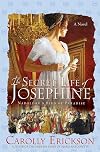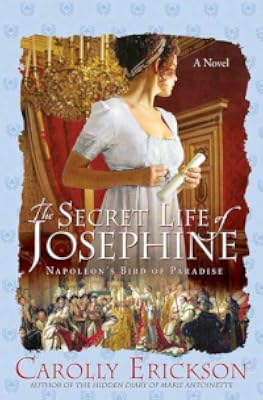
The Secret Life of Josephine: Napoleon's Bird of Paradise
by Carolly Erickson
On This Page
Description
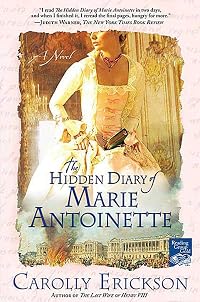
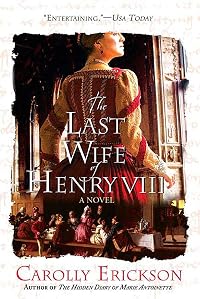
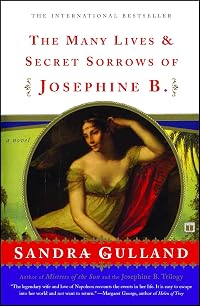
The bestselling author of The Hidden Diary of Marie Antoinette and The Last Wife of Henry VIII returns with an enchanting novel about one of the most seductive women in history: Josephine Bonaparte, first wife of Napoleon.Born on the Caribbean island of Martinique, Josephine had anexotic Creole appeal that would ultimately propel her to reign over an empire as wife of the most powerful man in the world. But her life is a story of ambition and danger, of luck and a ferocious will to survive. show more Married young to an arrogant French aristocrat who died during the Terror, Josephine also narrowly missed losing her head to the guillotine. But her extraordinary charm, sensuality, and natural cunning helped her become mistress to some of the most powerful politicians in post-Revolutionary France. Soon she had married the much younger General Bonaparte, whose armies garnered France an empire that ran from Europe to Africa and the New World and who crowned himself and his wife Emperor and Empress of France. He dominated on the battlefield and she presided over the worlds of fashion and glamor. But Josephine's heart belonged to another man--the mysterious, compelling stranger who had won her as a girl in Martinique. show lessTags
Recommendations
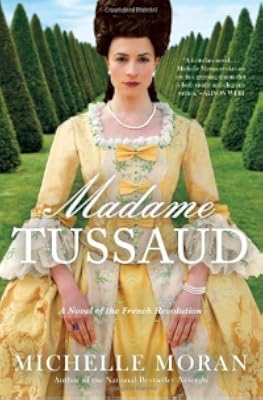
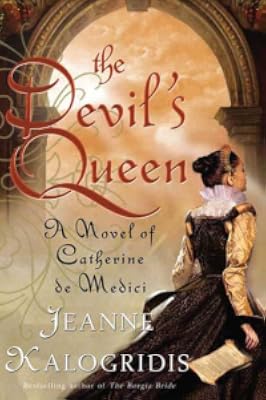
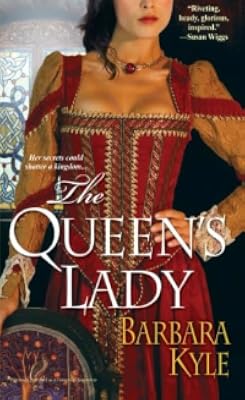
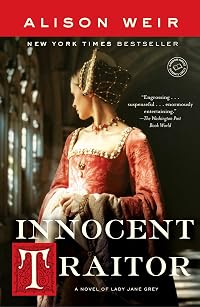




Member Recommendations
Member Reviews
So I loved this, predominantly because it was a lovely piece of historical fiction that DIDN'T center around one of the many wives of Henry VIII or the royal court of his daughter Elizabeth I. Unfortunately it feels like that's the majority of what's out there anymore.
ANYWAY! I loved this. Josephine, or Rose, or Yayette (sp?) or whatever name you want to give this spirited woman, was a spectacular character. I really enjoyed her spunk and cunning, even if she was made to seem like a bit of a tramp at times. I wish there was more to her character, but I think the point of the book was really to show what all she went through on her way to the top. Perhaps there wasn't enough information available on any particular point in her life for show more Erickson to make a complete story? I don't know. It probably worked out better this way anyway because you really got a lot of on Josephine's upbringing, which really helped to explain some of her actions and personality quirks. I particularly enjoyed the strong relationship that was illustrated between Yayette and her half sister/maid Euphemia.
Actually, come to think of it, I think my favorite aspect of this story was the extreme contrasts among many of Josephine's relationships. Both her marriages were... tough, at best and downright abusive at their worst. In contrast, however, her relationship with Donovan was strong, and passionate. Scipion's relationship with the Martinique blue-blood was strong as well, yet gentle. It read like the kind of love story that any woman would love to be a part of, despite there being so little of it, the victim of poor timing. Getting away from the Empress's romantic relationships, we see the caring, mother-like presence of Euphemia and Josephine, likewise, looks to her almost as both mother and sister. Josephine's mother, by contrast, is always shown as harsh and cold. Josephine seems to love her more out of obligation that actual emotion. To continue in a similar vein, the Empress's relationship with her first father-in-law is sweet. We don't get too much information about it, but the man seems genuinely concerned for her well being. In direct contrast, every single one of her in-laws from her second marriage complete loath her and enjoy tormenting her in one way or another. There's no love lost there.
I would definitely tell people to give this book a shot, particularly if you enjoy historical fiction from a perspective that isn't completely war-fuled and are sick of Elizabeth I, the Boleyns, and the rest of Henry VIII's wives. show less
ANYWAY! I loved this. Josephine, or Rose, or Yayette (sp?) or whatever name you want to give this spirited woman, was a spectacular character. I really enjoyed her spunk and cunning, even if she was made to seem like a bit of a tramp at times. I wish there was more to her character, but I think the point of the book was really to show what all she went through on her way to the top. Perhaps there wasn't enough information available on any particular point in her life for show more Erickson to make a complete story? I don't know. It probably worked out better this way anyway because you really got a lot of on Josephine's upbringing, which really helped to explain some of her actions and personality quirks. I particularly enjoyed the strong relationship that was illustrated between Yayette and her half sister/maid Euphemia.
Actually, come to think of it, I think my favorite aspect of this story was the extreme contrasts among many of Josephine's relationships. Both her marriages were... tough, at best and downright abusive at their worst. In contrast, however, her relationship with Donovan was strong, and passionate. Scipion's relationship with the Martinique blue-blood was strong as well, yet gentle. It read like the kind of love story that any woman would love to be a part of, despite there being so little of it, the victim of poor timing. Getting away from the Empress's romantic relationships, we see the caring, mother-like presence of Euphemia and Josephine, likewise, looks to her almost as both mother and sister. Josephine's mother, by contrast, is always shown as harsh and cold. Josephine seems to love her more out of obligation that actual emotion. To continue in a similar vein, the Empress's relationship with her first father-in-law is sweet. We don't get too much information about it, but the man seems genuinely concerned for her well being. In direct contrast, every single one of her in-laws from her second marriage complete loath her and enjoy tormenting her in one way or another. There's no love lost there.
I would definitely tell people to give this book a shot, particularly if you enjoy historical fiction from a perspective that isn't completely war-fuled and are sick of Elizabeth I, the Boleyns, and the rest of Henry VIII's wives. show less
In an afternote to the reader, Carolly Erickson describes this (and her then-previous novels The Hidden Diary of Marie Antoinette and The Last Wife of Henry VIII) as "a historical entertainment, not a historical novel" and "a way of blending fact and whimsy...[a] somewhat frothy mix." If you are looking for good historical fiction about Marie Josèphe Rose Tascher de La Pagerie de Beauharnais, better known as Josephine Bonaparte, there are far better books out there.
Hopefully readers will see the afternote - unfortunately, it was not included in the audiobook I listened to - as it clarifies that the real Josephine never went to Russia (probably the most ridiculous thing that happened in this book), among other liberties with the truth. show more The other inventions I found easier to accept, as they were more in character with the real Josephine, but the trip to Russia during Napoleon's defeat there was just too over the top for me to stomach.
Like Alison Weir, Erickson has written nonfiction biographies of many of the subjects of her "historical entertainments," and I'd be interested in reading one to evaluate its scholarship and readability.
Actress and acting professor Margot Dionne has a perfect voice for Josephine, who narrates the story - just vivacious and coquettish enough. However, when she put on thick French accents for some of the minor characters, I found her very difficult to understand.
This is a fun read, as long as the reader/listener understands that it is only VERY loosely based on the truth.
© Amanda Pape - 2015
[The audiobook, and a print copy for reference, were borrowed from and returned to my local public library. This review also appears on Bookin' It] show less
Hopefully readers will see the afternote - unfortunately, it was not included in the audiobook I listened to - as it clarifies that the real Josephine never went to Russia (probably the most ridiculous thing that happened in this book), among other liberties with the truth. show more The other inventions I found easier to accept, as they were more in character with the real Josephine, but the trip to Russia during Napoleon's defeat there was just too over the top for me to stomach.
Like Alison Weir, Erickson has written nonfiction biographies of many of the subjects of her "historical entertainments," and I'd be interested in reading one to evaluate its scholarship and readability.
Actress and acting professor Margot Dionne has a perfect voice for Josephine, who narrates the story - just vivacious and coquettish enough. However, when she put on thick French accents for some of the minor characters, I found her very difficult to understand.
This is a fun read, as long as the reader/listener understands that it is only VERY loosely based on the truth.
© Amanda Pape - 2015
[The audiobook, and a print copy for reference, were borrowed from and returned to my local public library. This review also appears on Bookin' It] show less
Wow Josephine. You’re quite saucy. Very saucy. I found it a little hard to like her. She seemed superficial, flaky, and although I’m sure she was a good mother, there was just something about her I could not sympathize with. Perhaps she’s just too much of a party animal for her own good. It annoyed me though, with her behavior towards Napoleon and when the tables turned on her she had the galls to say:
“I felt a pang, for until now I believed that he had been faithful to me. I knew I had no right to expect fidelity as I had a lover of my own. Yet the thought of my husband with another woman was surprisingly hurtful to me.”
Whatever Josephine. It’s okay if you act that way, but when someone does the same thing to you, you show more feel the right to whine and cry about it. Go find the next man on your list of many and move on. That is not to say that Napoleon was a saint. He was far from it and I just couldn't understand why she put up with his horrible treatment. So, I really didn’t find any of the characters in the book that likable. Despite this though, I did enjoy reading this book. The history in it was well written and detailed. I liked the detailed setting of Martinique, and how it might have been back then. The descriptions on how chaotic France was during this time was good enough to give you the atmosphere and feel of the time and how horrible the Reign of Terror really was although, even then Josephine found a way to “have fun” it’s like she was on very strong Viagra medication all throughout this time, and throughout the book. I’d have to say at least there wasn’t much in terms of explicit scenes regarding her exploits. Otherwise I probably wouldn’t have read the book from cover to cover.
Regarding the “stranger” that she fell in love with on Martinique. I thought it was a little strange at first. Especially when she first meets this person. I didn’t think he actually existed (apparently, she was visited by someone while sleeping and it felt like a dream) that particular sequence got me wondering why was this included and what was the point? I wondered if maybe it had to do with the spiritual theme of Martinique and what the slaves believed in. However I thought that part was just unnecessary and even silly. It just didn’t need to be there. As the book progresses, the stranger is finally explained and the mystery surrounding him is lifted. It was a tolerable explanation, but at least I finally knew he actually existed.
Basically it boils down to this; I liked the book because of the history surrounding Josephine and Napoleon. The writing was good and the historical setting was excellent and definitely gave the reader a good sense of the scene and the events surrounding these two important historical figures. I believe Josephine’s exploits were just added to make the story more entertaining and more interesting. However that’s where it fails. I think the reader would prefer reading more on Josephine’s volatile relationship with Napoleon instead of her wild escapades with other men. If the reader could ignore that (hard to do, as it’s mentioned a lot throughout the book) and just focus on the historical aspect of the book, you could say, that it’s a decent enough book to read. show less
“I felt a pang, for until now I believed that he had been faithful to me. I knew I had no right to expect fidelity as I had a lover of my own. Yet the thought of my husband with another woman was surprisingly hurtful to me.”
Whatever Josephine. It’s okay if you act that way, but when someone does the same thing to you, you show more feel the right to whine and cry about it. Go find the next man on your list of many and move on. That is not to say that Napoleon was a saint. He was far from it and I just couldn't understand why she put up with his horrible treatment. So, I really didn’t find any of the characters in the book that likable. Despite this though, I did enjoy reading this book. The history in it was well written and detailed. I liked the detailed setting of Martinique, and how it might have been back then. The descriptions on how chaotic France was during this time was good enough to give you the atmosphere and feel of the time and how horrible the Reign of Terror really was although, even then Josephine found a way to “have fun” it’s like she was on very strong Viagra medication all throughout this time, and throughout the book. I’d have to say at least there wasn’t much in terms of explicit scenes regarding her exploits. Otherwise I probably wouldn’t have read the book from cover to cover.
Regarding the “stranger” that she fell in love with on Martinique. I thought it was a little strange at first. Especially when she first meets this person. I didn’t think he actually existed (apparently, she was visited by someone while sleeping and it felt like a dream) that particular sequence got me wondering why was this included and what was the point? I wondered if maybe it had to do with the spiritual theme of Martinique and what the slaves believed in. However I thought that part was just unnecessary and even silly. It just didn’t need to be there. As the book progresses, the stranger is finally explained and the mystery surrounding him is lifted. It was a tolerable explanation, but at least I finally knew he actually existed.
Basically it boils down to this; I liked the book because of the history surrounding Josephine and Napoleon. The writing was good and the historical setting was excellent and definitely gave the reader a good sense of the scene and the events surrounding these two important historical figures. I believe Josephine’s exploits were just added to make the story more entertaining and more interesting. However that’s where it fails. I think the reader would prefer reading more on Josephine’s volatile relationship with Napoleon instead of her wild escapades with other men. If the reader could ignore that (hard to do, as it’s mentioned a lot throughout the book) and just focus on the historical aspect of the book, you could say, that it’s a decent enough book to read. show less
Eh. Deviates from real history SO MUCH it was destressing. It's not like the real story isn't interesting enough. Too much fiction and not enough history.
I read a lot of books. I read a lot of historical fiction books, but never have I read anything about France during King Louis XVI's reign nor about Napoleon. I find that odd, now that I think about it - especially considering that in this year alone I've read two books which overlap over King Louis and Marie Antoinette's deaths.
I'll be honest, it took me a bit of time to get into The Secret Life of Josephine. It was strange and I knew next to nothing about her earlier life so I felt a little lost - but then things seemed to clear up a bit. Although it's obvious that Carolly Erickson took some liberties (with voodoo/witchcraft), she did do a fantastic job of giving us exactly what she intended to give: historical entertainment.
As a show more result of the embellishment given to the story, it had all of the classic elements to make a suspenseful, romantic, thrilling story. Arranged marriages, politics, intrigue, war .. everything was present and in the middle of it all - Josephine, an incredibly strong woman fighting for love, her children and her life.
This was a bargain buy for me, purchased spur of the moment and I'm glad it ended up being a worthwhile read. And it's sparked massive interest in Josephine, so I plan on checking out a non-fiction look at her life soon. show less
I'll be honest, it took me a bit of time to get into The Secret Life of Josephine. It was strange and I knew next to nothing about her earlier life so I felt a little lost - but then things seemed to clear up a bit. Although it's obvious that Carolly Erickson took some liberties (with voodoo/witchcraft), she did do a fantastic job of giving us exactly what she intended to give: historical entertainment.
As a show more result of the embellishment given to the story, it had all of the classic elements to make a suspenseful, romantic, thrilling story. Arranged marriages, politics, intrigue, war .. everything was present and in the middle of it all - Josephine, an incredibly strong woman fighting for love, her children and her life.
This was a bargain buy for me, purchased spur of the moment and I'm glad it ended up being a worthwhile read. And it's sparked massive interest in Josephine, so I plan on checking out a non-fiction look at her life soon. show less
A historical novel based loosely on the life of Josephine. Carolly Erickson has a caveat in the beginning of the book warning the reader that some of the events and characters are fictionalized.
While the story line was easy to follow, it felt as though Erickson was forcing the character and, in particular, the ending seemed contrived and hurried. Normally after reading historical fiction, if I am not familiar with the person, I try to learn as much as possible to match fact with fiction. In this case, I have no desire to learn more about Josephine and thus I rate the book poorly.
While the story line was easy to follow, it felt as though Erickson was forcing the character and, in particular, the ending seemed contrived and hurried. Normally after reading historical fiction, if I am not familiar with the person, I try to learn as much as possible to match fact with fiction. In this case, I have no desire to learn more about Josephine and thus I rate the book poorly.
This was a little fluffy but I love any historical novel with lots of research. At the end of the book the author admits to it being a bit more of the "entertainment" genre. Somehow that made me like the book more.
Members
- Recently Added By
Author Information

49+ Works 8,800 Members
Carolly Erickson (born 1943) is an author of historical fiction and non-fiction. She lives in Hawaii. She is a historian and the author of The Hidden Diary of Marie Antoinette, The First Elizabeth, Great Catherine, Alexandra and many other prize-winning works of fiction and nonfiction. She earned her doctorate in history from Columbia University. show more (Bowker Author Biography) show less
Common Knowledge
- Original publication date
- 2007-09-03
- People/Characters
- Empress Josephine; Napoleon Bonaparte; Hortense de Beauharnais, Queen Consort of Holland; Eugene de Beauharnais
- Important places
- Paris, France; Martinique, France; Versailles, Île-de-France, France
- Important events
- French Revolution; Reign of Terror
Classifications
Statistics
- Members
- 285
- Popularity
- 113,139
- Reviews
- 11
- Rating
- (2.89)
- Languages
- English, Hungarian, Italian
- Media
- Paper, Audiobook, Ebook
- ISBNs
- 13
- ASINs
- 5