
On This Page
Description
The disappearance of a new puppy named Ginger and the appearance of a mysterious man in a mustard yellow hat bring excitement into the lives of the Pye children.Tags
Recommendations
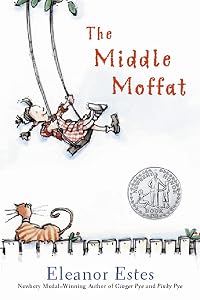
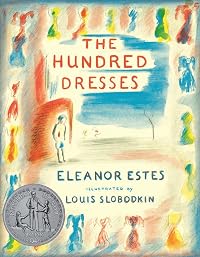




Member Reviews
As an avid dog lover, I found this story to be really interesting and heartfelt. The author, Eleanor Estes, really conveys the feeling of having a dog and enjoying it to its maximum capacity. As someone who had recently lost a dog, I understood the emotions that the children were going through when their dog suddenly disappeared. Although an extremely sad time, I felt that Estes did a really great job of not focusing on the sadness and keeping the reader engaged with other side conflicts that didn't have the same negative weight that losing a dog had. Although a very simple plot, I think that the story focuses more on the thoughts and discussions that go along with it. Saying that, I do wish that the story was a bit more intricate show more because I feel that it would have added more to the story and there would have been more to learn from the book. I believe that the plot is not what truly keeps the reader engaged throughout the novel. I think that the readers stays engaged because they have predicted what is going to happen and want to see if they are right or if Estes had completely tricked them. Although, it did win the Newbery Award in 1952, which is awarded to the book that makes the greatest contribution to children’s literature. I disagree with this because I think that it is not a large contribution and just a book that is fun to read. Because of this, I though that this book was a good book to read for leisure because it allows the reader to be able to stop and think about what is going to occur next. It isn't a book that forces you to keep reading all the time, which I really enjoyed because I didn't have the time to do something like that with school going on at the time. I would still recommend this book to people if they are looking for a mindless read. It does not require the brainpower that a book like A Tale of Two Cities does, but you can still get a good story out of it and have a lot to think about. show less
Moderately charming book of the Pye family and their clever dog, but marred by comments perhaps the norm in the 1950s when it was written that are totally inappropriate now. Racism, anti-Semitism, cruelty to animals - I found it impossible to overlook these and so cannot recommend the book.
The 1952 Newbery Medal winner Ginger Pye was a childhood favorite of mine, a book I can still remember my mom reading to my brother and me when we were very young indeed. My continuing love for it might be simple nostalgia, but I think the fact that it has lingered in my mind all these years is proof of the book’s simple power, and I enjoyed it just as much as an adult as I did as a child—in parts a bit more, because when Estes discusses such things as the first and third persons (in a very round-about, child-like manner), I am now in on the joke.
The Pyes are a unique bunch: Mr. Pye is a famous “bird man” (the children’s word for an ornithologist) who is always being called on to solve all the nation’s bird problems; Mrs. show more Pye is the youngest housewife in town, having literally bumped into the 35-year-old Mr. Pye on when she was only 17, thus causing him to fall madly in love with her; Jerry is a normal 10-year-old boy, interested in rocks and dogs; his younger sister Rachel wants to be a “bird man” like her dad and makes up the wildest explanations for things she doesn’t really understand, and finds them entirely sensible; and Gracie-the-Cat is a lazy old thing whose only great virtue, besides rat-killing, is her ability to unlock the front door. I should probably add Mama’s brother Bennie as well, as he visits every Saturday and is considered a hero in Cranbury because he is an uncle at only three years of age. All their lives change for the better when Jerry inducts a new pet into the household, the lovable puppy Ginger, whom he bought for a hard-earned dollar. But it seems someone else wants Ginger too, an Unsavory Character whose mysterious footsteps and dirty yellow hat are the only clues they have as to his identity....
There are certain passages of this book that have stuck in my mind like bubble-gum to the bottom of school desks. The story of how Mr. and Mrs. Pye met is one of them, Mr. Pye having knocked her over while he was foolishly trying to go up the “down” escalator, only to find himself head over heels in love: “Well, of course, since Mama was such a little thing and wore only a size two shoe, and, moreover, ate like a bird, Papa had to marry her.” And who could ever forget Rachel’s argument with her friend Addie Egan over the pronunciation of the word “villain,” especially Rachel’s assertion that “it must be vilyun because vilyun sounds more vilyunous than villun”? I could even remember Dr. Kelly’s pink and green kinds of medicines: “Both tasted awful but the green was worse because it also looked bad.” It’s little touches like this that make the book really breathe, and help create the impression that the Pyes are actual people living in an actual city called Cranbury, somewhere between Boston and New York. show less
The Pyes are a unique bunch: Mr. Pye is a famous “bird man” (the children’s word for an ornithologist) who is always being called on to solve all the nation’s bird problems; Mrs. show more Pye is the youngest housewife in town, having literally bumped into the 35-year-old Mr. Pye on when she was only 17, thus causing him to fall madly in love with her; Jerry is a normal 10-year-old boy, interested in rocks and dogs; his younger sister Rachel wants to be a “bird man” like her dad and makes up the wildest explanations for things she doesn’t really understand, and finds them entirely sensible; and Gracie-the-Cat is a lazy old thing whose only great virtue, besides rat-killing, is her ability to unlock the front door. I should probably add Mama’s brother Bennie as well, as he visits every Saturday and is considered a hero in Cranbury because he is an uncle at only three years of age. All their lives change for the better when Jerry inducts a new pet into the household, the lovable puppy Ginger, whom he bought for a hard-earned dollar. But it seems someone else wants Ginger too, an Unsavory Character whose mysterious footsteps and dirty yellow hat are the only clues they have as to his identity....
There are certain passages of this book that have stuck in my mind like bubble-gum to the bottom of school desks. The story of how Mr. and Mrs. Pye met is one of them, Mr. Pye having knocked her over while he was foolishly trying to go up the “down” escalator, only to find himself head over heels in love: “Well, of course, since Mama was such a little thing and wore only a size two shoe, and, moreover, ate like a bird, Papa had to marry her.” And who could ever forget Rachel’s argument with her friend Addie Egan over the pronunciation of the word “villain,” especially Rachel’s assertion that “it must be vilyun because vilyun sounds more vilyunous than villun”? I could even remember Dr. Kelly’s pink and green kinds of medicines: “Both tasted awful but the green was worse because it also looked bad.” It’s little touches like this that make the book really breathe, and help create the impression that the Pyes are actual people living in an actual city called Cranbury, somewhere between Boston and New York. show less
Ginger Pye, the 1952 Newbery Medal winner, is the story of a dog and his family, the Pyes (no relation to the nasty clan of that name in L. M. Montgomery's Anne books, by the way!). The Pye children, reasonable Rachel and her brother Jerry, consider their family to be quite distinctive in their little town of Cranbury. For one thing, their mother is the youngest mother in town. For another, their father is a well-known expert on birds. But the crowning point of the Pye family fame is Uncle Bennie, age three, born several years after his nephew and niece. For surely there is nothing more unusual and interesting than an uncle who is a baby!
Jerry and Rachel love their dog Ginger, who was purchased as a puppy by the aid of a miracle and an show more afternoon of hard work. Soon Ginger becomes famous in his own right for his intelligence and loyalty. But someone else sees the potential of the little dog, and when Ginger is suddenly stolen, the children are heartbroken. The story continues on, however, as the Pyes try to find their stolen dog, with no success. And lurking on the outskirts of the story is the yellow-hatted "Unsavory Character" (as the children dub him), mysterious and sinister. Was it he who stole Ginger?
Some things about the story are slightly artificial—everyone is happy and nice, and there are no visible complications in the family relationships. But there are other moments of startling honesty; life isn't all perfect and wonderful. It takes forever to get Ginger back, and when they do, there is sad evidence that the little dog was cruelly abused by the thieves. The Pyes are poor, and although the children are unexpectedly able to earn the dollar they need to buy their puppy, it's very clear that Ginger would have gone to some other home if fate had not intervened. One also feels some sympathy for Wally Bullwinkle, whose unhappy home life is hinted at but never explored. In short, this is very much a children's book. There are sad and bad things, but they are peripheral, not yet the main things. It is a comforting read.
This book was "assigned" to me by a friend who wanted me to experience this classic of his childhood. Eleanor Estes is a familiar name in circles devoted to children's literature, but somehow I missed her books as I was growing up. I'm glad this has been remedied, as I found Ginger Pye to be a rosy-colored but also honest tale, capturing perfectly that childlike reasoning that makes so much sense at the time—and that some of us can still remember. Recommended. show less
Jerry and Rachel love their dog Ginger, who was purchased as a puppy by the aid of a miracle and an show more afternoon of hard work. Soon Ginger becomes famous in his own right for his intelligence and loyalty. But someone else sees the potential of the little dog, and when Ginger is suddenly stolen, the children are heartbroken. The story continues on, however, as the Pyes try to find their stolen dog, with no success. And lurking on the outskirts of the story is the yellow-hatted "Unsavory Character" (as the children dub him), mysterious and sinister. Was it he who stole Ginger?
Some things about the story are slightly artificial—everyone is happy and nice, and there are no visible complications in the family relationships. But there are other moments of startling honesty; life isn't all perfect and wonderful. It takes forever to get Ginger back, and when they do, there is sad evidence that the little dog was cruelly abused by the thieves. The Pyes are poor, and although the children are unexpectedly able to earn the dollar they need to buy their puppy, it's very clear that Ginger would have gone to some other home if fate had not intervened. One also feels some sympathy for Wally Bullwinkle, whose unhappy home life is hinted at but never explored. In short, this is very much a children's book. There are sad and bad things, but they are peripheral, not yet the main things. It is a comforting read.
This book was "assigned" to me by a friend who wanted me to experience this classic of his childhood. Eleanor Estes is a familiar name in circles devoted to children's literature, but somehow I missed her books as I was growing up. I'm glad this has been remedied, as I found Ginger Pye to be a rosy-colored but also honest tale, capturing perfectly that childlike reasoning that makes so much sense at the time—and that some of us can still remember. Recommended. show less
Cute story! I wonder that it isn't as transparent to children as it is to adults. A good mystery for kids. Though misnamed. The book is really about the family and their reaction to the loss of Ginger Pye, not about Ginger Pye, himself! I loved the cover art, but was disappointed by the artwork within. Though it is the author's own drawings, she should stick to the writing and let someone else do the illustration. Too bad she is no longer with us. Her books are so delightful!
Jerry and Rachel Pye live in Cranbury with their parents and Gracie-the-cat, but Jerry is thinking of adding a new addition to the family: a dog. Another person wants this dog, however, and a mysterious person with a yellow hat keeps appearing.
I loved the Moffats when I was younger, so I was ready to enjoy this Newbery award-winning story by Eleanor Estes. The Moffats are referred to a couple of times, in fact, and I kind of want to go back and reread their stories now. The characters are funny - Rachel with her too-serious way of thinking everything was like a story book, Uncle Benny who is famous because he is three and the Pye's uncle. It wasn't hard for me to figure out where the story was going, but I liked the homey tone of the show more narration, even when it was going off on tangents. This would make a great read-aloud book. show less
I loved the Moffats when I was younger, so I was ready to enjoy this Newbery award-winning story by Eleanor Estes. The Moffats are referred to a couple of times, in fact, and I kind of want to go back and reread their stories now. The characters are funny - Rachel with her too-serious way of thinking everything was like a story book, Uncle Benny who is famous because he is three and the Pye's uncle. It wasn't hard for me to figure out where the story was going, but I liked the homey tone of the show more narration, even when it was going off on tangents. This would make a great read-aloud book. show less
Ginger Pye won the Newberry Award for 1952, beating out Charlotte's Web, which is quite a mystery. The book has some strengths, but some definite weaknesses as well.
On the good side, the book is funny at times, and sweet at times. The events take place in a quiet small town, somewhere between New York and Boston. The type of small town where, (in 1951 at least) young children could roam about town unattended by adults and come home after dark with no one worrying. A town where nobody locks their doors, and the jail at the police station has been empty for over ten years consecutively. This all has a certain old-fashioned charm to it. The book is dated, yes, but that didn't bother me. (The parents in his perfectly happy family met when show more the father was 35 and the mother was 17 and married almost immediately. I guess in 1951 that didn't seem as creepy as it does today!) Another delight was that the children behave very much the way children really do behave, rather than in the adult-leaning way they often do in children's books. However, this feature may well appeal to an adult reader like myself more than to a child - who is of course the target audience.
On the down side, the actual plot is minimal. The bulk of the book is taken up by unending little side-stories which have little or nothing to do with the basic story line. These stories are often entertaining, but rarely give any insight to the story. The tale is of the Pye children, who buy a puppy on Labor Day. The puppy is stolen from them on Thanksgiving day, still a puppy, and a good deal of time passes before they are reunited. Though Estes doesn't dwell on this sad fact, it looms in the background nonetheless. Who stole the puppy is quite a mystery for the children, but no mystery at all for the reader, as it is made obvious who the villain is before the dog even goes missing. The conclusion, reuniting the dog to the family, feels rather tossed in. The plot doesn't really lead up to it. It just happens when the author decided it was time to wrap up this book.
Do the strengths outweigh the weaknesses? For me the did, but only by a margin. show less
On the good side, the book is funny at times, and sweet at times. The events take place in a quiet small town, somewhere between New York and Boston. The type of small town where, (in 1951 at least) young children could roam about town unattended by adults and come home after dark with no one worrying. A town where nobody locks their doors, and the jail at the police station has been empty for over ten years consecutively. This all has a certain old-fashioned charm to it. The book is dated, yes, but that didn't bother me. (The parents in his perfectly happy family met when show more the father was 35 and the mother was 17 and married almost immediately. I guess in 1951 that didn't seem as creepy as it does today!) Another delight was that the children behave very much the way children really do behave, rather than in the adult-leaning way they often do in children's books. However, this feature may well appeal to an adult reader like myself more than to a child - who is of course the target audience.
On the down side, the actual plot is minimal. The bulk of the book is taken up by unending little side-stories which have little or nothing to do with the basic story line. These stories are often entertaining, but rarely give any insight to the story. The tale is of the Pye children, who buy a puppy on Labor Day. The puppy is stolen from them on Thanksgiving day, still a puppy, and a good deal of time passes before they are reunited. Though Estes doesn't dwell on this sad fact, it looms in the background nonetheless. Who stole the puppy is quite a mystery for the children, but no mystery at all for the reader, as it is made obvious who the villain is before the dog even goes missing. The conclusion, reuniting the dog to the family, feels rather tossed in. The plot doesn't really lead up to it. It just happens when the author decided it was time to wrap up this book.
Do the strengths outweigh the weaknesses? For me the did, but only by a margin. show less
Members
- Recently Added By
Lists

Best Newbery Medal Winners
97 works; 54 members

Favorite Childhood Books
1,651 works; 519 members
Honey For a Child's Heart
1,152 works; 25 members

Sonlight Books
1,487 works; 25 members

Satori Smiles Children's Book List
262 works; 7 members

Newbery Medal Winners - By Year
105 works; 7 members

4th Grade Books
312 works; 5 members

CCE 1000 Good Books List
1,033 works; 12 members

Romalda Spalding's Writing Road To Reading
213 works; 3 members

Kidnapping -- children's/young adult fiction
598 works; 3 members

Dogs -- children's/young adult fiction
1,317 works; 9 members

Books Read in 2019
4,052 works; 108 members

AR Level 6 in cloudLibrary
77 works; 1 member
Author Information

30+ Works 22,852 Members
Eleanor Estes was born in West Haven, Connecticut on May 9, 1906. She graduated from the Pratt Institute Library School and worked as a children's librarian in branches of the New York Public Library system. Her first book, The Moffats, was published in 1941. Her other works include The Hundred Dresses and Ginger Pye, which won a John Newbery show more Medal for the most distinguished children's book in 1952. She also wrote a single adult novel entitled The Echoing Green. She died of complications following a stroke on July 15, 1988 at the age of 82. (Bowker Author Biography) show less
Some Editions
Awards and Honors
Series

Work Relationships
Common Knowledge
- Canonical title
- Ginger Pye
- Original title
- Ginger Pye
- Original publication date
- 1951
- People/Characters
- Jerry Pye; Rachel Pye; Ginger Pye (dog); Mr. Pye; Mrs. Pye; Uncle Bennie (show all 13); Gramma; Grampa; Dick Badger; Duke; The Mysterious Footstepper / The Unsavory Character; Sam Doody; Wally Bullwinkle
- Important places
- Cranbury, Connecticut, USA; New York, USA; Boston, Massachusetts, USA
- Dedication
- To Cici and Gretchen
- First words
- Would Gracie-the-cat be jealous if the Pyes got another pet - a dog?
- Last words
- (Click to show. Warning: May contain spoilers.)Then he lowered his head down on his paws again and he let out a deep sigh that sounded almost like a sob, there was in it so much relief and pain and pleasure and remembering.
- Original language
- English
Classifications
- Genres
- Children's Books, Kids, Fiction and Literature
- DDC/MDS
- 813.54 — Literature & rhetoric American literature in English American fiction in English 1900-1999 1945-1999
- LCC
- PZ7 .E749 .G — Language and Literature Fiction and juvenile belles lettres Fiction and juvenile belles lettres Juvenile belles lettres
- BISAC
Statistics
- Members
- 5,280
- Popularity
- 2,593
- Reviews
- 56
- Rating
- (3.59)
- Languages
- Dutch, English, Finnish
- Media
- Paper, Audiobook, Ebook
- ISBNs
- 46
- ASINs
- 22