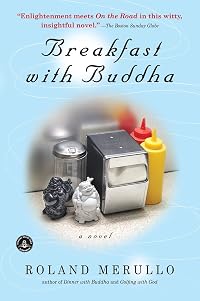
Breakfast with Buddha
by Roland Merullo
On This Page
Description
When his sister tricks him into taking her guru on a trip to their childhood home, Otto Ringling, a confirmed skeptic, is not amused. Six days on the road with an enigmatic holy man who answers every question with a riddle is not what he'd planned. But in an effort to westernize his passenger-and amuse himself-he decides to show the monk some "American fun" along the way. From a chocolate factory in Hershey to a bowling alley in South Bend, from a Cubs game at Wrigley field to his family show more farm near Bismarck, Otto is given the remarkable opportunity to see his world-and more important, his life-through someone else's eyes. Gradually, skepticism yields to amazement as he realizes that his companion might just be the real thing. In Roland Merullo's masterful hands, Otto tells his story with all the wonder, bemusement, and wry humor of a man who unwittingly finds what he's missing in the most unexpected place. show lessTags
Recommendations











Member Reviews
There's a problem when creating dialectical book on philosophical issues by your lonesome, in that both the genius guru and the naive character are written by the same guy who has the same limitations. It's extremely hard to make that sound natural, and even worse if they intend it to be didactic. New Age icon The Teachings of Don Juan: A Yaqui Way of Knowledge invented a whole person to do it, wanting the lie to sell the story. This book is open about being fictional but shares the problem of the 'master' just being the author wearing a fake beard. Strip away the artifice of the story that doesn't really matter and at the core there's some spiritual or philosophical message that could have been presented at half the length in a direct show more format, but the author doesn't have the credibility to try and be the guru in real life, and swiftly punts on responsibility at the end by referring the reader to other books where he found inspiration (in the text version), which is some false modesty coming off an ending where our naive protagonist literally kowtows the invented guru.
The problem becomes; is the song and dance of the fictional story to sell the philosophical debate worth the squeeze? Why read this instead of an introduction to actual Buddhism like Buddhism Plain & Simple: The Practice of Being Aware, Right Now, Every Day? Or how about a genuine dialogue between skeptic and buddhist practitioner like The Monk and the Philosopher: A Father and Son Discuss the Meaning of Life? Or perhaps a book on the practice of meditation written by a buddhist, like An Introduction to Zen Buddhism?
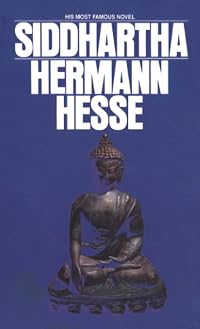
The answer is supposed to be that the story is good enough to get people interested in what otherwise would seem too academic or boring. Siddharta is a successful attempt to translate what buddhism meant to Hesse, but it's not really buddhist in thought, just Hesse's weird syncretism. Here the author tries to evoke a learned buddhist take on life that feels like a cheap imitation. It wouldn't matter if it was a side character in a greater story, but this is the story. The meeting of cultures is really just one culture and its misunderstanding of another. The result is also a sloppy syncretism but one that dresses in the garb of authenticity. show less
The problem becomes; is the song and dance of the fictional story to sell the philosophical debate worth the squeeze? Why read this instead of an introduction to actual Buddhism like Buddhism Plain & Simple: The Practice of Being Aware, Right Now, Every Day? Or how about a genuine dialogue between skeptic and buddhist practitioner like The Monk and the Philosopher: A Father and Son Discuss the Meaning of Life? Or perhaps a book on the practice of meditation written by a buddhist, like An Introduction to Zen Buddhism?
The answer is supposed to be that the story is good enough to get people interested in what otherwise would seem too academic or boring. Siddharta is a successful attempt to translate what buddhism meant to Hesse, but it's not really buddhist in thought, just Hesse's weird syncretism. Here the author tries to evoke a learned buddhist take on life that feels like a cheap imitation. It wouldn't matter if it was a side character in a greater story, but this is the story. The meeting of cultures is really just one culture and its misunderstanding of another. The result is also a sloppy syncretism but one that dresses in the garb of authenticity. show less
What an extraordinary book! It is part personal quest, part spiritual guidance, and part American road trip, all rolled into one novel. The basic premise is that the narrator, Otto, is living his life in a good publishing job with a wife and two teenagers and a slightly estranged sister. Then their parents suddenly die and Otto and his sister, Cecilia, are left with their home and farmland in North Dakota.
Problem is, Cecilia has always been a New Age sort of spiritualist, and she doesn't like to fly on planes. Which means that when it's time to go from suburban New York to North Dakota to sort out their parents' home and estate, Otto is all geared up to drive out there with Cecilia, sort out the details, and then drive home. Until show more Cecilia decides she needs to stay at home and asks Otto to please bring her houseguest, Rinpoche, in her place. Because he wants to set up a spiritual center in the US and she wants Rinpoche to have the house and her portion of the land.
Otto is polite enough to his unexpected passenger, and as they drive through the US conversations ensure. And expectations loom large, while realizations happen quietly as Otto sees Rinpoche's spirituality manifest in a bowling alley. With a couple of biker dudes. With a good outcome, and then Otto does not know what to believe.
The book explores Otto's burgeoning self-awareness with their drive across the US, including a Chicago Cubs baseball game, yoga class, and several seminars. Otto by turns pouts, thinks, eats, and talks, all the while learning from what Rinpoche has to teach. Rinpoche gains much from his travel through the US with all the variations in land, towns, and surprises that are in store for this mis-matched duo. show less
Problem is, Cecilia has always been a New Age sort of spiritualist, and she doesn't like to fly on planes. Which means that when it's time to go from suburban New York to North Dakota to sort out their parents' home and estate, Otto is all geared up to drive out there with Cecilia, sort out the details, and then drive home. Until show more Cecilia decides she needs to stay at home and asks Otto to please bring her houseguest, Rinpoche, in her place. Because he wants to set up a spiritual center in the US and she wants Rinpoche to have the house and her portion of the land.
Otto is polite enough to his unexpected passenger, and as they drive through the US conversations ensure. And expectations loom large, while realizations happen quietly as Otto sees Rinpoche's spirituality manifest in a bowling alley. With a couple of biker dudes. With a good outcome, and then Otto does not know what to believe.
The book explores Otto's burgeoning self-awareness with their drive across the US, including a Chicago Cubs baseball game, yoga class, and several seminars. Otto by turns pouts, thinks, eats, and talks, all the while learning from what Rinpoche has to teach. Rinpoche gains much from his travel through the US with all the variations in land, towns, and surprises that are in store for this mis-matched duo. show less
A road trip with an unexpected (and initially unwelcome) passenger leads narrator Otto Ringling to an unexpected destination.
Ringling is still returning to the family farm in North Dakota to settle his parents' estate, but along the way he begins to see "some primary color of the interior world that had simply been -- and still was -- just outside the spectrum visible to my inner eye." This intimation of change has come from his conversations with his passenger, Volya Rinpoche -- a Tibetan guru inserted into the front seat of Ringling's car by his "flaky as spanikopita crust" sister, Cecilia. Cecilia uses her fear of flying to make the swap seem logical, only revealing later and in small increments that there are other considerations show more involved.
The novel is an interesting blend of East-meets-West as the cynical Ringling (a high-powered New York A-type editor) is at first annoyed, then perplexed, then increasingly intrigued by Rinpoche, and a traditional road-trip tale, with the pair taking in bowling, a trip to the Hershey candy factory, sightseeing, swimming, and a major-league baseball game along the way. show less
Ringling is still returning to the family farm in North Dakota to settle his parents' estate, but along the way he begins to see "some primary color of the interior world that had simply been -- and still was -- just outside the spectrum visible to my inner eye." This intimation of change has come from his conversations with his passenger, Volya Rinpoche -- a Tibetan guru inserted into the front seat of Ringling's car by his "flaky as spanikopita crust" sister, Cecilia. Cecilia uses her fear of flying to make the swap seem logical, only revealing later and in small increments that there are other considerations show more involved.
The novel is an interesting blend of East-meets-West as the cynical Ringling (a high-powered New York A-type editor) is at first annoyed, then perplexed, then increasingly intrigued by Rinpoche, and a traditional road-trip tale, with the pair taking in bowling, a trip to the Hershey candy factory, sightseeing, swimming, and a major-league baseball game along the way. show less
This book explores spirituality in a fun setting...a road trip from New York City to the plains of North Dakota. Otto Ringling thinks he is picking up his wacky new age sister to drive to North Dakota to settle their parents' estate, when she pulls a switcheroo on him and sends her spiritual teacher, Volya Rinpoche, in her place. Let the fun begin!
The reluctant Otto gradually succumbs to the quiet charm of VR to the point where he makes several detours to deliver him to his speaking engagements along the way. It turns out that his sister's guru is a world famous Buddhist monk who has written several well-respected books about exploring the interior life through yoga and meditation. The strange friendship deepens as the miles accumulate show more and they agree to exchange the American experience for a piece of enlightenment -- in four days. Otto takes VR bowling, to a Cubs game in Chicago, and miniature golfing with some humorous results. In return, Volya imparts small wisdoms along the way that show Otto the contained world of himself that only he can control. I like that the book isn't preachy yet it still contains the wisdom of the ages. The lesson I'll take away? Do not miss the gifts of this world. I've been Zenned! show less
The reluctant Otto gradually succumbs to the quiet charm of VR to the point where he makes several detours to deliver him to his speaking engagements along the way. It turns out that his sister's guru is a world famous Buddhist monk who has written several well-respected books about exploring the interior life through yoga and meditation. The strange friendship deepens as the miles accumulate show more and they agree to exchange the American experience for a piece of enlightenment -- in four days. Otto takes VR bowling, to a Cubs game in Chicago, and miniature golfing with some humorous results. In return, Volya imparts small wisdoms along the way that show Otto the contained world of himself that only he can control. I like that the book isn't preachy yet it still contains the wisdom of the ages. The lesson I'll take away? Do not miss the gifts of this world. I've been Zenned! show less
I loved this book. I didn't know much about it when I started, but was delighted with it. The author uses such a light touch to introduce his character's and their differing spiritual approaches to life. The road trip is used as an exploration of restaurants and countryside, from New Jersey to North Dakota, but also as a journey into the deeper realms of each of these men's values and souls. There is a lot of humor, but also a lot to ponder.
Something interesting happened when I read this book. To put it in Otto's words, I think I got Zenned.
At some point in reading this, I realized I was mirroring Otto's feelings about his unexpected and unusual road-trip companion, Volya Rinpoche. A spiritual guru for Otto's flaky sister, he is dressed like a Buddhist monk, hides crucial information, and is able to pack a punch into the simple expression, "Ah." Otto finds him trying - and so would I - and struggles to make this trip comfortable for both.
But somewhere along the way, both Otto and I stopped resisting, and started to listen to the Rinpoche's message. The ideas presented in this book are simple, yet can be profound. And they are comforting, and ring true. Life is about love, show more and love is the best gift we can give or get. And meditation is an amazing way to tune in to the stillness that frees us from old traps and old selves. These discoveries for Otto were reminders for me, and came at a good time.
Yet, as is often the case in life, those moments of revelation and connection were fleeting; I couldn't quite hold on to them to the end of the book. Otto struggles to express the ways the experiences changed him, and that rings true, too. I think we all have these insightful experiences. Yet how successfully we hold on to them - for they don't happen with the same intensity every day - is probably the measure of how successfully we live our lives in love. And it isn't easy.
So did the author plan that? Or did I bring this to the book myself? Or is it just art skillfully imitating life? Not quite sure. If the author planned it, then he's genius and I should mark this higher. If I brought it all to the reading experience, then maybe this book isn't as good as 3 stars. I'm just going to take what I got from it... and head back to yoga class very soon. show less
At some point in reading this, I realized I was mirroring Otto's feelings about his unexpected and unusual road-trip companion, Volya Rinpoche. A spiritual guru for Otto's flaky sister, he is dressed like a Buddhist monk, hides crucial information, and is able to pack a punch into the simple expression, "Ah." Otto finds him trying - and so would I - and struggles to make this trip comfortable for both.
But somewhere along the way, both Otto and I stopped resisting, and started to listen to the Rinpoche's message. The ideas presented in this book are simple, yet can be profound. And they are comforting, and ring true. Life is about love, show more and love is the best gift we can give or get. And meditation is an amazing way to tune in to the stillness that frees us from old traps and old selves. These discoveries for Otto were reminders for me, and came at a good time.
Yet, as is often the case in life, those moments of revelation and connection were fleeting; I couldn't quite hold on to them to the end of the book. Otto struggles to express the ways the experiences changed him, and that rings true, too. I think we all have these insightful experiences. Yet how successfully we hold on to them - for they don't happen with the same intensity every day - is probably the measure of how successfully we live our lives in love. And it isn't easy.
So did the author plan that? Or did I bring this to the book myself? Or is it just art skillfully imitating life? Not quite sure. If the author planned it, then he's genius and I should mark this higher. If I brought it all to the reading experience, then maybe this book isn't as good as 3 stars. I'm just going to take what I got from it... and head back to yoga class very soon. show less
This one was a loaner from a friend at Spirit Moves, but I'm going to get a copy for hazrabai and send it to her. It was just a lovely read. Gentle, funny and insightful all rolled into one. A little bit of spiritual exploration rolled together with the regular rumbles of life made it just the ticket for reading right now. There were times that I recognized my own cynicism in Otto's inner monologues and times that I'd scurry for a pencil to record something that struck my heart as true. Life is a journey, but how we choose to walk it makes all the difference.
So the basic story, which made javaczuk roll his eyes when I told him, is that Otto Ringling and his sister (psychic who does past life regressions) are heading out to his family's show more farm to divide up things after the death of his parents. Only his sister does a switcheroo on him and instead of going, sends her spiritual guru, Volya Rinpoche , to whom she is giving her share of the land, in her stead for the drive out to North Dakota. Otto goes from being a reluctant, skeptical chauffeur to an interested participant, as he shows a slice of American to his companion. And fwiw, the scene about the yoga class had me laughing out loud. :) show less
So the basic story, which made javaczuk roll his eyes when I told him, is that Otto Ringling and his sister (psychic who does past life regressions) are heading out to his family's show more farm to divide up things after the death of his parents. Only his sister does a switcheroo on him and instead of going, sends her spiritual guru, Volya Rinpoche , to whom she is giving her share of the land, in her stead for the drive out to North Dakota. Otto goes from being a reluctant, skeptical chauffeur to an interested participant, as he shows a slice of American to his companion. And fwiw, the scene about the yoga class had me laughing out loud. :) show less
Members
- Recently Added By
Lists

2022 Christmas Gifts
60 works; 13 members

Good Buddhist Novels
30 works; 4 members
Author Information

32 Works 2,823 Members
Roland Merullo is the author of Revere Beach Boulevard, A Russian Requiem, and Leaving Losapas. He lives in western Massachusetts with his wife and daughters
Awards and Honors
Awards
Common Knowledge
- Original publication date
- 2007
- People/Characters
- Otto Ringling; Cecilia; Volya Rinpoche
- Important places
- New York, New York, USA; North Dakota, USA
- Epigraph
- Humor is a prelude to faith and
Laughter is the beginning of prayer.
--REINHOLD NIEBUHR
Like the lark that soars in the air, first singing, then silent, content with the last sweetness that satiates it, such seemed to me that image, the imprint of the Eternal Pleasure.
--DANTE, "Paradiso"
Genuine belief seems to have left us.
--WALT WHITMAN, "Democratic Vistas"
I hear America singing, the varied carols I hear.
--WALT WHITMAN, "I Hear America Singing" - Dedication
- For
Arlo Kahn
and
For
Michael Miller - First words
- My name is Otto Ringling (no circus jokes, please) and I have a strange story to tell.
- Last words
- (Click to show. Warning: May contain spoilers.)Because that seemed like the right thing to do.
- Publisher's editor
- Adams, Chuck; Stern, Ina; Denney, Courtney; Hoole, Brunson; Patterson, Janet; Clark, Kelly (show all 9); Popelars, Craig; Taekens, Michael; Rodriguez, Aimee
Classifications
Statistics
- Members
- 1,149
- Popularity
- 21,936
- Reviews
- 53
- Rating
- (3.73)
- Languages
- English
- Media
- Paper, Audiobook, Ebook
- ISBNs
- 11
- ASINs
- 6