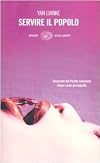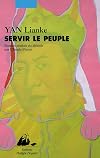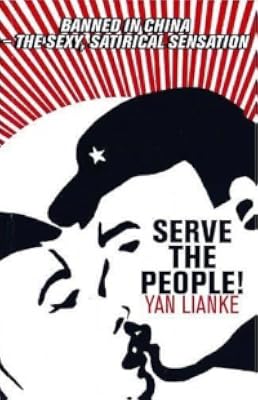
Serve the People!
by Yan Lianke
On This Page
Description
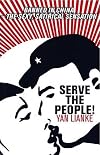
Set in 1967, at the peak of the Mao cult, Serve the People! is a beautifully told, wickedly daring story about the forbidden love affair between Liu Lian, the young, pretty wife of a powerful Division Commander in Communist China, and her household's lowly servant, Wu Dawang. When Liu Lian establishes a rule for her orderly that he is to attend to her needs whenever the household's wooden Serve the People! sign is removed from its usual place, the orderly vows to obey. What follows is a show more remarkable love story and a profound and deliciously comic satire on Mao's famous slogan and the political and sexual taboos of his regime. As life is breathed into the illicit sexual affair, Yan Lianke brilliantly captures how the Model Soldier Wu Dawang becomes an eager collaborator with the restless and demanding Liu Lian, their actions inspired by primitive passions that they are only just discovering. Originally banned in China, and the first work from Yan Lianke to be translated into English, Serve the People! brings us the debut of one of the most important authors writing from inside China today. show lessTags
Recommendations











Member Reviews
Satire does not criticise; indeed, the best satire is the very opposite of criticism: It is relentless, unflinching affirmation. Satire embraces the way things are with boundless enthusiasm, joyfully relishes in the state of the world, perceives every bit of propaganda as the truth it claims to be, takes every pretense at face value and thus makes them shine in all their utter absurdity.
This makes the Good Soldier Svejk the ultimate satirist, and “the People’s Liberation Army’s three rules of thumb” as recorded in Yan Lianke’s novel Serve the People! certainly sound like Svejk could have formulated them: “Don’t Say What You Shouldn’t Say, Don’t Ask What You Shouldn’t Ask, Don’t Do What You Shouldn’t Do”. Wu show more Duwang, the protagonist of Serve the People!, however, is no Svejk – he might be a Model Soldier, but he is not content with what he has and wants more, is, as we are told right at the beginning of the novel, ”greedy for laurels.”
Serve the People! is set during the time of the Cultural Revolution, and Yan Lianke shows ingeniously just how deeply everyone has internalized the regime’s propaganda by way of the similes which the novel is brimming over with - when a particular shade of red is described that can happen by comparison with the colour of a sunset or the colour of a specific propaganda poster, and both will be on exactly the same level. While this results in a very funny effect, there is also something quite serious at work there, for it indicates that propaganda has the same ontological status as nature, has indeed become second nature and is indiscernible from truth. The same holds true for one of the uses the title-giving slogan is put to – Wu Duwan gets assigned to assist the Division Commander, and as the Division Commander represents the People, serving the Division Commander becomes Serving the People. Wu Duwan effectively becomes the Division Commander’s servant, cook and gardener, and the novel never openly questions that he is serving the people this way even as the reader laughs at the absurdity of it.
Things begin to get complicated for Wu Duwan when the Division Commander is absent for an extended period of time and he finds himself tasked to Serve the People by serving the Division Commander’s wife Liu Lian – in quite intimate ways. As the two start an affair (initially on Liu Lian’s initiative towards a very reluctant Wu Duwan), some very interesting changes happen to the novel and to the reader’s attitude towards its protagonists. While neither Wu Duwan nor Liu Lian appeared very likable at the start of the novel, with the development of their affair we suddenly find ourselves (somewhat to the surprise of at least this reader) actually caring about them, and the satirical element, while never completely absent, recedes increasingly into the background, making room for an intense, and ultimately very sad love story.
As their affair progresses and becomes ever more absorbing and passionate, the lovers become like animals, and finally sink even lower down the creational ladder to become one with the earth, to be remade from clay; and synchronous with that the imagery shifts away from political propaganda, or more precisely – propaganda becomes appropriated by the lovers, turned away from its political significance and infused with a new personal, meaning. All of which is exemplified by the vagaries the title-giving Serve the People! poster undergoes; and the way Yan Lianke uses that image and that slogan in the course of the novel to symbolically indicate the current state of the relationship of the lovers while at the same time utilizing it as a plausible realistic prop is nothing short of brilliant.
It is pretty much clear from the start that things are not going to end well for the lovers; what does come as a surprise is that the melancholy that the ending is steeped is a result not of thwarted hopes but to the contrary, of everyone getting exactly what they wanted - or thought they did. While Serve the People! is set at a quite specific time and a very specific place and certainly could not have happened in the same way outside of that time and place, it transcends this setting, and is a novel first and foremost about human beings rather than about China during the Cultural Revolution.
Serve the People! is (I think) the first Chinese novel I have ever read, but likely will not remain the last one, and Yan Lianke’s Dream of Ding Village is high on my to-read list for 2013. show less
This makes the Good Soldier Svejk the ultimate satirist, and “the People’s Liberation Army’s three rules of thumb” as recorded in Yan Lianke’s novel Serve the People! certainly sound like Svejk could have formulated them: “Don’t Say What You Shouldn’t Say, Don’t Ask What You Shouldn’t Ask, Don’t Do What You Shouldn’t Do”. Wu show more Duwang, the protagonist of Serve the People!, however, is no Svejk – he might be a Model Soldier, but he is not content with what he has and wants more, is, as we are told right at the beginning of the novel, ”greedy for laurels.”
Serve the People! is set during the time of the Cultural Revolution, and Yan Lianke shows ingeniously just how deeply everyone has internalized the regime’s propaganda by way of the similes which the novel is brimming over with - when a particular shade of red is described that can happen by comparison with the colour of a sunset or the colour of a specific propaganda poster, and both will be on exactly the same level. While this results in a very funny effect, there is also something quite serious at work there, for it indicates that propaganda has the same ontological status as nature, has indeed become second nature and is indiscernible from truth. The same holds true for one of the uses the title-giving slogan is put to – Wu Duwan gets assigned to assist the Division Commander, and as the Division Commander represents the People, serving the Division Commander becomes Serving the People. Wu Duwan effectively becomes the Division Commander’s servant, cook and gardener, and the novel never openly questions that he is serving the people this way even as the reader laughs at the absurdity of it.
Things begin to get complicated for Wu Duwan when the Division Commander is absent for an extended period of time and he finds himself tasked to Serve the People by serving the Division Commander’s wife Liu Lian – in quite intimate ways. As the two start an affair (initially on Liu Lian’s initiative towards a very reluctant Wu Duwan), some very interesting changes happen to the novel and to the reader’s attitude towards its protagonists. While neither Wu Duwan nor Liu Lian appeared very likable at the start of the novel, with the development of their affair we suddenly find ourselves (somewhat to the surprise of at least this reader) actually caring about them, and the satirical element, while never completely absent, recedes increasingly into the background, making room for an intense, and ultimately very sad love story.
As their affair progresses and becomes ever more absorbing and passionate, the lovers become like animals, and finally sink even lower down the creational ladder to become one with the earth, to be remade from clay; and synchronous with that the imagery shifts away from political propaganda, or more precisely – propaganda becomes appropriated by the lovers, turned away from its political significance and infused with a new personal, meaning. All of which is exemplified by the vagaries the title-giving Serve the People! poster undergoes; and the way Yan Lianke uses that image and that slogan in the course of the novel to symbolically indicate the current state of the relationship of the lovers while at the same time utilizing it as a plausible realistic prop is nothing short of brilliant.
It is pretty much clear from the start that things are not going to end well for the lovers; what does come as a surprise is that the melancholy that the ending is steeped is a result not of thwarted hopes but to the contrary, of everyone getting exactly what they wanted - or thought they did. While Serve the People! is set at a quite specific time and a very specific place and certainly could not have happened in the same way outside of that time and place, it transcends this setting, and is a novel first and foremost about human beings rather than about China during the Cultural Revolution.
Serve the People! is (I think) the first Chinese novel I have ever read, but likely will not remain the last one, and Yan Lianke’s Dream of Ding Village is high on my to-read list for 2013. show less
This was a fun book. Though the writing was a little flat (possibly due to poor translation), I never imagined a book about the Cultural Revolution could give me such a boner. Mao, his little red book of quotations, the Cultural Revolution, and lots of steamy sex created an interesting voyeuristic peek into this oft told historical moment in China. This is not your standard Cultural Revolution book. The best scene is where the two main characters try to outdo themselves to prove how counter-revolutionary they each are... between the steamy sex, descriptions of defacing all things Mao, and clever insertions of Mao’s annoying quotations this was a pretty funny little book. And did I mention the steamy sex? Needless to say this book is show more banned in China, as are most of Yan’s books. show less
Servire il popolo vuol dire anche, per un soldato dell’esercito cinese, soddisfare gli appetiti sessuali della giovane e avvenente moglie del comandante, stracciando nella foga frasi di Mao e facendo a pezzi sue rappresentazioni. Questa la metafora piuttosto grossolana, su cui si regge questo piccolo romanzo, esile nella narrazione e nella forma e, a ben vedere, tutt’alto che erotico (descrivere il sesso femminile come “il giardino che non era mai stato toccato dal sole” scoraggerebbe chiunque). Peccato, soprattutto perché, pur comprendendo che qui l’intento è soprattutto ironico, Lianke ha scritto ben altro (v. I quattro libri).
A few years back I elected to weigh my vast ignorance of Chinese literature. (funny how that hasn't changed or improved since) and went to University to remedy this. Serve The People! was the first book I read on that expedition and far from the best. I thought Ju Dou was an adaptation of The Postman Always Rings Twice: this was yet another channeled through the little red book.
Både morsom og erotisk satire over Kina i 1960’erne. Satiren er efter vestlige forhold afdæmpet, men bogen blev forbudt i Kina, da den udkom i 2005.
Mønstersoldaten Wu og divisionskommandantens kone Liu kommer i et heftigt erotisk forhold – hvor som helst, når som helst og på hvilken som helst måde. Men alt har en ende… En både smuk, satirisk, saftig og humanistisk lille bog om, at den hede kærlighed overfor samfundets indsnævrende bånd og det maskinelle kommunistiske normalitetsideal.
Mønstersoldaten Wu og divisionskommandantens kone Liu kommer i et heftigt erotisk forhold – hvor som helst, når som helst og på hvilken som helst måde. Men alt har en ende… En både smuk, satirisk, saftig og humanistisk lille bog om, at den hede kærlighed overfor samfundets indsnævrende bånd og det maskinelle kommunistiske normalitetsideal.
Dec 3, 2008Danish
1
Soldaten Wu Dawang er ulykkelig gift, og tjenestegjør bl.a. som kokk for leirsjefen i en liten militærforlegning i Kina på slutten av 60-tallet. Leirsjefen er stort sett bortreist, og hans vakre kone forgår nærmest av kjedsomhet.
Etter hvert er det tydelig hva hun forventer av Dawang, og det er helt andre ting enn kokekunstene hans hun er ute etter. Dawang skjønner at han ikke har noe valg, og tross samvittighetskvaler befinner han seg raskt i en situasjon hvor han er elskeren til leirsjefens kone.
Kravene til at han skal stille opp kommer hyppigere og hyppigere, noe han for øvrig ikke har særlig mye i mot. Elskerinnen er nemlig noe ganske annet enn hans golde kone.
Etter som tiden går, avtar imidlertid begjæret, og elskerne show more går til ytterligheter for igjen å oppnå de store høyder. Ved å knuse og vandalisere Mao-symboler, blomstrer atter lidenskapen. Men alt har en ende - så også dette forholdet ...
Dette er en meget fornøyelig bok, som det bare er å gi seg fullstendig hen til! Jeg har aldri lest noe som ligner blant kinesisk litteratur tidligere! show less
Etter hvert er det tydelig hva hun forventer av Dawang, og det er helt andre ting enn kokekunstene hans hun er ute etter. Dawang skjønner at han ikke har noe valg, og tross samvittighetskvaler befinner han seg raskt i en situasjon hvor han er elskeren til leirsjefens kone.
Kravene til at han skal stille opp kommer hyppigere og hyppigere, noe han for øvrig ikke har særlig mye i mot. Elskerinnen er nemlig noe ganske annet enn hans golde kone.
Etter som tiden går, avtar imidlertid begjæret, og elskerne show more går til ytterligheter for igjen å oppnå de store høyder. Ved å knuse og vandalisere Mao-symboler, blomstrer atter lidenskapen. Men alt har en ende - så også dette forholdet ...
Dette er en meget fornøyelig bok, som det bare er å gi seg fullstendig hen til! Jeg har aldri lest noe som ligner blant kinesisk litteratur tidligere! show less
Nov 16, 2008Norwegian
Ratings
Members
- Recently Added By
Lists

CHINESE FICTION (in translation)
33 works; 1 member

The China Project Book List
100 works; 2 members
Author Information

39+ Works 1,393 Members
Yan Lianke was born in 1958 in Song County, Henan Province, China. He studied politics and education and is a 1985 graduate of Henan University. A few years later he received a degree in Literature from the People's Liberation Army Art Institute. His novels include Serve the People!, Lenin's Kisses, Dream of Ding Village, and The Four Books. Yan show more Lianke won the Hua Zhong World Chinese Literature Prize in 2013. He has also won two of China's most prestigious literary awards: the Lu Xan Literary Prize (in 1998 and 2001) and the Lao She Literary Award in 2005. In 2014, he won the Franz Kafka Prize. (Bowker Author Biography) show less
Some Editions
Awards and Honors
Work Relationships
Has the adaptation
Common Knowledge
- Canonical title
- Serve the People!
- Original title
- Wei Renmin Fuwu
- Original publication date
- 2007 (English translation) (English translation); 2005 (original Chinese) (original Chinese)
- People/Characters
- Wu Dawang; Liu Lian
- Important places
- Henan Province, China
- First words
- The novel is the only place for a great many of life's truths.
- Blurbers
- Dewoskin, Rachel
- Original language
- Chinese
Classifications
- Genres
- General Fiction, Fiction and Literature
- DDC/MDS
- 813 — Literature & rhetoric American literature in English American fiction in English
- LCC
- PL2925 .L54 .W4513 — Language and Literature Languages and literatures of Eastern Asia, Africa, Oceania Languages of Eastern Asia, Africa, Oceania Chinese language and literature Chinese literature Individual authors and works
- BISAC
Statistics
- Members
- 210
- Popularity
- 156,030
- Reviews
- 6
- Rating
- (3.41)
- Languages
- 8 — Chinese, Danish, English, French, German, Italian, Norwegian (Bokmål), Portuguese
- Media
- Paper, Ebook
- ISBNs
- 19
- ASINs
- 5