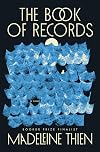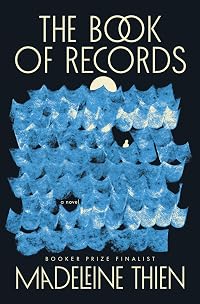
The Book of Records
by Madeleine Thien
On This Page
Description
Arriving at a mysterious enclave called The Sea, Lina navigates shifting realities where she converses with historical thinkers across centuries, confronting memory, history and her father's troubling past as she searches for understanding, responsibility and the meaning of home in a world of political upheaval.Tags
Recommendations
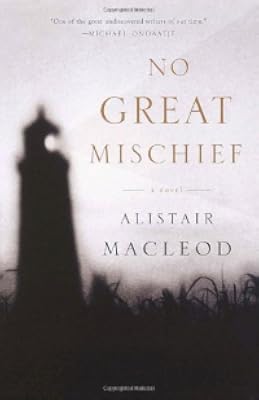
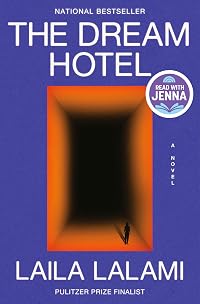
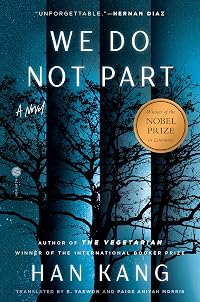

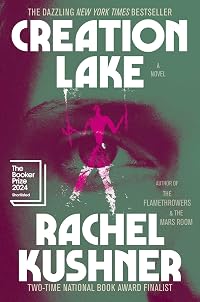





Member Reviews
A novel that takes place in a liminal space occupied by people who are escaping various forms of poiitical persecution as artists who have opinions or ethnicities that don't comport with the changing times. There are four strains, three belonging to historical figures. What I appreciated was the blending of fiction and fact in a narrative that undulated between those two poles. Having recently read a bio on Arendt and a bio of Spinosa, I was quite receptive to this interesting book. It's also very much about how important storytelling is. It provides strength during challenging times. People are always moving forward in this novel, into the unknown but carrying their memories along with them to help them endure. A smart, rich book. Full show more of ideas and aphorisms, the book is somehow held together by her skill as a writer. For a lesser novelist, this would have all fallen apart or never even gotten off the ground. show less
This was a GoodReads 4.5 star (an EW 9) for me that was easy to round up. It has lots going on and is definitely the kind of book that will reward rereadings, which I quite value.
The Book of Records is a multi-strand exploration of of life in "interesting" times. Do we flee? If so, when? What compromises are acceptable? Which will haunt us? How many last minute surprises/tensions will we have to ride out?
Three of the strands the novel includes are based on the lives of historical figures: the Tang Dynasty poet Du Fu; Enlightenment philosopher Baruch Spinoza; and Hannah Arendt. The fourth stand, which takes place in an unidentified point in the future, follows Lina and her father who have moved from Foshan in China to "The Sea," a show more largely abandoned housing project along the coast of an unnamed ocean where refugees find themselves in a liminal sort of holding pattern: no longer in the land they've fled, but not yet in the new place where they will try to rebuild their lives.
The author moves among these four strands with minimal signaling, so reading demands a significant level of attentiveness, but the effort is more than repaid by the content of the novel. During the first shift from The Sea to Hannah Arendt, I had my doubts about whether this complex structure would work. I'm glad I continued reading. After a few more such shifts the structure became clearer, and I started to realize the sort of mindful riches that Thien is offering her readers.
If you like books that make you think and that offer interesting mixes of characters and time periods, you're in for a treat with The Book of Records.
I received a free electronic review copy of this title from the publisher via Edelweiss; the opinions are my own. show less
The Book of Records is a multi-strand exploration of of life in "interesting" times. Do we flee? If so, when? What compromises are acceptable? Which will haunt us? How many last minute surprises/tensions will we have to ride out?
Three of the strands the novel includes are based on the lives of historical figures: the Tang Dynasty poet Du Fu; Enlightenment philosopher Baruch Spinoza; and Hannah Arendt. The fourth stand, which takes place in an unidentified point in the future, follows Lina and her father who have moved from Foshan in China to "The Sea," a show more largely abandoned housing project along the coast of an unnamed ocean where refugees find themselves in a liminal sort of holding pattern: no longer in the land they've fled, but not yet in the new place where they will try to rebuild their lives.
The author moves among these four strands with minimal signaling, so reading demands a significant level of attentiveness, but the effort is more than repaid by the content of the novel. During the first shift from The Sea to Hannah Arendt, I had my doubts about whether this complex structure would work. I'm glad I continued reading. After a few more such shifts the structure became clearer, and I started to realize the sort of mindful riches that Thien is offering her readers.
If you like books that make you think and that offer interesting mixes of characters and time periods, you're in for a treat with The Book of Records.
I received a free electronic review copy of this title from the publisher via Edelweiss; the opinions are my own. show less
I really don't know what to make of this.
Thien's writing is lovely, which is perhaps the only reason I managed to stick with it.
This is about a young girl, Lina, whose father takes her to a strange place called The Sea, which is supposed to be a transitional place where refugees and travelers pause on their journeys. Lina's father is ill, and his illness prevents them from ever leaving. They join a little community of other people who are there long-term. Among their few belongings are biographies of Hannah Arendt, Baruch Spinoza, and the Chinese poet Du Fu. Lina and her friends read and discuss these biographies. The book tells the story of Lina and her father: in the present timeline of the story, in flashbacks to her father's past as show more a software engineer, and in flash forwards to Lina's life after she has left the Sea. The book also tells the stories of Arendt, Spinoza, and Du Fu.
There's a lot going on here.... and I never understood how it all fit together. Obviously there's a theme of exile: Arendt fled the Holocaust, Spinoza was kicked out of his Jewish community for his ideas, and Du Fu had trouble getting a job because of his ideas. It is implied that Lina and her father are fleeing something, but we never really learn what.
I looked up several reviews of this book to see what I was missing, to understand how this is all supposed to fit together. Each review had a wildly different interpretation of what was happening, what The Sea is, and why all of these stories are in one book. On the one hand, it's an accomplishment that Thien has written a book that is open to so many different interpretations. On the other hand, to me it feels like a major weakness that I just can't tell what this book is about. If Thien is trying to say something, I have no idea what it is. I found this book to be very mystifying and frustrating, and I'm generally a reader who is very happy with ambiguity. show less
Thien's writing is lovely, which is perhaps the only reason I managed to stick with it.
This is about a young girl, Lina, whose father takes her to a strange place called The Sea, which is supposed to be a transitional place where refugees and travelers pause on their journeys. Lina's father is ill, and his illness prevents them from ever leaving. They join a little community of other people who are there long-term. Among their few belongings are biographies of Hannah Arendt, Baruch Spinoza, and the Chinese poet Du Fu. Lina and her friends read and discuss these biographies. The book tells the story of Lina and her father: in the present timeline of the story, in flashbacks to her father's past as show more a software engineer, and in flash forwards to Lina's life after she has left the Sea. The book also tells the stories of Arendt, Spinoza, and Du Fu.
There's a lot going on here.... and I never understood how it all fit together. Obviously there's a theme of exile: Arendt fled the Holocaust, Spinoza was kicked out of his Jewish community for his ideas, and Du Fu had trouble getting a job because of his ideas. It is implied that Lina and her father are fleeing something, but we never really learn what.
I looked up several reviews of this book to see what I was missing, to understand how this is all supposed to fit together. Each review had a wildly different interpretation of what was happening, what The Sea is, and why all of these stories are in one book. On the one hand, it's an accomplishment that Thien has written a book that is open to so many different interpretations. On the other hand, to me it feels like a major weakness that I just can't tell what this book is about. If Thien is trying to say something, I have no idea what it is. I found this book to be very mystifying and frustrating, and I'm generally a reader who is very happy with ambiguity. show less
What an amazing book! The story weaves together the stories of Du Fu, Baruch Spinoza, and Hannah Arendt into a narrative of Lina and her father, immigrants without a country who have been separated from the rest of their family. The writing is gorgeous and the various voices and story threads twine together seamlessly. The Tin House podcast Between the Covers interview with Thien is a fantastic companion to the book.
The Sea Within Us
A Kindle ARC review of the Penguin Random House Canada hardcover/eBook/audiobook to be published May 6, 2025.
The Book of Records is not an easy book to come to grips with on a first reading, especially as an eBook which I had *thanks* to a NetGalley ARC from the publisher. I think that I would enjoy a physical copy in order to more easily grasp its structure by being able to flip back and forth through its episodes. As it was it seemed as if it were 4 novellas which randomly shifted in and out of focus. And those novellas are told in maybe 10 or so episodes each which are not in a clear order.
You enter the show more book with the sense that it will be a sci-fi or cli-fi view into a flooded world of the future, a refugee crisis triggered by a climate crisis. By the end we learn that it is 100 years since the Three Gorges Dam (2006) project in China. A young girl Lina and her father are apparently stranded at a migrant waystation called The Sea. They are separated from the rest of their family for reasons that don't become clear until later. Lina reflects on their life and gradually she ages 50 years or so into the future and it becomes her life's memoir.
Among their few possessions are only 3 volumes of a set of 90 biographical books about famous personages. The 3 books are about writer [author:Hannah Arendt|12806] (1906-1975), philosopher [author:Baruch Spinoza|122092] (1632-1977) and Tang Dynasty poet [author:Du Fu|4081] (712-770). The lives of the 3 historical figures are paralleled with people that Lina meets at The Sea. We learn about the historical lives in a seemingly random order while periodically returning to the future world. Each probably takes up about 1/4th of the book, but each is told in about 10 episodes spread throughout.
I previously only knew anything about Hannah Arendt and it sounded very true to the life story that I know, even if Thien is inventing the dialogues etc. It is basically Arendt's escape from Nazi Germany and then from Occupied France through Spain/Portugal and eventually to the USA. The Spinoza is his shunning by his Jewish community due to his atheism, so a different kind of running away. The Du Fu is about how the poet was not accepted for his poetry in his lifetime and was instead struggling to get a position at the Imperial Court to support his family.
So in a way it is 4 novellas making up a novel. The confusing element is that the stories drift in and out not necessarily in any order. It is Lina, Arendt, Spinoza, Du Fu, Lina, Du Fu, Spinoza, Arendt etc etc all randomly mixed up maybe 10 or so episodes for each. I guess each of the characters is escaping or migrating or being rejected by their societies in their own way. That is the connection as best as I can explain after a single reading.
While the order of the structure was confusing to me, each reading was immersive and I found myself quite engaged in each of the 4 story lines while I read them. I particularly enjoyed the passage about valuing books which I excerpted above. This is probably a 5-star for the writing and it is only my poor understanding and grasp which causes a reserved 4-star rating in this case.
My thanks to Madeleine Thien, Penguin Random House Canada and NetGalley for the opportunity to read this advance ARC copy for which I provide this honest review.
Trivia and Links
My previous read of Madeleine Thien was her 2016 Giller Prize winning novel [book:Do Not Say We Have Nothing|31549906] (2016) which I reviewed and rated 5-stars as We Are Nothing, Let Us Be All.
There is a podcast interview with Madeleine Thien about the process for the writing of The Book of Records at BBC Sounds, April 29, 2025.
There will likely be several reviews and interviews after publication that I'll add to this section.
Initially there is an early summary at CBC Books from February 13, 2025. show less
A Kindle ARC review of the Penguin Random House Canada hardcover/eBook/audiobook to be published May 6, 2025.
Heinrich said their problem was not that they over valued books but that they valued almost nothing else as highly.
The Book of Records is not an easy book to come to grips with on a first reading, especially as an eBook which I had *thanks* to a NetGalley ARC from the publisher. I think that I would enjoy a physical copy in order to more easily grasp its structure by being able to flip back and forth through its episodes. As it was it seemed as if it were 4 novellas which randomly shifted in and out of focus. And those novellas are told in maybe 10 or so episodes each which are not in a clear order.
You enter the show more book with the sense that it will be a sci-fi or cli-fi view into a flooded world of the future, a refugee crisis triggered by a climate crisis. By the end we learn that it is 100 years since the Three Gorges Dam (2006) project in China. A young girl Lina and her father are apparently stranded at a migrant waystation called The Sea. They are separated from the rest of their family for reasons that don't become clear until later. Lina reflects on their life and gradually she ages 50 years or so into the future and it becomes her life's memoir.
Among their few possessions are only 3 volumes of a set of 90 biographical books about famous personages. The 3 books are about writer [author:Hannah Arendt|12806] (1906-1975), philosopher [author:Baruch Spinoza|122092] (1632-1977) and Tang Dynasty poet [author:Du Fu|4081] (712-770). The lives of the 3 historical figures are paralleled with people that Lina meets at The Sea. We learn about the historical lives in a seemingly random order while periodically returning to the future world. Each probably takes up about 1/4th of the book, but each is told in about 10 episodes spread throughout.
I previously only knew anything about Hannah Arendt and it sounded very true to the life story that I know, even if Thien is inventing the dialogues etc. It is basically Arendt's escape from Nazi Germany and then from Occupied France through Spain/Portugal and eventually to the USA. The Spinoza is his shunning by his Jewish community due to his atheism, so a different kind of running away. The Du Fu is about how the poet was not accepted for his poetry in his lifetime and was instead struggling to get a position at the Imperial Court to support his family.
So in a way it is 4 novellas making up a novel. The confusing element is that the stories drift in and out not necessarily in any order. It is Lina, Arendt, Spinoza, Du Fu, Lina, Du Fu, Spinoza, Arendt etc etc all randomly mixed up maybe 10 or so episodes for each. I guess each of the characters is escaping or migrating or being rejected by their societies in their own way. That is the connection as best as I can explain after a single reading.
While the order of the structure was confusing to me, each reading was immersive and I found myself quite engaged in each of the 4 story lines while I read them. I particularly enjoyed the passage about valuing books which I excerpted above. This is probably a 5-star for the writing and it is only my poor understanding and grasp which causes a reserved 4-star rating in this case.
My thanks to Madeleine Thien, Penguin Random House Canada and NetGalley for the opportunity to read this advance ARC copy for which I provide this honest review.
Trivia and Links
My previous read of Madeleine Thien was her 2016 Giller Prize winning novel [book:Do Not Say We Have Nothing|31549906] (2016) which I reviewed and rated 5-stars as We Are Nothing, Let Us Be All.
There is a podcast interview with Madeleine Thien about the process for the writing of The Book of Records at BBC Sounds, April 29, 2025.
There will likely be several reviews and interviews after publication that I'll add to this section.
Initially there is an early summary at CBC Books from February 13, 2025. show less
A refugee father grabs three books on his way out, thus the lives of Hannah Arendt, Spinoza, and poet Du Fu are interwoven with his family at a waystation camp. The resulting story is much less interesting than the historical fiction, especially Arendt and Spinoza.
For Love of the World has been on my shelf for a long while, this novel motivates me to bump it back to the top of the TBR pile.
For Love of the World has been on my shelf for a long while, this novel motivates me to bump it back to the top of the TBR pile.
Strange story apparently attempting to show that everything is happening at once - there is a lot of physics, philosophy, etc. which went right over my head. Benedict Spinoza, the Chinese poet Du Fu, and Hannah Arendt all appear as characters. At the same time, a young girl, Lina and her father have escaped something and are living at a place called "the sea." Are the people with them Spinoza, etc.?
I just couldn't really get into this as it lost me is so many places.
I just couldn't really get into this as it lost me is so many places.
Members
- Recently Added By
Lists

LoanStars | Adult List: May 2025
10 works; 1 member
Globe and Mail | Canadian Fiction: May 17, 2025
10 works; 1 member

Books recommended by Barack Obama
295 works; 28 members

Take Four Books
130 works; 1 member
Author Information

12+ Works 2,359 Members
Madeline Thien, 26, is the Canadian born daughter of Malaysian-Chinese immigrants. She holds an MFA in creative writing from the University of British Columbia. She live in Vancouver, BC. Madeleine Thien was born in Vancouver, Canada. She received an MFA in creative writing from the University of British Columbia. She is the author of Certainty, show more Dogs at the Perimeter, and Do Not Say We Have Nothing, which won the 2016 Scotiabank Giller Prize. She also wrote the story collection Simple Recipes. (Bowker Author Biography) show less
Awards and Honors
Common Knowledge
- Canonical title
- The Book of Records
- First words
- Half a century ago, during the rainy season, when I was seven years old, my father and I reached the Sea. It was evening and the buildings were coloured glass against the night. I remember that we disembarked into water, we c... (show all)rossed the sand, we entered a pale door of the Sea. Inside, the hallways were noisy and hot, there were people everywhere, and I wanted to escape to the open air. But my father found a room in which we and others could shelter. For a day, perhaps even two, I slept. -Chapter 1, Part One, Luna
- Canonical DDC/MDS
- 813.0000
Classifications
- Genres
- General Fiction, Fiction and Literature, Historical Fiction, Science Fiction
- DDC/MDS
- 813.0000 — Literature & rhetoric American literature in English American fiction in English By type
- LCC
- PR9199.3 .T447 .B66 — Language and Literature English English Literature English literature: Provincial, local, etc.
- BISAC
Statistics
- Members
- 227
- Popularity
- 143,539
- Reviews
- 9
- Rating
- (3.76)
- Languages
- English
- Media
- Paper, Audiobook, Ebook
- ISBNs
- 12
- ASINs
- 2