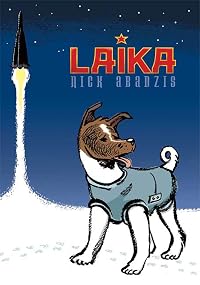
Laika
by Nick Abadzis (Author, Illustrator)
On This Page
Description
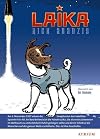
This is the journey of Laika, the abandoned puppy destined to become Earth's first space traveler. With the blending of fact and fiction, this story intertwines three compelling lives. Along with Laika, there is Korolev, a driven engineer at the top of the Soviet space program and Yelena, the lab technician responsible for Laika's health and life.Tags
Recommendations











































Member Recommendations
Member Reviews
I read Laika at a book store and it hit home so hard I can't help myself weeping right there with flooding tears, snot, and whatnot. I think I was in high school and I don't have my own money so I just left it there and went home without getting it. I was actually with my mom but I might be too shocked with the story and that I was THAT affected, I just washed my face and pretended like I didn't just read a book I'm going to treasure for my whole life. Why did I do that?? Well, I'm still regretting that. It's one of my gateway books to the outer space fandom. Even long after that, sometimes I recounted the book to a friend and I have to stop talking at the exact same part of the story (when Laika saw the earth getting far away and she show more thought about her family) because I know, one more word and I'd cry again. I've passed that phase, I can tell Laika's story just fine now. But this remains one of the most impactful and personal books I've read. Oh the things we do for science TT
Update 02/05/21: Finally getting this after 8.5 half years! > show less
Update 02/05/21: Finally getting this after 8.5 half years! > show less
This book broke my heart (I'm still fighting tears over it, actually), particularly since it is based on historical events during the Cold War. It is a powerful homage to the little dog which would become the first living creature to travel into space. If nothing else, it is a testament to the cruelty of animal testing in the name of science. As a dog-lover, I am once again reminded how dogs are often more humane than actual humans. A seriously powerful read - just know ahead of time that it isn't a story with a happy ending.
You know how this book ends. Laika dies. Alone. Orbiting the Earth in a small metal compartment. It's a dead dog book. There will be tears. So why read it?
To see how she gets there, of course.
A fascinating glimpse into the Soviet space program, at a time when they were handily kicking the United States' collective ass. There is a little over-sentimentalizing here, what with Laika's dream sequences and everything, but there is so much content here that it's easy to forgive. The political pressure, the complicated relationships between researchers and test animals, different relationships between people and dogs in general. And all, of course, enmeshed in cold-war era Soviet Union.
Painful. But worth it.
To see how she gets there, of course.
A fascinating glimpse into the Soviet space program, at a time when they were handily kicking the United States' collective ass. There is a little over-sentimentalizing here, what with Laika's dream sequences and everything, but there is so much content here that it's easy to forgive. The political pressure, the complicated relationships between researchers and test animals, different relationships between people and dogs in general. And all, of course, enmeshed in cold-war era Soviet Union.
Painful. But worth it.
This graphic 'novel' tells the story of the first dog in space, launched by the Soviet Union space program in 1957, with no provisions for returning her to earth. Laika's story from a Moscow street dog to her final journey is heart-renderingly told through the pages of beautiful illustrations. Central human characters include legendary Soviet rocket engineer and Sergei Korolev and the fictionalized dog caretaker for the space program, Yelena Alexandrovna Dubrovsky. Both are complex, fully-realized characters that add to the weight of what as being done to Laika in the name of science and advancement of humankind.
Favorite Passages:
“For once, it seems there’s nothing to worry about for the time being. Of course, nothing lasts. And why show more worry about that? One must learn not to. Every day, every moment is a frontier to a country, that once crossed, can never be returned to. Most of the time we don’t notice. Which is just how it should be. The secret is not to worry. You can’t back. Although, those you leave behind will still think of you. Most of the time, we don’t notice the small, gradual changes only the sudden unexpected ones. But, once you understand nothing lasts everything’s all right. After all, something always comes along that changes everything. And once you realize this, you find that you’re no longer imprisoned by this truth but freed by it.” - p. 111-116 show less
Favorite Passages:
“For once, it seems there’s nothing to worry about for the time being. Of course, nothing lasts. And why show more worry about that? One must learn not to. Every day, every moment is a frontier to a country, that once crossed, can never be returned to. Most of the time we don’t notice. Which is just how it should be. The secret is not to worry. You can’t back. Although, those you leave behind will still think of you. Most of the time, we don’t notice the small, gradual changes only the sudden unexpected ones. But, once you understand nothing lasts everything’s all right. After all, something always comes along that changes everything. And once you realize this, you find that you’re no longer imprisoned by this truth but freed by it.” - p. 111-116 show less
"Work with animals is a source of suffering to all of us. We treat them like babies who cannot speak. The more time passes, the more I'm sorry about it. We did not learn enough from the mission to justify the death of the dog." - Oleg Georgivitch Gazenko, 1998
Laika was the first animal sent into space, an unwitting pioneer destined never to return home. This account of her life was painstakingly researched and weaves fact and fiction into an educational, and ultimately heartbreaking look at the lives that Laika touched. Prominent throughout the book is just how powerfully working with a dog affected those closest to her, and perhaps a bit startlingly...the most touching moments are all fact, and not fiction.
This is a short, moving text show more that illuminates the cost of animal testing. Much was gained from working with dogs, yes, but was it worth the cost? Was it worth Laika? The quote that closes the text, and that begins my review, shows just how the bulk of everyone felt. Nevertheless, Laika is still remembered, and fondly so. It warms my heart to know that a statue of her is there, among the cosmonauts, and that her name will never be forgotten. show less
Laika was the first animal sent into space, an unwitting pioneer destined never to return home. This account of her life was painstakingly researched and weaves fact and fiction into an educational, and ultimately heartbreaking look at the lives that Laika touched. Prominent throughout the book is just how powerfully working with a dog affected those closest to her, and perhaps a bit startlingly...the most touching moments are all fact, and not fiction.
This is a short, moving text show more that illuminates the cost of animal testing. Much was gained from working with dogs, yes, but was it worth the cost? Was it worth Laika? The quote that closes the text, and that begins my review, shows just how the bulk of everyone felt. Nevertheless, Laika is still remembered, and fondly so. It warms my heart to know that a statue of her is there, among the cosmonauts, and that her name will never be forgotten. show less
This is a wonderful and terrible book.
Wonderful in bringing to life a moment in history. Wonderful in its captivating portrayal of Laika and her history - some imagined, some historical.
And terrible - in a good way - in how it will, if you have any heart for our canine friends, leave you mourning a brave little dog.
Wonderful in bringing to life a moment in history. Wonderful in its captivating portrayal of Laika and her history - some imagined, some historical.
And terrible - in a good way - in how it will, if you have any heart for our canine friends, leave you mourning a brave little dog.
When I heard about this project the first question that crossed my mind was "How do you make the story of the first dog in space interesting?" My second question was "And would young readers even care?"
I'll elaborate on the first in a moment, but the answer to the second question is a firm and resounding "probably not" but that has more to do with a general lack of interest in the space program and nothing to do with this book.
What Abadzis does is completely round out the story leading up to the launch of Laika the canine cosmonaut including the lives of those around her. Laika gives us the backstory on Sergi Pavlovich, the "chief designer" behind the Russian space program responsible for Sputnik. The story begins with Pavlovich leaving show more the gulag where he was once one of Stalin's political prisoners mumbling "I am a man of destiny." Saying this enough time in double-digit-below-zero temperatures becomes the mantra that saves him until a sound -- and the moon -- appear to guide him towards his salvation.
Flash ahead years later where we're given a brief insight into triumphant launch of Sputnik, the little satellite that launch a superpower race toward space. Premiere Kruschev is impressed with success of the satellite and requests that the Chief Designer push forward to another historic launch in time for the national holiday a month down the road. An impossible task, but our man of destiny will not fail and he calls his team back from vacation to make it happen.
Drop back a few years to a scene in a Russian household where among a little of puppies is a "special" runt with a curly tail. This runt is, of course, the future Laika and she moves about as if she has a destiny of her own. Taken in as a young boys punishment (she is meant to teach him responsibility) she spends much of her time alone in a hall closet, patiently waiting to be understood and loved. When the boy attempts to ditch the dog in the river she falls in with a street dog that shows her how to survive the lean streets. Eventually she is caught and sent to a special research facility that is raising dogs for a special government program.
Here in the dog kennels we meet his handler, a young female apparatchik who is finding it hard to separate her scientific background with her love of her charges. She has come to recognize all the dogs in her care by their character, their strengths and weaknesses, and it's clear that she recognizes in Laika those same special qualities that all with eyes eventually see. Her patience, her loyalty, her trust in those worth trusting, make her the ideal candidate for her vigorous training program. As it becomes clear what Laika will be used for the scientists begin to have misgivings. Even Pavlovich is uneasy about the fact that in order to guarantee a successful launch for Kruschev he must send Laika up with no plan for retrieval. She is a dog of destiny.
What Abadzis does in the end is create a story so rich that the reader will have a difficult time separating out the fact from the fiction. It is not impossible to believe what the dogs are thinking and dreaming because Abadzis has done his job of treating them as equal to humans. He includes supporting documentation at the end of the book but none of it (from what I can tell) is the true life story of Laika, and certainly not her autobiogrpahy. There is the ring of truth to every panel, so much so that I initially thought it might be eligible for the Siebert Award until my boss reminded me that the award went to books that were entirely non-fiction. Oh, yeah. That would preclude elements like talking dogs and unverifiable conversations -- or would it?
Up to now I have left out a crucial bit of information: this is a graphic novel. It almost shouldn't make a difference and I left that bit of information out from the beginning deliberately. The question has come up about how one is supposed to review a graphic novel without showing pictures of the work. The answer is already out in the form of printed music reviews and reviews of gallery openings. True, for the casual review those items appear in print with either photos to document the work or with references to other shared cultural knowledge that a reader can draw conclusions and inferences from. But it is possible to discuss the graphic novel in terms of it's content and never talk about the art; not because the art isn't worth mentioning but because the graphic novel is no more successful than any other media without a good story to hang it's decoration on.
Ultimately, I'm not sure who the audience for this book is, but I know that they will be richly rewarded for their interest. show less
I'll elaborate on the first in a moment, but the answer to the second question is a firm and resounding "probably not" but that has more to do with a general lack of interest in the space program and nothing to do with this book.
What Abadzis does is completely round out the story leading up to the launch of Laika the canine cosmonaut including the lives of those around her. Laika gives us the backstory on Sergi Pavlovich, the "chief designer" behind the Russian space program responsible for Sputnik. The story begins with Pavlovich leaving show more the gulag where he was once one of Stalin's political prisoners mumbling "I am a man of destiny." Saying this enough time in double-digit-below-zero temperatures becomes the mantra that saves him until a sound -- and the moon -- appear to guide him towards his salvation.
Flash ahead years later where we're given a brief insight into triumphant launch of Sputnik, the little satellite that launch a superpower race toward space. Premiere Kruschev is impressed with success of the satellite and requests that the Chief Designer push forward to another historic launch in time for the national holiday a month down the road. An impossible task, but our man of destiny will not fail and he calls his team back from vacation to make it happen.
Drop back a few years to a scene in a Russian household where among a little of puppies is a "special" runt with a curly tail. This runt is, of course, the future Laika and she moves about as if she has a destiny of her own. Taken in as a young boys punishment (she is meant to teach him responsibility) she spends much of her time alone in a hall closet, patiently waiting to be understood and loved. When the boy attempts to ditch the dog in the river she falls in with a street dog that shows her how to survive the lean streets. Eventually she is caught and sent to a special research facility that is raising dogs for a special government program.
Here in the dog kennels we meet his handler, a young female apparatchik who is finding it hard to separate her scientific background with her love of her charges. She has come to recognize all the dogs in her care by their character, their strengths and weaknesses, and it's clear that she recognizes in Laika those same special qualities that all with eyes eventually see. Her patience, her loyalty, her trust in those worth trusting, make her the ideal candidate for her vigorous training program. As it becomes clear what Laika will be used for the scientists begin to have misgivings. Even Pavlovich is uneasy about the fact that in order to guarantee a successful launch for Kruschev he must send Laika up with no plan for retrieval. She is a dog of destiny.
What Abadzis does in the end is create a story so rich that the reader will have a difficult time separating out the fact from the fiction. It is not impossible to believe what the dogs are thinking and dreaming because Abadzis has done his job of treating them as equal to humans. He includes supporting documentation at the end of the book but none of it (from what I can tell) is the true life story of Laika, and certainly not her autobiogrpahy. There is the ring of truth to every panel, so much so that I initially thought it might be eligible for the Siebert Award until my boss reminded me that the award went to books that were entirely non-fiction. Oh, yeah. That would preclude elements like talking dogs and unverifiable conversations -- or would it?
Up to now I have left out a crucial bit of information: this is a graphic novel. It almost shouldn't make a difference and I left that bit of information out from the beginning deliberately. The question has come up about how one is supposed to review a graphic novel without showing pictures of the work. The answer is already out in the form of printed music reviews and reviews of gallery openings. True, for the casual review those items appear in print with either photos to document the work or with references to other shared cultural knowledge that a reader can draw conclusions and inferences from. But it is possible to discuss the graphic novel in terms of it's content and never talk about the art; not because the art isn't worth mentioning but because the graphic novel is no more successful than any other media without a good story to hang it's decoration on.
Ultimately, I'm not sure who the audience for this book is, but I know that they will be richly rewarded for their interest. show less
Members
- Recently Added By
Published Reviews
ThingScore 75
Abadzis's artistic style put me in mind of Tin Tin -- the little doggy with the curly tail didn't hurt -- a childlike, cartoony line that is nevertheless expressive and expansive. It nicely complements the subject matter, contributing much to the sweetness of the story, and serving as counterpoint to the exhaustive research.
added by lampbane
Lists

Recommended Comics / Graphic Novels
595 works; 122 members

A High School Trip to Russia
25 works; 3 members

Books Read in 2014
2,343 works; 86 members
Best Graphic Novel Nonfiction
199 works; 101 members
Author Information

All Editions
Awards and Honors
Common Knowledge
- Canonical title
- Laika
- People/Characters
- Laika; Yelena Dubrovsky; Oleg Gazenko; Sergei Korolev
- Important places
- Moscow, Russia; Tyura-Tam, Kazakhstan; Russia; Kazakhstan; USSR
- Important events
- Space exploration
- Original language
- English
Classifications
- Genre
- Graphic Novels & Comics
- DDC/MDS
- 741.5973 — Arts & recreation Drawing & decorative arts Drawing Comic books, graphic novels, fotonovelas, cartoons, caricatures, comic strips History, geographic treatment, biography North American United States (General)
- LCC
- PN6737 .A24 .L35 — Language and Literature Literature (General) Literature (General) Collections of general literature Comic books, strips, etc.
- BISAC
Statistics
- Members
- 788
- Popularity
- 35,326
- Reviews
- 44
- Rating
- (4.05)
- Languages
- 6 — English, French, German, Italian, Portuguese, Spanish
- Media
- Paper, Ebook
- ISBNs
- 18
- ASINs
- 2