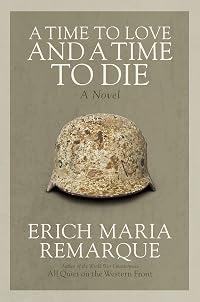
A Time to Love and a Time to Die
by Erich Maria Remarque
On This Page
Description
From the quintessential author of wartime Germany, A Time to Love and a Time to Die echoes the harrowing insights of his masterpiece All Quiet on the Western Front. After two years at the Russian front, Ernst Graeber finally receives three weeks' leave. But since leaves have been canceled before, he decides not to write his parents, fearing he would just raise their hopes. Then, when Graeber arrives home, he finds his house bombed to ruin and his parents nowhere in sight. Nobody knows if show more they are dead or alive. As his leave draws to a close, Graeber reaches out to Elisabeth, a childhood friend. Like him, she is imprisoned in a world she did not create. But in a time of war, love seems a world away. And sometimes, temporary comfort can lead to something unexpected and redeeming. show lessTags
Recommendations























Member Reviews
On leave from the Russian Front, a soldier plans a surprise visit to his parents. But, they have been bombed out while he was gone, and even their survival is unknown. A childhood female friend is still in their town, and, they spend their time in the ruins of their lives. In the 1960's Remarque was proof that not all Germans were monsters.
Excellent. This is the first time I've read a novel from the viewpoint of a German soldier toward the end of WWII. Really good look at what a typical foot soldier was most likely thinking and going through, wondering what the hell it was all about, what the hell it was all for. Extraordinary characterizations as well. Sad but very genuine in the feel of the book.
Goed boek. Echt een Remarque. Zat echt goed in het verhaal. Zeker het einde is verrassend.
trad Isabel da Nóbrega
Cosa succede quando ti accorgi di combattere dalla parte sbagliata? Questo è il tema portante del romanzo, la presa di coscienza del soldato tedesco Ernst Graeber. I primi dubbi esistenziali cominceranno a manifestarsi sul fronte russo, troveranno ampio sviluppo durante il periodo passato in licenza (in una Germania devastata dalle bombe, ma soprattutto dal sospetto e dalla paura), e arriveranno a compimento nel finale, di nuovo al fronte, in una perfetta chiusura del cerchio.
E' un libro che ha due anime: poetico quando narra dell'amore che nasce tra i protagonisti, crudo e cinico nelle scene di guerra. Questa dicotomia non è altro che un'eco del tormento interiore di Ernst, deluso di fronte al crollo degli ideali di cui è stato show more imbevuto, ma incapace di trovare una strada diversa e quindi destinato a tornare a combattere per una causa in cui non crede più, semplice ingranaggio della storia. L'epilogo è molto evocativo e in fondo l'unico possibile: [SPOILER]-Dopo aver portato tanta violenza e distruzione non c'è riscatto se non nella morte, vista come fine delle sofferenze fisiche e morali, ma anche come nuovo inizio (Ernst muore, ma una pianta sboccia nel fango)-[SPOILER]
Ernst Graeber è il simbolo di un'intera generazione di giovani tedeschi, l'opera quindi esce dalla dimensione individuale per arrivare a quella sociale e far riflettere sul tema sempre scottante della complicità del popolo tedesco con i nazisti e i loro abomini. Remarque sulla questione presenta un punto di vista che non credo di condividere appieno (accorgersi dei propri sbagli solo quando le cose vanno male non è una vera e propria presa di coscienza), ma leggere questo romanzo mi ha confermato una volta di più che nella vita non è mai tutto bianco o nero. show less
E' un libro che ha due anime: poetico quando narra dell'amore che nasce tra i protagonisti, crudo e cinico nelle scene di guerra. Questa dicotomia non è altro che un'eco del tormento interiore di Ernst, deluso di fronte al crollo degli ideali di cui è stato show more imbevuto, ma incapace di trovare una strada diversa e quindi destinato a tornare a combattere per una causa in cui non crede più, semplice ingranaggio della storia. L'epilogo è molto evocativo e in fondo l'unico possibile: [SPOILER]-Dopo aver portato tanta violenza e distruzione non c'è riscatto se non nella morte, vista come fine delle sofferenze fisiche e morali, ma anche come nuovo inizio (Ernst muore, ma una pianta sboccia nel fango)-[SPOILER]
Ernst Graeber è il simbolo di un'intera generazione di giovani tedeschi, l'opera quindi esce dalla dimensione individuale per arrivare a quella sociale e far riflettere sul tema sempre scottante della complicità del popolo tedesco con i nazisti e i loro abomini. Remarque sulla questione presenta un punto di vista che non credo di condividere appieno (accorgersi dei propri sbagli solo quando le cose vanno male non è una vera e propria presa di coscienza), ma leggere questo romanzo mi ha confermato una volta di più che nella vita non è mai tutto bianco o nero. show less
Mar 16, 2018 (Edited)Italian
En skildring av krigets helvete från en ung tysk soldats perspektiv. Tysklands framgång i kriget börjar vända och många "vanliga" tyskar börjar tvivla. Både på framgången men också på meningen med kriget. Skildringen av kriget vid fronten till att Ernst får permission som han tillbringar i sin hemstad skildras mycket realistiskt och starkt. Förtrycket från SS och Gestapo. Vad kan man säga och till vem? Propagandamaskinen Tyskland tillåter inte att man tvivlar på fürerns skärpa och briljans och förmåga. En riktigt stark skildring av både krigets helvete men också en kärlekshistoria mitt i krigets fasor. rekommenderas starkt.
Nov 19, 2014Swedish
Tid att älska dags att dö är den tyske författaren Erich Maria Remarques mest berömda roman efter På västfronten intet nytt. Den handlar om en tysk soldat som kommer hem på permission från kriget, i detta fall andra världskriget och utkom 1954 under den tyska originaltiteln Zeit zu leben und Zeit zu sterben.
Soldaten har länge väntat på sin första permission sedan fälttåget mot Sovjetunionen inleddes, den 22 juni 1941 (Operation Barbarossa). Efter att han lämnat sitt fältförband får han veta att "alla permissioner har dragits in", men han kommer likväl med den sista hemtransporten från sin del av fronten. Väl hemma märker han att tåget inte stannar vid stationen, utan långt utanför (den icke namngivna) show more hemstaden. Istället transporteras han med buss till centrum. Väl där upptäcker han att många byggnader mer eller mindre har förstörts av de västallierades bombflyg. Han hittar inte sina föräldrar och får istället bosätta sig på stadens lokala kasern för permitenter. Bombalarm ljuder nästan varje natt, men ofta hörs bombplanen flyga förbi - för att istället bomba andra städer. Under sina försök att få reda på föräldrarnas öde träffar han en kvinna och förälskelse uppstår. Tid att älska. Båda förstår att de troligen inte kommer träffas någonsin igen, när det blir dags för soldaten att återvända till kriget. Folk vet inte om deras hem kommer bestå nästa bombanfall eller ej och hela situationen präglas av tillfälligheter. Slutligen får soldaten återvända till fronten och väl tillbaka har många av hans kamrater stupat eller skadats allvarligt och nu är det Dags att dö. show less
Soldaten har länge väntat på sin första permission sedan fälttåget mot Sovjetunionen inleddes, den 22 juni 1941 (Operation Barbarossa). Efter att han lämnat sitt fältförband får han veta att "alla permissioner har dragits in", men han kommer likväl med den sista hemtransporten från sin del av fronten. Väl hemma märker han att tåget inte stannar vid stationen, utan långt utanför (den icke namngivna) show more hemstaden. Istället transporteras han med buss till centrum. Väl där upptäcker han att många byggnader mer eller mindre har förstörts av de västallierades bombflyg. Han hittar inte sina föräldrar och får istället bosätta sig på stadens lokala kasern för permitenter. Bombalarm ljuder nästan varje natt, men ofta hörs bombplanen flyga förbi - för att istället bomba andra städer. Under sina försök att få reda på föräldrarnas öde träffar han en kvinna och förälskelse uppstår. Tid att älska. Båda förstår att de troligen inte kommer träffas någonsin igen, när det blir dags för soldaten att återvända till kriget. Folk vet inte om deras hem kommer bestå nästa bombanfall eller ej och hela situationen präglas av tillfälligheter. Slutligen får soldaten återvända till fronten och väl tillbaka har många av hans kamrater stupat eller skadats allvarligt och nu är det Dags att dö. show less
Feb 21, 2023Swedish
Members
- Recently Added By
Lists

German Literature
518 works; 56 members
Author Information

115+ Works 29,401 Members
Erich Maria Remarque was born Erich Paul Remark on June 22, 1898 in Germany. He was drafted into the German Army at the age of 18. He was assigned to the Western Front and later moved to the 15th Reserve Infantry Regiment. He was wounded by shrapnel in the left leg, right arm and neck, and was moved to an army hospital in Germany where he spent show more the rest of the war. After the war, he continued his teacher training and became a primary school teacher. He also began pursuing his writing career. He started writing essays and poems and his first novel, The Dream Room. When he published All Quiet on the Western Front, Remarque changed his middle name in memory of his mother and reverted to the earlier spelling of the family name. The original family name, Remarque, had been changed to Remark by his grandfather in the 19th century. All Quiet on the Western Front was written in 1927, but Remarque was unable to find a publisher. The novel was published in 1929 and described the experiences of German soldiers during World War 1. His other works include: Station at the Horizon, The Road Back, Three Comrades, Flotsam, and Shadows in Paradise. Erich Remarque died in 1958 of heart collapse brought on byan aneurysm. (Bowker Author Biography) show less
Some Editions
Awards and Honors
Distinctions
Notable Lists
Series
Belongs to Publisher Series
Work Relationships
Common Knowledge
- Canonical title
- A Time to Love and a Time to Die
- Original title
- Zeit zu leben und Zeit zu sterben
- Alternate titles*
- Eine Zeit zu leben und eine Zeit zu sterben
- Original publication date
- 1954
- People/Characters
- Ernst Graeber; Elisabeth Kruse
- Important places
- Germany; Russia
- Important events
- World War II
- Related movies
- A Time to Love and a Time to Die (1958 | IMDb)
- Dedication
- To P. G. (presumably Paulette Goddard)
- First words
- Death smelled different in Russia than in Africa.
- Quotations*
- Mißtrauen war die verbreitetste Eigenschaft im Dritten Reich.
Wir beide haben den Krieg nicht angefangen und sind nicht dafür verantwortlich. Wir tun nur unsere Pflicht. Und Befehl ist Befehl. Oder nicht?
Herrenvolk – jedem Dummkopf, jedem Scharlatan, jedem Kommando zu gehorchen – was hat das mit Herrenvolk zu tun?
Er hockte sich neben die Treppe. Jakobsleiter, dachte er. Was war das noch? War es nicht eine Treppe, die in den Himmel führte? Und stiegen nicht Engel darauf auf und ab? Wo waren die Engel? Verwandelt in Flugzeuge. Wo war a... (show all)lles? Wo war Erde? War sie nur noch da für Gräber? - Last words*
- (Click to show. Warning: May contain spoilers.)La pianta oscillò e si fermò poi sullo stretto orizzonte davanti alla sua testa china, come cosa ovvia, con la consolazione dell'ordine più meticoloso, in perfetta pace, sempre più grande, finchè riempì il cielo intero e gli occhi di lui si chiusero.
- Original language
- German
- Canonical DDC/MDS
- 833.912
*Some information comes from Common Knowledge in other languages. Click "Edit" for more information.
Classifications
Statistics
- Members
- 721
- Popularity
- 39,525
- Reviews
- 9
- Rating
- (3.96)
- Languages
- 20 — Bulgarian, Danish, Dutch, English, Estonian, Finnish, French, German, Hungarian, Italian, Latvian, Lithuanian, Norwegian (Bokmål), Polish, Russian, Serbian, Slovak, Spanish, Swedish, Turkish
- Media
- Paper, Audiobook, Ebook
- ISBNs
- 50
- ASINs
- 41