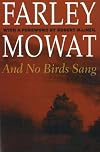
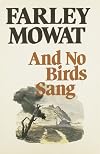
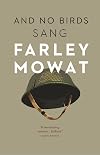
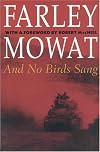
And No Birds Sang
by Farley Mowat
On This Page
Description
Turned away from the Royal Canadian Air Force for his apparent youth and frailty, Farley Mowat joined the infantry in 1940. The young second lieutenant soon earned the trust of the soldiers under his command, and was known to bend army rules to secure a stout drink, or find warm - if non-regulation - clothing. But when Mowat and his regiment engaged with elite German forces in the mountains of Sicily, the optimism of their early days as soldiers was replaced by despair. With a naturalist's show more eyes and ears, Mowat takes in the full dark depths of war - and his moving account of military service, and the friends he left behind, is also a plea for peace. It is one of the most searing and unforgettable World War II memoirs from any Canadian. show lessTags
Recommendations


















Member Recommendations
Member Reviews
What a wonderful writer Farley Mowat was! This book which is about Mowat's experiences in the infantry during World War II made me feel like I was in the midst of the fighting. Mowat doesn't pull any punches about the horrors of war or about the effects on the people who are involved in the war. There are lighter moments such as the description of him and his pal on the eve of landing in Italy going around the mess with a fake mine detector. However, as he progresses through his experiences in the fighting the tone becomes anything but funny. It's a miracle that Farley survived the war as so many of his companions did not but thank goodness he did and went on to write this classic and many others.
I've read many war memoirs, especially WWII, and this is one of the best. Mowat offers a fast-paced narrative of the descent into hell that was his experience as a Canadian officer during the invasion of Sicily and Italy by Allied forces in 1943. He offers no gloss or unnecessary assumptions, he simply recounts what he remembers of the experiences. If you were moved by Band of Brothers, you'll likely find And No Birds Sang a gripping tale of the expectations of glory in battle being crushed by the horrors of war.
2033 And No Birds Sang, by Farley Mowat (read 23 Nov 1986) This is about Mowat's experience in World War II and I was really affected by it. He tells things as I believe they were: no glamour, really rough. He was in Sicily and Italy with a Canadian regiment. The book ends abruptly at Christmas 1943. It is most anti-war, and its object is to again put the lie to Homer's claim that it is a sweet and good thing to die for one's country. This is one of my more moving reading experiences. It goes to show: just because Mowat's The Siberians was so awful a book, it does not mean the author can't write. It all depends on the subject. I do not know if the title of the book owes anything to John Keats' words:
:O WHAT can ail thee, knight-at-arms, show more
Alone and palely loitering?
The sedge has wither'd from the lake,
And no birds sing. show less
:O WHAT can ail thee, knight-at-arms, show more
Alone and palely loitering?
The sedge has wither'd from the lake,
And no birds sing. show less
Farley Mowat's memoir of his combat experiences in World War II begins innocently, with the story of his attempts to enlist and gradually details the folly and cost of war as he experienced them. His conclusion: there is no such thing as a "good" or worthwhile war.
Mowat's chilling account of his Canadian Regiment's close-combat in the Italian countryside. This tale of the usual WWII fare - confusion, poor equipment, poor planning, bravery, tenacity, fatigue and terror - ends abruptly as Mowat fights exhaustion and battle fatigue in the heat (and cold) of battle.
there's a similarity to the war memoirs of Farley Mowatt and those of Spike Milligan, and both relate to the writers having a nervous breakdown during the waning stages of WWII. Mowatt responded by intensifying his dedication to his ecological researches, and Milligan by flaunting his madness as a comedian. The world is richer for both men's existence.
This particular book is a one volume record of Mowatt's time with the Hastings and Prince Edward Regiment of the Canadian Army that was a major component of the first Canadian Infantry division which served mostly in Italy. It is very useful to Canadian historians of the war.
This particular book is a one volume record of Mowatt's time with the Hastings and Prince Edward Regiment of the Canadian Army that was a major component of the first Canadian Infantry division which served mostly in Italy. It is very useful to Canadian historians of the war.
Outstanding and emotionally wrenching memoir of the Sicilian and early part of the Italian campaigns. The book start off with hijinks and comedy, but progressively descends into despair and terror. Highly recommended.
Members
- Recently Added By
Lists

CBC's 100 True Stories
100 works; 6 members

Top Five Books of 2017
757 works; 231 members

Books about World War II
241 works; 22 members

The Best of Canadian Literature
235 works; 33 members

Books With the Most Memorable Titles
478 works; 158 members

THE WAR ROOM
813 works; 24 members
Author Information

60+ Works 15,310 Members
Farley Mowat's nearly forty books have sold millions of copies & have been published in more than twenty languages. His books include "Never Cry Wolf", "Sea of Slaughter", "The Farfarers", "People of the Deer", "The Dog Who Wouldn't Be", "The Desperate People", & "Ordeal by Ice". (Publisher Provided) He is one of Canada's most popular & show more distinguished writers. Through the past five decades he has recorded his experiences in several highly successful books for both adults & children. He has received scores of literary awards & his works have been translated into more than 30 languages. (Publisher Provided) Farley Mowat was born in Belleville, Ontario, Canada on May 12, 1921. During World War II, he fought in the Allied invasion of Sicily. He was discharged in 1945 with the rank of Captain. He studied at the University of Toronto. Farley was an author, activist, and environmentalist. He wrote more than 40 books during his lifetime including both novels and non-fiction works. His books include Never Cry Wolf, My Father's Son, Otherwise, and Eastern Passage. He received several awards including the Queen Elizabeth II Jubilee Medal in 1956, the Governor General's Award for Lost in the Barrens in 1956, the Leacock Medal for Humour for The Boat Who Wouldn't Float in 1970, and the Order of Canada in 1981. He died on May 6, 2014 at the age of 92. (Bowker Author Biography) show less
Work Relationships
Common Knowledge
- Canonical title*
- And No Birds Sang
- Original title
- And No Birds Sang
- Original publication date
- 1979
- People/Characters
- Farley Mowat
- Important places
- Sicily, Italy
- Important events
- World War II; Battle of Ortona; Invasion of Sicily
- Dedication
- For Claire and Helen,
and for all those others
who endured the aftermath. - First words
- On the second day of September, 1939, I was painting the porch of our clapboard house in the rural Ontario town of Richmond Hill when my father pulled into the driveway at the helm of his red convertible. He looked as if he m... (show all)ight have had a drink or two -- high-colored and exhilarated.
"Farley, my lad, there's bloody big news! The war is on!...
*Some information comes from Common Knowledge in other languages. Click "Edit" for more information.
Classifications
Statistics
- Members
- 535
- Popularity
- 55,906
- Reviews
- 12
- Rating
- (3.87)
- Languages
- Czech, English, Finnish, French
- Media
- Paper, Audiobook, Ebook
- ISBNs
- 21
- ASINs
- 9