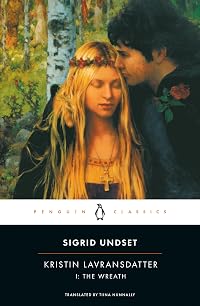
On This Page
Description
Published in 1920, "The Wreath" is the first book in the "Kristin Lavransdatter" trilogy by the Nobel Prize winning Norwegian author Sigrid Undset. Beloved for its historical and cultural accuracy, the stories follow the life of the main character, Kristin Lavransdatter, a fictional Norwegian woman living in the 14th century in the Gudbrand Valley in Norway. In "The Wreath" readers are introduced to Kristin at a young age at her family's prosperous farm. Kristin often clashes with her loving show more family and, while kind and gentle, she becomes willful and headstrong. Her family is beset by repeated tragedies and her life is upended when her reputation becomes tarnished. In response, she is sent to a nunnery by her parents and her life takes a dramatic turn. There she falls in love with an inappropriate man and engages in a scandalous affair, much to the disapproval of her pious parents. Beautifully written and poetic, "The Wreath" captures both the details of this ancient world and creates characters who share all the same passions and shortcomings as those in the modern era. Undset's classic continues to be treasured in Norway and read all over the world. show lessTags
Recommendations











Member Recommendations
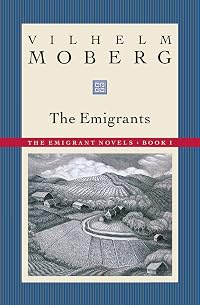
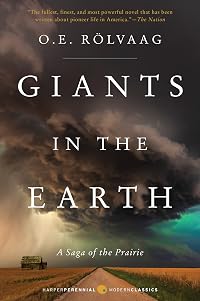
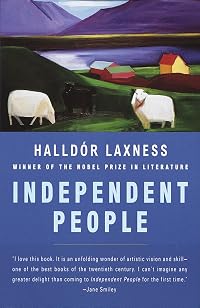
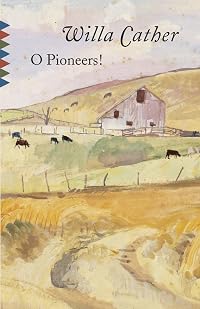
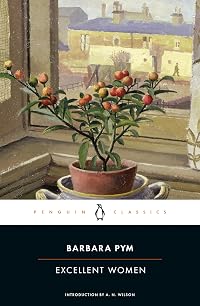
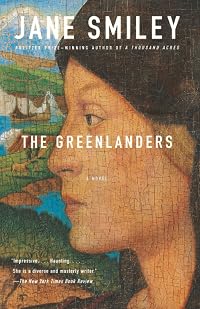
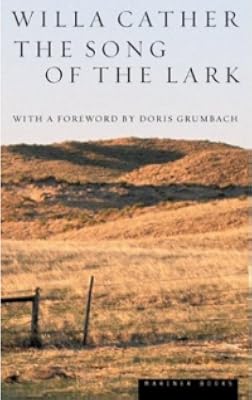
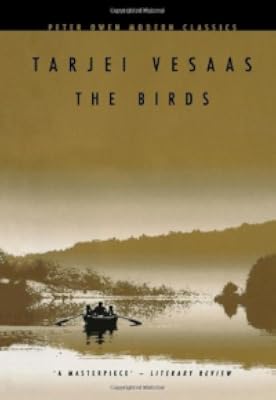
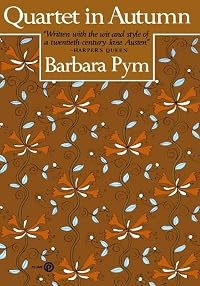
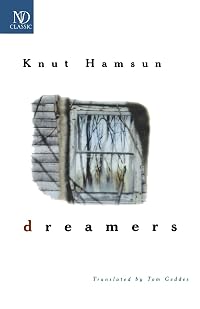
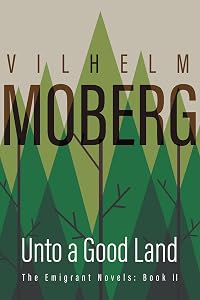
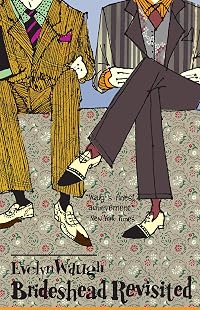
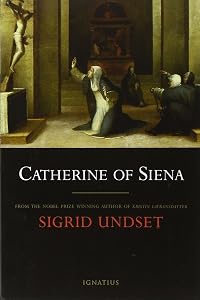
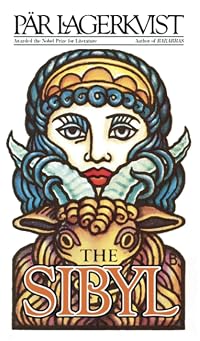
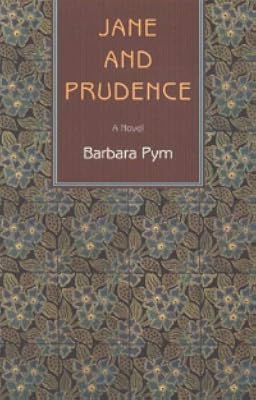
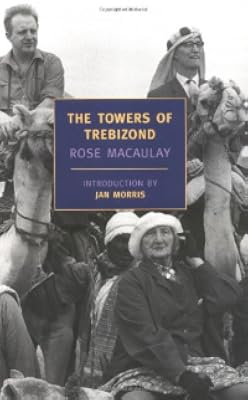
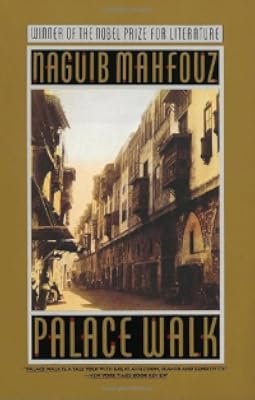
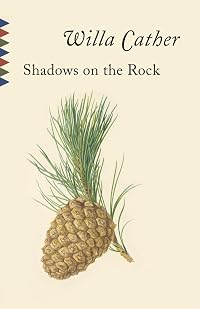
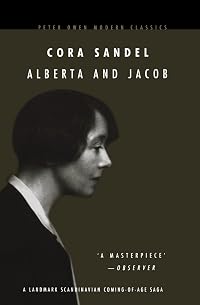
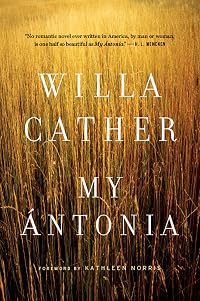
k8_not_kate Very different setting, but still the story of women's lives in a specific place and time, well told. Also contains fraught romance and family drama.
Member Reviews
Oh, Kristin. You really did make all the wrong choices in life, didn't you?Probably the best part about this book for me was the focus on the relationship between Kristin and her father. The love between them was so intense; everything Lavrans did was so clearly for Kristin's benefit, but she could not bring the family honor. Still pretty upset about how things went down despite reading this half a year ago, but deep down I can't find it in me to blame Kristin. She was a child really, and Erlend...Well let's just say this wasn't Erlend's first rodeo.
Undset is a master at expressing the emotions, desires and regrets of her characters. Though this one was truly heartbreaking, I think I'm going to have to read the sequel.
Undset is a master at expressing the emotions, desires and regrets of her characters. Though this one was truly heartbreaking, I think I'm going to have to read the sequel.
Just closed the last page. Read in memory of my mother who passed away a few months ago. Rather than a review, at the moment all I can think of is the conversation I would have had with her. Did she read the older Archer & Scott translation like I did? Did she sometimes have to re-read conversations to get their meaning? Did she like Kristin? Or did she, like I did, respond with a crone's shake of the head at what chaos hormones can create? (As they did in our own pre-menopausal lives.) Did she adore the description of the Norwegian landscape, of the weather, of the Medieval ways of life, and the fact it was written by a woman who obviously loved and researched her history? I know she would have. I did, too.
I might go to her Goodreads show more page to see if she read the rest of the trilogy. Or maybe not. Too soon, I think. show less
I might go to her Goodreads show more page to see if she read the rest of the trilogy. Or maybe not. Too soon, I think. show less
Historical fiction often falls flat by trying to portray a modern-day woman with a 21st century mindset in a long ago setting. Undsets Nobel prize winning tale of a 14th century girl manages to completely avoid this, and is a pretty compulsive read. Kristin starts out as a child on a middle class estate; the much-loved daughter of a handsome, good hearted landowner and his "heavy of mood" wife. The countryside, village life and the Catholic church form the backdrop to their story. But this is also a harsh world of violence and disease...
When she is sent away to spend a year at a convent, the (betrothed) Kristin encounters the dashing Erlund. But this is no Romeo and Juliet story, as the older man already has a commonlaw wife and two show more illegitimate children at his homestead of Husaby...
Extremely well written and gripping. show less
When she is sent away to spend a year at a convent, the (betrothed) Kristin encounters the dashing Erlund. But this is no Romeo and Juliet story, as the older man already has a commonlaw wife and two show more illegitimate children at his homestead of Husaby...
Extremely well written and gripping. show less
"I've done many things that I thought I would never dare to do because they were sins. But I didn't realize then that the consequence of sin is that you have to trample on other people."
On the surface this story can seem a bit melodramatic, but it's really a very deep book. It's beautifully written, but it's heartbreaking as well. The descriptions are on point. It follows Kristin from a child to her wedding to Erland. I love the Catholicism of it. This culture of Medieval Norway is very Catholic, but still steeped in paganism. They praise God, yet utter curses. Pray to the Saints, but believe in Fae. They believe in trusting God's will for them, but they are also superstitious. Many priests are good, but Undset does not hide the fact show more that there are evil ones as well, and even the good ones are shown to have sinned and have flaws. The people do not expect them to be perfect. They realize that they are human. This is the culture she grows up in. She is seduced by a much older man, when she is a teenager, who had been excommunicated for adultery, and still has his mistress live with him off and on. This sin causes great trouble in her life. As soon as she gave into him she felt she was his possession, and not in an entirely romantic way. She is passionate about him, but she also feels trapped. It takes her peace away, leads to more sin, and she must struggle with her guilt and the consequences. She still wants to be right with God and the Church, but she wants Erland, and she has her pride. She lies, and hides her sins, and prolongs them until she gets her way. She goes about it backwards. Instead of confessing, and doing things above board first, and then getting married to Erland. She hides, and works sneakily, she wants to marry him first and then deal with her sin, but it festers, and more people are hurt in the process. There is so much going on in this novel, and so many ways to look at it, but I think it's primarily about the struggle between sin and grace, hatred and love, forgiveness and resentment. This book ends on her and Erland's wedding night, but there is a sense if foreboding that their marriage will not be a happy one. I will be reading book 2 for my next category.
"I've done many things that I thought I would never dare to do because they were sins. But I didn't realize then that the consequence of sin is that you have to trample on other people."
CAWPILE Rating:
C- 9
A- 10
W- 8
P- 7
I- 9
L- 9
E- 9
8.7 = ⭐⭐⭐⭐
#backtotheclassics (classic by a woman author)
#mmdchallenge (three books by the same author) show less
On the surface this story can seem a bit melodramatic, but it's really a very deep book. It's beautifully written, but it's heartbreaking as well. The descriptions are on point. It follows Kristin from a child to her wedding to Erland. I love the Catholicism of it. This culture of Medieval Norway is very Catholic, but still steeped in paganism. They praise God, yet utter curses. Pray to the Saints, but believe in Fae. They believe in trusting God's will for them, but they are also superstitious. Many priests are good, but Undset does not hide the fact show more that there are evil ones as well, and even the good ones are shown to have sinned and have flaws. The people do not expect them to be perfect. They realize that they are human. This is the culture she grows up in. She is seduced by a much older man, when she is a teenager, who had been excommunicated for adultery, and still has his mistress live with him off and on. This sin causes great trouble in her life. As soon as she gave into him she felt she was his possession, and not in an entirely romantic way. She is passionate about him, but she also feels trapped. It takes her peace away, leads to more sin, and she must struggle with her guilt and the consequences. She still wants to be right with God and the Church, but she wants Erland, and she has her pride. She lies, and hides her sins, and prolongs them until she gets her way. She goes about it backwards. Instead of confessing, and doing things above board first, and then getting married to Erland. She hides, and works sneakily, she wants to marry him first and then deal with her sin, but it festers, and more people are hurt in the process. There is so much going on in this novel, and so many ways to look at it, but I think it's primarily about the struggle between sin and grace, hatred and love, forgiveness and resentment. This book ends on her and Erland's wedding night, but there is a sense if foreboding that their marriage will not be a happy one. I will be reading book 2 for my next category.
"I've done many things that I thought I would never dare to do because they were sins. But I didn't realize then that the consequence of sin is that you have to trample on other people."
CAWPILE Rating:
C- 9
A- 10
W- 8
P- 7
I- 9
L- 9
E- 9
8.7 = ⭐⭐⭐⭐
#backtotheclassics (classic by a woman author)
#mmdchallenge (three books by the same author) show less
https://fromtheheartofeurope.eu/kristin-lavransdatter-the-wreath-by-sigrid-undse...
This is the next in my sequence of educating myself about the work of winners of the Nobel Prize for Literature who were not white men. Sigrid Undset (1882-1949) was born in Denmark, but her father was Norwegian and they moved back to Norway when she was two. She began writing as a teenager, and won the Nobel Prize in 1928, when she was 46, then the second youngest winner after Rudyard Kipling (since beaten by Sinclair Lewis, Pearl S. Buck, and Albert Camus).
The Nobel Committee is clear that the award was for her novel Kristin Lavransdatter: the citation was “principally for her powerful descriptions of Northern life during the Middle Ages”. She had show more been nominated previously in 1922, 1925 and 1926; in 1928 her nomination came not from a writer but from Norwegian psychologist Helga Eng. In her mercifully short acceptance speech, she restricts herself to celebrating the bonds between Norway and Sweden.
I must say that I approached it with some trepidation. My project to read non-white-male Nobel Literature laureates has not been super successful so far; I have read two short okayish novels by Selma Lagerlöf, some incomprehensible poetry by Rabindranath Tagore and a dull book by Grazia Deledda. And Kristin Lavransdatter checks in at over 1100 pages, and I could tell that it was another tale of upstanding rural folk, like the Lagerlöf and Deledda books. However, I realised that I could always just read the first part, published in 1920, for this project, and come back to the second and third parts in due course of my normal rounds of reading if I want to.
So, what did I think of The Wreath, the first part of Kristin Lavransdatter? Actually I rather liked it. It’s set in the 14th century, in a valley in central Norway. Kristin is the daughter of Lavrans (as you might have guessed from the title); he is a respectable nobleman who betroths her to the neighbours’ virtuous son. Kristin however falls in love with an more mature chap who has children from a previous relationship (Undset’s own husband was also an older chap with children from a previous relationship) and eventually persuades her family to let her marry him, wearing the virginal wreath of the book’s title, though she alone knows that she is several months pregnant (as Undset was when she married).
I thought Kristin herself was very well realised, as were the men and women in her life, and the Norwegian landscape and climate, both of which are significant factors in the story, are vividly depicted. One of the interesting subplots is that Kristin’s younger sister suffers a spinal injury in an accident and remains bedridden for the rest of her short life. One of Undset’s own children had a learning disability, as did one of her stepchildren; I don’t know any more details than that, but for obvious reasons disabled characters catch my attention.
It’s quite a Catholic book. Kristin is sent off to a convent school in Oslo, and the portrayal of the nuns is pretty realistic; in general the church plays a helpful role. Undset herself converted to Catholicism in 1924, to great public scandal in Lutheran Norway. In general it’s a huge contrast with the likes of The Good Wife of Bath, which I bounced off last year. My Catholic days are behind me, but I appreciate calm description rather than polemic.
So yeah, this was the first discovery of a new and interesting writer for me in this project, and I will get to the second and third volumes in good time. show less
This is the next in my sequence of educating myself about the work of winners of the Nobel Prize for Literature who were not white men. Sigrid Undset (1882-1949) was born in Denmark, but her father was Norwegian and they moved back to Norway when she was two. She began writing as a teenager, and won the Nobel Prize in 1928, when she was 46, then the second youngest winner after Rudyard Kipling (since beaten by Sinclair Lewis, Pearl S. Buck, and Albert Camus).
The Nobel Committee is clear that the award was for her novel Kristin Lavransdatter: the citation was “principally for her powerful descriptions of Northern life during the Middle Ages”. She had show more been nominated previously in 1922, 1925 and 1926; in 1928 her nomination came not from a writer but from Norwegian psychologist Helga Eng. In her mercifully short acceptance speech, she restricts herself to celebrating the bonds between Norway and Sweden.
I must say that I approached it with some trepidation. My project to read non-white-male Nobel Literature laureates has not been super successful so far; I have read two short okayish novels by Selma Lagerlöf, some incomprehensible poetry by Rabindranath Tagore and a dull book by Grazia Deledda. And Kristin Lavransdatter checks in at over 1100 pages, and I could tell that it was another tale of upstanding rural folk, like the Lagerlöf and Deledda books. However, I realised that I could always just read the first part, published in 1920, for this project, and come back to the second and third parts in due course of my normal rounds of reading if I want to.
So, what did I think of The Wreath, the first part of Kristin Lavransdatter? Actually I rather liked it. It’s set in the 14th century, in a valley in central Norway. Kristin is the daughter of Lavrans (as you might have guessed from the title); he is a respectable nobleman who betroths her to the neighbours’ virtuous son. Kristin however falls in love with an more mature chap who has children from a previous relationship (Undset’s own husband was also an older chap with children from a previous relationship) and eventually persuades her family to let her marry him, wearing the virginal wreath of the book’s title, though she alone knows that she is several months pregnant (as Undset was when she married).
I thought Kristin herself was very well realised, as were the men and women in her life, and the Norwegian landscape and climate, both of which are significant factors in the story, are vividly depicted. One of the interesting subplots is that Kristin’s younger sister suffers a spinal injury in an accident and remains bedridden for the rest of her short life. One of Undset’s own children had a learning disability, as did one of her stepchildren; I don’t know any more details than that, but for obvious reasons disabled characters catch my attention.
It’s quite a Catholic book. Kristin is sent off to a convent school in Oslo, and the portrayal of the nuns is pretty realistic; in general the church plays a helpful role. Undset herself converted to Catholicism in 1924, to great public scandal in Lutheran Norway. In general it’s a huge contrast with the likes of The Good Wife of Bath, which I bounced off last year. My Catholic days are behind me, but I appreciate calm description rather than polemic.
So yeah, this was the first discovery of a new and interesting writer for me in this project, and I will get to the second and third volumes in good time. show less
This is the first part of the trilogy which won Undset the Nobel Prize for Literature in the 1920s. As a piece of historical fiction, I think it's quite excellent—Undset manages to conjure up a world quite different from that of modern Europe without falling prey to exposition dumps or the inclusion of anachronistic behaviour or modes of thinking. The characters were well-sketched and distinctive, and I really appreciated how Undset illuminated the ways in which the patriarchal and religious mindsets of late thirteenth century Norway could shape both a person's actions and their self-perceptions. It's probably, in a way, an odd testament to Undset's writing that I found the main characters in The Wreath—the eponymous Kristin and her show more lover Erlend—to be so vividly insufferable. I thoroughly disliked both of them, and cannot see how there could ever be a relationship between them that wasn't a trainwreck. I appreciated The Wreath, but don't think I'll be reading the rest of the Kristin Lavransdatter trilogy. show less
Kristin Lavransdatter is a 3-volume Norwegian epic set in the 14th century. The eponymous heroine is born to an influential and prosperous farmer, Lavrans, and his wife Ragnfrid. She is their seventh, but first surviving, child, and understandably the apple of Lavrans’ eye. The first volume, The Wreath, chronicles Kristin’s life from early childhood to marriage. Her protected childhood is shattered by a traumatic incident and she is sent to a convent for a one-year period of emotional recovery. When she enters the convent, Kristin is already betrothed to Simon, a perfectly acceptable but ordinary man. But this arranged marriage is threatened when she meets the passionate but rakish Erlend.
Well, we’ve seen this storyline before, show more haven’t we? What sets Kristin Lavransdatter apart, and enhances the traditional plot, are the medieval setting, Norwegian customs and rituals, and a very strong female protagonist. Kristin takes control of her future and refuses to be pigeonholed into traditional roles. I’m looking forward to reading the next two volumes of this work. show less
Well, we’ve seen this storyline before, show more haven’t we? What sets Kristin Lavransdatter apart, and enhances the traditional plot, are the medieval setting, Norwegian customs and rituals, and a very strong female protagonist. Kristin takes control of her future and refuses to be pigeonholed into traditional roles. I’m looking forward to reading the next two volumes of this work. show less
Members
- Recently Added By
Lists

Top Five Books of 2016
795 works; 229 members

Books to read again
1 work; 1 member

Love Triangles in Literature
108 works; 15 members

Reading List - Scandinavian Fiction
134 works; 3 members

Allie's List of Books I Want To Read
93 works; 1 member

Mustich's 1000 Books to Read Before You Die: A Life Changing List
1,001 works; 19 members
Author Information

164+ Works 12,090 Members
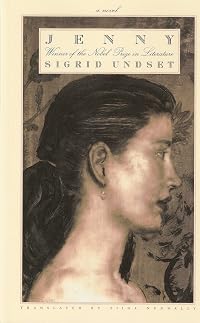
Sigrid Undset was the daughter of archeologist Ingvald Undset. Cultural, autobiographical, and religious topics constitute a large and interesting portion of her fiction, which in Norway is categorized according to the time of action: medieval or modern. Jenny (1911), an idealistic and tragic love story, is one of the latter novels. Undset's show more comprehensive knowledge of medieval Scandinavian culture has its literary monuments in Kristin Lavransdatter (1920--22) and The Master of Hestviken (1925--27), historical novels that depict life in the Norwegian Middle Ages. She was awarded the Nobel Prize for Literature in 1928. Norwegian criticism of Sigrid Undset's writing centers on her religiosity (she became a conservative, almost reactionary Catholic in Lutheran Norway in the 1920s; she possesses an intensity of belief that is rather naturally expressed in the medieval novels. Yet while she has written religious polemics, the medieval novels are not tendentious. In fact, the central motifs are eroticism, marriage, and family life, in short, the full life of a medieval woman who sees herself in the light of contemporary Christian beliefs. These novels are great, realistic delineations of medieval personalities. During World War II she escaped the German occupation of Norway and fled to America, where she wrote her autobiographical Happy Times in Norway (1942). (Bowker Author Biography) show less
Some Editions
Series

Belongs to Publisher Series
Work Relationships
Is contained in
Common Knowledge
- Canonical title
- Kristin Lavransdatter I: The Wreath
- Original title
- Kristin Lavransdatter. I. Kransen
- Alternate titles
- The Wreath; Kristin Lavransdatter; The Bridal Wreath
- Original publication date
- 1920
- People/Characters
- Kristin Lavransdatter; Erlend Nikulausson; Lavrans; Ragnfrid Ivarsdatter; Ulvhild Lavransdatter; Simon Andresson (show all 7); Ramborg
- Important places
- Scandinavia; Norway; Gudbransdalen, Norway
- Important events
- Middle Ages
- Related movies
- Kristin Lavransdatter (1995 | IMDb)
- First words
- When the lands and goods of Ivar Gjesling the younger, of Sundbu, were divided after his death in 1306, his lands in Sil of Gudbrandsdal fell to his daughter Ragnfrid and her husband Lavrans Bjørgulfson.
Sigrid Unset clearly perceived the Middle Ages as her "own time." (Introduction) - Last words
- (Click to show. Warning: May contain spoilers.)And so they sat on, motionless, speaking no word more.
(Click to show. Warning: May contain spoilers.)Sigrid Undset's great gift as a writer might best be described in her own appraisal of Charlotte Brontë, whom she much admired:
[Her] sense of self is grounded in her awareness that her art is bitterly true, that her talent is merely the courage to look honestly into her own heart. [She] wished to depict life and reality the way they are - life and reality as they existed in her own heart, in the limitless possibilities of her heart, in her dreams and yearnings, in the mirages of hunger and thirst - and in all the tiny gray-pebble days over which life flows. (Introduction) - Original language
- Norwegian
- Canonical DDC/MDS
- 839.82372
Classifications
- Genres
- Fiction and Literature, General Fiction, Historical Fiction
- DDC/MDS
- 839.82372 — Literature & rhetoric German & related literatures Other Germanic literatures Danish and Norwegian literatures Norwegian literature Norwegian Bokmål fiction 1900–2000 Early 20th century 1900–1945
- LCC
- PT8950 .U5 .K6513 — Language and Literature German, Dutch and Scandinavian literatures Norwegian literature Individual authors or works 1900-1960
- BISAC
Statistics
- Members
- 2,052
- Popularity
- 10,124
- Reviews
- 45
- Rating
- (4.07)
- Languages
- 17 — Belarusian, Czech, Danish, Dutch, English, Estonian, Finnish, French, German, Hebrew, Italian, Norwegian (Bokmål), Norwegian, Polish, Russian, Spanish, Swedish
- Media
- Paper, Ebook
- ISBNs
- 54
- ASINs
- 21