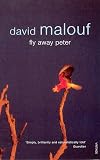
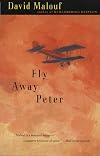
Fly Away Peter
by David Malouf
On This Page
Description
For three very different people brought together by their love for birds, life on the Queensland coast in 1914 is the timeless and idyllic world of sandpipers, ibises and kingfishers. In another hemisphere civilisation rushes headlong into a brutal conflict. Life there is lived from moment to moment. Inevitably, the two young men - sanctuary owner and employee - are drawn to the war, and into the mud and horror of the trenches of Armentieres. Alone on the beach, their friend Imogen, the show more middle-aged wildlife photographer, must acknowledge for all three of them that the past cannot be held. show lessTags
Recommendations



















Member Recommendations
lucyknows Heart of Darkness by Joseph Conrad may be paired with Fly Away Peter by David Malouf as both authors show human nature to be hollow to the core.
Member Reviews
Fly Away Peter- David Malouf
4 stars
The first word I think of for this book is lyrical. I could almost hear the orchestration. (It has, in fact been turned into an opera.) It begins quietly with Jim Saddler on his stomach, observing a sandpiper, in the marsh on his employers land. He has an unusual friendship with the wealthy landowner, Ashley Crowther, who employs Jim as a naturalist. The setting is idyllic, and filled with symbolism, on the eve of WW1.
The war begins with a great deal of noise and fanfare (brisk marching music, please). First Jim, and then Ashley are drawn into the debacle of European trench warfare. From here the story becomes a predictable tragic opera. Still poignantly beautiful, still filled with avian symbolism. show more At less than 200 pages, it’s as emotionally moving as many longer books about the first world war. show less
4 stars
The first word I think of for this book is lyrical. I could almost hear the orchestration. (It has, in fact been turned into an opera.) It begins quietly with Jim Saddler on his stomach, observing a sandpiper, in the marsh on his employers land. He has an unusual friendship with the wealthy landowner, Ashley Crowther, who employs Jim as a naturalist. The setting is idyllic, and filled with symbolism, on the eve of WW1.
The war begins with a great deal of noise and fanfare (brisk marching music, please). First Jim, and then Ashley are drawn into the debacle of European trench warfare. From here the story becomes a predictable tragic opera. Still poignantly beautiful, still filled with avian symbolism. show more At less than 200 pages, it’s as emotionally moving as many longer books about the first world war. show less
Is there anything better on a lazy Sunday afternoon than a newly purchased book of a new author recently recommended by a trusted friend? Yes, if the novel in question is lyrical, poetic, and so wonderful it can scarcely be put aside for dinner.
David Malouf is of Lebanese and English descent. His family moved to Australia in 1884, and he was born there in 1934. Like one of the main characters in Fly Away Peter, he left Australia for 11 years of study in England. He returned and taught at the University of Sydney until 1977. He now writes full-time, dividing his year between Australia and Tuscany. He has won numerous literary awards, including the first International Dublin Literary prize, and he has been short-listed for the Booker show more Prize.
Malouf is clearly in touch with nature, as this passage illustrates:
"They were so graceful, these creatures, turning their slow heads as the boat glided past and doubled where the water was clear: marsh terns, spotted crake, spur-winged plover, Lewen water rails. And Jim’s voice also held them with its low excitement. He was awkward and rough-looking till they got into the boat. Then he too was light, delicately balanced, and when it was a question of the birds, he could be poetic. They looked at him in a new light and with a respect he wouldn’t otherwise have been able to command" (31).
In stark contrast to the nature scenes in Australia are the graphic and frightening scenes in the trenches of France during World War I. I marvel at Malouf’s ability to describe the dreadful conditions of trench warfare – the rats, the mud, the lice, the stink, the urine, the corpses, the blood, always the blood – and the insanity of war. This passage only hints at the depth of Malouf’s vision when the novel is read as a whole:
"Packed again into a cattletruck, pushed in hard against the wall, in the smell of what he now understood, Jim had a fearful vision. It would go on forever. The war, or something like it with a different name, would go on growing out from here till the whole earth was involved; the immense and murderous machine what was in operation up ahead would require more and more men to work it, more and more blood to keep it running; it was no longer in control. The cattletrucks would keep on right across the century, […] They had fallen, he and his contemporaries, into a dark pocket of time from which there was no escape" (102-3).
Throughout this madness, Jim had the birds to ground him in reality. He kept a notebook of the birds he saw and the songs he heard.
If this is any indication of Malouf’s talents and power as a writer, I can’t wait to get into the rest of his novels, short stories, and poetry.
--Jim, 6/22/08 show less
David Malouf is of Lebanese and English descent. His family moved to Australia in 1884, and he was born there in 1934. Like one of the main characters in Fly Away Peter, he left Australia for 11 years of study in England. He returned and taught at the University of Sydney until 1977. He now writes full-time, dividing his year between Australia and Tuscany. He has won numerous literary awards, including the first International Dublin Literary prize, and he has been short-listed for the Booker show more Prize.
Malouf is clearly in touch with nature, as this passage illustrates:
"They were so graceful, these creatures, turning their slow heads as the boat glided past and doubled where the water was clear: marsh terns, spotted crake, spur-winged plover, Lewen water rails. And Jim’s voice also held them with its low excitement. He was awkward and rough-looking till they got into the boat. Then he too was light, delicately balanced, and when it was a question of the birds, he could be poetic. They looked at him in a new light and with a respect he wouldn’t otherwise have been able to command" (31).
In stark contrast to the nature scenes in Australia are the graphic and frightening scenes in the trenches of France during World War I. I marvel at Malouf’s ability to describe the dreadful conditions of trench warfare – the rats, the mud, the lice, the stink, the urine, the corpses, the blood, always the blood – and the insanity of war. This passage only hints at the depth of Malouf’s vision when the novel is read as a whole:
"Packed again into a cattletruck, pushed in hard against the wall, in the smell of what he now understood, Jim had a fearful vision. It would go on forever. The war, or something like it with a different name, would go on growing out from here till the whole earth was involved; the immense and murderous machine what was in operation up ahead would require more and more men to work it, more and more blood to keep it running; it was no longer in control. The cattletrucks would keep on right across the century, […] They had fallen, he and his contemporaries, into a dark pocket of time from which there was no escape" (102-3).
Throughout this madness, Jim had the birds to ground him in reality. He kept a notebook of the birds he saw and the songs he heard.
If this is any indication of Malouf’s talents and power as a writer, I can’t wait to get into the rest of his novels, short stories, and poetry.
--Jim, 6/22/08 show less
Two young men meet and connect over birds; one the owner of a wetland who wants to create a sanctuary, the other a bird watcher whom he hires to record the bird activity. The first half of the book compares life to the birds migration and continuity against the odds. WWI breaks out and both men join up at different ranks. We see the war through Jim's (the birdwatcher's) eyes with all its horrors but we also see the birds carrying on. Only one chapter gives Ashley's perspective of the men's resilience. The ending is sad as you would expect from a war story. What a waste of life war is.
"A beautiful book about the horror of war" may seem strange (contradictory), but that decribes "Fly Away Peter" by David Malouf. WWI was very different than the war now on-going, and it is valuable to understand, in both, what the soldiers are experiencing so that we, at home, do not underestimate their sacrifices. In only 134 pages David Malouf takes readers from a quiet countryside to the horror of the trenches. One reads the 18 brief chapters and then is haunted. This is truly a gem of a book. [Sometime I hope to describe Timothy Findley's epic, "The Wars." It also conveys the horror experienced by men on the ground, and goes further: to detail the trauma that faced many who did not die.]
Short, beautiful, haunting. I still think about the story several years later. Found at beach house we rented in North Carolina in 2008.
A really beautiful book. I especially loved the first half of the story, but then a friend of mine really enjoyed the second half.
There are no words to express how beautiful this book is. It's worth reading a hundred times over and you feel differently about it every time.
Members
- Recently Added By
Lists

THE WAR ROOM
813 works; 24 members
Author Information

69+ Works 5,961 Members
David Malouf was born in Brisbane, Australia on March 20, 1934. He received a B.A. with honours from the University of Queensland in 1954. He lived and worked in Europe from 1959 to 1968, then taught English at the University of Sydney until 1977. After 1977 he became a full-time poet and novelist. His collections of poetry include Bicycle and show more Other Poems, Neighbours in a Thicket, Wild Lemons, First Things Last, Typewriter Music, and An Open Book. He received the Kenneth Slessor Prize for Poetry for Earth Hour. His novels include Johnno, Ransom, An Imaginary Life, Child's Play, Fly Away Peter, Harland's Half Acre, Dream Stuff, Every Move You Make, and The Conversations at Curlow Creek. He received the Commonwealth Writers' Prize and the Prix Femina Etranger for The Great World and the IMPAC Dublin Literary Award for Remembering Babylon. His collections of short stories include Antipodes, Untold Tales, Dream Stuff, and Every Move You Make. His Collected Stories won the 2008 Australia-Asia Literary Award. His essays collections include A First Place and The Writing Life. He also wrote the libretto for Richard Meale's opera Voss. He won the 2016 Australia Council Award for Lifetime Achievement in Literature. (Bowker Author Biography) show less
Awards and Honors
Common Knowledge
- Canonical title
- Fly Away Peter
- Original publication date
- 1982
- People/Characters
- Jim Sanders; Ashley Crowther; Imogen Harcourt
- Important places
- Australia; France; Queensland, Australia; Armentières, Hauts-de-France, France
- Important events
- World War I (1914 | 1918)
- Dedication
- For Elizabeth Riddell
- First words
- All morning, far over to his left where the light of the swamp ended and farmlands began, a clumsy shape had been lifting itself out of an invisible paddock and making slow circuits of the air, climbing, dipping, rolling a li... (show all)ttle, then disappearing below the trees.
- Last words
- (Click to show. Warning: May contain spoilers.)But before she fell below the crest of the dunes, while the ocean was still in view, she turned and looked again.
Classifications
Statistics
- Members
- 383
- Popularity
- 81,884
- Reviews
- 10
- Rating
- (3.67)
- Languages
- English, French, Italian
- Media
- Paper, Audiobook, Ebook
- ISBNs
- 20
- ASINs
- 7