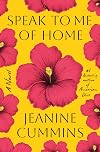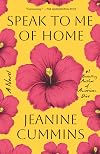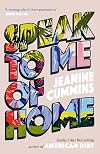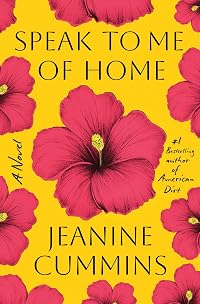
Speak to Me of Home
by Jeanine Cummins
On This Page
Description
What does it mean to call a place home?From #1 New York Times bestselling author Jeanine Cummins comes a deeply felt multigenerational family story
On her wedding day in San Juan, Puerto Rico, in 1968, Rafaela Acuña y Daubón has mild misgivings, but she marries Peter Brennan Jr. anyway in a blaze of romantic optimism. She has no way of knowing how dramatically her life will change when she uproots her young family to start over in the American Midwest, unleashing a fleet of show more disappointments.
In the 1980s, against the backdrop of her mother's isolation in St. Louis, Missouri, Rafaela's daughter, Ruth, wants only to belong. Eager to fit in, Ruth lets go of her language, habits, and childhood memories of Puerto Rico. It's not until decades later when Ruth's own daughter, Daisy, returns to San Juan that her mother and grandmother begin to truly reflect on the choices that have come to define their lives.
When a hurricane ravages the island in 2023, leaving Daisy critically injured, Rafaela and Ruth return to the city where their story began. As they gather at Daisy's bedside, we follow them back into the moments that brought them to this point: We watch as they come of age, fall in love, take risks, and contend with all the heartbreaks, triumphs, and reversals of fortune—both good and bad—that make up a meaningful life. As old memories come to light, so do buried secrets, leaving everyone in the family wondering exactly where it is that they belong.
A striking, resonant examination of marriage, family, and identity, Speak to Me of Home is ultimately a story of mothers and daughters that asks: How can three women who share geography and genetics have such wildly different ideas of where they come from? And, more important, can they discover a common language to find their way back home?
. show less
Tags
Recommendations







































Member Reviews
Jeanine Cummins’ Speak to Me of Home is a multigenerational novel that explores the ache of displacement, the complexity of identity, and the fragile bonds between mothers and daughters. Told through the voices of Rafaela, Ruth, and Daisy, the story spans decades and geographies—from Puerto Rico to the American Midwest—asking what it truly means to belong.
Rafaela’s romantic optimism on her wedding day in San Juan gives way to isolation and cultural dissonance in Missouri. Ruth, her daughter, sheds her heritage in pursuit of assimilation, while Daisy, Ruth’s daughter, returns to Puerto Rico and becomes the catalyst for reckoning and reflection. A hurricane, a hospital bed, and a lifetime of buried secrets bring the women show more together in a moment of emotional clarity.
Cummins’ prose is vivid and emotionally intelligent, capturing the subtle indignities of migration, the cost of silence, and the longing for home. The novel is a meditation on memory, motherhood, and the stories we inherit—and the ones we choose to tell. show less
Rafaela’s romantic optimism on her wedding day in San Juan gives way to isolation and cultural dissonance in Missouri. Ruth, her daughter, sheds her heritage in pursuit of assimilation, while Daisy, Ruth’s daughter, returns to Puerto Rico and becomes the catalyst for reckoning and reflection. A hurricane, a hospital bed, and a lifetime of buried secrets bring the women show more together in a moment of emotional clarity.
Cummins’ prose is vivid and emotionally intelligent, capturing the subtle indignities of migration, the cost of silence, and the longing for home. The novel is a meditation on memory, motherhood, and the stories we inherit—and the ones we choose to tell. show less
 This review was written for LibraryThing Early Reviewers.
SPEAK TO ME OF HOME is women’s fiction, not usually my fare. Rafaela (Rafa), Ruth, Daisy—three women, three generations within one family’s history. The storyline unfolds in the women’s three distinct third-person POVs, though so skillfully crafted that it holds the reader's interest while giving each character's account. The novel opens with one of those life-changing-event phone calls, and it’s not the only jarring life-changing telephone call the plot possesses. I like the manner in which each woman’s backstory is presented, giving a sense of undergoing each character's generational experience in real-time. It’s intricately paced, allowing one to feel engaged with each woman’s unique experiences. Grandmother, Rafaela, show more her daughter Ruth, both immigrants to America, and granddaughter, Daisy, who is America-born but hopes to make a life for herself in Puerto Rico. As a throwback to books of the past, there’s even a map of San Juan, Puerto Rico in the front, plus a drawn family-tree graphic included for reference. A novel to savor and consume at a slower pace, although the storyline advances adequately with the hook centered around DNA results. So, does one woman in the family keep a years-long secret to be revealed? And will Daisy settle in Puerta Rico where she has vacationed most summers with relocation now becoming her fervent wish? This book is at-times a laugh-out-loud entertainment with its generational tension. It's such a totally compelling read and highly recommended by this reader. show less
Then you’re going to have Latino babies or you’re going to have Irish babies. So maybe it feels like this is your last chance to be one thing or the other. from Speak to Me of Home by Jeanine Cummins
A beautiful Puerto Rican woman falls for an Irish soldier. Her family was once wealthy and their servant’s son may have been her soul mate. But after her family lost their wealth, they were separated. Besides, they were never could be social equals.
She marries her Irish American and they have children. Her marriage is not all she had hoped for. Then, her husband decides they will move to St. Louis where his job prospects are better. She never adjusts to America, being a woman of color, unwelcome at the country club, tries to fit in and show more adopt, but never feels welcome.
Their daughter falls for two men, deciding to marry the Anglo instead of the Puerto Rican. They have a daughter who loves summer vacations on Puerto Rico and decides to drop out of college to live there with her uncle. She is prospering until an accident that leaves her in a coma.
This multigenerational family saga considers the impact of class and color in the characters’ lives, how Puerto Rico is neither America or not American, how people of mixed background struggle to find their place in a society that judges them by color. As one generation tries to remove themselves from their homeland, another wants to connect with it, raising intergenerational conflict.
Each chapter has character and timeline changes that, for me, kept this from being a ‘page turner,’ as each chapter I had to reset where I was in the story. But in the end, I appreciated the story and the message.
Thanks to the publisher for a free book. show less
A beautiful Puerto Rican woman falls for an Irish soldier. Her family was once wealthy and their servant’s son may have been her soul mate. But after her family lost their wealth, they were separated. Besides, they were never could be social equals.
She marries her Irish American and they have children. Her marriage is not all she had hoped for. Then, her husband decides they will move to St. Louis where his job prospects are better. She never adjusts to America, being a woman of color, unwelcome at the country club, tries to fit in and show more adopt, but never feels welcome.
Their daughter falls for two men, deciding to marry the Anglo instead of the Puerto Rican. They have a daughter who loves summer vacations on Puerto Rico and decides to drop out of college to live there with her uncle. She is prospering until an accident that leaves her in a coma.
This multigenerational family saga considers the impact of class and color in the characters’ lives, how Puerto Rico is neither America or not American, how people of mixed background struggle to find their place in a society that judges them by color. As one generation tries to remove themselves from their homeland, another wants to connect with it, raising intergenerational conflict.
Each chapter has character and timeline changes that, for me, kept this from being a ‘page turner,’ as each chapter I had to reset where I was in the story. But in the end, I appreciated the story and the message.
Thanks to the publisher for a free book. show less
Jeanine Cummins returns with Speak to Me of Home, a powerful, multigenerational saga that spans continents, decades, and the emotional terrain of identity, belonging, and the fragile bonds between mothers and daughters. Told through the alternating perspectives of Rafaela, her daughter Ruth, and granddaughter Daisy, the novel asks a timeless question with renewed urgency: What does it mean to belong—and what does it cost?
The story begins in 2023 with Daisy Brennan racing against an approaching hurricane in San Juan, Puerto Rico. A tragic accident leaves her critically injured, and her mother Ruth and grandmother Rafaela return to the island where their family’s story began. This crisis sets the stage for a sweeping narrative that show more moves between timelines—Rafaela’s impulsive marriage in 1968, Ruth’s adolescence in the Midwest during the 1980s, and Daisy’s adulthood in present-day Puerto Rico—each chapter revealing how personal choices ripple across generations.
Cummins’ prose is both lush and precise. Her ability to evoke place, particularly Puerto Rico, is striking—rich in texture, history, and emotional resonance. The novel is as much about physical geography as it is about psychological terrain: what it feels like to be from somewhere and yet never feel entirely at home in it. Whether it’s Rafaela, denied whiteness in America while clinging to her status; Ruth, shedding her heritage to fit in; or Daisy, longing to reclaim the culture her mother abandoned—each woman is marked by displacement.
The shifting timelines and perspectives demand attention, and while some readers may find the structure disorienting at first, it ultimately mirrors the very themes Cummins explores. Memory, like identity, is non-linear. The gaps and overlaps in narration force us to see how truths are shaped not just by experience, but by what is left unsaid. 4.5 ⭐️ thank you Library Thing for my gifted copy.
What sets this novel apart is its emotional intelligence. The generational conflict is raw and authentic. Rafaela’s isolation, Ruth’s internalized shame, and Daisy’s search for self all feel lived-in and deeply human. Their misunderstandings—especially between mother and daughter—are not easily resolved, but rather revealed to be part of a larger struggle with race, language, gender expectations, and class.
While Speak to Me of Home includes historical and social commentary—touching on colonialism, colorism, and U.S.–Puerto Rico relations—it’s never didactic. Cummins is at her best when she lets the characters carry these themes in their decisions and regrets. The novel explores racism and classism not only as external forces but also as internalized tensions. Rafaela’s denial of her heritage and Ruth’s erasure of her childhood culture are survival strategies that eventually demand reckoning.
If American Dirt was a story about movement—escape, pursuit, and survival—Speak to Me of Home is a story about return. It’s quieter, more introspective, and arguably more personal. Cummins, whose own grandmother was Puerto Rican, seems to be writing from a place of reflection. The novel addresses, whether intentionally or not, the questions raised about authorship, authenticity, and who gets to tell whose story. Here, she tells one rooted closer to her own ancestry, and it shows in the detail and care.
That said, the book isn’t without flaws. Some readers may find the timeline structure unnecessarily convoluted or feel the momentum lags in places. A few narrative turns—especially the late reveal of a buried secret—are predictable, softened by how emotionally prepared the story has made us for them. But none of this detracts from the novel’s emotional power or the richness of its themes.
In the end, Speak to Me of Home is not about resolution. It’s about return, recognition, and reconciliation. It’s about the ways history repeats and the courage it takes to rewrite it. These women—Rafaela, Ruth, and Daisy—are shaped by their times, their choices, and by each other. And it’s in that intergenerational reckoning that they begin, however imperfectly, to define what home means for themselves.
A beautifully written, emotionally resonant story of identity, cultural inheritance, and the unbreakable ties of family. It lingers long after the final page—not just as a story, but as a question we’re all trying to answer: where do we come from, and where do we belong?
Recommended for fans of Isabel Allende, Brit Bennett’s The Vanishing Half, or anyone drawn to layered family stories with cultural depth and emotional honesty. show less
The story begins in 2023 with Daisy Brennan racing against an approaching hurricane in San Juan, Puerto Rico. A tragic accident leaves her critically injured, and her mother Ruth and grandmother Rafaela return to the island where their family’s story began. This crisis sets the stage for a sweeping narrative that show more moves between timelines—Rafaela’s impulsive marriage in 1968, Ruth’s adolescence in the Midwest during the 1980s, and Daisy’s adulthood in present-day Puerto Rico—each chapter revealing how personal choices ripple across generations.
Cummins’ prose is both lush and precise. Her ability to evoke place, particularly Puerto Rico, is striking—rich in texture, history, and emotional resonance. The novel is as much about physical geography as it is about psychological terrain: what it feels like to be from somewhere and yet never feel entirely at home in it. Whether it’s Rafaela, denied whiteness in America while clinging to her status; Ruth, shedding her heritage to fit in; or Daisy, longing to reclaim the culture her mother abandoned—each woman is marked by displacement.
The shifting timelines and perspectives demand attention, and while some readers may find the structure disorienting at first, it ultimately mirrors the very themes Cummins explores. Memory, like identity, is non-linear. The gaps and overlaps in narration force us to see how truths are shaped not just by experience, but by what is left unsaid. 4.5 ⭐️ thank you Library Thing for my gifted copy.
What sets this novel apart is its emotional intelligence. The generational conflict is raw and authentic. Rafaela’s isolation, Ruth’s internalized shame, and Daisy’s search for self all feel lived-in and deeply human. Their misunderstandings—especially between mother and daughter—are not easily resolved, but rather revealed to be part of a larger struggle with race, language, gender expectations, and class.
While Speak to Me of Home includes historical and social commentary—touching on colonialism, colorism, and U.S.–Puerto Rico relations—it’s never didactic. Cummins is at her best when she lets the characters carry these themes in their decisions and regrets. The novel explores racism and classism not only as external forces but also as internalized tensions. Rafaela’s denial of her heritage and Ruth’s erasure of her childhood culture are survival strategies that eventually demand reckoning.
If American Dirt was a story about movement—escape, pursuit, and survival—Speak to Me of Home is a story about return. It’s quieter, more introspective, and arguably more personal. Cummins, whose own grandmother was Puerto Rican, seems to be writing from a place of reflection. The novel addresses, whether intentionally or not, the questions raised about authorship, authenticity, and who gets to tell whose story. Here, she tells one rooted closer to her own ancestry, and it shows in the detail and care.
That said, the book isn’t without flaws. Some readers may find the timeline structure unnecessarily convoluted or feel the momentum lags in places. A few narrative turns—especially the late reveal of a buried secret—are predictable, softened by how emotionally prepared the story has made us for them. But none of this detracts from the novel’s emotional power or the richness of its themes.
In the end, Speak to Me of Home is not about resolution. It’s about return, recognition, and reconciliation. It’s about the ways history repeats and the courage it takes to rewrite it. These women—Rafaela, Ruth, and Daisy—are shaped by their times, their choices, and by each other. And it’s in that intergenerational reckoning that they begin, however imperfectly, to define what home means for themselves.
A beautifully written, emotionally resonant story of identity, cultural inheritance, and the unbreakable ties of family. It lingers long after the final page—not just as a story, but as a question we’re all trying to answer: where do we come from, and where do we belong?
Recommended for fans of Isabel Allende, Brit Bennett’s The Vanishing Half, or anyone drawn to layered family stories with cultural depth and emotional honesty. show less
This review was written for LibraryThing Early Reviewers.Speak to Me of Home by Jeanine Cummins is a beautifully layered, multigenerational story of identity, belonging, and the deep complexities of mother-daughter relationships. Spanning decades and continents, it captures the emotional dissonance of migration and the personal costs of assimilation through the lives of Rafaela, her daughter Ruth, and granddaughter Daisy. With lyrical prose and rich emotional depth, Cummins explores how heritage and home are defined not just by geography, but by memory, connection, and love.
⭐️⭐️⭐️⭐️ (4/5) – A heartfelt, introspective journey about finding your place—in the world and within your family.
⭐️⭐️⭐️⭐️ (4/5) – A heartfelt, introspective journey about finding your place—in the world and within your family.
This review was written for LibraryThing Early Reviewers.Speak to Me of Home is a family saga that follows three generations of Puerto Rican women: Rafaela Acuña y Daubón, the matriarch, born in Puerto Rico, daughter Ruth, and granddaughter Daisy. The storyline involves a move to the American Midwest, return to Puerto Rico, and the unpacking of long-buried family secrets. It explores themes of belonging, cultural displacement, and what it means to call a place home. It examines the immigrant experience and the push and pull between individual identity and ancestral ties. The author draws on her own heritage in developing her Puerto Rican and Irish characters. It is structured in three timelines that move backward and forward to provide piecemeal information, which all comes together in the show more final pages. Personally, I would have preferred longer segments in each timeline, since I tend to favor a more flowing narrative, but this is a minor complaint. I did not read the author’s debut, so I did not know what to expect and I am pleased to say I enjoyed this story very much. show less
A tale that encompasses 3 generations - which had me doing mental gymnastics to keep it straight - my own problem in listening rather than seeing it in print. Generation 1 starts with Rafaela growing up in a privileged family in Puerto Rico, with servants - and the housekeeper's son, Candido raised along side her, until there is a fall from grace/status in her father's government job when she is 17 and everything changes. Because of her good grades and good English, she is sent to be a secretary at the US naval base in Trinidad where her cousin is. There she meets and eventually marries Peter Brennan. Generation 2 is their children, Ruth and Benny, born in Puerto Rico and raised there until ages 8 and 10 when Peter decides to move the show more family back to his hometown in MO. This has big repercussions for all of them - Rafaela, despite her background, beauty and elegance is not accepted there in the late 70s/early 80s because she is not white. Ruth and Benny have varying degrees of challenges fitting in. Peter is a bit blind to it all. The third generation focuses mainly on Ruth's children - she met and married a man from Ireland, Thomas Hayes, in college and together they have Vic, Daisy and Carlos (christened Charlie) By now it is the new millennium, so identity and diversity are embraced and honored by these kids. Mostly the focus is on the women in the book - Rafaela, Ruth, Daisy. Daisy has opted out of college in NY to go back to Puerto Rico and make her life with Benny's family. Ruth is adamantly opposed. There is a hurricane; Daisy is gravely injured; the family is ruptured and in need of healing, and there are secrets that need to come to light for this to happen. The book is well-balanced among the time periods and generations - each of the women are well-developed characters that garner sympathy and understanding - the reader just wants them to understand each other. Rafaela as a grande dame grandma is delightful, annoying Ruth, but delighting Daisy. Cummins does such a good job in her fiction of looking at the idea of home, and what it means to leave a homeland. Immigration is examined with a thoughtful and critical eye; though technically Puerto Rico is part of the US as a territory and Puerto Ricans have US citizenship (at this moment in history), but the characters still face "othering." Overall, a well-crafted story. show less
Members
- Recently Added By
Lists

LoanStars | Adult List: May 2025
10 works; 1 member
Author Information

11+ Works 6,121 Members
Common Knowledge
- Canonical title
- Speak to Me of Home
Classifications
Statistics
- Members
- 209
- Popularity
- 156,791
- Reviews
- 33
- Rating
- (3.95)
- Languages
- English, Spanish
- Media
- Paper, Audiobook, Ebook
- ISBNs
- 11
- ASINs
- 2