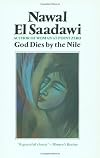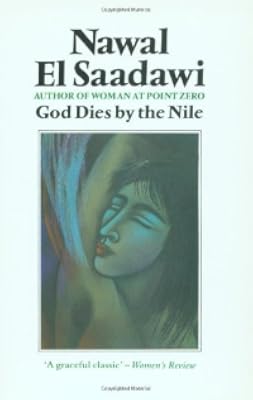
God Dies By the Nile
by Nawal El Saadawi
On This Page
Description
Kafr El Teen is a beautiful, sleepy village on the banks of the Nile. Yet at its heart it is tyrannical and corrupt. The Mayor, Sheikh Hamzawi of the mosque, and the Chief of the Village Guard are obsessed by wealth and use and abuse the women of the village, taking them as slaves, marrying them and beating them. Resistance, it seems, is futile. Zakeya, an ordinary villager, works in the fields by the Nile and watches the world, squatting in the dusty entrance to her house, quietly accepting show more her fate. It is only when her nieces fall prey to the Mayor that Zakeya becomes enraged by the injustice of her society and possessed by demons. Where is the loving and peaceful God in whom Zakeya believes? show lessTags
Recommendations













Member Reviews
Throughout my holiday, I’ve been alerted to a steady uncertainty regarding my reading appetite. Most days it is inscrutable. Projects assemble but just as quick drift away.
A few hours ago I wasn’t reading this wonderful novel. My attentions were on Mahfouz. Then sunlight gilded our house. Each window was alive with possibility. I drifted upstairs and found myself pausing. There on the shelf was God Dies by the Nile. Agency reigns. I suppose that could be a subtitle for the novel. Sadat promised reform. That did not happen. The normalized atrocity depicted was more than expected.
The focus slips about, time is folded and then unrolled. The target of vengeance despite the title is secular. Think Weber. Disenchantment. This is an show more astonishing ensemble. Each perspective is indefinite, partial and flawed. The denouement while celebrated on the back matter remains shocking. show less
A few hours ago I wasn’t reading this wonderful novel. My attentions were on Mahfouz. Then sunlight gilded our house. Each window was alive with possibility. I drifted upstairs and found myself pausing. There on the shelf was God Dies by the Nile. Agency reigns. I suppose that could be a subtitle for the novel. Sadat promised reform. That did not happen. The normalized atrocity depicted was more than expected.
The focus slips about, time is folded and then unrolled. The target of vengeance despite the title is secular. Think Weber. Disenchantment. This is an show more astonishing ensemble. Each perspective is indefinite, partial and flawed. The denouement while celebrated on the back matter remains shocking. show less
'We are God's slaves when it's time to say our prayers only But we are the mayor's slaves all the time', 4 Aug. 2012
By
sally tarbox
This review is from: God Dies by the Nile: 1 (Paperback)
The god in the title is not a deity but the mayor of a small village where, assisted by his henchmen, he governs with total corruption- forcing young girls to work for him, abusing them and ditching them once pregnant, and even committing murder or framing the innocent to remove unwanted people.
One family in particular suffers at his hands...
Saadawi does a good job of evoking rural life- the heat, the unceasing farm work and also the superstitious beliefs of the people. I was surprised to discover towards the end that it's actually set comparatively show more recently, just after the Suez/Sinai conflict - it feels as if it's much further back in time.
The author tells us this is based on a story she heard in her youth.
Quite interesting and well written although the 'angry defiance' that is quoted in every description of Zakeya became a little repetitive! show less
By
sally tarbox
This review is from: God Dies by the Nile: 1 (Paperback)
The god in the title is not a deity but the mayor of a small village where, assisted by his henchmen, he governs with total corruption- forcing young girls to work for him, abusing them and ditching them once pregnant, and even committing murder or framing the innocent to remove unwanted people.
One family in particular suffers at his hands...
Saadawi does a good job of evoking rural life- the heat, the unceasing farm work and also the superstitious beliefs of the people. I was surprised to discover towards the end that it's actually set comparatively show more recently, just after the Suez/Sinai conflict - it feels as if it's much further back in time.
The author tells us this is based on a story she heard in her youth.
Quite interesting and well written although the 'angry defiance' that is quoted in every description of Zakeya became a little repetitive! show less
The story of a family living in a small village in Egypt, and all the tragic things that happen to them because of corrupt officials and the class divide. To be honest, I found this pretty hard to follow - the writing is very vague in places.
Ratings
Members
- Recently Added By
Published Reviews
'Nawal El Saadawi writes with a directness and passion.' - New York Times Book Review
added by ZedBooks
Lists

A Good Read (Radio 4)
287 works; 1 member

Women in Islam
120 works; 8 members

Books That Changed Our Perspective
423 works; 168 members
Author Information

80+ Works 3,182 Members
Nawal El Saadawi was born in 1931. She is an Egyptian feminist author, acitvist, physician and psychiatrist whose writings focus on the subject of women in Islam. She is founder and president of the Arab Women's Solidarity Association, and co-founder of the Arab Association for Human Rights.
Some Editions
Series
Belongs to Publisher Series
Rainbow pocketboeken (105)
Common Knowledge
- Original title
- Maut ar-raǧul al-waḥīd ʿala ‚l-arḍ
- Original publication date
- 1974
- Original language
- Arabic
Classifications
- Genres
- Fiction and Literature, General Fiction
- DDC/MDS
- 892.736 — Literature & rhetoric Literatures of other languages Afro-Asiatic literatures Arabic (Egypt, Lebanon, Palestine, Saudi Arabia, Sudan) Arabic fiction 1945–2000
- LCC
- PJ7862 .A3 .M313 — Language and Literature Oriental languages and literatures Oriental philology and literature Arabic Arabic literature Individual authors or works
- BISAC
Statistics
- Members
- 224
- Popularity
- 146,201
- Reviews
- 3
- Rating
- (3.97)
- Languages
- 7 — Arabic, Dutch, English, German, Italian, Spanish, Swedish
- Media
- Paper, Ebook
- ISBNs
- 17
- ASINs
- 2