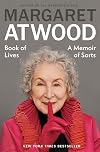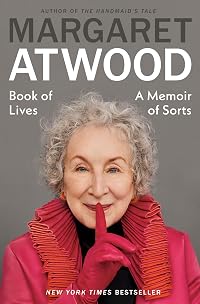
Book of Lives: A Memoir of Sorts
by Margaret Atwood
On This Page
Description
"A definitive autobiography from the lauded author of The Handmaid's Tale"-- Provided by publisher.Tags
Recommendations








Member Recommendations
Member Reviews
A charming, lively memoir that refuses to take itself too seriously. Atwood in old age doesn’t want us to force her into the image of the earnest, crusading, feminist, environmentalist, literary campaigner; she would prefer us to think of her as a kind of naughty grandmother, devious, witty and subversive. The text is peppered with mildly embarrassing photos and drawings or comic strips, and there are far more laugh-out-loud scenes than you might expect from the autobiography of Canada’s leading literary figure of the late 20th century.
There probably isn’t much here that will surprise you if you’ve read her novels, but it is still interesting to see how Atwood was influenced by her slightly eccentric childhood — her father show more was an entomologist, so the young family spent the non-winter months of each year in a shack in the woods somewhere a few hours paddling from the nearest civilisation. (I think when I first read her books I still had a vague idea that all Canadians lived like this…). It is also interesting to see her looking back with hindsight at the way Canada in general, and Can-Lit in particular, have emerged from the extremely provincial mood of the forties and fifties to the point where Atwood became someone who could be confused with other literary Margarets. Although she still got the annoying “My wife loves your books” more often than she would have liked.
Fun, but no substitute for (re-)reading the novels! show less
There probably isn’t much here that will surprise you if you’ve read her novels, but it is still interesting to see how Atwood was influenced by her slightly eccentric childhood — her father show more was an entomologist, so the young family spent the non-winter months of each year in a shack in the woods somewhere a few hours paddling from the nearest civilisation. (I think when I first read her books I still had a vague idea that all Canadians lived like this…). It is also interesting to see her looking back with hindsight at the way Canada in general, and Can-Lit in particular, have emerged from the extremely provincial mood of the forties and fifties to the point where Atwood became someone who could be confused with other literary Margarets. Although she still got the annoying “My wife loves your books” more often than she would have liked.
Fun, but no substitute for (re-)reading the novels! show less
A Career & CanLit Overview with Humour 🍁
A review of the McClelland & Stewart hardcover (November 5, 2025) released simultaneously with the audiobook/ebook.
I hadn't actually planned on reading this for the 2025 Long Books Challenge with several GR friends, but when I was at the library there it was on the New Releases shelf and I went for it on impulse. I can't even say that I'm a huge Atwood fan, sticking mostly to her breakout hits & and several of the shorter works. After reading Book of Lives I'm definitely ready to tackle show more more though. There is even a nice omnibus edition [book:The Margaret Atwood 4-Book Bundle: The Handmaid's Tale; The Blind Assassin; Alias Grace; The Robber Bride|30286076] available as a bargain eBook if you are looking for a possible starter pack.
Book of Lives tells Atwood's own life story, starting with her younger years with her parents and siblings which was often spent roughing it in Northern Ontario and Quebec where her father worked as an entomologist. That early life prepared her for the later years with life partner Graeme Gibson (1934-2019). whether exploring, farming or viewing bird life in the wilderness. Gibson's own life story is interspersed throughout, including those years before the two ever met.
The main course is the story of Atwood's writing career and development from a poet at a young age to the dominant figure of Canadian literature she is today. The book is full of trivia on the backstories of the novels and many of the short stories. This often entails quirky encounters with other writers and the publishers and editors of her works. The book is enhanced by a generous number of photographs and several of Atwood's own quirky cartoon drawings.
This was overall a Canadian bibliophile's delight with an emphasis on Atwood's self-deprecatory humour and gossipy bits about the history of Canadian literature. One of my top reads of 2025! show less
A review of the McClelland & Stewart hardcover (November 5, 2025) released simultaneously with the audiobook/ebook.
You were such a sensitive child!
- My Mother
But I'm quite flinty now.
- Me
Yes. You are.
- My Daughter
One of these days that smart mouth of yours is going to get you in trouble.
- My father, when I was a teenager
I hadn't actually planned on reading this for the 2025 Long Books Challenge with several GR friends, but when I was at the library there it was on the New Releases shelf and I went for it on impulse. I can't even say that I'm a huge Atwood fan, sticking mostly to her breakout hits & and several of the shorter works. After reading Book of Lives I'm definitely ready to tackle show more more though. There is even a nice omnibus edition [book:The Margaret Atwood 4-Book Bundle: The Handmaid's Tale; The Blind Assassin; Alias Grace; The Robber Bride|30286076] available as a bargain eBook if you are looking for a possible starter pack.
Book of Lives tells Atwood's own life story, starting with her younger years with her parents and siblings which was often spent roughing it in Northern Ontario and Quebec where her father worked as an entomologist. That early life prepared her for the later years with life partner Graeme Gibson (1934-2019). whether exploring, farming or viewing bird life in the wilderness. Gibson's own life story is interspersed throughout, including those years before the two ever met.
The main course is the story of Atwood's writing career and development from a poet at a young age to the dominant figure of Canadian literature she is today. The book is full of trivia on the backstories of the novels and many of the short stories. This often entails quirky encounters with other writers and the publishers and editors of her works. The book is enhanced by a generous number of photographs and several of Atwood's own quirky cartoon drawings.
This was overall a Canadian bibliophile's delight with an emphasis on Atwood's self-deprecatory humour and gossipy bits about the history of Canadian literature. One of my top reads of 2025! show less
One of several epigraphs opening this memoir by Margaret Atwood is a quote by her friend: "Don't piss her off or you'll live forever." In the introduction that follows, Atwood outlines her past refusals for composing a memoir with the reasons for doing so now. But she leaves one additional reason unspoken, the recent passing of her long-time companion Graeme Gibson. This was her opportunity to make him immortal, too. She provides his full backstory and he is a steady presence through the latter half of her own until his death in 2019.
Margaret Atwood's wisdom and dry humour shine through in this tour of her life, from her birth in 1939 to the present. There's an amazing overlap between her and my knowledge of Ontario communities that I show more never would have imagined. At one time as a child she lived within a few blocks of my father, and they were only six months apart in age. There's a lot to be said for the education she had going all the way back to grade school, with the careful study of poem types and structure (I didn't get any of that in the 1980s). She wasn't inspired to pursue writing as a career until high school, but once on the path it seems she didn't waver from it or ever seriously doubt herself and her ability, and pursued English into post-secondary studies.
It's always interesting to pick up hints from an author's background of what inspired certain works, and Atwood is very generous with highlighting several instances where experience provided her material. In the early going she's open about naming names of the deceased, then draws a veil over the names of those who may be or certainly are still living. More than once she experienced harassment, but she shares those instances with a streak of humour and identifies no one. On the other hand there's a laundry list of people she met before she was famous, though not necessarily before they were. Among the ones I recognized were Dennis Lee, Donald Sutherland, Northrup Frye, Adrienne Clarkson, Michael Ondjaatje, Margaret Laurence, Mordecai Richler, Alice Munro, Jean Rhys, together with a host of others who were or became noteworthy in poetry or publishing. I've read Salman Rushdie's biography and it was fun to see the two intersect.
Maybe what surprised me most was her credulousness about the supernatural, which crops up again and again: astrology, palm reading, ghosts, auras, psychics, fortune telling, exorcists, magic wool - all mentioned as factual things that she has either encountered, practiced or derived helpful information from. It suggests I've not read her novels as closely as I ought, so I'll watch in future for how she treats these things. I've read four or five over the years, and now I'm interested in at least that many more. show less
Margaret Atwood's wisdom and dry humour shine through in this tour of her life, from her birth in 1939 to the present. There's an amazing overlap between her and my knowledge of Ontario communities that I show more never would have imagined. At one time as a child she lived within a few blocks of my father, and they were only six months apart in age. There's a lot to be said for the education she had going all the way back to grade school, with the careful study of poem types and structure (I didn't get any of that in the 1980s). She wasn't inspired to pursue writing as a career until high school, but once on the path it seems she didn't waver from it or ever seriously doubt herself and her ability, and pursued English into post-secondary studies.
It's always interesting to pick up hints from an author's background of what inspired certain works, and Atwood is very generous with highlighting several instances where experience provided her material. In the early going she's open about naming names of the deceased, then draws a veil over the names of those who may be or certainly are still living. More than once she experienced harassment, but she shares those instances with a streak of humour and identifies no one. On the other hand there's a laundry list of people she met before she was famous, though not necessarily before they were. Among the ones I recognized were Dennis Lee, Donald Sutherland, Northrup Frye, Adrienne Clarkson, Michael Ondjaatje, Margaret Laurence, Mordecai Richler, Alice Munro, Jean Rhys, together with a host of others who were or became noteworthy in poetry or publishing. I've read Salman Rushdie's biography and it was fun to see the two intersect.
Maybe what surprised me most was her credulousness about the supernatural, which crops up again and again: astrology, palm reading, ghosts, auras, psychics, fortune telling, exorcists, magic wool - all mentioned as factual things that she has either encountered, practiced or derived helpful information from. It suggests I've not read her novels as closely as I ought, so I'll watch in future for how she treats these things. I've read four or five over the years, and now I'm interested in at least that many more. show less
I was lucky enough to get the download of this audiobook soon after it came out. Margaret Atwood herself is the narrator and I wouldn't have wanted anyone else. Her personality really comes through. Probably a lot of people who have only read her better known fiction would be surprised to learn that she is funny. At times during the reading, she even gives a little chuckle.
I believe Atwood has been pretty candid about her life. She names some names but, if it is in a negative way, that person is probably deceased. The one exception is the Globe and Mail journalist, Margaret Wente, who has frequently criticized Atwood. She goes into considerable detail about both her long term relationships. It is clear that Atwood and Graeme Gibson had show more a very special bond and supported each other in their various endeavours. She certainly lived in a variety of homes with him, many of which seemed to be infested with vermin and needing a lot of repair. It would try the best of relationships to go through that once, let alone multiple times. His death, after suffering from vscular dementia for several years, was accepted by Atwood as a good death. When that loss was followed by the global pandemic, Atwood just soldiered on, writing and participating as much as before, albeit in a different way.
I loved hearing about the inspirations for her novels, some of which percolated for some time before coming to fruition. I think this book is a remarkable view into the thoughts of one of the great writers of our time. Surely it is time she won the Nobel Prize for Literature? show less
I believe Atwood has been pretty candid about her life. She names some names but, if it is in a negative way, that person is probably deceased. The one exception is the Globe and Mail journalist, Margaret Wente, who has frequently criticized Atwood. She goes into considerable detail about both her long term relationships. It is clear that Atwood and Graeme Gibson had show more a very special bond and supported each other in their various endeavours. She certainly lived in a variety of homes with him, many of which seemed to be infested with vermin and needing a lot of repair. It would try the best of relationships to go through that once, let alone multiple times. His death, after suffering from vscular dementia for several years, was accepted by Atwood as a good death. When that loss was followed by the global pandemic, Atwood just soldiered on, writing and participating as much as before, albeit in a different way.
I loved hearing about the inspirations for her novels, some of which percolated for some time before coming to fruition. I think this book is a remarkable view into the thoughts of one of the great writers of our time. Surely it is time she won the Nobel Prize for Literature? show less
I just really enjoyed this book, and audio made it better. I'm not the biggest Atwood reader. I had read three of her novels when I started this, including [The Handmaid's Tale] and its sequel. Based on this book, I've now read her first novel, and I'm listening to her second. I was won over.
I loved Atwood's flat dry-humor tone here. She sounds almost as if we, readers, couldn't possibly care about what she has to say, but we're here so she might as well tell us. And yet, it's terrific stuff. I certainly enjoyed learning about her books, many of which I hadn't heard of. But mainly, I just loved learning how this Canadian wilderness girl, with a sort of endless optimism, who became a summer camp counselor nicknamed "Peggy Nature", became show more a nature loving writer and critic of contemporary culture with what was essentially a contemporary-to-us point-of-view in the mid 1960's. She wrote feminist [The Edible Woman] in 1964 before there was a second wave of feminism. (And I've now read that, and all her points are relevant today). An outsider to America, she pulled [The Handmaid's Tale] from the American religious right around 1981, and from the American Puritan heritage, whose literature she studied at Harvard in grad school. (And other things! Notably from the barbaric Argentinian policy of taking newborn babies from abducted women and having them raised elsewhere. And her tone in the novel is partially from the nature of secrecy she found behind the Iron Curtain in her travels in the mid-1980's.)
Anyway, this is an inspiring life story of a resilient author, with a resilient self-confidence. Her childhood is entertaining, as is her early literary life with no income, her connections in the tiny Canadian art world of the 1960's, her poetry, her tinkering happily with the stage, her relationship with Anansi Press, her strange early marriage and her lifelong non-marriage, her literary relationships, and even her thanking of even those she didn't like in her (18 minute long!) acknowledgements where she asks, what was Cinderella without an evil stepmother. It all comes out with a charming sort of resistance, maybe a Canadian understatement that lands. It's very inspiring memoir.
2026
https://www.librarything.com/topic/377230#9086032 show less
I loved Atwood's flat dry-humor tone here. She sounds almost as if we, readers, couldn't possibly care about what she has to say, but we're here so she might as well tell us. And yet, it's terrific stuff. I certainly enjoyed learning about her books, many of which I hadn't heard of. But mainly, I just loved learning how this Canadian wilderness girl, with a sort of endless optimism, who became a summer camp counselor nicknamed "Peggy Nature", became show more a nature loving writer and critic of contemporary culture with what was essentially a contemporary-to-us point-of-view in the mid 1960's. She wrote feminist [The Edible Woman] in 1964 before there was a second wave of feminism. (And I've now read that, and all her points are relevant today). An outsider to America, she pulled [The Handmaid's Tale] from the American religious right around 1981, and from the American Puritan heritage, whose literature she studied at Harvard in grad school. (And other things! Notably from the barbaric Argentinian policy of taking newborn babies from abducted women and having them raised elsewhere. And her tone in the novel is partially from the nature of secrecy she found behind the Iron Curtain in her travels in the mid-1980's.)
Anyway, this is an inspiring life story of a resilient author, with a resilient self-confidence. Her childhood is entertaining, as is her early literary life with no income, her connections in the tiny Canadian art world of the 1960's, her poetry, her tinkering happily with the stage, her relationship with Anansi Press, her strange early marriage and her lifelong non-marriage, her literary relationships, and even her thanking of even those she didn't like in her (18 minute long!) acknowledgements where she asks, what was Cinderella without an evil stepmother. It all comes out with a charming sort of resistance, maybe a Canadian understatement that lands. It's very inspiring memoir.
2026
https://www.librarything.com/topic/377230#9086032 show less
By choice, only read the first 1/4 or so... re: Atwood's childhood and adolescence. Great look at an authentically rural childhood in the wilds of Canada... living in a tent without running water, heat, electricity. Every scene is crisp with detail. Atwood could rewrite the phone book and I'd read it!
What can I say? If you like Atwood's writing and you're interested in her life, read this. or listen to her read it to you. Come for the "what was my childhood like" and "what inspired that story" and stay for the poignant insights on growing, aging, and loss.
Members
- Recently Added By
Lists

LoanStars | Adult List: November 2025
10 works; 1 member

Globe and Mail | Canadian Non-Fiction: January 24, 2026
10 works; 1 member
Globe and Mail | Canadian Non-Fiction: April 4, 2026
10 works; 1 member

Globe and Mail | Canadian Non-Fiction: March 28, 2026
10 works; 1 member
Globe and Mail | Canadian Non-Fiction: March 21, 2026
10 works; 1 member
Globe and Mail | Canadian Non-Fiction: March 14, 2026
10 works; 1 member
Globe and Mail | Canadian Non-Fiction: March 7, 2026
10 works; 1 member
Globe and Mail | Canadian Non-Fiction: February 28, 2026
10 works; 1 member
Globe and Mail | Canadian Non-Fiction: February 21, 2026
10 works; 1 member
Globe and Mail | Canadian Non-Fiction: February 14, 2026
10 works; 1 member
Globe and Mail | Canadian Non-Fiction: February 7, 2026
10 works; 1 member
Globe and Mail | Canadian Non-Fiction: January 31, 2026
10 works; 1 member
Globe and Mail | Canadian Non-Fiction: January 17, 2026
10 works; 1 member

Globe and Mail | Canadian Non-Fiction: November 15, 2025
10 works; 1 member
Globe and Mail | Canadian Non-Fiction: January 10, 2026
10 works; 1 member

Globe and Mail | Canadian Non-Fiction: Year End, 2025
10 works; 1 member
Globe and Mail | Canadian Non-Fiction: December 27, 2025
10 works; 1 member
Globe and Mail | Canadian Non-Fiction: December 20, 2025
10 works; 1 member

Books Read in 2026
2,062 works; 69 members

Biographies: Women
112 works; 1 member
Globe and Mail | Canadian Non-Fiction: December 13, 2025
10 works; 1 member

Top Five Books of 2025
954 works; 303 members
Globe and Mail | Canadian Non-Fiction: December 6, 2025
10 works; 1 member
Globe and Mail | Canadian Non-Fiction: November 29, 2025
10 works; 1 member
Globe and Mail | Canadian Non-Fiction: November 22, 2025
10 works; 1 member
Globe and Mail | Canadian Non-Fiction: Mid Year Recap, 2026
10 works; 1 member
Author Information

289+ Works 199,436 Members
Margaret Atwood was born on November 18, 1939 in Ottawa, Canada. She received a B.A. from Victoria College, University of Toronto in 1961 and an M.A. from Radcliff College in 1962. Her first book of verse, Double Persephone, was published in 1961 and was awarded the E. J. Pratt Medal. She has published numerous books of poetry, novels, story show more collections, critical work, juvenile work, and radio and teleplays. Her works include The Journals of Susanna Moodie, Power Politics, Cat's Eye, The Robber Bride, Morning in the Buried House, the MaddAdam trilogy, and The Heart Goes Last. She has won numerous awards including the Prince of Asturias Award for Literature, the Booker Prize in 2000 for The Blind Assassin, the Giller Prize and the Premio Mondello for Alias Grace, and the Governor General's Award in 1966 for The Circle Game and in 1986 for The Handmaid's Tale, which also won the very first Arthur C. Clarke Award in 1987. She won the PEN Pinter prize in 2016 for her political activism. She was awarded the 2016 PEN Pinter Prize for the outstanding literary merit of her body of work. (Bowker Author Biography) show less
Some Editions
Awards and Honors
Common Knowledge
Classifications
- Genres
- Biography & Memoir, Literature Studies and Criticism, Nonfiction
- DDC/MDS
- 928.23 — History & geography Biographies, Genealogy, Heraldry Writers, Authors / Poets / Dramatists Writers in English
- LCC
- PR9199.3 .A8 .Z46 — Language and Literature English English Literature English literature: Provincial, local, etc.
- BISAC
Statistics
- Members
- 408
- Popularity
- 76,287
- Reviews
- 16
- Rating
- (4.40)
- Languages
- Dutch, English, French, German
- Media
- Paper, Audiobook, Ebook
- ISBNs
- 17
- ASINs
- 4