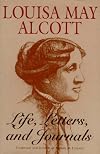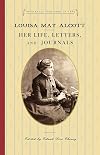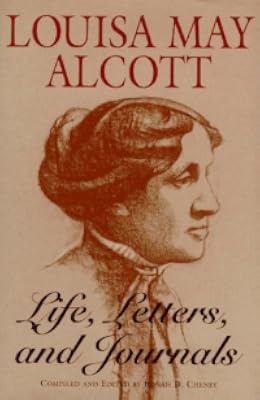
Louisa May Alcott: Life, Letters & Journals
by Louisa May Alcott, Ednah D. Cheney (Editor)
On This Page
Description
This early work by Louisa May Alcott was originally published in 1889 and we are now republishing it with a brand new introductory biography. Published a year after Alcott's death this is a truly unparalleled collection of her personal correspondence and a fascinating insight into the character and thoughts of this much loved author.Tags
Recommendations








Member Reviews
The more I know about L.M.A, as she styled herself in her journals, the better I like her. She had a mind entirely her own, very funny, observant, loving to those close and dear to her. She was also critical, had zero patience with nonsense, with people giving themselves airs over nothing. She really was a ‘child of duty,’ as her father once styled her, and more or less worked herself to death trying to take care of those around her.
This book gets all the stars for the journals and letters themselves; the comments in between add pretty much nothing. Still, amazing resource, and a great look into 19th century American society and into the mind of an amazing woman.
Every book I read by her hand (and there will be a lot as I just show more bought the collected works) will be more interesting because I read this. If you like L.M.A and intend to read (more) of her works, this will add to the experience. Highly recommended. show less
This book gets all the stars for the journals and letters themselves; the comments in between add pretty much nothing. Still, amazing resource, and a great look into 19th century American society and into the mind of an amazing woman.
Every book I read by her hand (and there will be a lot as I just show more bought the collected works) will be more interesting because I read this. If you like L.M.A and intend to read (more) of her works, this will add to the experience. Highly recommended. show less
I found this true account of arguably one of the greatest fiction writers of all time quite inspiring. I liked the way Louisa’s mother encouraged her from a young age. It was interesting to see how the aspiring author started out making a few dollars here and there, gradually building up a reputation, which in time led to great success and wealth.
Miss Alcott strikes me as a good-natured woman who cared about others whilst reserving her right for privacy when she wanted space from the limelight. I feel that anyone who knew her was most fortunate and any readers of her works who got the chance to meet her were privileged.
I seem to be one of few men who appreciate Louisa May Alcott’s literary talents. That said, this work shows that show more she did have male admires of various ages during her lifetime, which is good to know.
Obviously certain stories are aimed solely at young girls, but there’s a good share of material that should appeal to both sexes of all ages, plus LMA wrote some quality thrillers. Interestingly, she was dismissive of the thrillers herself, though the ones I’ve read to date strike me as excellent.
This volume was constructed by Ednah Cheney, who did a decent though not brilliant job. On the plus side, she fills in gaps that Miss Alcott’s letters and journals omit. But, annoyingly, at times Ms Cheney relays certain information only for the reader to have the same info repeated in Miss Alcott’s own words a few paragraphs later.
But this is only a small gripe with an otherwise impressive attempt to produce something of this nature in a short space of time. It was first published just over a year after Ms Alcott’s sad demise. show less
Miss Alcott strikes me as a good-natured woman who cared about others whilst reserving her right for privacy when she wanted space from the limelight. I feel that anyone who knew her was most fortunate and any readers of her works who got the chance to meet her were privileged.
I seem to be one of few men who appreciate Louisa May Alcott’s literary talents. That said, this work shows that show more she did have male admires of various ages during her lifetime, which is good to know.
Obviously certain stories are aimed solely at young girls, but there’s a good share of material that should appeal to both sexes of all ages, plus LMA wrote some quality thrillers. Interestingly, she was dismissive of the thrillers herself, though the ones I’ve read to date strike me as excellent.
This volume was constructed by Ednah Cheney, who did a decent though not brilliant job. On the plus side, she fills in gaps that Miss Alcott’s letters and journals omit. But, annoyingly, at times Ms Cheney relays certain information only for the reader to have the same info repeated in Miss Alcott’s own words a few paragraphs later.
But this is only a small gripe with an otherwise impressive attempt to produce something of this nature in a short space of time. It was first published just over a year after Ms Alcott’s sad demise. show less
Sentimental, yes, but that is also true to the time; and there is so much of Alcott here, extensive quotes from letters and journals, particularly of her later (adult) years, that it seems to have relieved my desire. Fulfilled it, I guess.
Often her journals illustrate a point differently than the editor/narrator would have it. Her depression, mania, depression, isolation tendencies.
Interesting. And lengthy. Intriguingly so.
Often her journals illustrate a point differently than the editor/narrator would have it. Her depression, mania, depression, isolation tendencies.
Interesting. And lengthy. Intriguingly so.
Compiled and edited in 1889 by Ednah Cheney, this book offers an interesting look into the life of Louisa May Alcott. Cheney intersperses the letters and journal entries with some biographical information. The Alcotts were very poor and lived off the money Louisa made from her writing; Alcott keeps track of how much money she gets for each story, even after the success of "Little Women". Unfortunately, the amount of time she spent writing (up to 14 hours a day), plus the illness she caught after nursing civil war soldiers took a toll on her and many of her letters, plus many of the journal entries mention her various illnesses and describe how she had to take morphine to help her sleep.
Fans of "Little Women" will be most interested in show more the segments regarding that book and may be surprised to find out that Alcott thought the book was boring. It's hard to believe she really meant that because it's clear from her letters and journal entries how very biographical "Little Women" is. In fact, Alcott's journal description of Beth's death in real life is used almost word for word in the book. Other elements in "Little Women" are fiction (there was, alas, no real life Professor Bhaer and Alcott included him against her better judgement - she would have preferred Jo remain single, as Alcott herself did) and Teddy was based on a Polish acquaintance, not a next door neighbor. However, the four sisters are based on Louisa and her sisters and the journal entries and letters make you realize how perfectly she caught them on paper.
This is an interesting book about not only a fascinating woman but also a fascinating family. The Alcotts' friends included the Emersons, the Thoreaus and the Hawthornes, all whose influences helped shape Louisa May Alcott's writings. Despite her success, her life was not an easy one and was often filled with sorrow. Yet, despite her sorrow and illnesses, Louise May Alcott's works enchanted children then and now. show less
Fans of "Little Women" will be most interested in show more the segments regarding that book and may be surprised to find out that Alcott thought the book was boring. It's hard to believe she really meant that because it's clear from her letters and journal entries how very biographical "Little Women" is. In fact, Alcott's journal description of Beth's death in real life is used almost word for word in the book. Other elements in "Little Women" are fiction (there was, alas, no real life Professor Bhaer and Alcott included him against her better judgement - she would have preferred Jo remain single, as Alcott herself did) and Teddy was based on a Polish acquaintance, not a next door neighbor. However, the four sisters are based on Louisa and her sisters and the journal entries and letters make you realize how perfectly she caught them on paper.
This is an interesting book about not only a fascinating woman but also a fascinating family. The Alcotts' friends included the Emersons, the Thoreaus and the Hawthornes, all whose influences helped shape Louisa May Alcott's writings. Despite her success, her life was not an easy one and was often filled with sorrow. Yet, despite her sorrow and illnesses, Louise May Alcott's works enchanted children then and now. show less
Ratings
Members
- Recently Added By
Author Information

465+ Works 108,771 Members
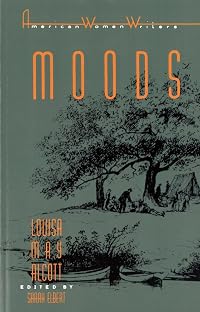
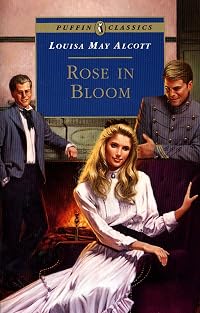
Louisa May Alcott was born in Germantown, Pennsylvania, in 1832. Two years later, she moved with her family to Boston and in 1840 to Concord, which was to remain her family home for the rest of her life. Her father, Bronson Alcott, was a transcendentalist and friend of Ralph Waldo Emerson and Henry David Thoreau. Alcott early realized that her show more father could not be counted on as sole support of his family, and so she sacrificed much of her own pleasure to earn money by sewing, teaching, and churning out potboilers. Her reputation was established with Hospital Sketches (1863), which was an account of her work as a volunteer nurse in Washington, D.C. Alcott's first works were written for children, including her best-known Little Women (1868--69) and Little Men: Life at Plumfield with Jo's Boys (1871). Moods (1864), a "passionate conflict," was written for adults. Alcott's writing eventually became the family's main source of income. Throughout her life, Alcott continued to produce highly popular and idealistic literature for children. An Old-Fashioned Girl (1870), Eight Cousins (1875), Rose in Bloom (1876), Under the Lilacs (1878), and Jack and Jill (1881) enjoyed wide popularity. At the same time, her adult fiction, such as the autobiographical novel Work: A Story of Experience (1873) and A Modern Mephistopheles (1877), a story based on the Faust legend, shows her deeper concern with such social issues as education, prison reform, and women's suffrage. She realistically depicts the problems of adolescents and working women, the difficulties of relationships between men and women, and the values of the single woman's life. (Bowker Author Biography) show less

Series
Belongs to Publisher Series
Common Knowledge
- Original publication date
- 1889
- People/Characters
- Louisa May Alcott
- Dedication
- TO
MRS. ANNA B. PRATT,
THE SOLE SURVIVING SISTER OF LOUISA M. ALCOTT, AND HER
NEVER-FAILING HELP, COMFORTER, AND FRIEND
FROM BIRTH TO DEATH,
This Memoir
IS RESPECTFULLY AND TENDERLY DEDICATED,
BY<... (show all)br>EDNAH D. CHENEY
Classifications
Statistics
- Members
- 168
- Popularity
- 194,388
- Reviews
- 4
- Rating
- (4.07)
- Languages
- English
- Media
- Paper, Ebook
- ISBNs
- 20
- ASINs
- 14