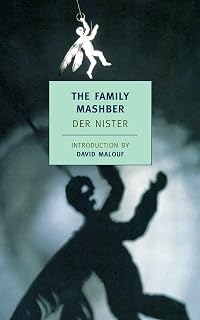
The Family Mashber
by Der Nister
On This Page
Description
First time in Paperback The Family Mashber is a protean work: a tale of a divided family and divided souls, a panoramic picture of an Eastern European town, a social satire, a kabbalistic allegory, an innovative fusion of modernist art and traditional storytelling, a tale of weird humor and mounting tragic power, embellished with a host of uncanny and fantastical figures drawn from daily life and the depths of the unconscious. Above all, the book is an account of a world in crisis (in show more Hebrew, mashber means crisis), torn between the competing claims of family, community, business, politics, the individual conscience, and an elusive God. At the center of the book are three brothers: the businessman Moshe, at the height of his fortunes as the story begins, but whose luck takes a permanent turn for the worse; the religious seeker Luzi, who, for all his otherworldliness, finds himself ever more caught up in worldly affairs; and the idiot-savant Alter, whose reclusive existence is tortured by fear and sexual desire. The novel is also haunted by the enigmatic figure of Sruli Gol, a drunk, a profaner of sacred things, an outcast, who nonetheless finds his way through every door and may well hold the key to the brothers’ destinies. show lessTags
Recommendations
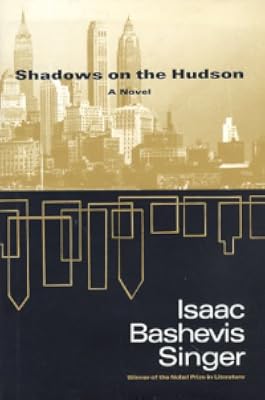
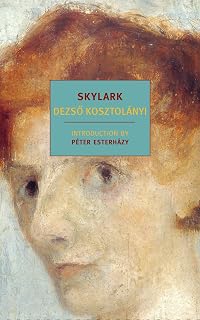
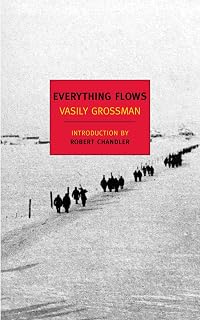
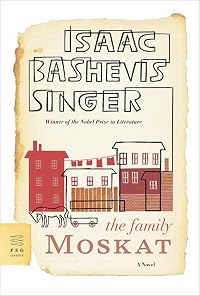











Member Recommendations
Member Reviews
Worth the investment for the immersive experience alone. Highly detailed glimpse into the life of a 19th century Eastern European Jewish family. Rich with detail and meaning. This book contributed to the author's imprisonment in a Soviet gulag so you know it has to be good.
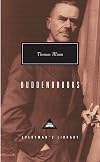
The Family Masjber by Der Nister ('the obscure one') is one of the forgotten classics of world literature. Influenced by the great Russian authors such as Tolstoy and especially Dostoevsky, Der Nister describes the life and downfall of a well-to-do Jewish family in the late nineteenth century. The story can favourably be compared with Thomas Mann's Buddenbrooks. It is masterfully told, and immerses the reader in an unfamiliar (to me at least) world of Jewish traditions, without ever becoming purely documentary. With just under 800 pages, fans of the genre will find all they look for.
Although this book was engrossing, I have to put it aside for right now, as it makes me too anxious to read at the moment (for reasons I won't get into here). So it goes back into the "to-read" pile.
Ambientada en la ciudad ucraniana de N. a finales del XIX, La familia Máshber analiza los conflictos entre los valores familiares, comunitarios, mercantiles, políticos y espirituales de una época en la que ya se presentían las convulsiones que traería el nuevo siglo; todo ello con una indudable maestría en la escritura y unas grandes dosis de inteligencia, sátira, magia y humor negro.
Jan 11, 2023Spanish
«La familia Máshber» de Der Níster («El Oculto»), seudónimo de Pinjas Kahanovich, es una obra cumbre de la literatura yiddish que Stalin no pudo acallar durante su mandato aunque deportó a su autor, un filósofo y traductor ucraniano descendiente de judíos, que murió en un campo de concentración de Siberia.
«Máshber» quiere decir crisis; mejor momento para leerla, imposible. Retrata un mundo en crisis, el de la ciudad de N., desplegado en torno a tres personajes, los hermanos Máshber: Moishe, un próspero y pragmático hombre de negocios que deberá hacer frente a un giro dramático de la fortuna; Luzzi, deseoso de alejarse del mundo y entregarse a la vida espiritual, y Álter, que tras una infancia prometedora cayó show more victima de una aflicción que lo condujo a una existencia torturada.
«La familia Máshber» ha sido comparada a menudo con las grandes novelas de los maestros rusos, como Tolstói y Dostoyevski, y fue incluida por el prestigioso National Yiddish Book Center en su lista de «Las cien mayores obras de la literatura judía moderna» junto a figuras como Isaak Babel, Saul Bellow, Vasili Grossman, Imre Kertész, Primo Levi, Philip Roth o Isaac Bashevis Singer.
¿Qué me gustaría destacar? El tono de la voz en off que nos cuenta la historia a modo de cuento; sin embargo, es un libro que se me ha atragantado en múltiples ocasiones y que, sólo por cabezonería, he seguido leyendo hasta el final. Hay momentos en que la historia ha dejado de interesarme.
Es una novela a la que hay que llegar con el ánimo de leer plácidamente, casi más interesados en cómo se narra que en qué se narra. Sobre esto último, me ha interesado la descripción de la sociedad judía para descubrir lo ajena que me es por desconocida. Otra de mis muchas carencias.
+INFO
• Podcast en radio 5: Biblioteca básica – 24-9-2011, http://tinyurl.com/7ad7kul
--
Der Níster (1884-1950). La familia Máshber / Der Níster [seud. de] Pinjas Kahanovich ; prólogo y traducción del yiddish de Rhoda Henelde y Jacob Abecasis. – [2ª ed. en Libros del Silencio]. -- Barcelona : Libros del Silencio, 2011. -- 885 p. ; 23 cm. -- (Miradas). – Tít. orig.: Di mishpokhe Mashber. -- ISBN 978-84-937856-4-2
I. Henelde, Rhoda, trad. II. Abecasis, Jacob, trad. 1. Novela realista y social.
821.112.28-31"19" show less
«Máshber» quiere decir crisis; mejor momento para leerla, imposible. Retrata un mundo en crisis, el de la ciudad de N., desplegado en torno a tres personajes, los hermanos Máshber: Moishe, un próspero y pragmático hombre de negocios que deberá hacer frente a un giro dramático de la fortuna; Luzzi, deseoso de alejarse del mundo y entregarse a la vida espiritual, y Álter, que tras una infancia prometedora cayó show more victima de una aflicción que lo condujo a una existencia torturada.
«La familia Máshber» ha sido comparada a menudo con las grandes novelas de los maestros rusos, como Tolstói y Dostoyevski, y fue incluida por el prestigioso National Yiddish Book Center en su lista de «Las cien mayores obras de la literatura judía moderna» junto a figuras como Isaak Babel, Saul Bellow, Vasili Grossman, Imre Kertész, Primo Levi, Philip Roth o Isaac Bashevis Singer.
¿Qué me gustaría destacar? El tono de la voz en off que nos cuenta la historia a modo de cuento; sin embargo, es un libro que se me ha atragantado en múltiples ocasiones y que, sólo por cabezonería, he seguido leyendo hasta el final. Hay momentos en que la historia ha dejado de interesarme.
Es una novela a la que hay que llegar con el ánimo de leer plácidamente, casi más interesados en cómo se narra que en qué se narra. Sobre esto último, me ha interesado la descripción de la sociedad judía para descubrir lo ajena que me es por desconocida. Otra de mis muchas carencias.
+INFO
• Podcast en radio 5: Biblioteca básica – 24-9-2011, http://tinyurl.com/7ad7kul
--
Der Níster (1884-1950). La familia Máshber / Der Níster [seud. de] Pinjas Kahanovich ; prólogo y traducción del yiddish de Rhoda Henelde y Jacob Abecasis. – [2ª ed. en Libros del Silencio]. -- Barcelona : Libros del Silencio, 2011. -- 885 p. ; 23 cm. -- (Miradas). – Tít. orig.: Di mishpokhe Mashber. -- ISBN 978-84-937856-4-2
I. Henelde, Rhoda, trad. II. Abecasis, Jacob, trad. 1. Novela realista y social.
821.112.28-31"19" show less
Sep 10, 2013 (Edited)Spanish
Viajamos con los personajes hasta finales del siglo XIX donde Moishe el hermano menor vive una existencia tranquila y próspera como buen negociante judío y seguidor de su religión y tradiciones. Luzzi el hermano mayor, el primogénito, resulta ser casi adorado por toda la familia de Moishe cuando realiza sus visitas periódicas a la ciudad. Todo parece fluir con normalidad hasta que algunos sucesos varían el equilibro familiar. Luzzi pese a ser el más estricto cumplidor de la Tora -o precisamente por eso- se adhiere a una pequeña secta del judaísmo ,denostada por los puristas, cuyos miembros son las personas más sencillas y humildes de la ciudad. Su hermano Moishe no ve con buen ojos el cambio de su hermano, la luz espiritual de show more su familia. Dos apariciones más completan el cuadro, por un lado Sruli Gol, un extraño y complicado ser que revolotea sobre toda la trama, y el hermano oculto, Álter, quien vive encerrado en la buhardilla mezclando la mayor sabiduría con la mayor locura. show less
Oct 19, 2011Spanish
Members
- Recently Added By
Lists

Jewish Books
367 works; 24 members
Tablet Magazine's List of 101 Great Jewish Books
103 works; 9 members

Canon de la narrativa universal del s. XX (cicutadry)
499 works; 3 members
Author Information

16+ Works 332 Members
Born in Berdichev, Ukraine, Der Nister ("the concealed one" in Yiddish) received a traditional Jewish education but also read secular Russian works at an early age. His spiritual and literary growth were greatly influenced by his older brother Aaron, a Bratzlaver Hasid. To avoid serving in the Russian army, Der Nister left Berdichev in 1905. He show more lived mainly in Zhitomir, eking out a meager existence giving private Hebrew lessons. In 1921, Der Nister left the Soviet Union and settled first in Kaunas (Kovno), Lithuania, and then Berlin, which had become a center for literary exiles and emigrants. In 1926 he returned to the Soviet Union, this time settling in Kharkov. He revived Nahman of Bratslav's Hasidic symbolic tales, and his own writing is also characterized by folk fantasy and modern Kabbalistic symbolism. His most famous work, Di Mishpokhe Mashber (The Family Crisis), is considered by many to be the greatest achievement of Soviet Yiddish literature. It combines the fantasy of the author's earlier works with modern realism. However, only two of the originally projected three volumes have been published. (Bowker Author Biography) show less
Some Editions
Awards and Honors
Series
Belongs to Publisher Series
Common Knowledge
- Canonical title
- The Family Mashber
- Original title
- Di misjpooche Masjber
- Original publication date
- 1939
- Dedication
- My child, my daughter, Hodele, tragically dead. Born July 1913 in Zhitomir, died spring 1942, Leningrad.
May your father's broken heart be the monument on your lost grave. Let this book be dedicated as an eternal and holy... (show all) memorial to you.
Your father, the author
[DER NISTER]
Classifications
- Genres
- Fiction and Literature, General Fiction
- DDC/MDS
- 839.133 — Literature & rhetoric German & related literatures Other Germanic literatures Yiddish literature Fiction 1860-1945
- LCC
- PJ5129 .K27 .M513 — Language and Literature Oriental languages and literatures Oriental philology and literature Hebrew Other languages used by Jews Yiddish
- BISAC
Statistics
- Members
- 290
- Popularity
- 110,871
- Reviews
- 7
- Rating
- (3.93)
- Languages
- 8 — Dutch, English, German, Hebrew, Norwegian, Russian, Spanish, Yiddish
- Media
- Paper
- ISBNs
- 13
- ASINs
- 2