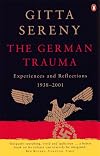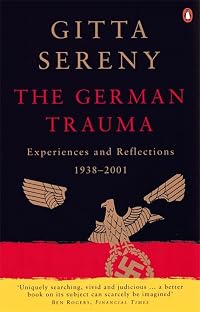
The German Trauma: Experiences and Reflections, 1938-2001
by Gitta Sereny
On This Page
Description
In The Healing Wound, Sereny presents a vital historical account of Germany in the 20th century, exploring the guilt which is in many ways the legacy of Nazism. She argues that despite the achievements of Germany since 1945, the awareness of the horrors committed in their name remains in the minds of Germans to this day-an open wound of historical culpability. 32 photos. Few individuals have written about the evil forces of Hitler's Germany with the immediacy & urgency of Gitta Sereny. She show more first encountered the Nazis in 1934 at age eleven when she witnessed a Nuremberg rally, & in 1940 she was in Paris when the Blitzkrieg overran the Allied armies. In 1942, warned of impending arrest for having hidden British pilots, she fled across the Pyrenees. The Healing Wound combines political statement with the haunting personal memories of one of the twentieth century's most relentless witnesses. show lessTags
Recommendations



















Member Reviews
Gitta Sereny's collection of her journalism from the late 1960s to the 1990s gets five stars for just one extended piece - her assessment of Franz Stangl, Commandant of Treblinka, based on interviews she undertook in 1971 just before Stangl died of a heart attack in prison.
We will get back to Stangl in a moment but the book has a number of other insightful pieces on characters like Francois Genoud and events such as the farce over the Hitler Diaries and the political confusion surrounding the Demjanjuk case with fresh autobiographical material added to give context.
There also some potboilers in there - interviews that are not much more than self-serving publicity for the interviewees (Speer, Riefenstahl, Syberberg) or pieces that dully show more explore the neuroses of the German liberal bourgeoisie - but the good investigative pieces outweight the transient gossip.
You can read these texts either as an insight into the cosmopolitan liberal mind trying to build a narrative around national socialism that can be made to fit with the journalistic ethics of detachment or you can read them as 'last chances' to get into the heads of some darkened souls.
Naturally, behind all this is a fact on the ground - one side won and one side lost a brutal war with crimes of horrifying proportions on both sides. The real issue is that the side that lost did something of exceptional horror - industrialising the slaughter of civilians for reasons of ideology.
Many themes emerge that cause us to think about the psychological consequences of this on the losing side and Sereny is a good guide not because of her liberalism (which we may take as a given) but because, with rare lapses, of her commitment to detachment in giving the past its voice.
The Stangl interview (which became the core of a significant book which sits alongside her works on Speer and the child murderess Mary Bell as contributions to the study of 'evil') exemplifies her skill and her honesty. She is also honest when she just can't take more of some ex-Nazi's nonsense.
Personally I am less interested in the guilt trip of neurotics who were not born or were children during the Nazi era. The self-flagellation of the German establishment was more about giving cover to not rocking the boat in rehabilitating former Nazis and sustaining democracy than morality.
What is really interesting is how people who are not obviously psychopathic are drawn into activity that is, in fact, legal under the prevailing regime but which even they recognise go way beyond the bounds of the acceptable under normal circumstances.
To be blunt, we might ask the same question of those who bombed Tokyo or Hamburg or many a modern corporate executive operating in the emerging world but in Stangl we have the extreme case - an ordinary copper (basically) steadily drawn into the business of organising mass murder.
The notion of the banality of evil is not really accepted as it once was - if only because we now know that Eichmann (about whom this was said by Arendt in good faith) was not quite who he appeared to be, or equally as it was convenient to present him, at his trial.
The idea of the banality of evil was useful to a certain class at a certain type of history because it could point the finger at 'them' (the functionaries and 'essential workers' of a regime) and not 'us' (the educated and intelligentsia) who, implied, could never have been implicated in such crimes!
The Stangl interview does show us an ordinary person who - if Sereny is to be believed - was not 'bad' under normal circumstances but who did bad things because he was embedded in a particular system at a particular time under particular circumstances.
And this sense of a particular set of human conditions guiding people into conformity - cemented by regime intellectuals elsewhere - recurs over and over again in the interviews with the constant and fair complaint that critics simply do not understand what it was like to live then.
It is this contingency of our 'goodness' that should strike home and make us think. I look at a liberal intellectual operating on automatic today and I often see someone who, under certain circumstances, could easily have been a racial hygeinist or Boshevik.
What Stangl and his critics often have in common is an inability to think critically on their own account about the contingency of their own situation and so they can be pulled increasingly into justifying the unjustifiable because they share a morality rather than have a private ethic.
In other words, terming what was done as banal is arrogant. We should actually refer to it as the normality of evil, a very different way of seeing things. Any structure that organises itself to survive under perceived existential threat or for existential ambition can and will make evil normal.
Sereny's skill lies in being wholly unforgiving of the act without confusing an act with the totality of a person - a rather catholic way of seeing the world (though Sereny was, in fact, of mixed German-Jewish and Hungarian Protestant background).
The conditionality of evil is what should interest us here and we see the same thing with the case of John Demanjuk who was undoubtedly trapped by history into a position at Sobibor but then proved himself exemplary (if not enormously intelligent) once he was out of that hell.
We often see an absolutist view of good and evil that refuses to recognise this conditionality that places people in positions where good or evil is to be done without thought although one must recognise the existence of some persons who are driven to good or bad acts by their very nature.
Sereny herself towards the end of the book wonders what the point had become by the 1980s of trying older men for things done under very different conditions in their late teenage or early twenties now that the immediate post-war chance for justice had long since gone.
And, though no position is taken, throughout the book there is a more nuanced approach than we often find from liberals to the memorialisation of the past into fixed narratives designed to create some form of impossible justice than is actually a form of revenge.
This is not a book that will easily resolve any moral dilemmas. It is a book simply of (mostly) excellent journalism giving us at least some semblance of the facts on which we can then draw our own moral conclusions.
This is not say that I would be forgiving of such crimes (far from it) but I would be proportionate and demand consistency and fairness within all normalising systems (including our own) rather than see our current tendency for show trials for the purpose of mass cultural engineering.
Stangl should perhaps have been executed rather than imprisoned from that perspective. The politicisation of extreme criminality in the West seems often to have been less just than the brute punishment meted out in the East by Russian war crimes hypocrites but that's another story.
Fundamentally, the morality of the post-war era was a 'fix' at so many levels - designed to ensure Germany remained subservient, to ensure that Nazi Germans could be reintegrated harmlessly, to avoid too many questions being asked about the generality of war crimes and to try and show some compassion and restitution to those most affected or noisiest.
It was about subservience without humiliation, stabilisation and respect for the most powerful of those representing the damaged (I recall no rush to return the German gold reserves to Greece). It was probably all that could be done but it was not quite as just or fair as we would like to think.
From this perspective, Sereny shines a light on many of the dark corners of this process of 'justice' so that rather than being told what is evil by the posturing moralists, we can see it for itself and then make our own judgements on what it is and how it manifests itself.
And this is why the testimony of Stangl is so important because never was cruel mechanised evil so manifest in the production line murder of people whose only 'crime' was not to fit into the alternative world view of a system of desperate ideological loons with a sense of style.
How an ordinary man, more catholic than Nazi by instincts, ends up acting as the central administrator of such a programme of machined death is what should interest us and Sereny's account of that process is plausible and disturbing.
Sereny's skill in this is often to separate person from deeds. This comes across most effectively in her curious and honest account of her family friendship with Francois Genoud, unrepentant Nazi and funder of Arab terrorism, which will worry many readers. It worried me somewhat.
She can say that this person was one of the most decent and honest people she had met - perhaps even a political naif - but also that he never wavered in his ideological position. The two, she suggests, are not incompatible which flies in the face of all contemporary liberal assumptions.
But she is right. Ideological lunacy is only dangerous when associated with the ability to implement it and we come full circle to the problem of evil - not how to deal with evil people but how to ensure we do not permit evil systems. And sometimes we refuse to see the lurking evil in ours. show less
We will get back to Stangl in a moment but the book has a number of other insightful pieces on characters like Francois Genoud and events such as the farce over the Hitler Diaries and the political confusion surrounding the Demjanjuk case with fresh autobiographical material added to give context.
There also some potboilers in there - interviews that are not much more than self-serving publicity for the interviewees (Speer, Riefenstahl, Syberberg) or pieces that dully show more explore the neuroses of the German liberal bourgeoisie - but the good investigative pieces outweight the transient gossip.
You can read these texts either as an insight into the cosmopolitan liberal mind trying to build a narrative around national socialism that can be made to fit with the journalistic ethics of detachment or you can read them as 'last chances' to get into the heads of some darkened souls.
Naturally, behind all this is a fact on the ground - one side won and one side lost a brutal war with crimes of horrifying proportions on both sides. The real issue is that the side that lost did something of exceptional horror - industrialising the slaughter of civilians for reasons of ideology.
Many themes emerge that cause us to think about the psychological consequences of this on the losing side and Sereny is a good guide not because of her liberalism (which we may take as a given) but because, with rare lapses, of her commitment to detachment in giving the past its voice.
The Stangl interview (which became the core of a significant book which sits alongside her works on Speer and the child murderess Mary Bell as contributions to the study of 'evil') exemplifies her skill and her honesty. She is also honest when she just can't take more of some ex-Nazi's nonsense.
Personally I am less interested in the guilt trip of neurotics who were not born or were children during the Nazi era. The self-flagellation of the German establishment was more about giving cover to not rocking the boat in rehabilitating former Nazis and sustaining democracy than morality.
What is really interesting is how people who are not obviously psychopathic are drawn into activity that is, in fact, legal under the prevailing regime but which even they recognise go way beyond the bounds of the acceptable under normal circumstances.
To be blunt, we might ask the same question of those who bombed Tokyo or Hamburg or many a modern corporate executive operating in the emerging world but in Stangl we have the extreme case - an ordinary copper (basically) steadily drawn into the business of organising mass murder.
The notion of the banality of evil is not really accepted as it once was - if only because we now know that Eichmann (about whom this was said by Arendt in good faith) was not quite who he appeared to be, or equally as it was convenient to present him, at his trial.
The idea of the banality of evil was useful to a certain class at a certain type of history because it could point the finger at 'them' (the functionaries and 'essential workers' of a regime) and not 'us' (the educated and intelligentsia) who, implied, could never have been implicated in such crimes!
The Stangl interview does show us an ordinary person who - if Sereny is to be believed - was not 'bad' under normal circumstances but who did bad things because he was embedded in a particular system at a particular time under particular circumstances.
And this sense of a particular set of human conditions guiding people into conformity - cemented by regime intellectuals elsewhere - recurs over and over again in the interviews with the constant and fair complaint that critics simply do not understand what it was like to live then.
It is this contingency of our 'goodness' that should strike home and make us think. I look at a liberal intellectual operating on automatic today and I often see someone who, under certain circumstances, could easily have been a racial hygeinist or Boshevik.
What Stangl and his critics often have in common is an inability to think critically on their own account about the contingency of their own situation and so they can be pulled increasingly into justifying the unjustifiable because they share a morality rather than have a private ethic.
In other words, terming what was done as banal is arrogant. We should actually refer to it as the normality of evil, a very different way of seeing things. Any structure that organises itself to survive under perceived existential threat or for existential ambition can and will make evil normal.
Sereny's skill lies in being wholly unforgiving of the act without confusing an act with the totality of a person - a rather catholic way of seeing the world (though Sereny was, in fact, of mixed German-Jewish and Hungarian Protestant background).
The conditionality of evil is what should interest us here and we see the same thing with the case of John Demanjuk who was undoubtedly trapped by history into a position at Sobibor but then proved himself exemplary (if not enormously intelligent) once he was out of that hell.
We often see an absolutist view of good and evil that refuses to recognise this conditionality that places people in positions where good or evil is to be done without thought although one must recognise the existence of some persons who are driven to good or bad acts by their very nature.
Sereny herself towards the end of the book wonders what the point had become by the 1980s of trying older men for things done under very different conditions in their late teenage or early twenties now that the immediate post-war chance for justice had long since gone.
And, though no position is taken, throughout the book there is a more nuanced approach than we often find from liberals to the memorialisation of the past into fixed narratives designed to create some form of impossible justice than is actually a form of revenge.
This is not a book that will easily resolve any moral dilemmas. It is a book simply of (mostly) excellent journalism giving us at least some semblance of the facts on which we can then draw our own moral conclusions.
This is not say that I would be forgiving of such crimes (far from it) but I would be proportionate and demand consistency and fairness within all normalising systems (including our own) rather than see our current tendency for show trials for the purpose of mass cultural engineering.
Stangl should perhaps have been executed rather than imprisoned from that perspective. The politicisation of extreme criminality in the West seems often to have been less just than the brute punishment meted out in the East by Russian war crimes hypocrites but that's another story.
Fundamentally, the morality of the post-war era was a 'fix' at so many levels - designed to ensure Germany remained subservient, to ensure that Nazi Germans could be reintegrated harmlessly, to avoid too many questions being asked about the generality of war crimes and to try and show some compassion and restitution to those most affected or noisiest.
It was about subservience without humiliation, stabilisation and respect for the most powerful of those representing the damaged (I recall no rush to return the German gold reserves to Greece). It was probably all that could be done but it was not quite as just or fair as we would like to think.
From this perspective, Sereny shines a light on many of the dark corners of this process of 'justice' so that rather than being told what is evil by the posturing moralists, we can see it for itself and then make our own judgements on what it is and how it manifests itself.
And this is why the testimony of Stangl is so important because never was cruel mechanised evil so manifest in the production line murder of people whose only 'crime' was not to fit into the alternative world view of a system of desperate ideological loons with a sense of style.
How an ordinary man, more catholic than Nazi by instincts, ends up acting as the central administrator of such a programme of machined death is what should interest us and Sereny's account of that process is plausible and disturbing.
Sereny's skill in this is often to separate person from deeds. This comes across most effectively in her curious and honest account of her family friendship with Francois Genoud, unrepentant Nazi and funder of Arab terrorism, which will worry many readers. It worried me somewhat.
She can say that this person was one of the most decent and honest people she had met - perhaps even a political naif - but also that he never wavered in his ideological position. The two, she suggests, are not incompatible which flies in the face of all contemporary liberal assumptions.
But she is right. Ideological lunacy is only dangerous when associated with the ability to implement it and we come full circle to the problem of evil - not how to deal with evil people but how to ensure we do not permit evil systems. And sometimes we refuse to see the lurking evil in ours. show less
http://shawjonathan.wordpress.com/2013/12/10/gitta-serenys-german-trauma/
Gitta Sereny (1921–2012) was one of the great non-fiction writers of the 20th century. Holocaust denier David Irving described her as a shrivelled Nazi hunter, but though she may well have worn the insult as a badge of honour it wasn’t accurate. She said of herself: ‘I am interested above all in how individual human beings succumb to, or resist, evil.’ In Albert Speer: His Battle with Truth (1995), and Cries Unheard: The Story of Mary Bell (1998) she digs with empathy and rigour into the minds of one of Hitler’s closest henchmen and a child murderer respectively, and sheds light on very dark places.
This book, retitled optimistically for the US market as show more The Healing Wound, was her last. It’s a collection of essays and newspaper pieces spanning 30 years, revised and with new interstitial pieces so that something of a coherent narrative emerges, beginning with the Austrian-born Sereny’s childhood and adolescent experience of Nazism (she accidentally attended a Nuremberg rally as an 11 year old schoolgirl and was enraptured; at 15 she shouted at an SS officer who was humiliating some Jews in Vienna soon after the Anschluss), and tracing her engagement with the meaning and legacies of that time up to the turn of the century.
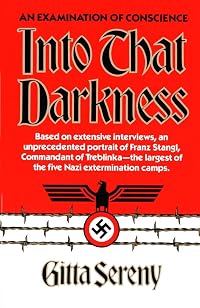
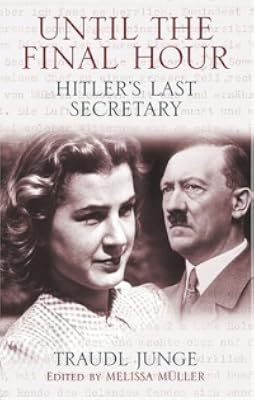
It’s not pretty. She takes us with her just after World War Two on the extraordinarily distressing task of tracking down East European children stolen from their parents years before, and abetting their being torn from home for a second time – she was in the employ of the UNRRA, the United Nations Relief and Rehabilitation Administration, where she might have rubbed shoulders with Edith Campbell Berry if the latter hadn’t been a figment of Frank Moorhouse’s imagination. We encounter Franz Stangl, who was commandant of the Treblinka extermination camp (I haven’t read Sereny’s 1974 book, Into That Darkness, which expanded the Daily Telegraph article included here, though I may one day have the stomach for it) and Albert Speer (in an essay that doesn’t add a lot to her magnificent book, but is well worth reading). We are introduced to children of Nazis who find strength in each other to face the horrors perpetrated by their parents. We follow Sereny’s dealings with a number of odd individuals who are dedicated collectors of Nazi documents and memorabilia. We gain some understanding of the US’s dubious dealings over decades with the question of justice for Nazi criminals. We meet an elderly woman who was one of Hitler’s secretaries, to whom he was always kind and thoughtful.
And through it all Gitta Sereny’s gaze doesn’t flinch. The book is saved from being a catalogue of horrors by the pervasive sense that she is driven by a need to understand. Perhaps the most impressive moment in the book is her response to David Irving’s book claiming that Hitler knew nothing of the ‘final solution’: rather than dismissing it out of hand as incompatible with her own understanding, she was intrigued, and began her fact-checking exercise, which was to turn into a devastatibg debunking, almost hoping Irving was right.
I learned a lot from this book. The Jewish Holocaust was a towering piece of evil, a calculated attempt to kill a whole people that succeeded in killing a full third of them – something way beyond genocide. But the Nazi murderousness wasn’t restricted to Jews. They killed something like 15 million people – homosexual men and women, political opponents, Romany people, eastern Europeans, people with disabilities – not as war crimes but as murders committed under the shadow of war, some with industrial efficiency in the extermination camps, some a bullet in the back of one head at a time, some with hideous callousness and mind-boggling disrespect for the dead. The US’s ‘denazification’ barely scratched the surface, leaving the German courts to prosecute Nazi crimes for at least 30 more years. While most Germans tried to forget and move on with their lives, Sereny says, a small elite made up of writers, artists and lawyers pursued the incredibly difficult task of coming to terms with what was generally known as ‘the recent past’ until well into the 1980s. Next time I hear an Australian shock jock or rabid columnist condemning ‘inner city elites’ or a combatant in our renewing history wars use. Dismissive phrase such as ‘black armband history’, I’ll remember Sereny and gird my loins for battle. show less
Gitta Sereny (1921–2012) was one of the great non-fiction writers of the 20th century. Holocaust denier David Irving described her as a shrivelled Nazi hunter, but though she may well have worn the insult as a badge of honour it wasn’t accurate. She said of herself: ‘I am interested above all in how individual human beings succumb to, or resist, evil.’ In Albert Speer: His Battle with Truth (1995), and Cries Unheard: The Story of Mary Bell (1998) she digs with empathy and rigour into the minds of one of Hitler’s closest henchmen and a child murderer respectively, and sheds light on very dark places.
This book, retitled optimistically for the US market as show more The Healing Wound, was her last. It’s a collection of essays and newspaper pieces spanning 30 years, revised and with new interstitial pieces so that something of a coherent narrative emerges, beginning with the Austrian-born Sereny’s childhood and adolescent experience of Nazism (she accidentally attended a Nuremberg rally as an 11 year old schoolgirl and was enraptured; at 15 she shouted at an SS officer who was humiliating some Jews in Vienna soon after the Anschluss), and tracing her engagement with the meaning and legacies of that time up to the turn of the century.
It’s not pretty. She takes us with her just after World War Two on the extraordinarily distressing task of tracking down East European children stolen from their parents years before, and abetting their being torn from home for a second time – she was in the employ of the UNRRA, the United Nations Relief and Rehabilitation Administration, where she might have rubbed shoulders with Edith Campbell Berry if the latter hadn’t been a figment of Frank Moorhouse’s imagination. We encounter Franz Stangl, who was commandant of the Treblinka extermination camp (I haven’t read Sereny’s 1974 book, Into That Darkness, which expanded the Daily Telegraph article included here, though I may one day have the stomach for it) and Albert Speer (in an essay that doesn’t add a lot to her magnificent book, but is well worth reading). We are introduced to children of Nazis who find strength in each other to face the horrors perpetrated by their parents. We follow Sereny’s dealings with a number of odd individuals who are dedicated collectors of Nazi documents and memorabilia. We gain some understanding of the US’s dubious dealings over decades with the question of justice for Nazi criminals. We meet an elderly woman who was one of Hitler’s secretaries, to whom he was always kind and thoughtful.
And through it all Gitta Sereny’s gaze doesn’t flinch. The book is saved from being a catalogue of horrors by the pervasive sense that she is driven by a need to understand. Perhaps the most impressive moment in the book is her response to David Irving’s book claiming that Hitler knew nothing of the ‘final solution’: rather than dismissing it out of hand as incompatible with her own understanding, she was intrigued, and began her fact-checking exercise, which was to turn into a devastatibg debunking, almost hoping Irving was right.
I learned a lot from this book. The Jewish Holocaust was a towering piece of evil, a calculated attempt to kill a whole people that succeeded in killing a full third of them – something way beyond genocide. But the Nazi murderousness wasn’t restricted to Jews. They killed something like 15 million people – homosexual men and women, political opponents, Romany people, eastern Europeans, people with disabilities – not as war crimes but as murders committed under the shadow of war, some with industrial efficiency in the extermination camps, some a bullet in the back of one head at a time, some with hideous callousness and mind-boggling disrespect for the dead. The US’s ‘denazification’ barely scratched the surface, leaving the German courts to prosecute Nazi crimes for at least 30 more years. While most Germans tried to forget and move on with their lives, Sereny says, a small elite made up of writers, artists and lawyers pursued the incredibly difficult task of coming to terms with what was generally known as ‘the recent past’ until well into the 1980s. Next time I hear an Australian shock jock or rabid columnist condemning ‘inner city elites’ or a combatant in our renewing history wars use. Dismissive phrase such as ‘black armband history’, I’ll remember Sereny and gird my loins for battle. show less
Gitta Sereny’s first experience with Hitler’s Third Reich was as an 11 year old girl. While passing through Germany she witnessed the powerful theatrical drama of a Nazi rally. Later, she watched the Nazi’s march into her home country of Austria. Her mother and Jewish step-father escaped to the Untied States and Gitta spent most of the war in France as a student and later as a volunteer nurse. She dabbled in anti-Nazi subversive activity, and when the war ended, Gitta worked with the UNRRA to assist the 5 million “Displaced Persons” and refugees which included hundreds of thousands of children.
It is impossible to imagine, even with all the detailed descriptions provided in a multitude of publications over the past 66 years, show more the utter chaos Europe was in at the war’s end. Everyone knows 6 million Jews died under Hitler’s rule, “but they also killed 5 million Russian civilians, 2 million Poles - including a large part of their finest intelligentsia - and a million other people: gypsies, German free thinkers, and German insane or incurably sick... what they chose to call ‘inferior stock’.... 14 million” civilians (Pg. 81)
Four of the big questions everyone asked when the war ended were: How could this have happened? Why? Who must pay for these crimes? and, What now?
Gitta Sereny dedicated the rest of her life to answering these questions. She became a highly respected journalist, attended many court hearings including the Nuremberg Trials, interviewed Albert Speer - Hitler’s protege and Minister of Armaments, and Franz Stangl - the commandant of Treblinka. Excerpts of the interview with Albert Speer are included in "The German Trauma".
As time passed and others grew weary of the quest for answers, Gitta plodded on - obsessed with her mission which was no easy task considering the mental anguish associated with the subject.
"The German Trauma" is partially autobiographical, relating Gitta’s experiences during the war and her life thereafter of investigative journalism. She explores the psychological aspects of how the Germans live with the eternal consuming black cloud of guilt hanging over their country. And she describes the barriers that exist between the older generations of Germans who were consenting adults during the war (and now refuse to talk about it) and the young children today who want answers but are horrified to think their own parents or grandparents may have been willing participants to the atrocities. She analyzes human conduct - the extreme range of capabilities in behavior - the nature of evil, and how a supposedly normal person can be mentally conditioned to commit insanely cold-blooded acts of evil.
Addressing politics and social sciences, Gitta discusses how the historical stigma of Hitler’s evil dictatorial leadership now inadvertently causes Germany to carefully lean to the liberal left.
Through her thorough investigation and intensive interviews over the years, Gitta never stopped pondering and debating the guilt associated with collaboration - coerced or voluntary - and the level of guilt of Germany’s war criminals. She always spoke out against intentionally misleading documentaries, Neo-Nazi propaganda, and fake memoirs of holocaust survivors. She became a leading authority on Germany’s individual post-war retribution. Gitta stressed the importance of documenting and preserving the truth and keeping the memories alive... the only hope for elevating the morality of humanity in the future is to learn from the past. Her contribution to journalism won her several prestigious awards, and "The German Trauma" is very well written; educational and informative, unique in it’s content, and a must read. show less
It is impossible to imagine, even with all the detailed descriptions provided in a multitude of publications over the past 66 years, show more the utter chaos Europe was in at the war’s end. Everyone knows 6 million Jews died under Hitler’s rule, “but they also killed 5 million Russian civilians, 2 million Poles - including a large part of their finest intelligentsia - and a million other people: gypsies, German free thinkers, and German insane or incurably sick... what they chose to call ‘inferior stock’.... 14 million” civilians (Pg. 81)
Four of the big questions everyone asked when the war ended were: How could this have happened? Why? Who must pay for these crimes? and, What now?
Gitta Sereny dedicated the rest of her life to answering these questions. She became a highly respected journalist, attended many court hearings including the Nuremberg Trials, interviewed Albert Speer - Hitler’s protege and Minister of Armaments, and Franz Stangl - the commandant of Treblinka. Excerpts of the interview with Albert Speer are included in "The German Trauma".
As time passed and others grew weary of the quest for answers, Gitta plodded on - obsessed with her mission which was no easy task considering the mental anguish associated with the subject.
"The German Trauma" is partially autobiographical, relating Gitta’s experiences during the war and her life thereafter of investigative journalism. She explores the psychological aspects of how the Germans live with the eternal consuming black cloud of guilt hanging over their country. And she describes the barriers that exist between the older generations of Germans who were consenting adults during the war (and now refuse to talk about it) and the young children today who want answers but are horrified to think their own parents or grandparents may have been willing participants to the atrocities. She analyzes human conduct - the extreme range of capabilities in behavior - the nature of evil, and how a supposedly normal person can be mentally conditioned to commit insanely cold-blooded acts of evil.
Addressing politics and social sciences, Gitta discusses how the historical stigma of Hitler’s evil dictatorial leadership now inadvertently causes Germany to carefully lean to the liberal left.
Through her thorough investigation and intensive interviews over the years, Gitta never stopped pondering and debating the guilt associated with collaboration - coerced or voluntary - and the level of guilt of Germany’s war criminals. She always spoke out against intentionally misleading documentaries, Neo-Nazi propaganda, and fake memoirs of holocaust survivors. She became a leading authority on Germany’s individual post-war retribution. Gitta stressed the importance of documenting and preserving the truth and keeping the memories alive... the only hope for elevating the morality of humanity in the future is to learn from the past. Her contribution to journalism won her several prestigious awards, and "The German Trauma" is very well written; educational and informative, unique in it’s content, and a must read. show less
For over 50 years Gitta Sereny has been a one-woman truth and reconciliation committee for post-war Germany, inserting her needle every so often to make sure that no one should forget the crimes of the Nazis and to measure the ambient climate of acceptance and regret. The German Trauma is a collection of these investigations, loosely tied together with an autobiographical thread. Few writers are better placed than Sereny to examine the German conscience and few do it as well. She attended a Nuremberg rally in 1934 at the age of 11 and has had her hooks into the pernicious influence of Nazism ever since. She is perhaps best known for her brushes with Albert Speer, whom she eventually persuaded to admit what he had previously denied: that show more he had known of the Final Solution. But there are other Nazi apologists and sympathisers here, too--David Irving, Kurt Waldheim, Leni Riefenstahl and John Demjanjuk--and none escapes the Sereny probe. For all that, Sereny is never less than scrupulously fair. She only wants her pound of flesh and takes no more. Those who admit their wrongdoings are blessed with some forgiveness; only the deniers are taken to the wire. The converse of this is that Sereny allows few grey areas into her analyses; there is merely good or bad, wrong or right. One could argue that Nazism permits no other approach, but humans are rarely that two-dimensional. For most of us, there is no one final leap into evil but rather a continuum of quantum collusive jumps. So when Sereny tells of those who stood up to Nazism, she intends to parade them as ordinary bastions of good with which to bash all those who failed to measure up to such ideals. A more telling way of looking at them might have been to give them a quasi-saintly status, and to view those who failed to measure up as mere fallible mortals. But then one is often left feeling with Sereny that she needs or rather is desperate to paint a picture of a Germany that stepped so far over the moral abyss that it can never be repeated. You can't quibble over the morality, but sadly you can over its abnormality. And there are signs towards the end of the book that Sereny has just begun to understand this. Nazism isn't a one-off; it is being acted out in variant forms in Serbia, Kosovo, Rwanda and Iraq. And with a desperate irony that would not be lost on Sereny, the Israelis can themselves no longer claim any moral high ground in their treatment of the Palestinians. Maybe that's where she will turn her attention next. --John Crace
Book Jacket
It is now fifty years since the end of the Third Reich, yet in Germany the past seems always present. It is no longer--as it certainly was for a long time--that foreigners provoke this awareness: it is just there.
Gitta Sereny's new book is about Germany and her experience of it during and after the Second World War. Sereny's first encounters with the Nazis came in 1934 at eleven when, by chance, she was taken to a Nuremburg rally, and four years later when she was in Vienna during the Anschluss. In 1940, she was studying in Paris when the Blitzkrieg overran the Allied a armies: she became a nurse in a chateau on the Loire in occupied France, looking after abandoned children, until in 1942, warned that she was about to be arrested, she escaped across the Pyrenees. After the war she worked in Displaced Persons camps for the United Nations Relief and Rehabilitation Administration (UNRRA) in occupied Germany.
When, later, Sereny became a writer, the Nazi period and its lasting impact on Germany not surprisingly became one of her main themes. The German Trauma gathers together the best of Sereny's writings about Germany over 50 years, exploring the guilt, denials and deceptions which in many different ways the Nazis left behind them. "I am interested above all," she writes, "in how individual human beings succumb to, or resist, evil." So she writes about individuals, many of whom she came to know well, who were deeply involved in the events of the period--among others, Franz Stangl, the Commandant of Treblinka. show less
Book Jacket
It is now fifty years since the end of the Third Reich, yet in Germany the past seems always present. It is no longer--as it certainly was for a long time--that foreigners provoke this awareness: it is just there.
Gitta Sereny's new book is about Germany and her experience of it during and after the Second World War. Sereny's first encounters with the Nazis came in 1934 at eleven when, by chance, she was taken to a Nuremburg rally, and four years later when she was in Vienna during the Anschluss. In 1940, she was studying in Paris when the Blitzkrieg overran the Allied a armies: she became a nurse in a chateau on the Loire in occupied France, looking after abandoned children, until in 1942, warned that she was about to be arrested, she escaped across the Pyrenees. After the war she worked in Displaced Persons camps for the United Nations Relief and Rehabilitation Administration (UNRRA) in occupied Germany.
When, later, Sereny became a writer, the Nazi period and its lasting impact on Germany not surprisingly became one of her main themes. The German Trauma gathers together the best of Sereny's writings about Germany over 50 years, exploring the guilt, denials and deceptions which in many different ways the Nazis left behind them. "I am interested above all," she writes, "in how individual human beings succumb to, or resist, evil." So she writes about individuals, many of whom she came to know well, who were deeply involved in the events of the period--among others, Franz Stangl, the Commandant of Treblinka. show less
Assembled in part from magazine pieces by the Author, this book attempts to present the complexity of dealing with the Nazi period, even if one is not German. Several case histories are laid out, revealing how the act of surviving the Nazi period has stressed those survivors. Some have been tried for what they had done, and some were tried for what they MAY have done. Others had very little to do with the legal processes after the war, and have faced the memories of that period privately, some with medical help, others without. The trauma is shown in the varius patterns that Sereny, an Austrian of a non-nazi family who just missed active involvement in the German armed forces, presents. She views herself as an observer and reacter to show more WWII, not a full participant. This book does add depth to the question of what one would have done in similar circumstances, It is worth the read. show less
Sereny är på jakt efter hur det kunde hända. Hur kunde människor utföra sådana avskyvärda handlingar? Vad drev dem? Vem är skyldig?
Hon ställer viktiga frågor som samhället måste komplentera. Det får inte hända igen. Men det gör det.
Författaren vill förmedla en känsla av att det faktiskt inte var så längesen nazisterna utförde dessa hemska handlingar, med kriget som "ursäkt". Fortfarande lever barn (och barnbarn) till de höga nazistledarna. Hur fungerar de idag? Kan de processa sinna minnen, känner de skuld över vad deras fäder gjort? Skall de känna skuld?
Hur var det att vara chef för ett utrotningsläger? Hur fungerar en sådan människa?
En fantastiskt intressant och otroligt hemsk historia lämnar Gitta show more Sereny till oss. Hon beskriver inte kriget som sådant - det finns det ju otaliga andra som gör. Nej hennes historer blir verkligen mänskliga (eller - kanske snararae - omänskliga) och de berör verkligen.
Om jag ska komma med någon kritik så är det att hennes egna analyser inte blir särskilt intressanta. De känns flummiga och kvasipsykologiska. Men (som tur är kanske) analyserar hon inte så mycket själv, utan låter det mesta i reportagen tala för sig själv. Och mer behövs inte. show less
Hon ställer viktiga frågor som samhället måste komplentera. Det får inte hända igen. Men det gör det.
Författaren vill förmedla en känsla av att det faktiskt inte var så längesen nazisterna utförde dessa hemska handlingar, med kriget som "ursäkt". Fortfarande lever barn (och barnbarn) till de höga nazistledarna. Hur fungerar de idag? Kan de processa sinna minnen, känner de skuld över vad deras fäder gjort? Skall de känna skuld?
Hur var det att vara chef för ett utrotningsläger? Hur fungerar en sådan människa?
En fantastiskt intressant och otroligt hemsk historia lämnar Gitta show more Sereny till oss. Hon beskriver inte kriget som sådant - det finns det ju otaliga andra som gör. Nej hennes historer blir verkligen mänskliga (eller - kanske snararae - omänskliga) och de berör verkligen.
Om jag ska komma med någon kritik så är det att hennes egna analyser inte blir särskilt intressanta. De känns flummiga och kvasipsykologiska. Men (som tur är kanske) analyserar hon inte så mycket själv, utan låter det mesta i reportagen tala för sig själv. Och mer behövs inte. show less
Feb 15, 2008Swedish
Members
- Recently Added By
Lists

All Things Germany
321 works; 4 members
Author Information

12+ Works 2,653 Members
Her previous books include Into That Darkness, Albert Speer: His Battle with Truth & most recently Cries Unheard. Born in Vienna, she lives in London. (Bowker Author Biography)
Some Editions
Series
Belongs to Publisher Series
Seuil, Points (P4651)
Common Knowledge
- Canonical title
- The German Trauma: Experiences and Reflections, 1938-2001
- Original title
- The German trauma. Expériences and reflections, 1938-2001; The healing wound. Expériences and reflections, 1938-2001
- Alternate titles
- The Healing Wound: Experiences and Reflections, Germany, 1938-2001
- Original publication date
- 2000-09-28 (1e édition originale anglaise, History S., Allen Lane) (1e édition originale anglaise, History S., Allen Lane); 2016-01-14 (1e traduction et édition française ∙ Plein Jour) (1e traduction et édition française ∙ Plein Jour); 2017-09-21 (Réédition française, Points histoire, P4651, Seuil) (Réédition française, Points histoire, P4651, Seuil)
- People/Characters
- Gitta Sereny
- Important places
- Germany
- Important events
- World War II
- First words*
- Hur beskriver man, inte sina omständigheter eller vad man gjorde vid ett särskilt tillfälle i livet, utan vad man var?
- Last words*
- (Click to show. Warning: May contain spoilers.)Men det allvar och den moral de uppvisar i de frågor de ställer om det förflutna, och den oro de ger uttryck för unför framtiden, är densamma.
- Original language*
- Anglais (Royaume-Uni) (Royaume-Uni)
*Some information comes from Common Knowledge in other languages. Click "Edit" for more information.
Classifications
- Genres
- Nonfiction, History, General Nonfiction, Biography & Memoir
- DDC/MDS
- 943.087 — History & geography History of Europe Central Europe: Germany, Austria, Switzerland, Czech, Poland, Hungary Historical periods of Germany Germany 1866- East And West 1945-1990
- LCC
- DD256.5 .S443 — History of Europe, Asia, Africa and Oceania Germany History of Germany History By period Modern, 1519- 19th-20th centuries Revolution and Republic, 1918- Hitler, 1933-1945. National socialism Period of World War II, 1939-1945
- BISAC
Statistics
- Members
- 276
- Popularity
- 117,135
- Reviews
- 7
- Rating
- (3.95)
- Languages
- 7 — English, French, German, Italian, Portuguese, Spanish, Swedish
- Media
- Paper, Ebook
- ISBNs
- 14
- ASINs
- 2