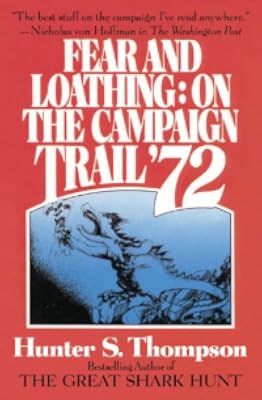
Fear and Loathing: On the Campaign Trail '72
by Hunter S. Thompson
On This Page
Description
After popularizing Gonzo journalism with Fear and Loathing in Las Vegas, Hunter S. Thompson turned his drug-fueled wit and savage insight to the race for President. With On the Campaign Trail '72, Thompson deconstructs the 1972 campaigns of George McGovern and Richard Nixon, laying bare a political process that is both seductive and utterly repellent.Tags
Recommendations


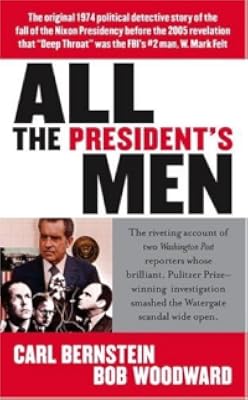

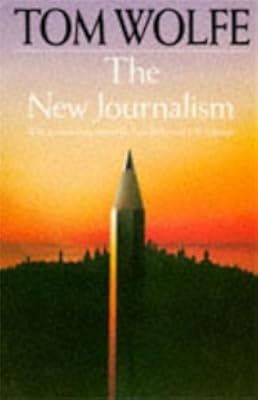
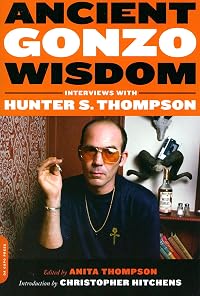




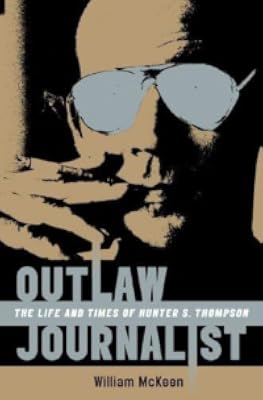
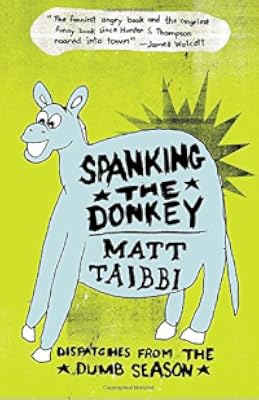
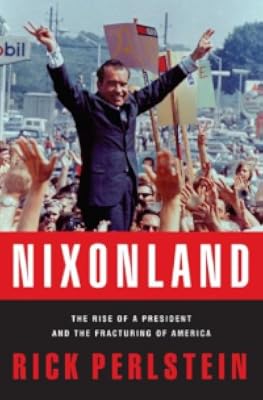


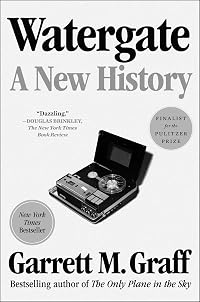




Member Recommendations
Member Reviews
There's something to reading the words of an addict who both hates and can't live without his vices. And no, this has little to do with drugs. Hunter S. Thompson's truly tragic obsession was with the American Dream, and achieving it, in this work, through politics. And it's an utter balls up. For HST, for America, and for history as well.
It has been a very very long time since I've read Thompson. Fear and Loathing in Las Vegas was my only other exposure to him and that was way back in that magically punitive year I spent in Israel (2011/2012 ish?). I loved it and loved the movie. HST's voice is inimitable; it's a distinctly American mode of expression that simultaneously carries and transcends the numerous weights of intangible baggage show more that come with being a Yankee with even a modicum of intelligence and self-awareness. It was funny, bizarre, and ultimately a tragic Dear John letter to the ideals the 60's promised but failed to deliver.
Here, Thompson goes for broke and follows then underdog Democratic presidential candidate George McGovern on his campaign trail. What Hunter illumines is a twisting and undulating journey through the psychosis of the modern American political process. And, like the earlier Las Vegas, it's a grim road of human grotesquerie and shattered dreams. It's hilarious as well. And sobering as, throughout the whole work, I kept intoning to myself that "It only gets worse". And it has.
But, small potatoes though they be, we at least, from the trainwreck of our political machine, have a fundamentally important work about our leaders and how they come to lead and how much, and how little, we matter to the entire system. Republicans, Democrats, Conservatives, Liberals, these are just shifting labels for power groups that care only for the people as a number and a percentage, to think anything else is hopelessly naive and not to the betterment of anyone in the long run.
HST was an idealist and, in his own way, a realist, depicting what he saw as the failure of an ostensibly great nation to live up to its numerous promises. And he did it all with elan. Read this if you want an insider's look at the most lachrymose and yet hopeful depiction of the American political dream. Maybe we can do better. I do know I will be voting in the next election, for what it's worth. Though, like HST, I'll probably elide sobriety before, during, and after. show less
It has been a very very long time since I've read Thompson. Fear and Loathing in Las Vegas was my only other exposure to him and that was way back in that magically punitive year I spent in Israel (2011/2012 ish?). I loved it and loved the movie. HST's voice is inimitable; it's a distinctly American mode of expression that simultaneously carries and transcends the numerous weights of intangible baggage show more that come with being a Yankee with even a modicum of intelligence and self-awareness. It was funny, bizarre, and ultimately a tragic Dear John letter to the ideals the 60's promised but failed to deliver.
Here, Thompson goes for broke and follows then underdog Democratic presidential candidate George McGovern on his campaign trail. What Hunter illumines is a twisting and undulating journey through the psychosis of the modern American political process. And, like the earlier Las Vegas, it's a grim road of human grotesquerie and shattered dreams. It's hilarious as well. And sobering as, throughout the whole work, I kept intoning to myself that "It only gets worse". And it has.
But, small potatoes though they be, we at least, from the trainwreck of our political machine, have a fundamentally important work about our leaders and how they come to lead and how much, and how little, we matter to the entire system. Republicans, Democrats, Conservatives, Liberals, these are just shifting labels for power groups that care only for the people as a number and a percentage, to think anything else is hopelessly naive and not to the betterment of anyone in the long run.
HST was an idealist and, in his own way, a realist, depicting what he saw as the failure of an ostensibly great nation to live up to its numerous promises. And he did it all with elan. Read this if you want an insider's look at the most lachrymose and yet hopeful depiction of the American political dream. Maybe we can do better. I do know I will be voting in the next election, for what it's worth. Though, like HST, I'll probably elide sobriety before, during, and after. show less
There's a certain shame in going back to books which were important in your adolescence. How did I think this was wise? How did I even think this was good? Fear and Loathing on the Campaign Trail '72 is an incredibly uneven book, written on the downslope of Thompson's meteoric career but still showing a guttering flicker of his genius. Stapled together out of a year of Rolling Stone columns, Thompson covers the '72 Nixon-McGovern campaign in his own inimitable style: a mix of drug fantasy experiences, rumor, straight-shooting opinion, and (verbatim?) transcripts of tape recordings with senior people.
Thompson picked Senator McGovern as his man early, the last decent man in Congress, a staunch opponent of the ongoing atrocity in Vietnam, show more and the catalyst of a new Youth Movement-centered democratic party to finally sink the crusty and corrupt bosses in Big Labor, ethnic machines, and imperialist warmongering before going on to crush a weak President Nixon. The early primaries are a slog, but once the convention hits, Thompson really gets into his groove. Forget the facts, nobody captures the sheer edge and obsession of a presidential race like the master of Gonzo Journalism, along with the gritty details of 1970s convention procedures and retail politics.
Of course, at the end of the day the facts do matter, and McGovern's youth coalition failed to materialize. McGovern was beaten like a dog by Nixon, losing even his own state. What's weird about this book is the way that the patterns seem to repeat in slight variation: The embattled incumbent, the decrepit party establishment, the anarchic new idealism candidate, the racist spoiler, or the way the 'thought leaders' seem to have no idea what is going on. Just change the name and the dates, and this book works in 2012 or 2016.
There's a lot of cruft in F&L '72, but when Thompson hits home, he hits home, and I'd like to preserve a few quotes here where I can find them.
"The whole framework of the presidency is getting out of hand. It's come to the point where you almost can't run unless you can cause people to salivate and whip each other on with big sticks. You almost have to be a rock star to get the kind of fever you need to survive in American politics."
"There are only two ways to make it in big-time politics today: One is to come on like a mean dinosaur, with a high-powered machine that scares the shit out of your entrenched opposition... The other is to tap the massive, frustrated energies of a mainly young, disillusioned electorate that has long since abandoned the idea that they have a *duty* to vote."
"This may be the year when we finally come face to face with ourselves; finally just lay back and say it — that we are really just a nation of 220 million used car salesmen with all the money we need to buy guns, and no qualms at all about killing anybody else in the world who tries to make us uncomfortable."
Hell. Yeah. Always more, always worse. show less
Thompson picked Senator McGovern as his man early, the last decent man in Congress, a staunch opponent of the ongoing atrocity in Vietnam, show more and the catalyst of a new Youth Movement-centered democratic party to finally sink the crusty and corrupt bosses in Big Labor, ethnic machines, and imperialist warmongering before going on to crush a weak President Nixon. The early primaries are a slog, but once the convention hits, Thompson really gets into his groove. Forget the facts, nobody captures the sheer edge and obsession of a presidential race like the master of Gonzo Journalism, along with the gritty details of 1970s convention procedures and retail politics.
Of course, at the end of the day the facts do matter, and McGovern's youth coalition failed to materialize. McGovern was beaten like a dog by Nixon, losing even his own state. What's weird about this book is the way that the patterns seem to repeat in slight variation: The embattled incumbent, the decrepit party establishment, the anarchic new idealism candidate, the racist spoiler, or the way the 'thought leaders' seem to have no idea what is going on. Just change the name and the dates, and this book works in 2012 or 2016.
There's a lot of cruft in F&L '72, but when Thompson hits home, he hits home, and I'd like to preserve a few quotes here where I can find them.
"The whole framework of the presidency is getting out of hand. It's come to the point where you almost can't run unless you can cause people to salivate and whip each other on with big sticks. You almost have to be a rock star to get the kind of fever you need to survive in American politics."
"There are only two ways to make it in big-time politics today: One is to come on like a mean dinosaur, with a high-powered machine that scares the shit out of your entrenched opposition... The other is to tap the massive, frustrated energies of a mainly young, disillusioned electorate that has long since abandoned the idea that they have a *duty* to vote."
"This may be the year when we finally come face to face with ourselves; finally just lay back and say it — that we are really just a nation of 220 million used car salesmen with all the money we need to buy guns, and no qualms at all about killing anybody else in the world who tries to make us uncomfortable."
Hell. Yeah. Always more, always worse. show less
Ahh, Hunter S., “The first journalist in Christendom to go on record comparing Nixon to Hitler?”
I enjoyed this flashback to 1972 and the election. Mostly, it's about how the Democrats lost, than how Nixon won, and the politics involved are deeply interesting. Love the comparison of a politician “on the scent of the White House” to “a bull elk in the rut”! Pure genius! I must admit, I liked the more gonzo bits about Hunter in the hotels and such, but I think if someone is looking for what feels like an honest take on an election, this book does it! It was also interesting to see so many familiar names to me - Gary Hart, Willie Brown, Ron Dellums, Ron Kovic - many before their bigger fame moments!
I had picked this up after show more watching "Where The Buffalo Roam", and was interested to know more about the Zoo plane. Strangely, that covers maybe 10 pages total toward the end. Funny, but just a drop of a story in the overall bucket of this book! Still, I'm glad I read it! And I wish Hunter were around today to see how Trump has out-Nixoned Nixon, and how the Hitler comparison is even more applicable today! Boy, he would have had a field day!
One complaint about this edition: The Ralph Steadman artwork is really small in here. So small, in fact, that I could not read most of the words in the pictures. And it's a shame, because his stuff is so damn good! If/when they do another reprint, they should give the man his due! To hell with page constraints!!! show less
I enjoyed this flashback to 1972 and the election. Mostly, it's about how the Democrats lost, than how Nixon won, and the politics involved are deeply interesting. Love the comparison of a politician “on the scent of the White House” to “a bull elk in the rut”! Pure genius! I must admit, I liked the more gonzo bits about Hunter in the hotels and such, but I think if someone is looking for what feels like an honest take on an election, this book does it! It was also interesting to see so many familiar names to me - Gary Hart, Willie Brown, Ron Dellums, Ron Kovic - many before their bigger fame moments!
I had picked this up after show more watching "Where The Buffalo Roam", and was interested to know more about the Zoo plane. Strangely, that covers maybe 10 pages total toward the end. Funny, but just a drop of a story in the overall bucket of this book! Still, I'm glad I read it! And I wish Hunter were around today to see how Trump has out-Nixoned Nixon, and how the Hitler comparison is even more applicable today! Boy, he would have had a field day!
One complaint about this edition: The Ralph Steadman artwork is really small in here. So small, in fact, that I could not read most of the words in the pictures. And it's a shame, because his stuff is so damn good! If/when they do another reprint, they should give the man his due! To hell with page constraints!!! show less
Forget Primary Colors: A Novel of Politics. Even forget All the President's Men and The Selling of the President. Especially forget the overrated Game Change: Obama and the Clintons, McCain and Palin, and the Race of a Lifetime. The greatest book on a political campaign of all time is Hunter Thompson's Fear and Loathing on the Campaign Trail.
Any author can look back at a campaign, but Thompson, despite being drunk or high or hung over for the duration of the election, predicted the future. He foresaw the Reagan Revolution of 1980. His only error was that he thought it would happen in 1976. He couldn't know that Watergate and its aftermath would set the calendar back one election cycle and four years. That man was a political genius.
I show more just wish Thompson were alive to write the definitive book on the 2008 election. Who knows? Maybe Alex Pareene or Matt Taibbi will be the new Hunter Thompson. show less
Any author can look back at a campaign, but Thompson, despite being drunk or high or hung over for the duration of the election, predicted the future. He foresaw the Reagan Revolution of 1980. His only error was that he thought it would happen in 1976. He couldn't know that Watergate and its aftermath would set the calendar back one election cycle and four years. That man was a political genius.
I show more just wish Thompson were alive to write the definitive book on the 2008 election. Who knows? Maybe Alex Pareene or Matt Taibbi will be the new Hunter Thompson. show less
I was surprised at how good this book was. There's a lot of detail about minor points of the 72 campaign that you can skim over, such as a lot of the way the McGovernites outfoxed Humphrey & Muskie at the convention, but for the most part, the book is pretty engrossing.
It's the gonzo stuff that gets the attention; Thompson isn't shy about talking about his drinking and drug use, and also isn't shy about talking about what others do. But that's not really what keeps you reading, though there are plenty of laugh-out-loud moments in the book. What I enjoyed here was how well Thompson caught the characters of some of the players, notably George McGovern himself and Joseph Mankewicz, McGovern's campaign manager. There are some great scenes show more with both of them.
It's also worth noting how much the world has changed since then. Scenes of people gong up to banks of pay phones with rolls of quarters don't mean a lot these days. The cynicism of many of the political players comes through pretty clearly, but you realize it's nothing compared to the cynicism and manipulation that goes on today.
Thompson's also really good at showing why McGovern failed so miserably; he never had much of a chance, but his serious missteps in selecting Eagleton (who is portrayed as a real hack) then putting out contradictory statements about supporting him before tossing him off the ticket really destroyed his reputation as a straight shooter. And his choice of Sargent Shriver as VP candidate was also a huge mistake.
Finally, the elephant in the living room here is Watergate. Of course not a lot was known about Nixon's crimes when Thompson was writing this, but it hangs over the whole book.
All in all, a very enjoyable read, and great journalism. show less
It's the gonzo stuff that gets the attention; Thompson isn't shy about talking about his drinking and drug use, and also isn't shy about talking about what others do. But that's not really what keeps you reading, though there are plenty of laugh-out-loud moments in the book. What I enjoyed here was how well Thompson caught the characters of some of the players, notably George McGovern himself and Joseph Mankewicz, McGovern's campaign manager. There are some great scenes show more with both of them.
It's also worth noting how much the world has changed since then. Scenes of people gong up to banks of pay phones with rolls of quarters don't mean a lot these days. The cynicism of many of the political players comes through pretty clearly, but you realize it's nothing compared to the cynicism and manipulation that goes on today.
Thompson's also really good at showing why McGovern failed so miserably; he never had much of a chance, but his serious missteps in selecting Eagleton (who is portrayed as a real hack) then putting out contradictory statements about supporting him before tossing him off the ticket really destroyed his reputation as a straight shooter. And his choice of Sargent Shriver as VP candidate was also a huge mistake.
Finally, the elephant in the living room here is Watergate. Of course not a lot was known about Nixon's crimes when Thompson was writing this, but it hangs over the whole book.
All in all, a very enjoyable read, and great journalism. show less
This is an excellent book, right in there with the best of Hunter S. Thompson’s work. However, strictly because of timing, I found it incredibly depressing. Do yourself a favor; do not read this book during an active presidential campaign. What goes around…the more things change…those who do not learn from history…etc. Ah well, let me pick myself up from my depression and go on to review the book.
This is the story of the 1972 presidential election directly from the front lines of the campaign trail – primarily from a front seat of the disaster that was the McGovern campaign. It provides excellent detail on how things came together, how they fell apart, and how the entire year was a sideshow of inexplicable events. It tells the show more story of how we pick our presidents, and how others pick them for us. (There I go down that spiral again – come on, pick yourself up.)
And, of course, it has the twisted take on reality that is the hallmark of gonzo journalism. Of course, to call it reality may be giving Thompson more credit for grasping reality than may be deserved. Okay, let’s lay it out there- Thompson is an unreliable narrator. Meaning, healthy grains of salt must be taken. Yet, in spite of this, it is also obvious there is more truth here than we wish to know.
Shy of the last two sections which are primarily Thompson’s meandering thoughts on what went right and wrong (the real low part of the book), this is a fascinating telling of the tale. If you don’t know that much about the 1972 campaign you probably want to start somewhere else. But come back to this one once you have the historical perspective. show less
This is the story of the 1972 presidential election directly from the front lines of the campaign trail – primarily from a front seat of the disaster that was the McGovern campaign. It provides excellent detail on how things came together, how they fell apart, and how the entire year was a sideshow of inexplicable events. It tells the show more story of how we pick our presidents, and how others pick them for us. (There I go down that spiral again – come on, pick yourself up.)
And, of course, it has the twisted take on reality that is the hallmark of gonzo journalism. Of course, to call it reality may be giving Thompson more credit for grasping reality than may be deserved. Okay, let’s lay it out there- Thompson is an unreliable narrator. Meaning, healthy grains of salt must be taken. Yet, in spite of this, it is also obvious there is more truth here than we wish to know.
Shy of the last two sections which are primarily Thompson’s meandering thoughts on what went right and wrong (the real low part of the book), this is a fascinating telling of the tale. If you don’t know that much about the 1972 campaign you probably want to start somewhere else. But come back to this one once you have the historical perspective. show less
I wanted to dislike Thompson, and I succeeded. That said, his chapter about trolling the Muskie campaign by giving his press pass to a drunken "boohoo" is the funniest thing I've read in years.
Why does he hate Hubert Humphrey on such a visceral level? He doesn't feel a need to explain. It was presumed to be obvious why any liberal would despise the man who did more to advance the cause of civil rights within the Democrats and in congress than any other. It wasn't merely that he hadn't advocated for an immediate halt to bombing and withdrawal from Vietnam in 1968 - it was worse than that. It was that Hubert Humphrey hadn't run a guerrilla campaign staffed by amateurs and nuts.
The protest movement His bald head was there, sticking out show more like a sore thumb, a sign in the Very High Frequency heavens that this was not the end of the age.
For the New Deal and The Great Society to be lumped together as they typically are masks the distinctions in their popular reception. LBJ's campaign tantalized voters with the prospect that the end of poverty and racism was within reach, and on Christmas 1964 claimed it was the most hopeful time since the babe lay in Bethlehem. Yet providence ordained that the great society would be stillborn, at least as a popular platform. That didn't stop Democrats from concluding that it merely hadn't gone far enough (at least, not until 1972). Daniel Patrick Moynihan, long lionized
George Whitefield and Henry Beecher were never so daft as to put their revivals up for a vote. Methodism must have seemed a permanent fixture upon the American landscape. But there are no such things in human institutions. It had entered the back end of a 300-year slow burn, and the failure of its 1972 revival should have been a sign that the flame which had consumed America in the 1860s was beginning to die out. show less
Why does he hate Hubert Humphrey on such a visceral level? He doesn't feel a need to explain. It was presumed to be obvious why any liberal would despise the man who did more to advance the cause of civil rights within the Democrats and in congress than any other. It wasn't merely that he hadn't advocated for an immediate halt to bombing and withdrawal from Vietnam in 1968 - it was worse than that. It was that Hubert Humphrey hadn't run a guerrilla campaign staffed by amateurs and nuts.
The protest movement His bald head was there, sticking out show more like a sore thumb, a sign in the Very High Frequency heavens that this was not the end of the age.
For the New Deal and The Great Society to be lumped together as they typically are masks the distinctions in their popular reception. LBJ's campaign tantalized voters with the prospect that the end of poverty and racism was within reach, and on Christmas 1964 claimed it was the most hopeful time since the babe lay in Bethlehem. Yet providence ordained that the great society would be stillborn, at least as a popular platform. That didn't stop Democrats from concluding that it merely hadn't gone far enough (at least, not until 1972). Daniel Patrick Moynihan, long lionized
George Whitefield and Henry Beecher were never so daft as to put their revivals up for a vote. Methodism must have seemed a permanent fixture upon the American landscape. But there are no such things in human institutions. It had entered the back end of a 300-year slow burn, and the failure of its 1972 revival should have been a sign that the flame which had consumed America in the 1860s was beginning to die out. show less
Members
- Recently Added By
Lists

Books for the 2020 Campaign Season
16 works; 4 members

Non-Fiction Worth Reading
1,025 works; 264 members

To read: Hunter S. Thompson
4 works; 1 member

Recommended Election Year Reads
9 works; 1 member

Best Satire
188 works; 27 members

Swinging Seventies
255 works; 18 members

Books Read in 2024
4,727 works; 128 members

Favourite Books
1,820 works; 316 members
LibraryThingers' 1001 Books You Must Read Before You Die
442 works; 29 members
Author Information

71+ Works 43,629 Members
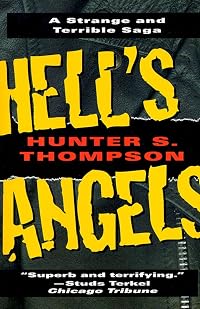
Hunter S. Thompson was born on July 18, 1937 in Louisville, Kentucky. At the age of sixteen he was inducted into the Athenaeum Literary Association and wrote for the Athenaeum Journal. During his two years in the US Air Force, Thompson wrote a sports column for The Common Courier. After he was discharged, he moved to New York to work as a copy boy show more at Time Magazine and later moved to San Juan to write for a Puerto Rican bowling magazine. He also reported to the National Observer from South America. Upon his return to the US, Thompson wrote Hell's Angels: A Strange and Terrible Saga, which became a national bestseller and Fear and Loathing in Las Vegas, which was originally published in Rolling Stone magazine. Thompson wrote for Rolling Stone, Playboy, and Esquire. Both Bill Murray and Johnny Depp portrayed Hunter in feature film movies based on his books, Where the Buffalo Roam and Fear and Loathing in Las Vegas, respectively. Hunter S. Thompson committed suicide on February 20, 2005 at his home in Colorado. (Bowker Author Biography) show less
Some Editions
Common Knowledge
- Original publication date
- 1973
- People/Characters
- George McGovern; Richard M. Nixon; Sargent Shriver; Thomas Eagleton; Spiro Agnew; Hubert Humphrey (show all 7); George Wallace
- Important places
- Florida, USA; Miami, Florida, USA
- Important events
- United States presidential election (1972)
- Epigraph
- Between the Idea and the Reality ... Falls the Shadow.
--T. S. Eliot - Dedication
- To Sandy, who endured almost a year of grim exile in Washington, D. C. while this book was being written.
--HST - First words
- Outside my front door the street is full of leaves.
- Last words
- (Click to show. Warning: May contain spoilers.)I put on my special Miami Beach nightshirt and walked several blocks down La Cienega Boulevard to the Loser's Club.
- Blurbers
- Vonnegut, Kurt
Classifications
Statistics
- Members
- 3,230
- Popularity
- 5,362
- Reviews
- 39
- Rating
- (4.04)
- Languages
- English, French, German
- Media
- Paper, Audiobook, Ebook
- ISBNs
- 16
- UPCs
- 1
- ASINs
- 25