
Ralph Steadman
Author of The Joke's Over: Bruised Memories: Gonzo, Hunter S. Thompson, and Me
About the Author
Ralph Steadman has been Gardening Correspondent for Rolling Stone for thirty years.
Image credit: copyright Ralph Steadman, photograph by Anna Steadman
Series
Works by Ralph Steadman
The Book of Jones: A Tribute to the Mercurial, Manic, and Utterly Seductive Cat (1997) 92 copies, 1 review
Little Treasury of Limericks Fair and Foul (1973) — Illustrator, some editions; Illustrator — 33 copies, 1 review
Alice in Wonderland, retold for younger readers (Tales retold for younger readers) (1960) — Illustrator — 8 copies, 1 review
Steadman at 77 4 copies
Gonzovation Trilogy, The: Extinct Boids – Nextinction – Critical Critters (The Gonzovation Trilogy) (2020) 3 copies
Visagen und Visionen 1 copy
Associated Works
Alice's Adventures in Wonderland / Through the Looking-Glass (1865) — Illustrator, some editions — 29,366 copies, 315 reviews
Fear and Loathing in Las Vegas (1971) — Illustrator, some editions; Cover artist, some editions — 15,666 copies, 211 reviews
Fear and Loathing: On the Campaign Trail '72 (1973) — Illustrator, some editions — 3,224 copies, 39 reviews
Fear and Loathing in Las Vegas and Other American Stories (Modern Library) (1996) — Illustrator, some editions — 798 copies, 8 reviews
Alice's Adventures in Wonderland / Through the Looking Glass / The Hunting of the Snark (1901) — Illustrator, some editions — 542 copies, 3 reviews
Midnite: The Story of a Wild Colonial Boy (1967) — Illustrator, some editions — 164 copies, 2 reviews
The Wasp in a Wig: A Suppressed Episode of Through the Looking Glass and What Alice Found There (1977) — Illustrator, some editions — 114 copies, 1 review
Escape Attempts: The Theory and Practice of Resistance in Everyday Life (1976) — Cover artist, some editions — 68 copies, 2 reviews
The Bush Junta: 25 Cartoonists on the Mayberry Machiavelli and the Abuse of Power (2004) — Illustrator — 57 copies
The Smoke Ring: Tobacco, Money and Multinational Politics (1984) — Cover artist, some editions — 35 copies, 1 review
All the Art That's Fit to Print (And Some That Wasn't): Inside The New York Times Op-Ed Page (2008) — Foreword — 28 copies
Rogue’s Gallery: Pirate Ballads, Sea Songs & Chanteys [sound recording] (2006) — Contributor — 10 copies
The Full and True text of a Notorious, Remarkable and Visionary Speech made by John, Viscount Amberley, Earl RUSSEL — Illustrator — 3 copies
Linus (1969) n.4 — Author — 1 copy
Rolling Stone Australia #639 — Illustrator, some editions — 1 copy
Tagged
Common Knowledge
- Legal name
- Steadman, Ralph Idris
- Birthdate
- 1936-05-15
- Gender
- male
- Education
- Ysgol Emrys Ap Iwan (high school)
East Ham Technical College
London College of Printing and Graphic Arts - Occupations
- cartoonist
printmaker
illustrator - Awards and honors
- Francis Williams Book Illustration Award (Alice in Wonderland)
American Society of Illustrators' Certificate of Merit
W H Smith Illustration Award (I, Leonardo)
Dutch Silver Paintbrush Award (Inspector Mouse)
Italian Critica in Erba Prize (That's My Dad)
BBC Design Award (show all 8)
Black Humour Award
American Institute of Graphic Arts Illustrator of the Year (1979) - Nationality
- UK
- Birthplace
- Wallasey, Cheshire, England, UK
- Places of residence
- Wallasey, Cheshire, England (birth)
Tywyn, Meirionnydd, Wales - Associated Place (for map)
- UK
Members
Reviews
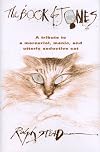
What a gorgeous book! Actually, it made me cry. The author and artist drew fantastic ink drawings of a cat named Jones who lived at the mountain home of author Hunter S. Thompson. This cat was master of his own fate and owed no one anything. Years ago, I had a feral cat named Lord Bravery who was just like Jones. Therefore I loved reading about this cat's interactions, however brief, with others. For the beautiful artwork and the author's appreciation of a cat's personality, I say that this show more is a book not to be missed by those who love individuals of the feline persuasion. show less
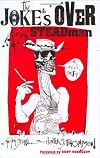
Ralph Steadman and Hunter Thompson were kindred spirits. A match made at the Kentucky Derby in 1970.
This is Steadman’s memoir — a running account, almost like a diary, of his relationship with Thompson, beginning when Steadman collaborated with Thompson on The Kentucky Derby is Decadent and Depraved. Steadman’s eccentric and dire artwork was the perfect complement to Thompson’s no-holds-barred writing style, and the two seemed to share similar attitudes toward the rich, decadent, and show more corrupt.
Steadman includes his own reflections on the assignments and other times the two got together for whatever reason or lack of reason, along with letters and faxes the two exchanged. Thompson seemed to be freely in his element around Steadman. The two of them together composed a combustible mobile carnival of weirdness.
Thompson also let Steadman have it with both barrels (not literally), and Steadman gave back as best he could. He understood Thompson like few people did. He took the barrage of insults, slights, and even degradations, and he saw where it was all coming from. He sees Thompson as an intense, pulsing mass of flawed, damaged goods wrapped around a sense of justice and a sense of outrage where it was warranted.
I don’t think it’s even possible to sugar-coat Thompson, and Steadman doesn’t try. Thompson treated him like crap much, maybe most of the time. He ridiculed him, he accused him of disloyalty, he competed for credit and money in their collaborations, . . . .
But Thompson treated most people like crap, especially himself. His writing though — no one could flow such an extreme life into prose that communicated, that called us all to outrage over a corrupt world. We miss that voice today.
One thing I hadn’t known was how bound Thompson’s suicide was to the Bush re-election. Steadman doesn’t come right out and say that Thompson ended his life because of it, but it’s pretty clear it was one of the last straws. The title of the book, The Joke’s Over, is something that Thompson took to saying as he saw the political world degrading into uncharted depths — it just wasn’t funny anymore, and if it wasn’t even funny, what was it?
This is a great chance, if you’re interested in Thompson, to get the perspective of someone with a unique understanding and experience of him. And it’s also a great chance to understand Steadman. I hadn’t really. Now I have a much better picture of where those drawings are coming from, why they are so dire and crazed — a reflection of the world he experienced with Thompson.
As writing goes, the book runs a little long and maybe in need of editing. But then “extreme” is the name of the game.
Steadman of course is still around and active as an artist. He and Thompson were kindred souls, but Thompson was playing a higher stakes game. No slight to Steadman — he was in it heart and soul. But it’s as if Steadman was playing a kind of hard core bumper cars to Thompson’s lifelong demolition derby. show less
This is Steadman’s memoir — a running account, almost like a diary, of his relationship with Thompson, beginning when Steadman collaborated with Thompson on The Kentucky Derby is Decadent and Depraved. Steadman’s eccentric and dire artwork was the perfect complement to Thompson’s no-holds-barred writing style, and the two seemed to share similar attitudes toward the rich, decadent, and show more corrupt.
Steadman includes his own reflections on the assignments and other times the two got together for whatever reason or lack of reason, along with letters and faxes the two exchanged. Thompson seemed to be freely in his element around Steadman. The two of them together composed a combustible mobile carnival of weirdness.
Thompson also let Steadman have it with both barrels (not literally), and Steadman gave back as best he could. He understood Thompson like few people did. He took the barrage of insults, slights, and even degradations, and he saw where it was all coming from. He sees Thompson as an intense, pulsing mass of flawed, damaged goods wrapped around a sense of justice and a sense of outrage where it was warranted.
I don’t think it’s even possible to sugar-coat Thompson, and Steadman doesn’t try. Thompson treated him like crap much, maybe most of the time. He ridiculed him, he accused him of disloyalty, he competed for credit and money in their collaborations, . . . .
But Thompson treated most people like crap, especially himself. His writing though — no one could flow such an extreme life into prose that communicated, that called us all to outrage over a corrupt world. We miss that voice today.
One thing I hadn’t known was how bound Thompson’s suicide was to the Bush re-election. Steadman doesn’t come right out and say that Thompson ended his life because of it, but it’s pretty clear it was one of the last straws. The title of the book, The Joke’s Over, is something that Thompson took to saying as he saw the political world degrading into uncharted depths — it just wasn’t funny anymore, and if it wasn’t even funny, what was it?
This is a great chance, if you’re interested in Thompson, to get the perspective of someone with a unique understanding and experience of him. And it’s also a great chance to understand Steadman. I hadn’t really. Now I have a much better picture of where those drawings are coming from, why they are so dire and crazed — a reflection of the world he experienced with Thompson.
As writing goes, the book runs a little long and maybe in need of editing. But then “extreme” is the name of the game.
Steadman of course is still around and active as an artist. He and Thompson were kindred souls, but Thompson was playing a higher stakes game. No slight to Steadman — he was in it heart and soul. But it’s as if Steadman was playing a kind of hard core bumper cars to Thompson’s lifelong demolition derby. show less
In the world of fiction there exists a plethora of dynamic duos — Batman and Robin, Sherlock Holmes and Watson, Timmy and Lassie, but in the more narrowly focused world of quasi-real fact-bending narrative, there stands one couple towering over the masses, Hunter S. Thompson and Ralph Steadman. Originally just a marketing moment for one artist to help illustrate an article for a crazed, rebellious writer on the upswing, what sprung from the meeting of these two wild minds left an show more impression on the American literary landscape for generations to come. Millions have already turned the legendary pages of Mr. Thompson, while others have memorized the famous drug-catalog listing monologue from the opening of the film, Fear and Loathing in Las Vegas, based on Thompson’s most famous book of the same name. Yet, as with many famous duos, we are all used to hearing from the front man -Batman, Holmes, Timmy (Lassie was really never the big conversationalist), but now we get to see of those integral sidekicks step out into his own right and tell the world how things looked from his perspective, standing off to the right and half in the shadow of a highly intelligent, self-medicated madman.
The Joke’s Over is a vicious eulogy to a carnivorous collaboration of passion, friendship and art. Dangerous at best, suicidal at worst. Getting connected with Thompson, Steadman found himself plugged into a self-propelled generator of creative energy, one that would steamroll over most other people, but he held on, gnashed his teeth in and went for the ride. The partnership shuttled back and forth between being a connected pair of best friends attempting to take over the world to a pair of artistic geniuses desperately trying not to tear each other’s throats out. The ride through their friendship is terrifying, but the results they found are awe-inspiring.
When I first picked up the book I thought I was only in for more stories about Thompson’s eccentricities and crazy drug binges, albeit from a closer perspective, but what I got was only partially that. The unexpected side of the story is hearing about Thompson’s rage, paranoia and continued ability to try and destroy all the close relationships in his life. Being best friends with him is detailed out like a full-time job that only provides partial benefits, but when that one week of paid-vacation comes each year, it feels that much better due to the work you put in to get it. Steadman lists out numerous occasions when Thompson screamed at him, in person or via phone, fax and smoke signals, decrying proof he recently discovered showing that Steadman was only riding his coattails and subconsciously attempting to destroy the power of his literary ambrosia. But before you can feel our rage rising, decrying the treatment of someone who seems to be a soft-spoken, great friend, Steadman would share other messages, like olive branches across the deep, blue ocean that separated them:
[from Thompson to Steadman]
“…Keep in mind that I am always both ahead and behind you in the same moment (an eerie Truth that we both understood in our blood and which you have, in fact, explained more than once, in print…)”
As much as Steadman battled to understand and accept the tumultuous waves of their friendship, it seemed that Thompson himself struggled constantly not to burn the bridge that kept him connected to the real world and real people.
To be fair, even with the letters and reprinted faxes from Thompson, this is all from Steadman’s perspective and it is his autobiography about those infamous years. At times he paints himself the humble hero, while others creates a much sadder picture of an artist beat down and abused by his muse. Far from the wordsmith that Thompson was, a fact Thompson constantly reminded him of, the book is enjoyable, but suffers from subconscious reminders of a more powerful writer. For true worshippers of Steadman’s artwork, the book does raise its own value by detailing numerous other places beyond Thompson’s books where you can find his maddening and wild imagery (personally, I am looking into buying Steadman’s version of Alice in Wonderland. Now that should be a real trip down the rabbit hole.)
My recommendation, it's an interesting look behind the scenes for the devoted followers of intangible excellence that sprang from Thompson and Steadman. show less
The Joke’s Over is a vicious eulogy to a carnivorous collaboration of passion, friendship and art. Dangerous at best, suicidal at worst. Getting connected with Thompson, Steadman found himself plugged into a self-propelled generator of creative energy, one that would steamroll over most other people, but he held on, gnashed his teeth in and went for the ride. The partnership shuttled back and forth between being a connected pair of best friends attempting to take over the world to a pair of artistic geniuses desperately trying not to tear each other’s throats out. The ride through their friendship is terrifying, but the results they found are awe-inspiring.
When I first picked up the book I thought I was only in for more stories about Thompson’s eccentricities and crazy drug binges, albeit from a closer perspective, but what I got was only partially that. The unexpected side of the story is hearing about Thompson’s rage, paranoia and continued ability to try and destroy all the close relationships in his life. Being best friends with him is detailed out like a full-time job that only provides partial benefits, but when that one week of paid-vacation comes each year, it feels that much better due to the work you put in to get it. Steadman lists out numerous occasions when Thompson screamed at him, in person or via phone, fax and smoke signals, decrying proof he recently discovered showing that Steadman was only riding his coattails and subconsciously attempting to destroy the power of his literary ambrosia. But before you can feel our rage rising, decrying the treatment of someone who seems to be a soft-spoken, great friend, Steadman would share other messages, like olive branches across the deep, blue ocean that separated them:
[from Thompson to Steadman]
“…Keep in mind that I am always both ahead and behind you in the same moment (an eerie Truth that we both understood in our blood and which you have, in fact, explained more than once, in print…)”
As much as Steadman battled to understand and accept the tumultuous waves of their friendship, it seemed that Thompson himself struggled constantly not to burn the bridge that kept him connected to the real world and real people.
To be fair, even with the letters and reprinted faxes from Thompson, this is all from Steadman’s perspective and it is his autobiography about those infamous years. At times he paints himself the humble hero, while others creates a much sadder picture of an artist beat down and abused by his muse. Far from the wordsmith that Thompson was, a fact Thompson constantly reminded him of, the book is enjoyable, but suffers from subconscious reminders of a more powerful writer. For true worshippers of Steadman’s artwork, the book does raise its own value by detailing numerous other places beyond Thompson’s books where you can find his maddening and wild imagery (personally, I am looking into buying Steadman’s version of Alice in Wonderland. Now that should be a real trip down the rabbit hole.)
My recommendation, it's an interesting look behind the scenes for the devoted followers of intangible excellence that sprang from Thompson and Steadman. show less

I've long been fascinated by Hunter S. Thompson, but Ralph Steadman's drawings have never held me in similar thrall, although one cannot deny their originality nor the artistry. The same cannot be said for Thompson himself, who was obviously inspired and captivated by his collaborator's grotesque illustrations. Steadman's writing is not up to the same standard, and HST (partly from a strongly developed sense of territoriality, partly as vicious criticism) never lost the opportunity to tell show more him so.
This memoir does, however, shed light on a period in history that seems almost fantastic now, even after one has discounted the distortions of substances and nostalgia. Drinking and smoking everywhere, slipping over borders and past security, securing vast sums for extremely dubious assignments...
I would rather read one of HST's books, but have a drink with Steadman, no question. I wouldn't mind being in the same room with Thompson when things got weird (at a safe distance), but from the way he treats Steadman (allegedly one of his dearest friends) and others around him, it's hard to entertain any warmer feeling than respect for him. There was brilliance and hilarity there, but venality, cruelty and solipsism were always in the wings by the sounds of it. That's the business of the eternal soul of HST, Steadman and those who knew them to worry about - better for us to enjoy the marvellous and terrible bouts of debauchery, and reflect on the phenomenon that is Gonzo, what it did and the much more it could have done. show less
This memoir does, however, shed light on a period in history that seems almost fantastic now, even after one has discounted the distortions of substances and nostalgia. Drinking and smoking everywhere, slipping over borders and past security, securing vast sums for extremely dubious assignments...
I would rather read one of HST's books, but have a drink with Steadman, no question. I wouldn't mind being in the same room with Thompson when things got weird (at a safe distance), but from the way he treats Steadman (allegedly one of his dearest friends) and others around him, it's hard to entertain any warmer feeling than respect for him. There was brilliance and hilarity there, but venality, cruelty and solipsism were always in the wings by the sounds of it. That's the business of the eternal soul of HST, Steadman and those who knew them to worry about - better for us to enjoy the marvellous and terrible bouts of debauchery, and reflect on the phenomenon that is Gonzo, what it did and the much more it could have done. show less
Lists
Forced Exposure (1)
Awards


You May Also Like


Associated Authors
Statistics
- Works
- 56
- Also by
- 37
- Members
- 2,546
- Popularity
- #10,090
- Rating
- 4.0
- Reviews
- 25
- ISBNs
- 150
- Languages
- 6
- Favorited
- 10