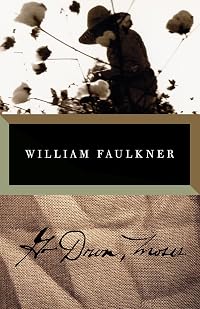
Go Down, Moses
by William Faulkner
On This Page
Description
Faulkner examines the changing relationship of black to white and of man to the land, and weaves a complex work that is rich in understanding of the human condition.Tags
Recommendations












Member Reviews
I would not presume to “review” William Faulkner's Go Down, Moses. What follow are merely impressions that remain upon having read the book, which some professional reviewers have deemed the best book that Faulkner wrote. I myself found it challenging to read for two reasons, only one of which relates to the author's writing style. More on this thought in a bit.
First, though, I hesitate to describe Go Down, Moses as a novel. As is well known, the chapters in the book originally appeared as separate short stories, all related more or less by theme and generally by characters. So is the book a novel or an anthology? Not that the definition is particularly significant, but it does affect a reader's perception of the book's show more structure.
Now then as to my reasons for describing the book as “challenging” to read, the first is simply my personal reaction to the characters and their culture. Faulkner does a marvelous job of molding readers' perceptions of a culture in which a single drop of Black blood makes a person, regardless of appearance or erudition a [insert what we now call the “n-word” here]. The reader follows two lines of descent from the same white male progenitor, but that progenitor begins those lines of descendants through two different females, one Black and the other white. The descendants know their relationship to one another, but “blood” determines which is superior.
However, Faulkner is not through muddying the waters, for another consideration complicates relationships. The otherwise superior white line descends through a maternal line while the Black traces its ancestry through its paternity—and paternity is far more significant than maternity. The characters, to say the least, are conflicted, and I find both causes, race and paternity, to be equally disgusting to 21st century sensibilities.
Also repulsive is the mark by which a youth is felt to become an adult in Faulkner's portrayal of the culture. The child must kill. And not just rabbits and squirrels, which are only practice for a young male human. He must slaughter a deer, and his passage into adulthood noted by having his face marked with the hot blood of the animal. Fortunately, in a chronologically later story, we do see that the deep woods and its creatures are retreating ever farther from human civilization and are less readily accessible to ritual sacrifice (though the retreat of the wilderness certainly has negative connotations as well).
Faulkner has tackled three large themes here: culturally-induced effects of miscegenation, perceived superiority of paternity over maternity, and change wrought by time. These themes are skillfully developed, yet the nature of the characters and the repulsive nature of what intelligent people now view as unacceptable racial and sexual prejudice and the ritual slaughter of wild creatures make the stories hard to read; one feels sullied by having been in the presence of such people—even vicariously.
My second reason for finding Go Down, Moses challenging to read is Faulkner's tendency to use what appears to be a sort of stream-of-consciousness writing style, which is to say that some of his word constructions defy definition as sentences and go on interminably. For example, pages 271 and 272 contain a word string of over 600 words without encountering a single period or paragraph break. After reading this morass three times, I still cannot condense it into anything meaningful. Another word string on pages 306 and 307 is almost as bad. Thankfully, not every story/chapter contains such obtuse verbiage, both cited examples occurring in “The Bear.”
Go Down, Moses paints a gory picture of the culture that characterized the U.S. “South” from the 19th well into the 20th century. The reader comes away with a pretty clear understanding of some revolting aspects of that culture, so in that sense the book is a total success. Still, just reading of such an environment leaves one feeling the need of a cleansing shower. I'll end these ruminations with the admonition that those who wish to consider themselves decently well read in American literature should read the book but with the warning that the act of reading may prove challenging and uncomfortable. (And I do wish that publishers would insert a family tree in the book so that we could keep the characters straight.) show less
First, though, I hesitate to describe Go Down, Moses as a novel. As is well known, the chapters in the book originally appeared as separate short stories, all related more or less by theme and generally by characters. So is the book a novel or an anthology? Not that the definition is particularly significant, but it does affect a reader's perception of the book's show more structure.
Now then as to my reasons for describing the book as “challenging” to read, the first is simply my personal reaction to the characters and their culture. Faulkner does a marvelous job of molding readers' perceptions of a culture in which a single drop of Black blood makes a person, regardless of appearance or erudition a [insert what we now call the “n-word” here]. The reader follows two lines of descent from the same white male progenitor, but that progenitor begins those lines of descendants through two different females, one Black and the other white. The descendants know their relationship to one another, but “blood” determines which is superior.
However, Faulkner is not through muddying the waters, for another consideration complicates relationships. The otherwise superior white line descends through a maternal line while the Black traces its ancestry through its paternity—and paternity is far more significant than maternity. The characters, to say the least, are conflicted, and I find both causes, race and paternity, to be equally disgusting to 21st century sensibilities.
Also repulsive is the mark by which a youth is felt to become an adult in Faulkner's portrayal of the culture. The child must kill. And not just rabbits and squirrels, which are only practice for a young male human. He must slaughter a deer, and his passage into adulthood noted by having his face marked with the hot blood of the animal. Fortunately, in a chronologically later story, we do see that the deep woods and its creatures are retreating ever farther from human civilization and are less readily accessible to ritual sacrifice (though the retreat of the wilderness certainly has negative connotations as well).
Faulkner has tackled three large themes here: culturally-induced effects of miscegenation, perceived superiority of paternity over maternity, and change wrought by time. These themes are skillfully developed, yet the nature of the characters and the repulsive nature of what intelligent people now view as unacceptable racial and sexual prejudice and the ritual slaughter of wild creatures make the stories hard to read; one feels sullied by having been in the presence of such people—even vicariously.
My second reason for finding Go Down, Moses challenging to read is Faulkner's tendency to use what appears to be a sort of stream-of-consciousness writing style, which is to say that some of his word constructions defy definition as sentences and go on interminably. For example, pages 271 and 272 contain a word string of over 600 words without encountering a single period or paragraph break. After reading this morass three times, I still cannot condense it into anything meaningful. Another word string on pages 306 and 307 is almost as bad. Thankfully, not every story/chapter contains such obtuse verbiage, both cited examples occurring in “The Bear.”
Go Down, Moses paints a gory picture of the culture that characterized the U.S. “South” from the 19th well into the 20th century. The reader comes away with a pretty clear understanding of some revolting aspects of that culture, so in that sense the book is a total success. Still, just reading of such an environment leaves one feeling the need of a cleansing shower. I'll end these ruminations with the admonition that those who wish to consider themselves decently well read in American literature should read the book but with the warning that the act of reading may prove challenging and uncomfortable. (And I do wish that publishers would insert a family tree in the book so that we could keep the characters straight.) show less
Set in the Yoknapatowpha County, these seven stories mainly deal with the McCaslin family. I like how in so far every Faulkner novel I've read he focuses on an entire family, each fucked up in their own special way. The scandal in the McCaslins comes from Lucius Quintus Carothers McCaslin (the patriarch) who has illegitimate interracial children with his slaves and then knocks up his daughter. As a result, this novel deals heavily with questions of blood and race. Though Lucas is a more direct descendent of Lucius than the Edmonds he is kept down because of his race. Then there's Uncle Ike who should have inherited the plantation but gives it up to his cousin. Most of the stories focus on Isaac, especially "The Bear," which is the real show more heart and soul of this novel. Isaac searches to learn humility and pride through hunting, but learns a lot more. He is against the belief that man owns the land- 'on that instant when Ikkemotubbe realized that he could sell the land to Grandfather, it ceased to have been his." The white man's false notion of ownership causes nothing but problems and is kind of like a curse ie. how man ruined the seemingly perfect South with slavery and environmental destruction. And this is why Faulkner is so great- he really picks up on the paradox of this beautiful but cursed land. It's more than just some kind of supernatural curse though, but one that is a direct result of people's greedy and problematic behaviour. When will the curse every be lifted? Of course this curse transcends the South, which is why I like the title. It comes from the last story, when Mollie's grandson is killed and she laments that he was sold by the Pharaoh and is dead in Egypt. Connecting the Africans in America with the Jews in Egypt shows how far back in the past these issues of power and oppression have been affecting all parts of the Earth.
I like the use of the stories to give multiple perspectives from multiple points of time. It started off a little confusing because Faulkner just jumps into it, but once you start to know the McCaslins it clears up! I liked jumping through the generations of the family because you really feel how the past influences the future. The best two stories were the longer ones: "The Fire and the Hearth" because Lucas is a great character and kind of a badass and obviously "The Bear" for so many reasons. Much more than just a hunting story, thank God, though old Ben is a great opponent. Faulkner's writing here is just as great as usual- oh those lovely, hypnotic, winding sentences! show less
I like the use of the stories to give multiple perspectives from multiple points of time. It started off a little confusing because Faulkner just jumps into it, but once you start to know the McCaslins it clears up! I liked jumping through the generations of the family because you really feel how the past influences the future. The best two stories were the longer ones: "The Fire and the Hearth" because Lucas is a great character and kind of a badass and obviously "The Bear" for so many reasons. Much more than just a hunting story, thank God, though old Ben is a great opponent. Faulkner's writing here is just as great as usual- oh those lovely, hypnotic, winding sentences! show less
Faulkner's novels are designed to be read twice. You don't know what you're reading early on. I mean, you usually think you do (there are exceptions!), but it's not until the end that the significance of the beginning, and everything it was doing, comes into place. I'm not yet reading his novels twice. 🙂 But I've been tempted a few times, and this one really left me feeling that need to.
The first surprise for me was that it's not really a novel. This is a collection of linked short stories. One, the longest, I've heard talked about a lot. This is The Bear, one of Faulkner's better known short stories. It's in here and it's the longest short story I have ever read. Not because of the page count, or the pace, but because it keeps show more switching what it's doing. It's a novel-long - a coming-of-age story becomes a kind of backhanded naturalist writing as our character slowly becomes one of the last truly expert woodsmen in the Mississippi delta. But this story becomes a ranting reflection on the south and race (not a comfortable reflection, especially from today's perspective). And this becomes a reflection of the disappearing woods and the vastly expanding human economic footprint - farming, logging etc.
But I didn't know that. What I knew coming in was that this was the story of a mixed-race black man trying to maintain his finances and dignity in this very racist south. This is Lucas Buchannon, the last male descendent of the 1st white farm owner of the farm he always lived on, and always worked on, but doesn't own. The farm inheritance went through the white lineage, through the wives' descendants. "through the distaff", as Faulkner, or his narrator, puts it. Lucas holds a literary weight our woodsman (named Ike McCaslin, also mixed race, but considered white) cannot hold. But his literary purpose is not simply himself, and maybe not himself at all. Faulkner is doing a lot with his own sort of pully system.
This was a rough read. Many times I felt completely lost. Who was talking? What were they saying? Do I need to care? Will they ever find a period? Ever? What does it mean if you start your paragraph with a lower-case letter, and mid-sentence? Especially if I didn't understand the previous paragraph.
But cumulatively this book is truly something. It worked on this reader. I would like to reread it.
2025
https://www.librarything.com/topic/372264#8899458 show less
The first surprise for me was that it's not really a novel. This is a collection of linked short stories. One, the longest, I've heard talked about a lot. This is The Bear, one of Faulkner's better known short stories. It's in here and it's the longest short story I have ever read. Not because of the page count, or the pace, but because it keeps show more switching what it's doing. It's a novel-long - a coming-of-age story becomes a kind of backhanded naturalist writing as our character slowly becomes one of the last truly expert woodsmen in the Mississippi delta. But this story becomes a ranting reflection on the south and race (not a comfortable reflection, especially from today's perspective). And this becomes a reflection of the disappearing woods and the vastly expanding human economic footprint - farming, logging etc.
But I didn't know that. What I knew coming in was that this was the story of a mixed-race black man trying to maintain his finances and dignity in this very racist south. This is Lucas Buchannon, the last male descendent of the 1st white farm owner of the farm he always lived on, and always worked on, but doesn't own. The farm inheritance went through the white lineage, through the wives' descendants. "through the distaff", as Faulkner, or his narrator, puts it. Lucas holds a literary weight our woodsman (named Ike McCaslin, also mixed race, but considered white) cannot hold. But his literary purpose is not simply himself, and maybe not himself at all. Faulkner is doing a lot with his own sort of pully system.
This was a rough read. Many times I felt completely lost. Who was talking? What were they saying? Do I need to care? Will they ever find a period? Ever? What does it mean if you start your paragraph with a lower-case letter, and mid-sentence? Especially if I didn't understand the previous paragraph.
But cumulatively this book is truly something. It worked on this reader. I would like to reread it.
2025
https://www.librarything.com/topic/372264#8899458 show less
When I'm away from Faulkner's works, I always think of them as "hard", "confusing", "over-the-top". You know, that sort of thing that only intellectuals read and pretend to understand and enjoy. But when I start to read them...
The first chapter is mysterious and deliberately obscure. The reader is placed in the middle of some strange goings-on and must try to decipher both the characters and their convoluted family relationshiips, and the elusive plotline.
But keep reading. No matter how much you feel like you're lost in some maze, or hurtling down the hill acquiring more and more mass like that mythical snowball from your youth, just keep on reading. The prose, which seems at first glance to be so complex and without identifiable form show more as to be impenetrable, will soon charm you and draw you into ints web; you'll forget all about grammar constructs as you tumble over ideas, people, and events.
This is a sad, sad story of men's pride, women's degradation, the corrupting abuse of power, and the equally corrupting influence of having no power when one man can be considered to "own" another. It's a moving exposition of the American South, worth reading either to better understand both black and white culture in that South, or simply to be carried off into another world by some astounding prose. show less
The first chapter is mysterious and deliberately obscure. The reader is placed in the middle of some strange goings-on and must try to decipher both the characters and their convoluted family relationshiips, and the elusive plotline.
But keep reading. No matter how much you feel like you're lost in some maze, or hurtling down the hill acquiring more and more mass like that mythical snowball from your youth, just keep on reading. The prose, which seems at first glance to be so complex and without identifiable form show more as to be impenetrable, will soon charm you and draw you into ints web; you'll forget all about grammar constructs as you tumble over ideas, people, and events.
This is a sad, sad story of men's pride, women's degradation, the corrupting abuse of power, and the equally corrupting influence of having no power when one man can be considered to "own" another. It's a moving exposition of the American South, worth reading either to better understand both black and white culture in that South, or simply to be carried off into another world by some astounding prose. show less
William Faulkner's Go Down, Moses has a mind-blowing centerpiece in "The Bear", however the rest of the short stories fall short of this standard. "The Bear" ranks with the top of Faulkner's writing (As I Lay Dying and The Sound And The Fury) but the other stories show that this was an author who more or less got lucky rather than set out to distinctly create nothing but masterpieces. This is okay- after all, it worked for Shakespeare, but even he wrote a "Merry Wives Of Windsor", even he wrote "The Two Gentlemen of Verona."
I'm sort of surprised how much I enjoyed this book. I expected it to be a struggle, like Little Women was -- which I gave up on and decided I honestly just don't care how those women turned out. This one I enjoyed.
I'm listing it as "History" because I think recently we've been trying to rewrite history ... "It wasn't THAT BAD! People are making more of the Civil War and slavery than it was!" ... and this book almost beats you about the face with the true reality of the time. Part of me wants to keep it for that reason. I can also foresee books like these -- that liberally use the "N-word" -- being collected and burned in order to better control what we remember about the past.
I think I will keep it.
Adrianne
I'm listing it as "History" because I think recently we've been trying to rewrite history ... "It wasn't THAT BAD! People are making more of the Civil War and slavery than it was!" ... and this book almost beats you about the face with the true reality of the time. Part of me wants to keep it for that reason. I can also foresee books like these -- that liberally use the "N-word" -- being collected and burned in order to better control what we remember about the past.
I think I will keep it.
Adrianne
Some beautiful and truly touching stories, and certainly some of Faulkner's best. Oddly enough, The Bear, which is often mentioned as Faulkner's best story, fell dead and completely flat after Ike's beautifully described encounter with Old Ben and the monstrous dog Lion, when the story becomes a tedious (and probably academically interesting) chronical of the family's next few decades, which moves more or less like notations in a wage book. This is historically intriguing, since apparently the ledger was copied almost word for word from an actually post-Civil War document. Still, THE BEAR is probably the biggest let down I've ever read, since the first 20 pages are among the best I've read anywhere. Thematically, the story's conclusion show more makes sense, since it deals with greed, land, bloodlines and family, but it just did not have the narrative thrust of the earlier sections.
Faulkner at his best makes you feel and understand and entire world, working in the background. His greatest stories grab you by the throat and never let go.
Faulkner at his worst becomes a sort of confusing historical chronicler, devoid of emotion or even tangible scenes.
Still,The Fire and the Hearth is brilliant (10/10), Pantaloon in Black is a truly weirdo depiction of mythbuilding and racial oppression (9/10), and the other pieces are all great in their own ways (WAS is a hilarious and disturbing story of race, love and a poker game).
Greatly recommended. show less
Faulkner at his best makes you feel and understand and entire world, working in the background. His greatest stories grab you by the throat and never let go.
Faulkner at his worst becomes a sort of confusing historical chronicler, devoid of emotion or even tangible scenes.
Still,The Fire and the Hearth is brilliant (10/10), Pantaloon in Black is a truly weirdo depiction of mythbuilding and racial oppression (9/10), and the other pieces are all great in their own ways (WAS is a hilarious and disturbing story of race, love and a poker game).
Greatly recommended. show less
Members
- Recently Added By
Lists

1001 Books You Must Read Before You Die
1,448 works; 1,134 members

Southern Fiction
212 works; 52 members

Recommend the 20 best books you've read in the last five years
2,168 works; 606 members

20th Century Literature
1,161 works; 55 members
Favourite Books
1,820 works; 316 members

Books Read in 2025
4,128 works; 98 members
Author Information

466+ Works 99,470 Members
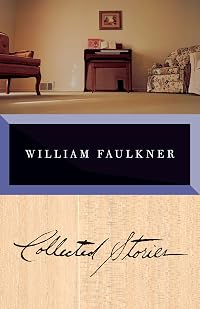
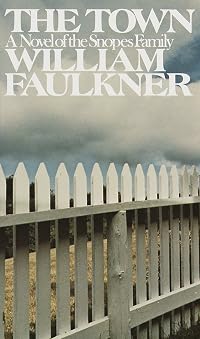
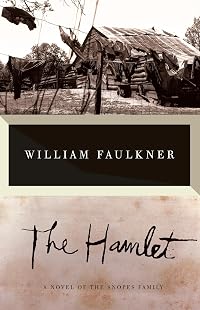
Born in an old Mississippi family, William Faulkner made his home in Oxford, seat of the University of Mississippi. After the fifth grade he went to school only off and on-lived, read, and wrote much as he pleased. In 1918, refusing to enlist with the "Yankees," he joined the Canadian Air Force, and was transferred to the British Royal Air Force. show more After the war he studied a little at the University, did house painting, worked as a night superintendent at a power plant, went to New Orleans and became a friend of Sherwood Anderson, then to Europe and back home to Oxford. By this time he had written two novels. The Sound and the Fury followed in 1929. Financial success came with Sanctuary in 1931, which he assisted in filming. Faulkner 's novels are intense in their character portrayals of disintegrating Southern aristocrats, poor whites, and African Americans. A complex stream-of-consciousness rhetoric often involves Faulkner in lengthy sentences of anguished power. Most of his tales are set in the mythical Yoknapatawpha County, Mississippi, and are characterized by the use of many recurring characters from families of different social levels spanning more than a century. His best subjects are the old, dying South and the newer materialistic South. As I Lay Dying (1930), is a grotesquely tragicomic story about a family of poor southern whites. With Absalom, Absalom! (1936); the difficult parts of his famous short novel "The Bear" (published in Go Down, Moses, 1942); and the allegorical A Fable (1954), a non-Yoknapatawpha novel set in France during World War I; Faulkner returned to an innovative and difficult style that most readers have trouble with. Yet, interspersed among such works are collections of easily read stories originally published in popular magazines. There seems to be a growing sentiment among critics that the Snopes trilogy-The Hamlet (1940), The Town (1957), and The Mansion (1959)-for the most part an example of Faulkner's "moderate" style, could well be among his most important works. Faulkner was awarded the 1949 Nobel Prize for literature "for his powerful and artistically independent contribution to the new American novel," but it would appear now that he also deserved to win that honor for his contribution to world literature. When reporting his death, the Boston Globe quoted Faulkner's having once told an interviewer: "Since man is mortal, the only immortality for him is to leave something behind him that is immortal since it will always move. That is the artist's way of scribbling "Kilroy was here" on the wall of the final and irrevocable oblivion through which he must some day pass." In addition to the Nobel Prize, Faulkner received the Howells Medal of the American Academy of Arts and Letters in 1950, and in 1951 he was given the National Book Award for his Collected Stories Collected Stories. For his novel A Fable he received the National Book Award for the second time, as well as the Pulitzer Prize in 1955. The Reivers (1962) was awarded the Pulitzer Prize in 1963. In 1957 and 1958, he was the University of Virginia's first writer-in-residence, and in January 1959 he accepted an appointment as consultant on contemporary literature to the Alderman Library of that university. Although Faulkner was not without honors in his lifetime and has received world recognition since then, it is surprising to learn that, when Malcolm Cowley edited The Portable Faulkner in 1946, he found that almost all of Faulkner's books were out of print. By arranging selections from the works to form a continuous chronicle, Cowley deserves much of the credit for making readers aware of the way in which Faulkner was creating a fictive world on a scale grander than that of any novelist since Balzac. William Faulkner died in Oxford, Mississippi, in 1962. (Bowker Author Biography) show less
Awards and Honors
Series
Belongs to Publisher Series
Work Relationships
Is contained in
Contains
Has as a study
Has as a student's study guide
Common Knowledge
- Canonical title
- Go Down, Moses
- Original title
- Go Down, Moses
- Original publication date
- 1942
- People/Characters
- Isaac McCaslin ('Uncle Ike'); Sam Fathers; Lucas Beauchamp; Carothers McCaslin Edmonds ('Cass'); Major DeSpain; Boon Hogganbeck (show all 14); Thucydides McCaslin ('Uncle Buck'); Amodeus McCaslin ('Uncle Buddy'); Zachary Edmonds; Mollie Beauchamp; Tennie Beauchamp; Terrel Beauchamp ('Tomey's Turl'); James Beauchamp ('Tennie's Jim'); General Compson
- Important places
- Yoknapatawpha County, Mississippi, USA; Mississippi, USA
- Dedication
- To Mammy /
CAROLINE BARR /
Mississippi /
[1840-1940] /
Who was born in slavery and who /
gave to my family a fidelity without /
stint or calculation of recompense /
and to my childhood an immeasur- /
a... (show all)ble devotion and love [As shown in 1955 1st Modern Library ed.] - First words
- Isaac McCaslin, 'Uncle Ike', past seventy and nearer eighty than he ever corroborated any more, a widower now and uncle to half a county and father to no one.
- Quotations*
- Questa terra che l'uomo in due generazioni ha denudato e prosciugato dalle paludi e dal fiume per permettere ai bianchi di possedere le piantagioni e di fare ogni giorno avanti e indietro da Memphis e ai neri di possedere le ... (show all)piantagioni e correre con le loro auto da negri a Chicago per vivere in dimore da milionari in Lakeshore Drive, dove i bianchi prendono in affitto le fattorie e vivono come negri e i negri coltivano i campi a mezzadria e vivono come animali, dove il cotone viene piantato e cresce a altezza d'uomo perfino nelle crepe dei marciapiedi, e l'usura e le ipoteche e la bancarotta e un'immensa ricchezza, cinese e africana e ariana e ebraica, si riproducono e si moltiplicano insieme finché nessuno ha il tempo o la voglia di distinguerle l'una dall'altra.
- Last words
- (Click to show. Warning: May contain spoilers.)I haven't seen my desk in two days.
- Original language
- English
*Some information comes from Common Knowledge in other languages. Click "Edit" for more information.
Classifications
Statistics
- Members
- 3,706
- Popularity
- 4,356
- Reviews
- 37
- Rating
- (3.92)
- Languages
- 12 — English, Estonian, Finnish, French, German, Hungarian, Italian, Norwegian (Bokmål), Portuguese, Serbian, Spanish, Turkish
- Media
- Paper, Audiobook, Ebook
- ISBNs
- 33
- ASINs
- 39