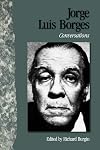
Conversations with Jorge Luis Borges
by Richard Burgin, Jorge Luis Borges
On This Page
Description
Jorge Luis Borges, one of the indisputably great writers of the twentieth century, was born in Buenos Aires in 1899. Never having been awarded the Nobel Prize, which his readers worldwide believed he deserved, this story writer, poet, essayist, and man of letters died at age eighty-six. This anthology of interviews with him features more than a dozen conversations that cover all phases of his life and work. Conducted between 1964 and 1984, the interviews reveal Borges to be a remarkably show more candid, humorous man, by turns skeptical and enthusiastic, and always a singularly incisive and adventurous thinker. He discusses his blindness, his family and childhood, early travels, literary friends, and struggles to find his literary identity. In depth he examines the meanings and intentions of his own famous stories and poems, and he speaks of the writers whose works he has loved-Dante, Cervantes, Emerson, Dickinson, H. G. Wells, Kafka, Stevenson, Kipling, Whitman, Frost, and Faulkner-and of those whom he disliked, such as Hemingway and Lorca. Borges expresses his contempt for Péron and assesses the tumultuous politics of Argentina. He speaks also of the imagination as a type of dreaming, about issues of collaboration and translation, about philosophy, and about time. Many of the interviews were conducted by notable figures, including Alastair Reid, Willis Barnstone, and Ronald Christ. As Borges speaks in these conversations, readers who have fallen under the spell of his magical prose and poetry will find additional sustenance. show lessTags
Recommendations











Member Reviews
There are far too many examples of Borges' genius presented in this book for somebody like me to comment on them. That is, other than to say that I loved this book and my introduction to Borges on a more personal note. He is definitely somebody worth reading and listening to.
Very interesting
Not Read
Ratings
Members
- Recently Added By
Lists

Art of Reading
188 works; 5 members
Author Information

24+ Works 360 Members

868+ Works 58,866 Members
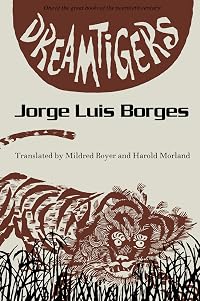
Born in Buenos Aires, Argentina, in 1899, Jorge Borges was educated by an English governess and later studied in Europe. He returned to Buenos Aires in 1921, where he helped to found several avant-garde literary periodicals. In 1955, after the fall of Juan Peron, whom he vigorously opposed, he was appointed director of the Argentine National show more Library. With Samuel Beckett he was awarded the $10,000 International Publishers Prize in 1961, which helped to establish him as one of the most prominent writers in the world. Borges regularly taught and lectured throughout the United States and Europe. His ideas have been a profound influence on writers throughout the Western world and on the most recent developments in literary and critical theory. A prolific writer of essays, short stories, and plays, Borges's concerns are perhaps clearest in his stories. He regarded people's endeavors to understand an incomprehensible world as fiction; hence, his fiction is metaphysical and based on what he called an esthetics of the intellect. Some critics have called him a mystic of the intellect. Dreamtigers (1960) is considered a masterpiece. A central image in Borges's work is the labyrinth, a mental and poetic construct, that he considered a universe in miniature, which human beings build and therefore believe they control but which nevertheless traps them. In spite of Borges's belief that people cannot understand the chaotic world, he continually attempted to do so in his writing. Much of his work deals with people's efforts to find the center of the labyrinth, symbolic of achieving understanding of their place in a mysterious universe. In such later works as The Gold of the Tigers, Borges wrote of his lifelong descent into blindness and how it affected his perceptions of the world and himself as a writer. Borges died in Geneva in 1986. (Bowker Author Biography) show less
Series
Belongs to Publisher Series
Literary Conversations Series (Borges)
Common Knowledge
- Original publication date
- 1970
Classifications
- Genres
- Literature Studies and Criticism, Fiction and Literature, Biography & Memoir
- DDC/MDS
- 868 — Literature & rhetoric Spanish Literature Spanish miscellaneous writings
- LCC
- PQ7797 .B635 .Z635 — Language and Literature French, Italian, Spanish and Portuguese literatures Spanish literature Provincial, local, colonial, etc. Spanish America
- BISAC
Statistics
- Members
- 208
- Popularity
- 156,801
- Reviews
- 3
- Rating
- (3.71)
- Languages
- English, French, Serbian, Spanish
- Media
- Paper
- ISBNs
- 10
- ASINs
- 5