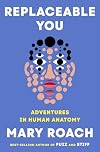
Replaceable You: Adventures in Human Anatomy
by Mary Roach
On This Page
Description
One of Literary Hub's Most Anticipated Books of 2025A Goodreads Readers' Most Anticipated Fall Book
From the New York Times bestselling author of Stiff and Fuzz, a rollicking exploration of the quest to re-create the impossible complexities of human anatomy.
The body is the most complex machine in the world, and the only one for which you cannot get a replacement part from the manufacturer. For centuries, medicine has reached for what’s available—sculpting noses from brass, borrowing show more skin from frogs and hearts from pigs, crafting eye parts from jet canopies and breasts from petroleum by-products. Today we’re attempting to grow body parts from scratch using stem cells and 3D printers. How are we doing? Are we there yet?
In Replaceable You, Mary Roach explores the remarkable advances and difficult questions prompted by the human body’s failings. When and how does a person decide they’d be better off with a prosthetic than their existing limb? Can a donated heart be made to beat forever? Can an intestine provide a workable substitute for a vagina?
Roach dives in with her characteristic verve and infectious wit. Her travels take her to the OR at a legendary burn unit in Boston, a “superclean” xeno-pigsty in China, and a stem cell “hair nursery” in the San Diego tech hub. She talks with researchers and surgeons, amputees and ostomates, printers of kidneys and designers of wearable organs. She spends time in a working iron lung from the 1950s, stays up all night with recovery techs as they disassemble and reassemble a tissue donor, and travels across Mongolia with the cataract surgeons of Orbis International.
Irrepressible and accessible, Replaceable You immerses readers in the wondrous, improbable, and surreal quest to build a new you. show less
Tags
Recommendations
























Member Recommendations
Member Reviews
I always enjoy Mary Roach's books. I love the sardonic humour, and her self-effacing demeanour through the proceedings. I do occasionally find myself wishing she'd dive a bit deeper into the various subjects she investigates, but then again, that's what other books are for, right? Find a topic, then dig deeper.
This one though? Damn. On one hand, it absolute shows what a shockingly intricate machine the body is and how very hard it is to come in later and try and fix or replace bits of it.
On the other hand, it's also a nightmare fuel-soaked ride through the many things that can go wrong, either through maturation or misadventure, and the things we've done to try and get around those. I was squirming through both the penis replacement show more section, as well as the cataract removal section.
Both an eye opening and an eye watering book. show less
This one though? Damn. On one hand, it absolute shows what a shockingly intricate machine the body is and how very hard it is to come in later and try and fix or replace bits of it.
On the other hand, it's also a nightmare fuel-soaked ride through the many things that can go wrong, either through maturation or misadventure, and the things we've done to try and get around those. I was squirming through both the penis replacement show more section, as well as the cataract removal section.
Both an eye opening and an eye watering book. show less
Mary Roach's latest book is all about replacing human body parts: with mechanical prostheses, with tissue from other parts of one's body, with parts from other people or from animals, or with artificially grown organic parts, perhaps cultured from your own stem cells. Some of these technologies, of course, are considerably further advanced than others.
If you're familiar with any of Roach's other books, you probably know what to expect from this one. If you're not, well, then this is anything but a dry, academic approach to the subject or a piece of meticulous and exhaustive journalism. It is, rather, an irrepressibly enthusiastic person taking us along on a slightly wild ride through a subject she finds fascinating, picking the brains show more of anyone in the field who will talk to her or let her watch them work. Or harvest hair follicles from her head and implant them on her leg, just to see what happens.
As usual, she's wonderfully funny, uninhibited even with subject matter other people shy away from, and great at making whatever she's talking about interesting and engaging. Although I will say that one thing she wasn't quite as successful at here as in previous books was bypassing my usual reactions to things that squick me out. I discovered while reading this one that it can, in fact, be too early in the morning to read about skin grafts, and that all the matter-of-fact wonder-and-excitement-filled good humor in the world can't keep me from flinching while reading about eye surgery. But, then, few authors could make me willing to read about that at all, or make me feel glad I'd done so afterward, so, honestly, kudos on that, too. show less
If you're familiar with any of Roach's other books, you probably know what to expect from this one. If you're not, well, then this is anything but a dry, academic approach to the subject or a piece of meticulous and exhaustive journalism. It is, rather, an irrepressibly enthusiastic person taking us along on a slightly wild ride through a subject she finds fascinating, picking the brains show more of anyone in the field who will talk to her or let her watch them work. Or harvest hair follicles from her head and implant them on her leg, just to see what happens.
As usual, she's wonderfully funny, uninhibited even with subject matter other people shy away from, and great at making whatever she's talking about interesting and engaging. Although I will say that one thing she wasn't quite as successful at here as in previous books was bypassing my usual reactions to things that squick me out. I discovered while reading this one that it can, in fact, be too early in the morning to read about skin grafts, and that all the matter-of-fact wonder-and-excitement-filled good humor in the world can't keep me from flinching while reading about eye surgery. But, then, few authors could make me willing to read about that at all, or make me feel glad I'd done so afterward, so, honestly, kudos on that, too. show less
Mary Roach is a delightful narrator as well as engaging writer. If you haven't tried one of her audiobooks, I would recommend them.
Replaceable You delves into the science of replacement parts for humans: prosthetics, regenerative tissues, printed parts, and every other possible permeation. From the history of transplants to the future of stem cell banks, Roach covers it all. She has a fearless and slightly irreverent attitude and asks great questions of the specialists she shadows and isn't afraid to go off the beaten path to find answers. In this book, she travels to Mongolia with a cornea transplant team, to China to visit a multistory pigsty and learn about genetically altered pig skin for xenotransplantation, and to Tbilisi, show more Georgia to visit a surgeon performing penis reconstruction from a patient's finger. She tries out an iron lung, has a hair from her head transplanted to her leg, and joins a 5K ostomy awareness run. Although the book could sound like a publicity stunt, Roach has great respect for science and medicine and for the researchers, doctors, and patients with whom she interacts. This is the second book by Roach that I've read, and I'm already looking forward to my next foray into science with Mary. show less
Replaceable You delves into the science of replacement parts for humans: prosthetics, regenerative tissues, printed parts, and every other possible permeation. From the history of transplants to the future of stem cell banks, Roach covers it all. She has a fearless and slightly irreverent attitude and asks great questions of the specialists she shadows and isn't afraid to go off the beaten path to find answers. In this book, she travels to Mongolia with a cornea transplant team, to China to visit a multistory pigsty and learn about genetically altered pig skin for xenotransplantation, and to Tbilisi, show more Georgia to visit a surgeon performing penis reconstruction from a patient's finger. She tries out an iron lung, has a hair from her head transplanted to her leg, and joins a 5K ostomy awareness run. Although the book could sound like a publicity stunt, Roach has great respect for science and medicine and for the researchers, doctors, and patients with whom she interacts. This is the second book by Roach that I've read, and I'm already looking forward to my next foray into science with Mary. show less
A book club pick :)
Let’s replace stuff in out bodies! On second thought?…
I’ve heard that Mary Roach writes cool non-fiction, so I’ve been meaning to read her books. This book club pick came in handy.
Replaceable You was interesting, smart, often fun, sometimes tragic. I read some of the chapters while having lunch. I was fine, but I thought I’d warn potential readers that you might not want to read some parts (many parts? most parts?) of this book while eating.
We cover many many many subjects, so let me go through some of those I found especially memorable:
🦷Dentistry: whoa, I didn’t know about people having all their healthy teeth removed to install false ones. Just to avoid trouble in the future, you see.
👃Rhinoplasty: show more I had no idea that is has been around for so long. I will remember Tycho Brahe and his prosthetic nose.
🌱 Skin grafts: Fascinating, with some very scary stories that made me teary-eyed.
🐖 Transplanting pig organs into humans and growing human organs in pigs: ethical issues aside, it is very interesting, and we still have long way to go.
🥛Blood transfusions? How about milk transfusions? Yes, they did it in the late 19th century. ”Medicine came to its senses quickly.” Good, good.
✨ Making vaginas: ”Here we have an organ that evolved for a specific purpose being drafted into service for a wholly unrelated one.” Remember what I said about lunch? I found it cool and interesting, though!
🥩 3D printed organs and things grown from patients’ own stem cells – bring it on. We are not there yet, but we will be (hopefully).
🔪 The chapter on plastic surgery is poisonous in ways that I like:
”buttock transformation luminaries”
”Plastic surgeons and their patients are chasing an ideal that rarely exists in undoctored human anatomy.”
”…it would be lovely if feeling good about oneself didn’t depend on altering the normal effects of aging.”
(I could have done without the Kardashians.)
My biggest complaint is that I didn't really need to know how beautiful or athletic the scientists Roach met were, nor how excellent their English was, if they happened to not be American. Come on.
But I learned many new things and I am happy about that.
”For every step forward, three go nowhere. Progress doesn’t march, it lurches.” show less
Let’s replace stuff in out bodies! On second thought?…
I’ve heard that Mary Roach writes cool non-fiction, so I’ve been meaning to read her books. This book club pick came in handy.
Replaceable You was interesting, smart, often fun, sometimes tragic. I read some of the chapters while having lunch. I was fine, but I thought I’d warn potential readers that you might not want to read some parts (many parts? most parts?) of this book while eating.
We cover many many many subjects, so let me go through some of those I found especially memorable:
🦷Dentistry: whoa, I didn’t know about people having all their healthy teeth removed to install false ones. Just to avoid trouble in the future, you see.
👃Rhinoplasty: show more I had no idea that is has been around for so long. I will remember Tycho Brahe and his prosthetic nose.
🌱 Skin grafts: Fascinating, with some very scary stories that made me teary-eyed.
🐖 Transplanting pig organs into humans and growing human organs in pigs: ethical issues aside, it is very interesting, and we still have long way to go.
🥛Blood transfusions? How about milk transfusions? Yes, they did it in the late 19th century. ”Medicine came to its senses quickly.” Good, good.
✨ Making vaginas: ”Here we have an organ that evolved for a specific purpose being drafted into service for a wholly unrelated one.” Remember what I said about lunch? I found it cool and interesting, though!
🥩 3D printed organs and things grown from patients’ own stem cells – bring it on. We are not there yet, but we will be (hopefully).
🔪 The chapter on plastic surgery is poisonous in ways that I like:
”buttock transformation luminaries”
”Plastic surgeons and their patients are chasing an ideal that rarely exists in undoctored human anatomy.”
”…it would be lovely if feeling good about oneself didn’t depend on altering the normal effects of aging.”
(I could have done without the Kardashians.)
My biggest complaint is that I didn't really need to know how beautiful or athletic the scientists Roach met were, nor how excellent their English was, if they happened to not be American. Come on.
But I learned many new things and I am happy about that.
”For every step forward, three go nowhere. Progress doesn’t march, it lurches.” show less
Another great Mary Roach book. Wry humor, odd subjects, and some fascinating look into stuff talked about but never examined - in this case various types of bodily replacement, from artificial hips to spare parts from a corpse (in a late nod to Stiff: The Curious Lives of Human Cadavers?), to teardrops and why the eye drops don't really work. The overall news is really depressing, despite the author's optimism for future decades - even the simple and routine replacements are riddled with problems, and the more dreamy visions like a pig of spare parts might be a long time coming.
The book was a bit short on the personal adventure side of things, though she spends 15 minutes in an iron lung in a pretty touching tale among the family of show more the last occupant and one of the few to have need of one. show less
The book was a bit short on the personal adventure side of things, though she spends 15 minutes in an iron lung in a pretty touching tale among the family of show more the last occupant and one of the few to have need of one. show less
As usual, an engaging tour through weird and occasionally gross science, such as transplanting pig organs into humans to address the longstanding human organ shortage. The risks include pig viruses jumping to humans, which does seem worrisome. I learned that the blood in our veins (and arteries) doesn’t clot because cells in the linings secrete nitric oxide, which (temporarily) stops platelets from clotting, and new tubes and catheters can use this tactic too, “buying patients up to a week without risk of blood clots.” I learned that brain-dead pregnant people’s organs work better than those of brain-dead people who aren’t pregnant, and this apparent transfer of brain function to run the body also works the other way: show more acephalic fetuses’ other organs will function until they’re delivered.
Also: It’s possible to construct a neovagina out of a section of colon, which has the benefit of having some natural lubrication, but some patients develop bleeding and burning sensations—the latter of which is unexpected because the colon in its initial location doesn’t perceive that kind of pain. I learned that a significant number of trans women who have bottom surgery have only vulvoplasty, without a neovagina that they’d have to dilate/look after. Trans men, meanwhile, sometimes need reduction surgery because they find their neophalluses too girthy, though one expert says that we shouldn’t necessarily blame surgeons, since patients themselves fairly commonly want larger-than-average size. Conclusion based on research: “The mean circumference for the bestselling realistic dildos sold online and in Good Vibrations is 5 inches. If a man goes a lot bigger, it shouldn’t be the surgeon who decides that.”
For transplants, immunosuppression is the key barrier. This is one reason why prosthetics might often be a better choice, especially for a limb—and amputations might also be better than trying to save a limb that has longterm problems. Doctors and insurance companies, though, are biased in favor of trying to preserve a limb that will have to be repeatedly revisited and get repeated infections. Comparing patients who’d had below-knee amputations with a those who’d had limb salvage surgery, “the amputees end up with better health and ‘functionality’ and lower pain scores.” At the same time, “[m]ore than half of arm amputees end up abandoning their prosthesis—a figure that has remained steady in the age of myoelectric options.”
Bone-anchored protheses might offer better results, especially for legs, because they allow the skeleton to bear the body’s weight—this both feels more comfortable and allows the sensation of contacting the ground to be felt in the body. Animals do have exposed bone interfaces—teeth and horns—but figuring out how to do that artificially poses its own challenges; the key risk is bone infections, which run just under 30% currently.
Biofilms that develop on implants and cause infection are a huge problem. But there’s a mystery: tooth plaque is a biofilm. Yet artificial hips, implanted under “stringent conditions of infection control,” have the same 1% infection rate as dental implants, even though by comparison the mouth is a “sewer.” “Saliva and possibly gum tissue appear to have natural antibiotic properties.” (Later, I learned that, while we can create artificial tears, we are currently unable to recreate the film that keeps our eyeballs wet.)
I also learned more about why anesthesia is so dangerous. “One paralytic in the anesthesiologist’s arsenal, succinylcholine, leaves no trace in the body, making it a perfect murder weapon, if hard to come by.” But also: intubation injects mouth organisms into the lungs. “After ten days, one study found, 90 percent of [ICU] patients earned a dental plaque score of 3 (the worst), even though 70 percent had gone in with a score of zero or 1 (the best).” Covid patients had lungs that stiffened, making them less expansive and able to absorb oxygen; raising ventilation pressure could compensate but only at risk of further damaging the lungs. The alternative was to provide oxygen with more frequency and less force, but people can’t breathe comfortably that way and panic—leading to a need for sedation. Then the sedation caused delirium, which can last a while.
Roach also discusses cataract surgeries. A RAF eye surgeon discovered in WWII that “fragments of shattered Plexiglas jet canopies that lodged in airmen’s eyes were well tolerated, and that it was safer to leave them there than to try to dig them out.” This accidental discovery led to replacement lenses that didn’t provoke an immune response. I also learned that, per one expert, “[t]he lens is the only part of the body that doesn’t get cancer.”
What’s the hardest part of the body to replace? Anything that contracts, which is to say muscles, and the hardest are ring-shaped muscles (like the anus). “Artificial anal sphincters either don’t clench tightly enough or they don’t ‘relax’ sufficiently,” which is why people still end up with ostomies.
More speculatively, it turns out that foreign collagen doesn’t trigger an immune response, so in theory we could take, say, pig organs, dissolve their cells, and “use the same network of capillaries to recell the scaffold that remains—to deliver millions of the patient’s own lab-cultured cells.”
The chapter on hair transplants also had interesting tidbits: “Hair follicles from the sides and back of the scalp lie outside the pattern of male-pattern baldness. They don’t go dormant, and they retain that golden attribute when they’re transplanted up top.” However, scalp hair and pubic hair have different growth patterns, which can be a problem for moving one to the other’s usual location. show less
Also: It’s possible to construct a neovagina out of a section of colon, which has the benefit of having some natural lubrication, but some patients develop bleeding and burning sensations—the latter of which is unexpected because the colon in its initial location doesn’t perceive that kind of pain. I learned that a significant number of trans women who have bottom surgery have only vulvoplasty, without a neovagina that they’d have to dilate/look after. Trans men, meanwhile, sometimes need reduction surgery because they find their neophalluses too girthy, though one expert says that we shouldn’t necessarily blame surgeons, since patients themselves fairly commonly want larger-than-average size. Conclusion based on research: “The mean circumference for the bestselling realistic dildos sold online and in Good Vibrations is 5 inches. If a man goes a lot bigger, it shouldn’t be the surgeon who decides that.”
For transplants, immunosuppression is the key barrier. This is one reason why prosthetics might often be a better choice, especially for a limb—and amputations might also be better than trying to save a limb that has longterm problems. Doctors and insurance companies, though, are biased in favor of trying to preserve a limb that will have to be repeatedly revisited and get repeated infections. Comparing patients who’d had below-knee amputations with a those who’d had limb salvage surgery, “the amputees end up with better health and ‘functionality’ and lower pain scores.” At the same time, “[m]ore than half of arm amputees end up abandoning their prosthesis—a figure that has remained steady in the age of myoelectric options.”
Bone-anchored protheses might offer better results, especially for legs, because they allow the skeleton to bear the body’s weight—this both feels more comfortable and allows the sensation of contacting the ground to be felt in the body. Animals do have exposed bone interfaces—teeth and horns—but figuring out how to do that artificially poses its own challenges; the key risk is bone infections, which run just under 30% currently.
Biofilms that develop on implants and cause infection are a huge problem. But there’s a mystery: tooth plaque is a biofilm. Yet artificial hips, implanted under “stringent conditions of infection control,” have the same 1% infection rate as dental implants, even though by comparison the mouth is a “sewer.” “Saliva and possibly gum tissue appear to have natural antibiotic properties.” (Later, I learned that, while we can create artificial tears, we are currently unable to recreate the film that keeps our eyeballs wet.)
I also learned more about why anesthesia is so dangerous. “One paralytic in the anesthesiologist’s arsenal, succinylcholine, leaves no trace in the body, making it a perfect murder weapon, if hard to come by.” But also: intubation injects mouth organisms into the lungs. “After ten days, one study found, 90 percent of [ICU] patients earned a dental plaque score of 3 (the worst), even though 70 percent had gone in with a score of zero or 1 (the best).” Covid patients had lungs that stiffened, making them less expansive and able to absorb oxygen; raising ventilation pressure could compensate but only at risk of further damaging the lungs. The alternative was to provide oxygen with more frequency and less force, but people can’t breathe comfortably that way and panic—leading to a need for sedation. Then the sedation caused delirium, which can last a while.
Roach also discusses cataract surgeries. A RAF eye surgeon discovered in WWII that “fragments of shattered Plexiglas jet canopies that lodged in airmen’s eyes were well tolerated, and that it was safer to leave them there than to try to dig them out.” This accidental discovery led to replacement lenses that didn’t provoke an immune response. I also learned that, per one expert, “[t]he lens is the only part of the body that doesn’t get cancer.”
What’s the hardest part of the body to replace? Anything that contracts, which is to say muscles, and the hardest are ring-shaped muscles (like the anus). “Artificial anal sphincters either don’t clench tightly enough or they don’t ‘relax’ sufficiently,” which is why people still end up with ostomies.
More speculatively, it turns out that foreign collagen doesn’t trigger an immune response, so in theory we could take, say, pig organs, dissolve their cells, and “use the same network of capillaries to recell the scaffold that remains—to deliver millions of the patient’s own lab-cultured cells.”
The chapter on hair transplants also had interesting tidbits: “Hair follicles from the sides and back of the scalp lie outside the pattern of male-pattern baldness. They don’t go dormant, and they retain that golden attribute when they’re transplanted up top.” However, scalp hair and pubic hair have different growth patterns, which can be a problem for moving one to the other’s usual location. show less
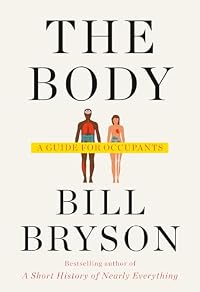
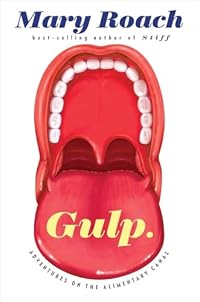
If you're looking for a humorous take on science, health, and new frontiers, then you can't really go wrong with Mary Roach. Great for fans of The Body: A Guide for Occupants by Bill Bryson and Roach's previous look at the digestive system (Gulp: Adventures on the Alimentary Canal).
In this book, we learn about pig farms for parts (HELLO Oryx and Crake!), iron lungs (if people stop getting that vaccine, at least there's updated respiratory tech, I guess?), hip replacements (reminded me of The Danger Within Us) and way more. It's definitely the kind of book that helps me be the person at a party saying, "Did you know...?" and then dropping the most random piece of knowledge imaginable. If you want to be that person, too, definitely read show more Mary Roach. show less
In this book, we learn about pig farms for parts (HELLO Oryx and Crake!), iron lungs (if people stop getting that vaccine, at least there's updated respiratory tech, I guess?), hip replacements (reminded me of The Danger Within Us) and way more. It's definitely the kind of book that helps me be the person at a party saying, "Did you know...?" and then dropping the most random piece of knowledge imaginable. If you want to be that person, too, definitely read show more Mary Roach. show less
Members
- Recently Added By
Lists

Science: Health & Medical
100 works; 1 member

Book Riot Read Harder 2026
80 works; 1 member

Books Read in 2025
4,090 works; 97 members

Books Read in 2026
1,762 works; 62 members
Author Information

24+ Works 33,475 Members
Mary Roach was born and raised in Etna, New Hampshire. She has a BA degree in psychology from Wesleyan University. She spent a few years as a free-lance copy editor before she landed a job at the San Francisco Zoological Society turning out press releases. She then moved on to write humor pieces for such periodicals as The New York Times Magazine, show more The San Francisco Chronicle and Sports Illustrated. Her article "How to Win at Germ Warfare" was a National Magazine Award Finalist, in 1995. In 1996, her article on earthquake-proof bamboo houses took the Engineering Journalism Award. She published several books such as Stiff: The Curious Lives of Human Cadavers (2003) and Packing for Mars (2010). Mary's title Grunt: The Curious Science of Humans at War, made the New York Times Bestseller list in 2016. (Bowker Author Biography) show less
Some Editions
Awards and Honors
Distinctions
Common Knowledge
- Original publication date
- 2025-09-16
- Dedication
- For Otis
- First words
- The Victorian upper crust excelled at taking apart dinner.
- Last words
- (Click to show. Warning: May contain spoilers.)That's where the gee-whiz belongs.
- Blurbers
- Alexander, Jason; Kraus, Daniel; Blum, Deborah
- Original language
- English
- Canonical DDC/MDS
- 611.07
Classifications
Statistics
- Members
- 383
- Popularity
- 81,376
- Reviews
- 18
- Rating
- (3.96)
- Languages
- English
- Media
- Paper, Audiobook, Ebook
- ISBNs
- 7
- ASINs
- 2