On This Page
Description
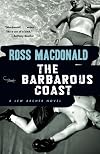
In The Barbarous Coast, Lew Archer's pursuit of a girl who jackknifed too suddenly from high diving to high living leads him to an ex-fighter with an unexplained movie contract, a big-time gambler who died by his own knife, and finally to an answer he would rather not have known.Tags
Recommendations













Member Reviews
My opinion of The Barbarous Coast suffered from how I read it: a few pages at a time, right before sleep, over a period of ten or more days. I lost the thread and missed the clues, and was left with a hazy and irritated recollection of a bunch of flawed people in an ugly situation. Fortunately, I had the good sense to read it again (it's not that long), which took only a couple of sessions, and see the ingeniousness with which it's put together, and the way the pieces are all laid out for the reader at the beginning. I ended by admiring the book very much.
Unlike many readers of mystery-thrillers, I'm not a person who enjoys difficult puzzles, so working out the solution to a mystery isn't part of my reading process. I'm in it for the show more prose, for the setting, and for the characters, pretty much in that order. I don't remember the plots of most books after I finish them; what I remember is the atmosphere they conjured when I was immersed in them. This novel has plenty of that, too; just as I like reading about a Los Angeles with orange groves on its outskirts, I love reading about a Malibu that still has room for a trailer court. But if you read mysteries for the mystery, you'll probably think this is one of the better Macdonalds. show less
Unlike many readers of mystery-thrillers, I'm not a person who enjoys difficult puzzles, so working out the solution to a mystery isn't part of my reading process. I'm in it for the show more prose, for the setting, and for the characters, pretty much in that order. I don't remember the plots of most books after I finish them; what I remember is the atmosphere they conjured when I was immersed in them. This novel has plenty of that, too; just as I like reading about a Los Angeles with orange groves on its outskirts, I love reading about a Malibu that still has room for a trailer court. But if you read mysteries for the mystery, you'll probably think this is one of the better Macdonalds. show less
*Partial spoilers ahead*
In 1956 Ross Macdonald was a good, but not great, writer of detective novels. He had a lot of confidence in himself, and had produced some strong work (The Moving Target and The Way Some People Die, in particular), but at this stage of the game had fallen prey to a peculiar impulse which might have prevented him from becoming the master he already felt himself to be. Fortunately, it didn't: he recognized the deficiency and corrected it, eventually authoring undisputed classics like The Chill and The Underground Man. But in The Barbarous Coast, as in the earlier The Ivory Grin, Macdonald exhibited a meanness of spirit that was beneath him, making his villains sad old nebbishes so that he-man detective Lew Archer show more could lecture them about their inadequacies, their envy of younger, normally functioning people. Here he carried this distasteful schtick to even greater extremes, as when Archer berates a perfectly sympathetic young male character for having "too many feelings". It's a bemusing quirk that will come as a surprise if you've read any of the author's more mature books: a sanctimonious, bourgeois bitchiness quite out of character for a world-weary private eye (and just plain hypocritical, considering the fact that Macdonald had jeeringly referred to Raymond Chandler as an old maid). That he learned to resist this temptation is a testament to the depth of his self-knowledge, and to his strength as a writer.
A sufficiently engaging crime yarn on its own terms, and better than what most of his peers were doing at the time--but The Barbarous Coast is far from Ross Macdonald's best work. He improved enormously after this. show less
In 1956 Ross Macdonald was a good, but not great, writer of detective novels. He had a lot of confidence in himself, and had produced some strong work (The Moving Target and The Way Some People Die, in particular), but at this stage of the game had fallen prey to a peculiar impulse which might have prevented him from becoming the master he already felt himself to be. Fortunately, it didn't: he recognized the deficiency and corrected it, eventually authoring undisputed classics like The Chill and The Underground Man. But in The Barbarous Coast, as in the earlier The Ivory Grin, Macdonald exhibited a meanness of spirit that was beneath him, making his villains sad old nebbishes so that he-man detective Lew Archer show more could lecture them about their inadequacies, their envy of younger, normally functioning people. Here he carried this distasteful schtick to even greater extremes, as when Archer berates a perfectly sympathetic young male character for having "too many feelings". It's a bemusing quirk that will come as a surprise if you've read any of the author's more mature books: a sanctimonious, bourgeois bitchiness quite out of character for a world-weary private eye (and just plain hypocritical, considering the fact that Macdonald had jeeringly referred to Raymond Chandler as an old maid). That he learned to resist this temptation is a testament to the depth of his self-knowledge, and to his strength as a writer.
A sufficiently engaging crime yarn on its own terms, and better than what most of his peers were doing at the time--but The Barbarous Coast is far from Ross Macdonald's best work. He improved enormously after this. show less
Clarence Bassett, the manager of an exclusive Malibu country club, has a problem. To solve it he hires private detective Lew Archer, who is initially asked to drive off a young man named George Wall before being asked instead to search for Wall’s wife, Hester. Archer soon finds himself emerged in a web of stories told by Hester, which draw Archer to an unsolved murder involving a friend of Hester’s, a young ex-boxer turned aspiring actor, and a movie mogul in a partnership with a mob boss. Obstructed by secrets and opposed by thugs, Archer untangles in the hope of saving the lives of those enmeshed—including his own.
Ross Macdonald’s sixth Lew Archer novel reflects all of the strengths of the series. Within its well-plotted show more story, he spins a tragic tale of ambition, desire, greed, and frustration under the Southern California sun. The multilayered nature of the plot takes a little longer to come together than do some of the previous books in the series, reflecting Macdonald’s willingness to tinker with his formula in order to keep things fresh and different. It makes for a work that fans of detective noir will enjoy as an excellent example of the form by a true master of his craft. show less
Ross Macdonald’s sixth Lew Archer novel reflects all of the strengths of the series. Within its well-plotted show more story, he spins a tragic tale of ambition, desire, greed, and frustration under the Southern California sun. The multilayered nature of the plot takes a little longer to come together than do some of the previous books in the series, reflecting Macdonald’s willingness to tinker with his formula in order to keep things fresh and different. It makes for a work that fans of detective noir will enjoy as an excellent example of the form by a true master of his craft. show less
Spike Magazine: Books, Music, Art, Ideas
Originally published in 1956, as the sixth novel in the Lew Archer crime series, The Barbarous Coast demonstrates exactly why Ross Macdonald’s name has survived when so many others have been forgotten. Punctuated by a sharp, dark wit, and twisting subtly through an untold number of well-plotted revelations, this novel shows why Macdonald was considered the natural successor to the likes of Raymond Chandler and Dashiell Hammett. It also makes for a damned good read.
If you haven’t stepped inside this noir-ish world before then here’s a brief rundown of what to expect: hot-headed gangsters, scheming women, smart-talking detectives, guns, seedy motels, under-the-table business deals and more show more than one murder. It’s the world that Roman Polanski portrayed so realistically in Chinatown, or that James Ellroy still plunders to this day. It’s dark, dangerous, and the flip side of the American dream.
In many ways Macdonald’s Lew Archer is the archetypal private eye, quick tongued and always struggling to stay on the right side of the law. He also has a heart of gold, naturally, but after so many years of being dragged through the mud it’s tarnished a little. Actually, it’s tarnished a lot. The novel opens with Lew being called to The Channel Club, a private building at the southern end of Malibu beach. He encounters an angry young man called George Wall at the gate – the action kicking in almost before the end of the first page – and once he’s inside the building the club manager, Clarence Bassett, explains what the disturbance is all about.
One of the girls who used to work at the club, Hester Campbell, married Mr Wall in Canada; since then she has abandoned him and returned to California, and Wall’s worried that she might be in trouble. He’s been leaning on Bassett for information, but Bassett pleads ignorance, along with a bad case of nerves. Needless to say, Hester Campbell was strikingly beautiful. Needless to say, there’s a lot of dirt to be uncovered before the truth comes out. show less
Originally published in 1956, as the sixth novel in the Lew Archer crime series, The Barbarous Coast demonstrates exactly why Ross Macdonald’s name has survived when so many others have been forgotten. Punctuated by a sharp, dark wit, and twisting subtly through an untold number of well-plotted revelations, this novel shows why Macdonald was considered the natural successor to the likes of Raymond Chandler and Dashiell Hammett. It also makes for a damned good read.
If you haven’t stepped inside this noir-ish world before then here’s a brief rundown of what to expect: hot-headed gangsters, scheming women, smart-talking detectives, guns, seedy motels, under-the-table business deals and more show more than one murder. It’s the world that Roman Polanski portrayed so realistically in Chinatown, or that James Ellroy still plunders to this day. It’s dark, dangerous, and the flip side of the American dream.
In many ways Macdonald’s Lew Archer is the archetypal private eye, quick tongued and always struggling to stay on the right side of the law. He also has a heart of gold, naturally, but after so many years of being dragged through the mud it’s tarnished a little. Actually, it’s tarnished a lot. The novel opens with Lew being called to The Channel Club, a private building at the southern end of Malibu beach. He encounters an angry young man called George Wall at the gate – the action kicking in almost before the end of the first page – and once he’s inside the building the club manager, Clarence Bassett, explains what the disturbance is all about.
One of the girls who used to work at the club, Hester Campbell, married Mr Wall in Canada; since then she has abandoned him and returned to California, and Wall’s worried that she might be in trouble. He’s been leaning on Bassett for information, but Bassett pleads ignorance, along with a bad case of nerves. Needless to say, Hester Campbell was strikingly beautiful. Needless to say, there’s a lot of dirt to be uncovered before the truth comes out. show less
For some reason, I stumbled across an article on my telephone, from The New Repbulic, about how Ross Macdonald was every bit as good, if not better, than Raymond Chandler, when it came to writing hard-boiled, noir detective fiction. So, I had to find me some Ross Macdonald. I have a vague feeling I'd tried doing this before, and none was to be found in my local library. But, the Boston Public Library did have a few Macdonald's available for us Kindle folk. So, I began my Macdonald investigations with this particular book.
So, we're in Hollywood in the 1950s. Lew Archer is called to The Channel Club to meet with Clarence Bassett, the club's manager. It seems Bassett wants Archer to "dispose of" an annoyance, one George Wall. Wall, who show more claims to be married to Hester Campbell, claims she's run out on him, in Toronto, and is likely back in Southern California, and likely with one of the Channel Club's richest, most influential members, Simon Graff, the movie mogul. On his way into the club, Archer had already run into Wall. On the way out, he tries to chase Wall off, but Wall begs Archer to find his wife. Archer agrees to do that.
So, Archer begins looking for the wife, and along the way runs into a variety of weird occurrences: some folks seem suddenly to have garnered magic movie contracts, despite having no prior skill; some folks, who were thriving, suddenly find themselves on the down-hill slide; floozies and drunks wander into and out of the scenes; etc. Along the way, bodies start piling up, gangsters drift in and out, Archer and others get the crap beaten out of them, and so forth. All the good stuff of hard-boiled, noir novels. The one thing missing is that Archer doesn't appear to live on a steady diet of whiskey, unlike Philip Marlowe and Sam Spade.
Anyway, this is quite good, albeit a bit convoluted. I'll definitely be hunting me some more Archer.
Interestingly, I just discovered that one can take a class at an Ivy League college in Hard-Boiled and Noir Crime Fiction. Who knew life's gutter creatures had ascended the ivory towers of academia? show less
So, we're in Hollywood in the 1950s. Lew Archer is called to The Channel Club to meet with Clarence Bassett, the club's manager. It seems Bassett wants Archer to "dispose of" an annoyance, one George Wall. Wall, who show more claims to be married to Hester Campbell, claims she's run out on him, in Toronto, and is likely back in Southern California, and likely with one of the Channel Club's richest, most influential members, Simon Graff, the movie mogul. On his way into the club, Archer had already run into Wall. On the way out, he tries to chase Wall off, but Wall begs Archer to find his wife. Archer agrees to do that.
So, Archer begins looking for the wife, and along the way runs into a variety of weird occurrences: some folks seem suddenly to have garnered magic movie contracts, despite having no prior skill; some folks, who were thriving, suddenly find themselves on the down-hill slide; floozies and drunks wander into and out of the scenes; etc. Along the way, bodies start piling up, gangsters drift in and out, Archer and others get the crap beaten out of them, and so forth. All the good stuff of hard-boiled, noir novels. The one thing missing is that Archer doesn't appear to live on a steady diet of whiskey, unlike Philip Marlowe and Sam Spade.
Anyway, this is quite good, albeit a bit convoluted. I'll definitely be hunting me some more Archer.
Interestingly, I just discovered that one can take a class at an Ivy League college in Hard-Boiled and Noir Crime Fiction. Who knew life's gutter creatures had ascended the ivory towers of academia? show less
Ross Macdonald was a perceptive, witty, and cynical observer of that odd piece of the world, Southern California. That being the case, it was inevitable that he would, from time to time, turn his attention to Hollywood. Much of The Barbarous Coast takes place in Malibu, up the coast from that provincial neighborhood, but as Malibu is largely a playground for the denizens of Hollywood, The Barbarous Coast can still be counted as a Hollywood novel, perhaps not one of the great ones, but still, a worthy consideration of that provincial scene and an excellent further installment in the investigations of, and the investigation of, Macdonald's detective, Lew Archer.
Listened to this one. Pretty great, though i know it doesn't have the highest reputation. An innocent husband comes in from Canada to find his missing wife in the sleazy land of LA / private clubs / hollywood lowland. Hires Lew to do the hunting and he bumps into toughs from the studio and las vegas world. He is knocked out, pounded, tied up, etc but always manages to get the slip on the bad guys. It all ends up at the private pricey night club it started at - with the wispy head of the club in it with the iffy sanity wife of the important movie head. A bit outlandish - but a great ride.
Members
- Recently Added By
Lists

Golden Age of Detection
35 works; 10 members

Best Noir Fiction
160 works; 14 members

Anthony Boucher's Best Crime Fiction of the Year
115 works; 5 members

Books Read in 2018
4,360 works; 110 members
Author Information

103+ Works 14,274 Members
Awards and Honors
Distinctions
Series

Belongs to Publisher Series
El Séptimo Círculo (244)
detebe (99/IV / 20324)
Work Relationships
Common Knowledge
- Canonical title*
- Die Küste der Barbaren
- Original title
- The Barbarous Coast
- Original publication date
- 1956
- People/Characters
- Lew Archer; George Wall; Hester Campbell; Rina Campbell; Clarence Bassett; Carl Stern (show all 15); Gabrielle Torres; Isobel Graff; Lance Leonard; Frost; Lashman; Marfeld; Simon Graff; Tony Torres; Dr. Frey
- Important places
- Hollywood, Los Angeles, California, USA; Las Vegas, Nevada, USA; Channel Club
- Dedication
- For Stanley Tenny
- First words
- The Channel Club lay on a shelf of rock overlooking the sea, toward the southern end of the beach called Malibu.
- Quotations
- Time was running through me, harsh on my nerve-ends, hot in my arteries, impalpable as breath in my mouth. I had the sleepless feeling you sometimes get in the final hours of a bad case, that you can see around corners, if yo... (show all)u want to, and down into the darkness in human beings.
- Last words*
- (Click to show. Warning: May contain spoilers.)Für alles übrige würden die Waffensachverständigen der kriminaltechnischen Abteilung sorgen.
- Original language
- English US
*Some information comes from Common Knowledge in other languages. Click "Edit" for more information.
Classifications
Statistics
- Members
- 469
- Popularity
- 65,321
- Reviews
- 13
- Rating
- (3.80)
- Languages
- 11 — Catalan, Danish, English, Estonian, Finnish, French, German, Hungarian, Portuguese, Spanish, Swedish
- Media
- Paper, Audiobook, Ebook
- ISBNs
- 29
- ASINs
- 15