On This Page
Description
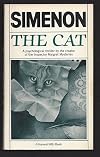
Ein Meisterwerk Simenons - bekannt geworden auch durch die Verfilmung mit Signoret/Gabin: Die Geschichte eines alten, in Haß und Sprachlosigkeit erstarrten Ehepaares..Tags
Recommendations





























Member Reviews
Un Simenon triste di grandissimo livello.
Qui si racconta il rapporto tre due vecchi vedovi che per noia decidono di vivere insieme, riescono ad odiarsi, ma per noia non riescono a fare a meno l’uno dell’altra. Il loro rapporto diventa lo scopo della vita di entrambi.
A contorno, la società che sta cambiando: i condomini che prendono il posto delle case, i quartieri che mutano e le persone che vanno e vengono.
Amaro, cinico, pieno di riflessioni sulla vita e la morte: poche pagine ma belle dense.
Qui si racconta il rapporto tre due vecchi vedovi che per noia decidono di vivere insieme, riescono ad odiarsi, ma per noia non riescono a fare a meno l’uno dell’altra. Il loro rapporto diventa lo scopo della vita di entrambi.
A contorno, la società che sta cambiando: i condomini che prendono il posto delle case, i quartieri che mutano e le persone che vanno e vengono.
Amaro, cinico, pieno di riflessioni sulla vita e la morte: poche pagine ma belle dense.
A novella or a long short story rather than a full length novel, this explores loneliness and incompatibility within a marriage that both partners have come to too late. The marriage appears to come to grief over the poisoning of Émile’s beloved cat but in fact it was doomed long before that. Simenon makes the reader feel how loveless the marriage is. There are just too many other obstacles.
I've read this as Simenon is one of the authors our U3A Crime Fiction Reading group is exploring in 2026.
I've read this as Simenon is one of the authors our U3A Crime Fiction Reading group is exploring in 2026.
I thought i had stumbled upon a Simenon that i was only middling on- the story of the older, 2nd marriage couple who hate each other and don't talk and only write nasty little notes to each other - was interesting (sort of) but not compelling. Almost seemed a little cheap / easy angle for the author. I think it was the introduction of the character of Nellie- the cafe / bar owner - woman of easy virtue who is over the top supportive of our lead male lead (almost reminds me of "I don't have to speak and she defends me..."). She takes him in after the old shrew wife starts taunting the male lead (Bouin) with a nearby crazy (fortune telling) lady friend- describing how bad Bouin is all day to her. Bouin enjoys Nellie's hospitality, the way show more he enjoyed his mother's and 1st wife's care for him. It's pretty idyllic, but the old woman misses him and begins showing herself looking for him and Bouin weakens and decides to come back (as Nellie predicted all along) and they come to a better understanding one guesses. Still hating each other, but in that good warm way that seems to satisfy them both (?). Poignant ending scenes with the old avenue being battered down to make way for new houses and finally a health crisis: the woman collapses- stroke? dead? we don't know but then he is broken by this and we see him in the hospital... needing to mend (from what?) and not sure about the wife. It is for the poignancy of the ending and the interesting accommodation with Nellie that this book - again- comes to the 5 star honor category. Still though, even with all that - not too interested in seeing the probably very good Simone Signoret / Jean Gabin film. show less
Very tense, unusual novel. I found it depressing, and so sad but easy to stay interested . The details, the descriptions of everything are excellent.
This was very different from other books I’ve read by Simenon. Usually they have been from the Maigret series.
Emile and Marguerite have been married eight years. Their previous spouses had died earlier on. The two seemed to have married for companionship and not romance. They had met when Emile lived across the street and both were widowed. They seemed to be complete opposites.
Marguerite comes from money. Her father had owned his own business and had built the building she lived in and the one across the street. The street (or alley as it is referred to in the book) is named for him. Her previous husband had been first violin at the opera.
Emile’s father had been a mason and Emile had followed that path. His previous wife was a show more country girl who worked as a sales girl in a deli. She had been a lively woman who loved life.
There had always been a bit of a split in their relationship. What drove it completely apart was his cat and her parrot.
They lived under the same roof, but they were not a pair. They no longer spoke to each other – the communicated by notes. They each had their own locked cabinet for food, as each felt the other didn’t know the proper food to eat. They did their own shopping, but not together. They slept in separate beds, in the same room. They did their own specific chores. They were married in name only.
At this point, they have a deep hatred for each other. They do small things to annoy each other and watch out of the corner of their eye for the reaction, trying not to show any reaction of their own.
The tension is thick. They are up in years and it is only a matter of time till they die. The question is who will die first?
It was a book I wouldn’t normally read, but the writing kept me going. I had to know what happened. show less
Emile and Marguerite have been married eight years. Their previous spouses had died earlier on. The two seemed to have married for companionship and not romance. They had met when Emile lived across the street and both were widowed. They seemed to be complete opposites.
Marguerite comes from money. Her father had owned his own business and had built the building she lived in and the one across the street. The street (or alley as it is referred to in the book) is named for him. Her previous husband had been first violin at the opera.
Emile’s father had been a mason and Emile had followed that path. His previous wife was a show more country girl who worked as a sales girl in a deli. She had been a lively woman who loved life.
There had always been a bit of a split in their relationship. What drove it completely apart was his cat and her parrot.
They lived under the same roof, but they were not a pair. They no longer spoke to each other – the communicated by notes. They each had their own locked cabinet for food, as each felt the other didn’t know the proper food to eat. They did their own shopping, but not together. They slept in separate beds, in the same room. They did their own specific chores. They were married in name only.
At this point, they have a deep hatred for each other. They do small things to annoy each other and watch out of the corner of their eye for the reaction, trying not to show any reaction of their own.
The tension is thick. They are up in years and it is only a matter of time till they die. The question is who will die first?
It was a book I wouldn’t normally read, but the writing kept me going. I had to know what happened. show less
C’est affreux, cette histoire. Il n’y a rien qui va et pourtant, je suis sûr que nous connaissons tous un couple pareil. Oh, bien sûr, peut-être pas aussi pire (… regardons bien), mais un vieux couple, attachés par leur haine de l’un pour l’autre. Ensemble. Et le jour où l’un s’en va, c’est sa meilleure maladie qui meurt. Quelle horreur, quel enfer.
Ne me rappelant que vaguement de l’adaptation avec Gabin et Signoret, j’ai découvert une histoire qui m’a fait frémir. Quelle misère.
Un tout grand Simenon, sans polar, sans artifice
Ne me rappelant que vaguement de l’adaptation avec Gabin et Signoret, j’ai découvert une histoire qui m’a fait frémir. Quelle misère.
Un tout grand Simenon, sans polar, sans artifice
May 31, 2025French
Una coppia di ultra settantenni inaciditi e pieni di rancori, la cui vita scorre sempre uguale dentro ambienti semibui e polverosi.è al centro di questo magnifico romanzo. La morte del gatto di Emile, quasi certamente per mano della moglie, crea una situazione di odio implacabile che paradossalmente finisce per costituire la sola ragione del loro convivere,
Dal libro è stato tratto il film del 1971 "Le chat - l'implacabile uomo di Saint Germain" di Pierre Granier-Deferre
Dal libro è stato tratto il film del 1971 "Le chat - l'implacabile uomo di Saint Germain" di Pierre Granier-Deferre
Nov 10, 2017Italian
Members
- Recently Added By
Lists

1001 Books You Must Read Before You Die
1,448 works; 1,132 members
Author Information

1,313+ Works 62,658 Members
The prolific Belgian-born writer Georges Simenon produced hundreds of fictional works under his own name and 17 pseudonyms, in addition to more than 70 books about Inspector Maigret, long "the favorite sleuth of highbrow detective-story readers" (SR). More than 50 "Simenons" have been made into films. In addition to his mystery stories, he wrote show more what he called "hard" books, the serious psychological novels numbering well over 100. The autobiographical Pedigree, set in his native town of Liege, is perhaps his finest work. The publication of Simenon's intimate memoirs also attracted considerable attention. Simenon himself once said that he would never write a "great novel." Yet Gide called him "a great novelist, perhaps the greatest and truest novelist we have in French literature today," and Thornton Wilder (see Vol. 1) found that Simenon's narrative gift extends "to the tips of his fingers." The following are some of Simenon's novels, exclusive of the Maigret detective stories, that are in print. (Bowker Author Biography) Georges Simenon was born on February 13, 1903 in Liege, Belgium. He wrote more than 200 fiction works under 16 different pseudonyms. His first book, The Case of Peter the Lent led to 80 more of the like including the main character, Inspector Maigret. He published over 400 books that were translated into 50 different languages and sold by the millions. He also wrote psychological novels, including The Man Who Watched the Train Go By. He died on September 4, 1989 in Lausanne. (Bowker Author Biography) show less
Some Editions
Awards and Honors
Distinctions
The Guardian Book of the Day (2025-12-28)
Series

Belongs to Publisher Series
Work Relationships
Common Knowledge
- Canonical title
- The Cat
- Original title
- Le chat
- Original publication date
- 1967
- First words*
- II avait lâché le journal, qui s'était d'abord déployé sur ses genoux puis qui avait glissé lentement avant d'atterrir sur le parquet ciré.
- Original language
- French
*Some information comes from Common Knowledge in other languages. Click "Edit" for more information.
Classifications
- Genres
- Fiction and Literature, General Fiction, Mystery
- DDC/MDS
- 843.912 — Literature & rhetoric French & related literatures French fiction 1900- 20th Century 1900-1945
- LCC
- PZ3 .S5892 — Language and Literature Fiction and juvenile belles lettres Fiction and juvenile belles lettres Fiction in English
- BISAC
Statistics
- Members
- 273
- Popularity
- 117,622
- Reviews
- 10
- Rating
- (3.95)
- Languages
- 13 — Catalan, Danish, Dutch, English, Finnish, French, German, Italian, Norwegian (Bokmål), Norwegian, Russian, Spanish, Swedish
- Media
- Paper, Ebook
- ISBNs
- 29
- ASINs
- 13