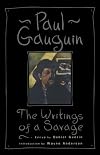
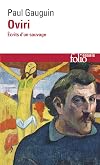
The Writings Of A Savage
by Paul Gauguin
On This Page
Description
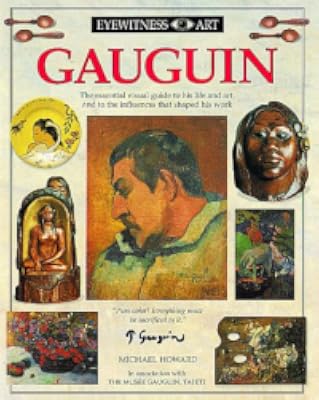
The life of Paul Gauguin (1848#150;1903), who abandoned his wife, five children, and a successful career as a stockbroker to paint in poverty in exotic Tahiti, is one of the legendary tales of the art world. Today he is recognized as a highly influential founding father of modern art, who emphasized the use of flat planes and bright, nonnaturalistic color in conjunction with symbolic or primitive subjects. Familiarity with Gauguin the writer is essential for a complete understanding of the show more artist. The Writings of a Savage collects the very best of his letters, articles, books, and journals, many of which are unavailable elsewhere. In brilliantly lucid discussions of life and art Gauguin paints a triumphant self-portrait of a volcanic artist and the tormented man within. show lessTags
Recommendations
















Member Reviews
art I. Gauguin in France: -- Gauguin's beginnings -- "Notes synthétiques" (1884-85) -- On decorative art (date unknown) -- "Notes on art at the universal exhibition" (July 4 and 11, 1889) -- "Who is being deceived here?" (September 21, 1889) -- Huysmans and Redon (end of 1889) -- Letter to J.F. Willumsen (late 1890) -- "Paul Gauguin discussing his paintings" (February 23, 1891) -- Part II. First stay in Tahiti: -- "Ancient Maori Religion: (1892) -- "Notebook for Aline" (1892) -- Part III. Back in France: -- Noa Noa (end of 1893) -- "In two latitudes" (May 1894) -- "About Sèvres and the latest Kiln" (April 25, 1895) -- "Interview with Paul Gauguin" (May 13, 1895) -- Part IV. Second stay in Oceania: -- A letter to Charles Morice show more (January 1897) -- "Miscellaneous Things" (1896-98) -- A letter to Charles Morice (November 1897) -- A letter to Daniel de Monfreid -- Against the Catholic church -- Two essays -- Le Sourire and Les Guêpes -- Gauguin and the art speculators -- "Racontars de Rapin" (1902) -- Avant et Après -- Last writings -- "The empire of death" (May 8, 1903). show less
je cherche encore la porte d'entrée dans ce texte très factuel qui n'ouvre peu de lien vers la peinture.
May 8, 2010French
Ratings
Members
- Recently Added By
Author Information

130+ Works 1,186 Members
Paul Gauguin, together with Vincent Van Gogh and Paul Cezanne, was one of the great masters of postimpressionism. His life story, prototypical of the artist-rebel, was the subject of films and novels, such as The Moon and Sixpence by W. Somerset Maugham. Born in Paris, Gauguin spent his youth with his mother's family in Peru and went to sea as a show more 16-year-old. He then became a stockbroker in Paris, painting only in his spare time. His early paintings were in the impressionist style. In 1883 he broke with his bourgeois life and eventually separated from his family. In 1888 he visited Van Gogh in Arles---with disastrous results. In 1891 he went to Tahiti. Apart from a short return to Paris, he spent the rest of his life in the South Sea Islands, suffering from poverty, poor health, and recurring struggles with the colonial authorities. In his art, Gauguin sought to return to nature and truth. Inspired by the islanders, among whom he was living, he covered his canvases with stark forms, rhythmic patterns, and strong color, going far beyond naturalistic representation. Through this, his influence on modern art was powerful. His book Noa Noa (1894--1900) is a moving account of his thoughts and life. (Bowker Author Biography) show less
All Editions
Classifications
Statistics
- Members
- 122
- Popularity
- 267,102
- Reviews
- 2
- Rating
- (4.06)
- Languages
- English, French, Italian, Spanish
- Media
- Paper, Ebook
- ISBNs
- 15
- ASINs
- 3