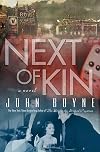
Next of Kin: A Novel
by John Boyne
On This Page
Description
1936: London is abuzz with gossip about the affair between Edward VIII and Mrs. Simpson. But the king is not the only member of the aristocracy with a hard decision to make. Owen Montignac, the handsome and charismatic descendent of a wealthy land-owning family, is anxiously awaiting the reading of his late uncle's will. For Owen has run up huge gambling debts and casino boss Nicholas Delfy has given him a choice: find GBP50,000 by Christmas - or find yourself six feet under. So when Owen show more discovers that he has been cut out of the will in favor of his beautiful cousin Stella, it is time to prove just how cunning he can be...And Owen is nothing if not inventive - even a royal crisis can provide the means for profit. And for murder... show lessTags
Recommendations





























Member Reviews
Always anxious to read anything I can find by John Boyne, I wonder how I could have missed NEXT OF KIN for the last 17 years. I think this might be my favorite of his books.
Historical fiction that is also a thriller, NEXT OF KIN is set in England during 1936, when Edward VIII was King of England and then abdicated the throne. At the same time as his birthright was being discussed all over the world, when he might have felt that it was being stolen from him, another man, Owen Montignac, is SURE that HIS birthright was stolen from HIM.
Owen is a member of the upper class and has lived a very palatial life with his aunt and uncle and cousins in a beautiful mansion that he feels was stolen from his father, the firstborn son. That mindset show more leads to so much trouble! Unlike the king, he refuses to just step aside.
Boyne is critical of the upper class and not only of the Montignacs. Another family in the story, not quite so rich but still upper class, enjoys the lifestyle because the father is a judge. The 24-year-old son, Gareth Bentley, has graduated from college where he studied law. He now sleeps in late every morning and spends the rest of every day doing pretty much nothing at his father's expense. But Judge Bentley finally gives him an ultimatum: get a job or else. Then Gareth meets Owen.
Gareth thinks Owen is his friend so is easily led into Owen's get-rich-quick scheme. As a result, the lives of two families are changed forever.
NEXT OF KIN could be the best of John Boyne. If you, too, missed reading it, grab it now. show less
Historical fiction that is also a thriller, NEXT OF KIN is set in England during 1936, when Edward VIII was King of England and then abdicated the throne. At the same time as his birthright was being discussed all over the world, when he might have felt that it was being stolen from him, another man, Owen Montignac, is SURE that HIS birthright was stolen from HIM.
Owen is a member of the upper class and has lived a very palatial life with his aunt and uncle and cousins in a beautiful mansion that he feels was stolen from his father, the firstborn son. That mindset show more leads to so much trouble! Unlike the king, he refuses to just step aside.
Boyne is critical of the upper class and not only of the Montignacs. Another family in the story, not quite so rich but still upper class, enjoys the lifestyle because the father is a judge. The 24-year-old son, Gareth Bentley, has graduated from college where he studied law. He now sleeps in late every morning and spends the rest of every day doing pretty much nothing at his father's expense. But Judge Bentley finally gives him an ultimatum: get a job or else. Then Gareth meets Owen.
Gareth thinks Owen is his friend so is easily led into Owen's get-rich-quick scheme. As a result, the lives of two families are changed forever.
NEXT OF KIN could be the best of John Boyne. If you, too, missed reading it, grab it now. show less
I've only recently discovered John Boyne who has become a favorite author. And one of the things I like about reading his novels is how different each one is from all the others. This one reads like a skillfully constructed suspense novel, where the entire puzzle isn't clear until the very end of the book. It takes place in the late 1930s, during the reign of King Edward VIII, though the abdication crisis is really more of a backdrop to the family drama.
At its heart, Boyne explores the ways in which family dysfunction can influence events across generations in surprising and unexpected ways. The nature of love and morality are also recurring themes.
Although most of the action involves one generation, the beginnings of the story involve show more two previous generations of a British aristocratic family, the Montignacs, with extensive holdings and wealth. When Henry, the heir, falls for the wrong girl, Henry's father sets in motion events that will wind up impacting the children of both Henry and his younger brother, Peter.
Their children (Andrew, Stella, and Owen) and the relationships they have with each other form the foundation of the novel, particularly between Stella and Owen. Also affected are others who come into their orbits. Stella has a fiancee. Owen takes on an employee, Gareth. And their childhood nanny Margaret remains a central part of their lives. Then, layer on top an accidental shooting, large gambling debts, shady political maneuverings, and a couple of sensational murder trials and you get the makings of this engrossing page-turner. You won't be able to put it down! show less
At its heart, Boyne explores the ways in which family dysfunction can influence events across generations in surprising and unexpected ways. The nature of love and morality are also recurring themes.
Although most of the action involves one generation, the beginnings of the story involve show more two previous generations of a British aristocratic family, the Montignacs, with extensive holdings and wealth. When Henry, the heir, falls for the wrong girl, Henry's father sets in motion events that will wind up impacting the children of both Henry and his younger brother, Peter.
Their children (Andrew, Stella, and Owen) and the relationships they have with each other form the foundation of the novel, particularly between Stella and Owen. Also affected are others who come into their orbits. Stella has a fiancee. Owen takes on an employee, Gareth. And their childhood nanny Margaret remains a central part of their lives. Then, layer on top an accidental shooting, large gambling debts, shady political maneuverings, and a couple of sensational murder trials and you get the makings of this engrossing page-turner. You won't be able to put it down! show less
I've only recently discovered John Boyne who has become a favorite author. And one of the things I like about reading his novels is how different each one is from all the others. This one reads like a skillfully constructed suspense novel, where the entire puzzle isn't clear until the very end of the book. It takes place in the late 1930s, during the reign of King Edward VIII, though the abdication crisis is really more of a backdrop to the family drama.
At its heart, Boyne explores the ways in which family dysfunction can influence events across generations in surprising and unexpected ways. The nature of love and morality are also recurring themes.
Although most of the action involves one generation, the beginnings of the story involve show more two previous generations of a British aristocratic family, the Montignacs, with extensive holdings and wealth. When Henry, the heir, falls for the wrong girl, Henry's father sets in motion events that will wind up impacting the children of both Henry and his younger brother, Peter.
Their children (Andrew, Stella, and Owen) and the relationships they have with each other form the foundation of the novel, particularly between Stella and Owen. Also affected are others who come into their orbits. Stella has a fiancee. Owen takes on an employee, Gareth. And their childhood nanny Margaret remains a central part of their lives. Then, layer on top an accidental shooting, large gambling debts, shady political maneuverings, and a couple of sensational murder trials and you get the makings of this engrossing page-turner. You won't be able to put it down! show less
At its heart, Boyne explores the ways in which family dysfunction can influence events across generations in surprising and unexpected ways. The nature of love and morality are also recurring themes.
Although most of the action involves one generation, the beginnings of the story involve show more two previous generations of a British aristocratic family, the Montignacs, with extensive holdings and wealth. When Henry, the heir, falls for the wrong girl, Henry's father sets in motion events that will wind up impacting the children of both Henry and his younger brother, Peter.
Their children (Andrew, Stella, and Owen) and the relationships they have with each other form the foundation of the novel, particularly between Stella and Owen. Also affected are others who come into their orbits. Stella has a fiancee. Owen takes on an employee, Gareth. And their childhood nanny Margaret remains a central part of their lives. Then, layer on top an accidental shooting, large gambling debts, shady political maneuverings, and a couple of sensational murder trials and you get the makings of this engrossing page-turner. You won't be able to put it down! show less
This is the 4th novel I have read by John Boyne and he is quickly becoming one of my favorite authors. He is an excellent writer and his books vary in style and topic. This one takes place in England in 1936 and can be classified as historical fiction with a crime plot surrounding the whole story. The lead character Owen Montignac is a great anti-hero. Someone you love to hate. He reminded me of the talented Mr. Ripley. The story revolves around the abdication of the English throne by King Edward VIII. This is part of the story that is always in the background and Boyne uses it cleverly to develop his plot. Owen is the nephew of a wealthy man who believes he will inherit the wealth when his uncle dies. Instead it all goes to his cousin show more Stella and he is out in the cold. To add to this he is deeply in gambling debts that he must pay or it end up 6 feet under. Mix this story in with Boyne's less than flattering portrayal of the English upper class and you end with a story that starts slowly until the pieces begin to fit. Once it gets going it is a page turner. As with any complicated crime plot, there are some flaws but they do not take away much from this excellent book. John Boyne is an author worth checking out. show less
NEXT OF KIN by John Boyne is a literary thriller set in London in 1936 amidst the unfolding crisis over King Edward VIII and Mrs. Simpson. This is a first rate novel that kept me in suspense every single moment and had me enthralled with its use of the abdication as its central story.
Those who enjoy reading fiction will love this book which is a very clever story within several stories, with the abdication crisis at the center of a fascinating drama with very interesting and fully developed cast of characters. The Windsors themselves appear only once in a very brief cameo appearance.
The book's wrapper notes gives us a hint:
It is 1936, and London is abuzz with gossip about the affair between King Edward VIII and Mrs. Simpson. Owen show more Montignac, the handsome and charismatic scion of a wealthy family, is anxiously awaiting the reading of his late uncle’s will. He must pay £50,000 worth of gambling debts by Christmas or he’ll soon find himself six feet under. In his desperation, he discovers that the royal scandal could provide the means for profit…and for murder.
What Boyne accomplishes, and quite impressively I might add, is to interweave various thematic messages or allegories among the various plotlines throughout the novel.
What Boyne also does quite effectively, and I was pleasantly surprised, is portray the abdication crisis and all of the various facets of public and private opinion of all classes of British Society. Mr. Boyne has obviously read some informative books about King Edward VIII. Even though this is a work of fiction, I think that Mr. Boyne has accurately reflected the history of the abdication in a balanced and thoughtful way. Unlike other recent thrillers which featured a leather-wearing, whip-snapping Mrs. Simpson as a dominatrix, NEXT OF KIN portrays both the King and Mrs. Simpson, and a few of the key government officials in an historically accurate way.
The novel involves a committee of select expert lawyers who are brought together to develop recommendations for Prime Minister Stanley Baldwin regarding handling of the abdication. Through this committee, as well as various characters in the book, we see a full spectrum of what people thought at the time about the King's affair with Mrs. Simpson. This is historical fiction, I remind you. That genre (and several non-fiction books, in my opinion, that were written as biographies of the Windsors should be classified as historical fiction) is a very difficult category to work in and not many writers effectively manage to find the right balance of historical fact within their artistic license with fiction. Fortunately, John Boyne gives an excellent example of historical fiction at its very best.
Many of the main characters, who are in their twenties, and the conflicts they endure represent the shift in British society from the old ways of the Edwardian and Victorian eras. That theme is very much a part of this book, the divergence from the old ways and the conflicts involved. And, of course, we know that Edward, Prince of Wales, was a chief instigator of change. Boyne’s novel even suggests that this is essentially the reason for Edward’s abdication, not his infamous mistress, Mrs. Simpson. 1936 was, after all, the year of three kings. In the book (as in reality), King Edward VIII seems to represent everything about a new generation and a beginning in a shift of collective consciousness. One of the book’s characters who is on the abdication committee, Lord Keaton, says:
‘Personally I couldn’t care less if the king wanted to marry a donkey. It doesn’t make a blind bit of difference to me. But the man has a way about him that has to be stopped. All this business with the miners in the North-East. The little visits he makes. This nonsense of ‘something has to be done.’ He thinks the monarchy is there to be shared with the people. He understands nothing about our ways. It’s as simple as that. But Baldwin….now he understands. He can see the damage the man is doing.’
The following discussion in the novel also illuminates a number of interesting issues/concepts especially related to the abdication of Edward VIII. One of our members recently pointed out that the morganatic marriage option is essentially what Edward finally ended up with, only crownless. (Ironically, it is also essentially what his successor, Prince Charles, was allowed to do in taking his second wife, the divorced Camilla Parker Bowles, and who was not required to sacrifice his crown.)
'The king proposes that he and Mrs. Simpson marry but that their marriage be a morganatic one—…A morganatic marriage,’ repeated Monckton. ‘Whereby the issue of the marriage would not be in line for the throne.’
'Good God,’ said Keaton. ‘She’s not pregnant, is she?’
'No she’s not,’ said Monckton quickly and angrily. ‘And let us remember that we are discussing the king here and that some level of decorum needs to be maintained. As I was saying, the issue, should there be any,’ he added loudly, ‘would not be in line for the throne. After the king’s death, the throne would pass to the Duke of York or, should he predecease him, to the Princess Elizabeth.’
'He can’t be serious,’ said Altringham.
'He’s perfectly serious,’ said Monckton, sitting back. ‘And it seems a perfectly fair proposal if you ask me.’
'It would satisfy both sides of the debate,’ said Roderick, nodding his head. ‘And Mrs. Simpson. What title would she expect?’
'She would be willing to reject the title of queen, instead she could use the consort equivalent of one of the king’s other titles. The Duchess of Cornwall is the preferred option.’
I was fascinated with the main characters of the book. They all exhibit some sort of serious flaws as humans but I was still sympathetic to them, even perhaps the most flawed of them all, the protagonist Owen Montignac. The characters often do rather horrible things to each other and yet you somehow understand what motivated them or how they found themselves doing the things they were doing.
The cameo appearance by King Edward VIII and Mrs. Simpson, both central characters to the central plotline in NEXT OF KIN, occurs about two-thirds of the way through the book. It is an intimate meeting between Owen Montignac and the King and Mrs. Simpson at a gambling bar in London the night before the abdication:
The guests laughed and Montignac watches as Mrs. Simpson laid a hand gently on the king’s arm, an affectionate gesture, entirely truthful and unpossessive, and the manner in which he used his other hand to tap hers affectionately while she did it. He observed them in their intimacy and envied them.
It is in this scene that I encountered the only instance (that I could find) of the author’s artistic license at hand with the actual circumstances that occurred. As Society Members know, Mrs. Simpson was sequestered in France for many days leading up to the abdication. This scene has Mrs. Simpson in London the night prior to the abdication. But that is the fun of historical fiction…the writer has the ability to create scenes which could not have occurred. In this case, Boyne does so and provides us with a wonderful sympathetic portrayal of the King and Mrs. Simpson.
Boyne’s book is just so very clever and I was constantly in awe of the author’s ability to continue to weave recurring themes into so many different plotlines (e.g., birthright, definition of a family). My copy of NEXT OF KIN looks like some college textbook with dogeared edges and highlighted paragraphs on so many pages.
I strongly recommend this book. It is a very intelligent and exciting read, whether you are a Windsor-phile or not. But for those of you that are, I’ll leave you with this final excerpt of why you’ll be thrilled to read this book (for so many reasons) and you won’t want to miss NEXT OF KIN:
In Buckingham Palace, King Edward VIII slept alone but lay awake now, his mind torn by the twin tortures of duty and love. He didn’t know why he wasn’t simply allowed to do as he pleased—no one had ever denied him anything before—and he thought of his late father’s prophetic words that after he was gone, his heir would destroy himself within a twelve-month. But he knew what he wanted and he knew who he could not live without. And if that meant giving up the throne, his own birthright, then so be it. But he would wait no longer to be married. They had plagued him for so many years to take a wife and now that he had chosen one, they claimed that she was unacceptable. The whole thing was a ridiculous irony. show less
Those who enjoy reading fiction will love this book which is a very clever story within several stories, with the abdication crisis at the center of a fascinating drama with very interesting and fully developed cast of characters. The Windsors themselves appear only once in a very brief cameo appearance.
The book's wrapper notes gives us a hint:
It is 1936, and London is abuzz with gossip about the affair between King Edward VIII and Mrs. Simpson. Owen show more Montignac, the handsome and charismatic scion of a wealthy family, is anxiously awaiting the reading of his late uncle’s will. He must pay £50,000 worth of gambling debts by Christmas or he’ll soon find himself six feet under. In his desperation, he discovers that the royal scandal could provide the means for profit…and for murder.
What Boyne accomplishes, and quite impressively I might add, is to interweave various thematic messages or allegories among the various plotlines throughout the novel.
What Boyne also does quite effectively, and I was pleasantly surprised, is portray the abdication crisis and all of the various facets of public and private opinion of all classes of British Society. Mr. Boyne has obviously read some informative books about King Edward VIII. Even though this is a work of fiction, I think that Mr. Boyne has accurately reflected the history of the abdication in a balanced and thoughtful way. Unlike other recent thrillers which featured a leather-wearing, whip-snapping Mrs. Simpson as a dominatrix, NEXT OF KIN portrays both the King and Mrs. Simpson, and a few of the key government officials in an historically accurate way.
The novel involves a committee of select expert lawyers who are brought together to develop recommendations for Prime Minister Stanley Baldwin regarding handling of the abdication. Through this committee, as well as various characters in the book, we see a full spectrum of what people thought at the time about the King's affair with Mrs. Simpson. This is historical fiction, I remind you. That genre (and several non-fiction books, in my opinion, that were written as biographies of the Windsors should be classified as historical fiction) is a very difficult category to work in and not many writers effectively manage to find the right balance of historical fact within their artistic license with fiction. Fortunately, John Boyne gives an excellent example of historical fiction at its very best.
Many of the main characters, who are in their twenties, and the conflicts they endure represent the shift in British society from the old ways of the Edwardian and Victorian eras. That theme is very much a part of this book, the divergence from the old ways and the conflicts involved. And, of course, we know that Edward, Prince of Wales, was a chief instigator of change. Boyne’s novel even suggests that this is essentially the reason for Edward’s abdication, not his infamous mistress, Mrs. Simpson. 1936 was, after all, the year of three kings. In the book (as in reality), King Edward VIII seems to represent everything about a new generation and a beginning in a shift of collective consciousness. One of the book’s characters who is on the abdication committee, Lord Keaton, says:
‘Personally I couldn’t care less if the king wanted to marry a donkey. It doesn’t make a blind bit of difference to me. But the man has a way about him that has to be stopped. All this business with the miners in the North-East. The little visits he makes. This nonsense of ‘something has to be done.’ He thinks the monarchy is there to be shared with the people. He understands nothing about our ways. It’s as simple as that. But Baldwin….now he understands. He can see the damage the man is doing.’
The following discussion in the novel also illuminates a number of interesting issues/concepts especially related to the abdication of Edward VIII. One of our members recently pointed out that the morganatic marriage option is essentially what Edward finally ended up with, only crownless. (Ironically, it is also essentially what his successor, Prince Charles, was allowed to do in taking his second wife, the divorced Camilla Parker Bowles, and who was not required to sacrifice his crown.)
'The king proposes that he and Mrs. Simpson marry but that their marriage be a morganatic one—…A morganatic marriage,’ repeated Monckton. ‘Whereby the issue of the marriage would not be in line for the throne.’
'Good God,’ said Keaton. ‘She’s not pregnant, is she?’
'No she’s not,’ said Monckton quickly and angrily. ‘And let us remember that we are discussing the king here and that some level of decorum needs to be maintained. As I was saying, the issue, should there be any,’ he added loudly, ‘would not be in line for the throne. After the king’s death, the throne would pass to the Duke of York or, should he predecease him, to the Princess Elizabeth.’
'He can’t be serious,’ said Altringham.
'He’s perfectly serious,’ said Monckton, sitting back. ‘And it seems a perfectly fair proposal if you ask me.’
'It would satisfy both sides of the debate,’ said Roderick, nodding his head. ‘And Mrs. Simpson. What title would she expect?’
'She would be willing to reject the title of queen, instead she could use the consort equivalent of one of the king’s other titles. The Duchess of Cornwall is the preferred option.’
I was fascinated with the main characters of the book. They all exhibit some sort of serious flaws as humans but I was still sympathetic to them, even perhaps the most flawed of them all, the protagonist Owen Montignac. The characters often do rather horrible things to each other and yet you somehow understand what motivated them or how they found themselves doing the things they were doing.
The cameo appearance by King Edward VIII and Mrs. Simpson, both central characters to the central plotline in NEXT OF KIN, occurs about two-thirds of the way through the book. It is an intimate meeting between Owen Montignac and the King and Mrs. Simpson at a gambling bar in London the night before the abdication:
The guests laughed and Montignac watches as Mrs. Simpson laid a hand gently on the king’s arm, an affectionate gesture, entirely truthful and unpossessive, and the manner in which he used his other hand to tap hers affectionately while she did it. He observed them in their intimacy and envied them.
It is in this scene that I encountered the only instance (that I could find) of the author’s artistic license at hand with the actual circumstances that occurred. As Society Members know, Mrs. Simpson was sequestered in France for many days leading up to the abdication. This scene has Mrs. Simpson in London the night prior to the abdication. But that is the fun of historical fiction…the writer has the ability to create scenes which could not have occurred. In this case, Boyne does so and provides us with a wonderful sympathetic portrayal of the King and Mrs. Simpson.
Boyne’s book is just so very clever and I was constantly in awe of the author’s ability to continue to weave recurring themes into so many different plotlines (e.g., birthright, definition of a family). My copy of NEXT OF KIN looks like some college textbook with dogeared edges and highlighted paragraphs on so many pages.
I strongly recommend this book. It is a very intelligent and exciting read, whether you are a Windsor-phile or not. But for those of you that are, I’ll leave you with this final excerpt of why you’ll be thrilled to read this book (for so many reasons) and you won’t want to miss NEXT OF KIN:
In Buckingham Palace, King Edward VIII slept alone but lay awake now, his mind torn by the twin tortures of duty and love. He didn’t know why he wasn’t simply allowed to do as he pleased—no one had ever denied him anything before—and he thought of his late father’s prophetic words that after he was gone, his heir would destroy himself within a twelve-month. But he knew what he wanted and he knew who he could not live without. And if that meant giving up the throne, his own birthright, then so be it. But he would wait no longer to be married. They had plagued him for so many years to take a wife and now that he had chosen one, they claimed that she was unacceptable. The whole thing was a ridiculous irony. show less
This is quite a different voice to Boy in the Striped Pyjamas. In fact it's unsympathetic central character Owen Montignac is pretty repugnant. He was quite a hard barrier to overcome and really I didn't quite enjoy this story. I found it quite unsatisfying and unengaging, unsatisfying enough that I actually nearly didn't finish it. Owen is expecting to inherit the family estate from his uncle, something he needs in order to fix some gambling debts he has. However his cousin Stella gets it and he's not sure what to do. Opportunity knocks, and it brings him down a path of murder and other crimes.
It could have really appealed to me as I'm a fan of this period, the interwar period, and this did have some interesting parallels drawn with show more the King and Mrs Simpson, and it did have an interesting look at upper middle class lawyers and their life-assumptions but overall it just didn't work for me. I was glad when I was finished but a little deflated by the whole thing. show less
It could have really appealed to me as I'm a fan of this period, the interwar period, and this did have some interesting parallels drawn with show more the King and Mrs Simpson, and it did have an interesting look at upper middle class lawyers and their life-assumptions but overall it just didn't work for me. I was glad when I was finished but a little deflated by the whole thing. show less
READ IN ENGLISH
This book again is completely different from the other books by John Boyne I've read. It's a subtle crime novel as well as an intrigue novel. I think this to be one of his best books. It was just so engrossing, I couldn't stop reading.
London, 1936 That's a great start!
Owen Montignac has a great gambling debt and only six months to find himself a large amount of money. What a nice coincidence that his very wealthy uncle has just passed away. No need to be sad - until Owen finds out his uncle has cut him out of his will. Oops. What follows is Owen's increasingly psychopathic scheming and planning in order to reach his goals.
I really liked this book, and I don't get why so few people know about this book or have read it. show more It was really good. I also don't get why this book isn't translated into Dutch. I would recommend this book, because I think it deserves more readers! show less
This book again is completely different from the other books by John Boyne I've read. It's a subtle crime novel as well as an intrigue novel. I think this to be one of his best books. It was just so engrossing, I couldn't stop reading.
London, 1936 That's a great start!
Owen Montignac has a great gambling debt and only six months to find himself a large amount of money. What a nice coincidence that his very wealthy uncle has just passed away. No need to be sad - until Owen finds out his uncle has cut him out of his will. Oops. What follows is Owen's increasingly psychopathic scheming and planning in order to reach his goals.
I really liked this book, and I don't get why so few people know about this book or have read it. show more It was really good. I also don't get why this book isn't translated into Dutch. I would recommend this book, because I think it deserves more readers! show less
Members
- Recently Added By
Author Information

43+ Works 31,674 Members
Acclaimed Irish novelist John Boyne was born in Dublin, Ireland on April 30, 1971. He studied English Literature at Trinity College, Dublin and Creative Writing at the University of East Anglia. He has written dozens of short stories and many novels, including the New York Times bestseller The Boy in the Striped Pyjamas. An award-winning film show more adaptation of this work was released in 2008. In 2015 his title, A History of Lonelines made The New Zealand Best Seller List. (Bowker Author Biography) show less
Common Knowledge
- Original title
- Next of Kin
- Original publication date
- 2006
- People/Characters
- Edward VIII, Duke of Windsor; Wallis Simpson; Walter Monckton; Owen Montignac
Classifications
Statistics
- Members
- 167
- Popularity
- 195,358
- Reviews
- 10
- Rating
- (3.86)
- Languages
- English, German, Portuguese
- Media
- Paper, Ebook
- ISBNs
- 13
- ASINs
- 5