On This Page
Description
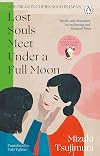
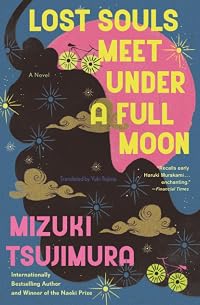
"I bring together the living and the departed. I am the go-between. When a young woman from Tokyo contacts the go-between to request a meeting with a deceased TV star who once helped her, she doesn't expect a teenage boy to show up. Dressed in a designer duffel coat and carrying a tattered notebook, Ayumi Shibuya offers an extraordinary service: he reunites the living with their dearly departed. Meeting his clients at a luxury hotel, Ayumi lays down the ground rules: each reunion is a show more one-time arrangement that the dead can refuse, the service is entirely free, and the meeting must take place during a full moon. As Ayumi arranges these reunions, we encounter a resentful eldest son who wants to ask his mother to unearth the deeds to a plot of land, a teenage girl who blames herself for her best friend's death, and a weary businessman seeking answers about his fiancee's disappearance days after he proposed."-- show lessTags
Recommendations









Member Reviews
I came into this second book by Mizuki Tsujimura getting what I expected (and largely hoped for) after Lonely Castle in the Mirror - a gentle, emotional, and full of heart tale that sits neatly in the Japanese magical realism genre that I am so attracted to. Tsujimura has a lovely way of writing about heavy topics, like grief and loss, loneliness and trauma, without ever making it feel too bleak or melodramatic. This one dives into the big “what ifs” that haunt people after someone they love or admire is gone, and asks whether those questions can ever really be resolved.
What I really liked is that it doesn’t sugar-coat any of it. Yes, it’s soft and easy to read, but it’s also quite confronting in moments. It faces the painful show more sides of grief head-on...regret, guilt, missed chances, but with compassion. There’s a warmth to it that keeps it from ever feeling too heavy.
The story reminded me a bit of Before the Coffee Gets Cold, but where that book sometimes felt a little too neat or sentimental, this one feels more authentic. It handles the supernatural or “what if” element quietly and simply, so it ends up feeling like an emotional conversation rather than a gimmick.
It’s not a fast-paced book, and it doesn’t need to be. It’s the kind of story you sit with - simple but thoughtful, sad but strangely comforting. If you’ve ever lost someone and found yourself turning over all the things you wish you’d said or done differently, this book will hit home.
In short: touching, sincere, and quietly powerful. Tsujimura does what she does best - takes the messy emotions of grief and turns them into something that feels oddly healing. show less
What I really liked is that it doesn’t sugar-coat any of it. Yes, it’s soft and easy to read, but it’s also quite confronting in moments. It faces the painful show more sides of grief head-on...regret, guilt, missed chances, but with compassion. There’s a warmth to it that keeps it from ever feeling too heavy.
The story reminded me a bit of Before the Coffee Gets Cold, but where that book sometimes felt a little too neat or sentimental, this one feels more authentic. It handles the supernatural or “what if” element quietly and simply, so it ends up feeling like an emotional conversation rather than a gimmick.
It’s not a fast-paced book, and it doesn’t need to be. It’s the kind of story you sit with - simple but thoughtful, sad but strangely comforting. If you’ve ever lost someone and found yourself turning over all the things you wish you’d said or done differently, this book will hit home.
In short: touching, sincere, and quietly powerful. Tsujimura does what she does best - takes the messy emotions of grief and turns them into something that feels oddly healing. show less
Lost Souls Meet Under a Full Moon is a compelling and structured exploration of life, death, mortality, and mourning. The novel is composed of vignettes, which give the book a brisk pace and allow Tsujimura to introduce a fascinating collection of characters.
These individuals are crafted as imperfect and profoundly human; they aren't always likeable, but their complexity makes them feel real. This grounded emotional realism is complemented by Tsujimura-san's invocation of a casual mysticism I find to be unique to Japanese culture, where the supernatural quietly integrates with everyday life. While some characters and chapters are harder to invest in than others, the brevity of the vignettes ensures that any less compelling moment passes show more quickly.
This structural choice ultimately pays off spectacularly, culminating in a final chapter that delivers rich and satisfying lore drops. The experience was made even more interesting by reading it alongside my cousin, which sparked discussions about which characters and chapters resonated most deeply.
Overall, the book is an insightful and moving experience. show less
These individuals are crafted as imperfect and profoundly human; they aren't always likeable, but their complexity makes them feel real. This grounded emotional realism is complemented by Tsujimura-san's invocation of a casual mysticism I find to be unique to Japanese culture, where the supernatural quietly integrates with everyday life. While some characters and chapters are harder to invest in than others, the brevity of the vignettes ensures that any less compelling moment passes show more quickly.
This structural choice ultimately pays off spectacularly, culminating in a final chapter that delivers rich and satisfying lore drops. The experience was made even more interesting by reading it alongside my cousin, which sparked discussions about which characters and chapters resonated most deeply.
Overall, the book is an insightful and moving experience. show less
When a life was lost, who did it belong to? What were those left behind meant to do with the incomprehensible, inescapable loss?
A contemplative novel about—among other things—death, duty, family, loss, and love. For all that it is about such weighty topics, there is a gentleness that keeps the book from feeling oppressive in its themes.
Lost Souls Meet Under a Full Moon will never be a favorite of mine, but I believe it will stay with me for a long time.
Received via NetGalley.
A contemplative novel about—among other things—death, duty, family, loss, and love. For all that it is about such weighty topics, there is a gentleness that keeps the book from feeling oppressive in its themes.
Lost Souls Meet Under a Full Moon will never be a favorite of mine, but I believe it will stay with me for a long time.
Received via NetGalley.
*received as an ARC from the publisher
What a strange, quiet little novel. Made up of four short tales where mourning individuals use the services of a mystic go-between to meet a person who has died, and wrapping up with a novella that delves into the origins of the go-between, I’m left with a sense of vague wonder by the story’s final pages. The tale itself was well written, and I enjoyed the slightly intricate telling of the story that only came to light at the finale, but does the story actually have a climax and conclusion? The tone of the book feels distinctly Japanese in its quietude, with a subtle sense of language, characters, and pacing that doesn’t really rely on narrative action to propel readers and expose themes - show more even though there are definitely highs and lows throughout, and not a little amount of melodrama. Definitely an enjoyable read for its uniqueness, even if it’s not exactly a standout stunner. show less
What a strange, quiet little novel. Made up of four short tales where mourning individuals use the services of a mystic go-between to meet a person who has died, and wrapping up with a novella that delves into the origins of the go-between, I’m left with a sense of vague wonder by the story’s final pages. The tale itself was well written, and I enjoyed the slightly intricate telling of the story that only came to light at the finale, but does the story actually have a climax and conclusion? The tone of the book feels distinctly Japanese in its quietude, with a subtle sense of language, characters, and pacing that doesn’t really rely on narrative action to propel readers and expose themes - show more even though there are definitely highs and lows throughout, and not a little amount of melodrama. Definitely an enjoyable read for its uniqueness, even if it’s not exactly a standout stunner. show less
If you can request to meet someone who has died but you only have one chance, who will you choose? The dead person has to agree to the request and cannot ever meet another living person again. Sounds like fantasy, but Tsujimura handled it in such a way that it doesn't come across as too ridiculous. You will expect the meetings to end well but Tsujimura included one that is quite dark. Arashi hoped to get assurance that she did not cause her best friend's death. This was not resolved, and Arashi was left in a bucket of tears from the message she received from the go-between.
I enjoyed this book. I really liked the structure of it, and the stories were moving, one even brought me close to tears. Overall, I would recommend to magic realism fans or fans of Japanese media.
Really lovely book with such human emotions and contradictions. Like when the coffee gets cold without the jankiness.
Members
- Recently Added By
Lists

Top Five Books of 2025
954 works; 303 members
Author Information

46+ Works 1,513 Members
Some Editions
Series

Common Knowledge
- Canonical title
- Lost Souls Meet Under a Full Moon
- Original publication date
- 2010
- First words
- As the wind was blowing, I pulled the collar of my coat tighter.
- Quotations
- When a life was lost, who did it belong to? What were those left behind meant to do with the incomprehensible, inescapable loss?
- Last words
- (Click to show. Warning: May contain spoilers.)"Open your eyes," the voice called.
- Original language
- Japanese
Classifications
- Genres
- Fiction and Literature, General Fiction, Fantasy
- DDC/MDS
- 890.00 — Literature & rhetoric Literatures of other languages Literatures of other specific languages and language families
- LCC
- PL876 .S83 .T7813 — Language and Literature Languages and literatures of Eastern Asia, Africa, Oceania Languages of Eastern Asia, Africa, Oceania Japanese language and literature Japanese literature
- BISAC
Statistics
- Members
- 274
- Popularity
- 118,173
- Reviews
- 9
- Rating
- (3.89)
- Languages
- English
- Media
- Paper, Audiobook, Ebook
- ISBNs
- 8
- ASINs
- 3