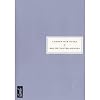
London War Notes, 1939-1945
by Mollie Panter-Downes
On This Page
Description
A firsthand account of the British civilian experience of World War II.Tags
Recommendations







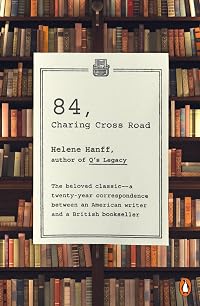
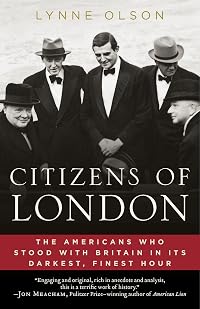


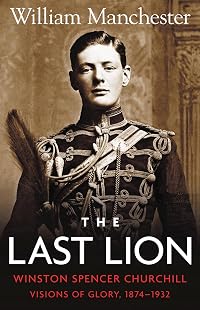









Member Recommendations

Member Reviews
Sep 3, 1939: For a week, everybody in London had been saying everyday that if there wasn't a war tomorrow there wouldn't be a war. Yesterday, people were saying that if there wasn't a war today it would be a bloody shame. Now that there is a war, the English, slow to start, have already in spirit started and are comfortably two laps ahead of the official war machine, which had to await the drop of someone's handkerchief. In the general opinion, Hitler has got it coming to him.
Between 1939 and 1945 British novelist, Mollie Panter-Downes, wrote a regular column for The New Yorker entitled Letter from London. The columns written between 1939 and 1945 are collected in London War Notes and provide a fascinating glimpse into life in Britain show more (well, England and mainly London) during WWII.
As I've come to expect from her short story collections, Mollie Panter-Downes writes beautifully: with a light touch, but not without seriousness. The book includes a list of the major events of WWII which was helpful in understanding all of her essays although there were occasions when I had to google battles or generals to work out exactly what she was referring to. It probably sounds silly, but the more I read accounts written about or during WWII, the more it hits me that this actually happened to people within living memory. And they didn't know that it would be 1939-1945 or which side would win. The book ends with Panter-Downes' account of VE day and reading this brought tears to my eyes, even knowing that despite the war being officially over, Britain (and presumably the rest of Europe) still had years of hardship left (Simon Garfield's [Our Hidden Lives] is recommended if you want eyewitness accounts of the post-war years).
It was interesting to consider the differences between a collection of essays like this which were purposefully written for publication and something like the Mass Observation diaries collected in Simon Garfield's [We Are at War] where the diarists weren't writing for publication in the same way. Mollie Panter-Downes' writings come across as more positive and resilient than the Mass Observation diarists and I did wonder to what extent this was influenced by the fact that she was writing for an American publication, when it was clear for most of the early war that Britain desperately needed the support of America. Or whether the difference was simply that between the face you put on in public and the secret fears you might confess to your private diary.
If you're interested in the social history of WWII or the Home Front in England then this is probably essential reading, although unfortunately out of print and rather expensive second-hand.
July 5, 1942 (after yet another defeat for Britain): In these grave days, Londoners have been glad to be able to find something to crack a smile, however grim, about. It seems that some earnest fact-finding agency [....] saw fit to circulate a little house-to-house questionnaire to find out the public's reaction to the Army. [....] One of the questions asked was whom the households fancied as the outstanding general. Naturally, the agency meant a British general, but a horribly large and candid proportion of Britons picked up their pens and regretfully, though with their contrymen's typical admiration for a first-class performer in any game, wrote 'Rommel'. show less
Between 1939 and 1945 British novelist, Mollie Panter-Downes, wrote a regular column for The New Yorker entitled Letter from London. The columns written between 1939 and 1945 are collected in London War Notes and provide a fascinating glimpse into life in Britain show more (well, England and mainly London) during WWII.
As I've come to expect from her short story collections, Mollie Panter-Downes writes beautifully: with a light touch, but not without seriousness. The book includes a list of the major events of WWII which was helpful in understanding all of her essays although there were occasions when I had to google battles or generals to work out exactly what she was referring to. It probably sounds silly, but the more I read accounts written about or during WWII, the more it hits me that this actually happened to people within living memory. And they didn't know that it would be 1939-1945 or which side would win. The book ends with Panter-Downes' account of VE day and reading this brought tears to my eyes, even knowing that despite the war being officially over, Britain (and presumably the rest of Europe) still had years of hardship left (Simon Garfield's [Our Hidden Lives] is recommended if you want eyewitness accounts of the post-war years).
It was interesting to consider the differences between a collection of essays like this which were purposefully written for publication and something like the Mass Observation diaries collected in Simon Garfield's [We Are at War] where the diarists weren't writing for publication in the same way. Mollie Panter-Downes' writings come across as more positive and resilient than the Mass Observation diarists and I did wonder to what extent this was influenced by the fact that she was writing for an American publication, when it was clear for most of the early war that Britain desperately needed the support of America. Or whether the difference was simply that between the face you put on in public and the secret fears you might confess to your private diary.
If you're interested in the social history of WWII or the Home Front in England then this is probably essential reading, although unfortunately out of print and rather expensive second-hand.
July 5, 1942 (after yet another defeat for Britain): In these grave days, Londoners have been glad to be able to find something to crack a smile, however grim, about. It seems that some earnest fact-finding agency [....] saw fit to circulate a little house-to-house questionnaire to find out the public's reaction to the Army. [....] One of the questions asked was whom the households fancied as the outstanding general. Naturally, the agency meant a British general, but a horribly large and candid proportion of Britons picked up their pens and regretfully, though with their contrymen's typical admiration for a first-class performer in any game, wrote 'Rommel'. show less
Another book to add to my favourites for the year. This is a compilation of the articles the author wrote for The New Yorker, roughly every two weeks throughout World War II. Every article covers a variety of subjects, all very much about the war. The effects of the war on the British people, especially Londoners, are related as events unfold. Battles, international relations, politics, air raids, rationing, national defence, evacuation, morale, and the housing crisis are recurring topics.
It is fascinating to follow as the author narrates the events of the war without the benefit of foresight. On October 29, 1939, she tells us that "Food rationing is in the offing," and that "Generous allowances are promised". On December 13th, 1942, show more we learn that "Turkeys are difficult to find, though it's rumored that tinned ones will be available--a bleak prospect for those who can't work up any suitably seasonal emotions at the thought of getting out the yuletide can-opener." She realizes by June 15th, 1940, that it was "certain that the end of the war will find a changed--perhaps a better, possibly a less pleasant--England, in which Englishmen will no longer be able to give their loving and undivided attention to the cultivation of their gardens." I learned about things like Anderson and Morrison shelters, and the bunk beds in the tube stations.
Considering that the author was working under the constraints of censorship, she managed to pack a lot of information into her short articles. I have no way of knowing all that had to be left out, but a few things are notable. There is no mention of numbers of casualties, either at home or abroad, and no specific mention of high-casualty air raids. V-2 rockets started hitting London at the beginning of September in 1944, but it wasn't until November 16th that they she could write about them. She says, "Prime Minister Churchill's statement, which made it all right to talk about V-2 instead of cautiously referring to it as if it were something supernatural which had dropped in somehow and made a big hole in the back yard, came as a relief to the inhabitants of southern England."
Mollie Panter-Downes' writing style is understated with humourous touches, and clearly conveys national sentiment. I came away with a better overview of the war than I had before. I just wish I could have spread out my reading of it over more time, instead of having to rush through the whole war in a week. show less
It is fascinating to follow as the author narrates the events of the war without the benefit of foresight. On October 29, 1939, she tells us that "Food rationing is in the offing," and that "Generous allowances are promised". On December 13th, 1942, show more we learn that "Turkeys are difficult to find, though it's rumored that tinned ones will be available--a bleak prospect for those who can't work up any suitably seasonal emotions at the thought of getting out the yuletide can-opener." She realizes by June 15th, 1940, that it was "certain that the end of the war will find a changed--perhaps a better, possibly a less pleasant--England, in which Englishmen will no longer be able to give their loving and undivided attention to the cultivation of their gardens." I learned about things like Anderson and Morrison shelters, and the bunk beds in the tube stations.
Considering that the author was working under the constraints of censorship, she managed to pack a lot of information into her short articles. I have no way of knowing all that had to be left out, but a few things are notable. There is no mention of numbers of casualties, either at home or abroad, and no specific mention of high-casualty air raids. V-2 rockets started hitting London at the beginning of September in 1944, but it wasn't until November 16th that they she could write about them. She says, "Prime Minister Churchill's statement, which made it all right to talk about V-2 instead of cautiously referring to it as if it were something supernatural which had dropped in somehow and made a big hole in the back yard, came as a relief to the inhabitants of southern England."
Mollie Panter-Downes' writing style is understated with humourous touches, and clearly conveys national sentiment. I came away with a better overview of the war than I had before. I just wish I could have spread out my reading of it over more time, instead of having to rush through the whole war in a week. show less
There is definitely an emotional arc to the book. It begins very witty and you fall in love with the English people. There is wry commentary about everyday lives, politics, the war on it's various fronts; streetside opinions of all of it. About half way through, it begins to bog down. I'm sure it reflects the fatigue everyone was experiencing at the time, but I had to start skipping rather than reading.
I'm glad to have read the amount that I did, but I won't be finishing. Too many other books.
I'm glad to have read the amount that I did, but I won't be finishing. Too many other books.
Ratings
Members
- Recently Added By
Lists

Top Five Books of 2013
1,562 works; 721 members

1940s
221 works; 25 members

THE WAR ROOM
813 works; 24 members

Persephone
148 works; 3 members
Author Information

13+ Works 1,388 Members
All Editions
Awards and Honors
Distinctions
Series
Belongs to Publisher Series
Persephone (111)
Common Knowledge
- Canonical title
- London War Notes, 1939-1945
- Original publication date
- 1971
- Important places
- London, England, UK
- Dedication
- to William Shawn, with my affectionate gratitude for editing these London War Notes, and for everything
- First words
- For a week, everybody in London had been saying every day that if there wasn't a war tomorrow there wouldn't be a war.
Classifications
Statistics
- Members
- 167
- Popularity
- 196,163
- Reviews
- 3
- Rating
- (4.13)
- Languages
- English
- Media
- Paper
- ISBNs
- 3