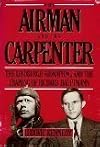
The Airman and the Carpenter
by Ludovic Kennedy
On This Page
Description
The Lindbergh killing and the framing of Richard Hauptman.Tags
Recommendations





























Member Reviews
A meticulous and well-written book, Ludovic Kennedy's The Airman and the Carpenter is a fine introduction for those wishing to learn more about the Lindbergh Baby kidnapping of 1932. Charles Lindbergh was one of the most famous men in the world at the time and the kidnapping of his son from his crib generated a media circus, a headline-grabbing ransom demand and, eventually, the tragic discovery of the body of poor young Charlie Jr. not far from where he went missing.
All this is well-told by Kennedy, but the raison d'être of his true-crime book is what followed: the arrest of one Richard Hauptmann and his trial for what was dubbed the 'Crime of the Century'. Kennedy's conviction, for which he brings receipts, is that Hauptmann was show more completely innocent of the crime and was railroaded by a perfect storm of unfortunate circumstances. Much of what is low in America is on display in these events: the media circus and the preening, grasping fame of even the case's bit-part players, the greed, pigheadedness and unreflective ruthlessness of both law enforcement and the lawyers, and the same sort of public thirst for celebrity, blood and mob outrage that has made 'true-crime' an often unedifying genre and the justice system an insular self-mockery, with the courtroom a bloodsport between two implacable 'sides', a game to be won at all costs rather than a process by which truth is arrived at.
Kennedy is an ideal guide through this shoddy terrain, for being a British journalist he stands apart from some of the American craziness on display and shows restraint even when some of the behaviour on display is unforgivably contemptible. I knew a bit of surface-level knowledge of the Lindbergh Baby kidnapping prior to reading Kennedy's book, but I had never got into the weeds of it. I had never known that it was so shamefully inept.
One much acknowledge, of course, that this is Kennedy's take on it, and no doubt I could read other books which reach a different conclusion, or present the same evidence with a different emphasis. But the interpretation Kennedy builds is compelling, convincing and detailed. In fact, if there is a drawback in reading the book it's that Kennedy is almost too earnest, too sober in his depiction of the case. There's little to nothing on who might have committed the crime if not Hauptmann, for Kennedy deals in facts, and his estimation of the facts, rather than speculation. Whatever evidence and leads there might have been were squandered – and sometimes actively extinguished – by the ineptitude and corruption of the police at the time, and cannot be revived decades later. Who killed the baby will almost certainly never be known, and because of the lack of any solid knowledge Kennedy does not indulge hypotheticals.
Those looking for such titillating speculations will have to look elsewhere. (I believe there's a non-zero chance that Lindbergh Senior – a deeply shady character behind his mask – did it himself, perhaps one of his cruel pranks gone wrong, and was arrogantly willing to let an innocent stranger get the chair to cover it up. It fits the known facts, survives an encounter with Occam's Razor, and the fact that the family dog did not bark on the night-time of the 'intrusion' (pg. 113) is surely a 'curious incident' that would've made Sherlock Holmes raise an eyebrow.)
Instead, the conspiracies Kennedy relates here are not those of the unknown kidnapping gang or of any inside-job cover-up, but the very real and provable ones that saw law enforcement, reporters and prosecuting lawyers plant fake evidence, hide exculpatory evidence, beat and intimidate Hauptmann and witnesses, and just all around make a mockery of 'justice' under that extremely dangerous logical fallacy that they 'knew' Hauptmann was guilty and were therefore willing to do anything and everything to ensure he was executed for it, never once stopping to consider they might be wrong and being too prideful to admit it when others stopped them and asked them to reconsider. One hopes that when they too eventually passed from this life and found themselves facing Judgement, that St. Peter stood aside and allowed Hauptmann to be the face that greeted them at heaven's gate, their entry to be weighed by his hands.
While it is long and detailed and takes a good while to get going, Ludovic Kennedy's The Airman and the Carpenter is a great introduction to a case that proved even more tragic than I had thought it was. As Governor Hoffman recognises at the time (he was one of the few to believe in Hauptmann's innocence, and did what he could to temporarily grant the man a reprieve – for which the mob tried to impeach him), the injustice is not only in the taking of the life of the child and the anguish of his mother, and not even in adding the injustice of condemning an innocent man, but in allowing those who actually did commit the crime to escape punishment (pg. 383). The real killer, or killers, got away with it. All that was achieved in the Crime of the Century, aside from some false catharsis for the mob and some base copy for the media, was unnecessary misery. As Hauptmann himself said while on Death Row (pg. 394), the case is not solved; all they did was add one more dead. show less
All this is well-told by Kennedy, but the raison d'être of his true-crime book is what followed: the arrest of one Richard Hauptmann and his trial for what was dubbed the 'Crime of the Century'. Kennedy's conviction, for which he brings receipts, is that Hauptmann was show more completely innocent of the crime and was railroaded by a perfect storm of unfortunate circumstances. Much of what is low in America is on display in these events: the media circus and the preening, grasping fame of even the case's bit-part players, the greed, pigheadedness and unreflective ruthlessness of both law enforcement and the lawyers, and the same sort of public thirst for celebrity, blood and mob outrage that has made 'true-crime' an often unedifying genre and the justice system an insular self-mockery, with the courtroom a bloodsport between two implacable 'sides', a game to be won at all costs rather than a process by which truth is arrived at.
Kennedy is an ideal guide through this shoddy terrain, for being a British journalist he stands apart from some of the American craziness on display and shows restraint even when some of the behaviour on display is unforgivably contemptible. I knew a bit of surface-level knowledge of the Lindbergh Baby kidnapping prior to reading Kennedy's book, but I had never got into the weeds of it. I had never known that it was so shamefully inept.
One much acknowledge, of course, that this is Kennedy's take on it, and no doubt I could read other books which reach a different conclusion, or present the same evidence with a different emphasis. But the interpretation Kennedy builds is compelling, convincing and detailed. In fact, if there is a drawback in reading the book it's that Kennedy is almost too earnest, too sober in his depiction of the case. There's little to nothing on who might have committed the crime if not Hauptmann, for Kennedy deals in facts, and his estimation of the facts, rather than speculation. Whatever evidence and leads there might have been were squandered – and sometimes actively extinguished – by the ineptitude and corruption of the police at the time, and cannot be revived decades later. Who killed the baby will almost certainly never be known, and because of the lack of any solid knowledge Kennedy does not indulge hypotheticals.
Those looking for such titillating speculations will have to look elsewhere. (I believe there's a non-zero chance that Lindbergh Senior – a deeply shady character behind his mask – did it himself, perhaps one of his cruel pranks gone wrong, and was arrogantly willing to let an innocent stranger get the chair to cover it up. It fits the known facts, survives an encounter with Occam's Razor, and the fact that the family dog did not bark on the night-time of the 'intrusion' (pg. 113) is surely a 'curious incident' that would've made Sherlock Holmes raise an eyebrow.)
Instead, the conspiracies Kennedy relates here are not those of the unknown kidnapping gang or of any inside-job cover-up, but the very real and provable ones that saw law enforcement, reporters and prosecuting lawyers plant fake evidence, hide exculpatory evidence, beat and intimidate Hauptmann and witnesses, and just all around make a mockery of 'justice' under that extremely dangerous logical fallacy that they 'knew' Hauptmann was guilty and were therefore willing to do anything and everything to ensure he was executed for it, never once stopping to consider they might be wrong and being too prideful to admit it when others stopped them and asked them to reconsider. One hopes that when they too eventually passed from this life and found themselves facing Judgement, that St. Peter stood aside and allowed Hauptmann to be the face that greeted them at heaven's gate, their entry to be weighed by his hands.
While it is long and detailed and takes a good while to get going, Ludovic Kennedy's The Airman and the Carpenter is a great introduction to a case that proved even more tragic than I had thought it was. As Governor Hoffman recognises at the time (he was one of the few to believe in Hauptmann's innocence, and did what he could to temporarily grant the man a reprieve – for which the mob tried to impeach him), the injustice is not only in the taking of the life of the child and the anguish of his mother, and not even in adding the injustice of condemning an innocent man, but in allowing those who actually did commit the crime to escape punishment (pg. 383). The real killer, or killers, got away with it. All that was achieved in the Crime of the Century, aside from some false catharsis for the mob and some base copy for the media, was unnecessary misery. As Hauptmann himself said while on Death Row (pg. 394), the case is not solved; all they did was add one more dead. show less
A compelling, very well written account of the sad fate of Richard Hauptmann, a German immigrant carpenter who was framed for the kidnapping and murder of the Lindberghs' baby son. A heartbreaking story, with a particularly interesting social and historical context which is expertly evoked.
1964 The Airman and the Carpenter: The Lindbergh Kidnapping and the Framing of Richard Hauptmann, by Ludovic Kennedy (read 5 Dec 1985) On July 9, 1962, I read Kidnap and was convinced Hauptmann was guilty. On Dec 4, 1976, I read Scapegoat and came to believe he was not guilty. I have now read this book and am thoroughly convinced Hauptmann was not only innocent but framed. In fact the book was depressing and saddening. When I read Kidnap I thought the attic board was proof positive. Now it seems ridiculous to think anyone could believe Hauptmann would take a board from his attic floor to build a ladder, when he could use wood much more easily from some other source. This book is well-written, although it is confessedly written to prove show more Hauptmann was framed. A better book would have been more objective, and have proved the same thing. The book is by an English writer who has written other crime books I'd like to read: 10 Rillington Place; A Presumption of Innocence; and Wicked Beyond Belief. [But I never have, yet.] show less
Interesting book, though it didn't convince me of Hauptmann's innocence. Though the trial and the conduct of the prosecutors certainly left a lot to be desired, the question of how Hauptmann came to be in possession of the ransom money has never been properly addressed by those who like to proclaim his innocence.
Ratings
Members
- Recently Added By
Author Information

27+ Works 967 Members
Awards and Honors
Awards
Common Knowledge
- People/Characters
- Bruno Richard Hauptmann; Charles A. Lindbergh; Charles Lindbergh Jr.; Anne Morrow Lindbergh
- Important places
- Hopewell, New Jersey, USA
- Important events
- Lindbergh kidnapping (1932)
- Related movies
- Crime of the Century (1996 | IMDb)
Classifications
- Genres
- Nonfiction, History, General Nonfiction, Politics and Government
- DDC/MDS
- 364.15 — Society, government, & culture Social problems and social services Crime Criminal offenses Offenses against the person
- LCC
- HV6603 .L5 .K46 — Social sciences Social pathology. Social and public welfare. Criminology Social pathology. Social and public welfare. Criminology Crimes and offenses
- BISAC
Statistics
- Members
- 105
- Popularity
- 307,674
- Reviews
- 4
- Rating
- (3.90)
- Languages
- English
- Media
- Paper
- ISBNs
- 5
- ASINs
- 3