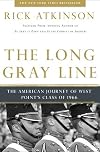
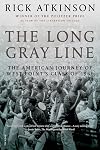
The Long Gray Line: The American Journey of West Point's Class of 1966
by Rick Atkinson
On This Page
Description
A gripping look at the cadets of West Point whose dedication to duty was not honored by the country they served. Young men who dream of heroes look to West Point and to a career of serving their country. The class of 1966 was no exception, but these cadets faced greater challenges than any earlier generation could have imagined. Thirty of them would be killed in Vietnam, but for those who did return, they resigned from the Army in records numbers— returning to a society that paid no honor show more to their military careers. In The Long Gray Line, Rick Atkinson eloquently tells the stories of the class of ' 66, a class that represented the innocence and patriotism of a generation.. show less
Tags
Recommendations

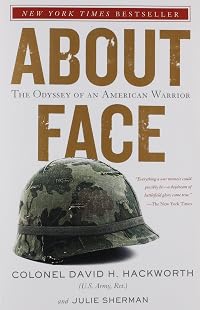

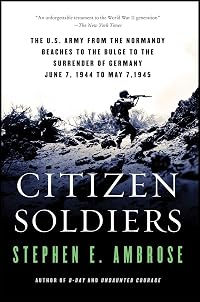
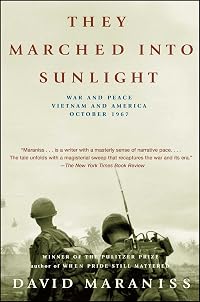
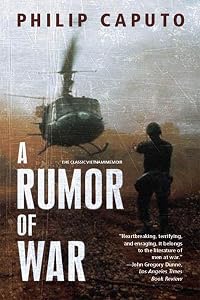







Member Reviews
This book seems like a bit of a hen's tooth to my mind. A fascinating, readable, very comprehensive yet also incredibly detailed dive into a part of history I really knew very little about going in.
Gives all sorts of facts, figures and juicy details whilst still keeping them, well, juicy. A dry tome of events and statistics, this ain't.
Somehow the author covered his subject in painstaking detail without making it any less of an enjoyable narrative. The subject itself may sound kind of niche, but through that subject the book takes a good look at a dazzlingly wide array of subjects - and of course, I've come away with an understanding of West Point (and the American military as a whole) that is 100% improved on the next-to-nothing I show more knew before. show less
Gives all sorts of facts, figures and juicy details whilst still keeping them, well, juicy. A dry tome of events and statistics, this ain't.
Somehow the author covered his subject in painstaking detail without making it any less of an enjoyable narrative. The subject itself may sound kind of niche, but through that subject the book takes a good look at a dazzlingly wide array of subjects - and of course, I've come away with an understanding of West Point (and the American military as a whole) that is 100% improved on the next-to-nothing I show more knew before. show less
One of the hazards of being Santa Claus in a library is that one sees all sorts of interesting items in between promises for Barbie dolls and AK-47s. I happened to run across Rick Atkinson's Long Gray Line: The American Journey of West Point's Class of 1966 in the Forreston Public Library. This is just a wonderful book. Based on scores of interviews, Atkinson spent 10 years gathering material. The reader gets to know the pains and pleasures (very few indeed) of 4 years at West Point. The class becomes a microcosm of American society for the next 20 years as many of the officers suffer the same agonies and worries as their countrymen. Atkinson describes the revolution that Kennedy tried to foment in the officer corps. In his address to show more West Point in 1962, Kennedy referred obliquely to the war in southeast Asia as a new kind of war with insurgents, assassins, ambushes and an enemy seeking to win by exhaustion rather than engagement. Kennedy wanted the new officers to be as much diplomats as soldiers, particularly to be nation builders. After Vietnam, an American officer said to his Vietnamese counterpart: "You know you never beat us in battle." To which the other replied, "That's true, it's also irrelevant." West Point resisted the change. They were used to creating a fighter who gave no quarter and who won by massive firepower. Yet the army desperately needed a new mission in the atomic age so counter-insurgency techniques were a godsend yet these proficiencies were virtually unknown. In 1951, a senator asked Omar Bradley if the army had learned anything new fighting in North Korea. His reply was that "we have certainly been up against one type of warfare we never had before, and that is the guerilla type, in which you have infiltration of your lines by large groups." Military historians were stunned. The 19th century army had destroyed a whole continent of gorilla fighters, often by fighting unconventionally; they had successfully defeated the Tagaloos in the Philippines, not to mention the British in the late 18th century. West Point Superintendent Dave Richard Palmer wrote, "The army corporate memory was little more than one generation long, stretching back no further than the experiences of the men in it."
The impact of Vietnam on the corps was tremendous. The contrast between the strict honor code of the Point and the mendacity of the army in the field: lying on readiness reports and digging up graves to inflate body counts. Ironically, the first class of '66 graduate to die became a metaphor for the war. His own rifle killed him when he became mired in mud and handed his M-16 to a soldier butt first without the safety on. The soldier accidentally hit the trigger and Frank Rybecki died in a hail of his own bullets. The number of soldiers killed by friendly fire was astonishing. In the book's most intense section we watch several '66 graduates maneuver their troops up hill 875, 6 of the 8 classmates in the battalion were to become casualties. One died as a jet flew the wrong trajectory and dropped his bomb in the middle of Company C killing 42 and wounding all the rest. Paradoxically, the hill was then evacuated after finally being taken. The West Point chaplain's story is particularly poignant as he presides over an increasing number of funerals of boys whose weddings he had officiated at not too many months before. Atkinson follows the class through Grenada and Panama and for many into their civilian careers. An interesting tidbit: Battle fatigue causalities (acute environmental reaction -- which I always thought was something parents suffered from) was much lower in Vietnam (2-3%) than in WW II (20-30%). A WW II study found that soldiers reached peak efficiency at 90 days of combat and that after 200-240 days the value of battle-hardened men to their units became negligible. That was the reason for one-year tours in Vietnam. show less
The impact of Vietnam on the corps was tremendous. The contrast between the strict honor code of the Point and the mendacity of the army in the field: lying on readiness reports and digging up graves to inflate body counts. Ironically, the first class of '66 graduate to die became a metaphor for the war. His own rifle killed him when he became mired in mud and handed his M-16 to a soldier butt first without the safety on. The soldier accidentally hit the trigger and Frank Rybecki died in a hail of his own bullets. The number of soldiers killed by friendly fire was astonishing. In the book's most intense section we watch several '66 graduates maneuver their troops up hill 875, 6 of the 8 classmates in the battalion were to become casualties. One died as a jet flew the wrong trajectory and dropped his bomb in the middle of Company C killing 42 and wounding all the rest. Paradoxically, the hill was then evacuated after finally being taken. The West Point chaplain's story is particularly poignant as he presides over an increasing number of funerals of boys whose weddings he had officiated at not too many months before. Atkinson follows the class through Grenada and Panama and for many into their civilian careers. An interesting tidbit: Battle fatigue causalities (acute environmental reaction -- which I always thought was something parents suffered from) was much lower in Vietnam (2-3%) than in WW II (20-30%). A WW II study found that soldiers reached peak efficiency at 90 days of combat and that after 200-240 days the value of battle-hardened men to their units became negligible. That was the reason for one-year tours in Vietnam. show less
Pulitzer prize winning author Rick Atkinson has achieved something remarkable with this book. It is an epic portrayal of a generation's experiences via the prism of the US Military Academy at West Point and their lives beyond the wide-eyed days at 'Beast Barracks' in 1962.
Following the Class of '66, and focusing on half a dozen cadets in particular (though the engrossing cast is actually of dozens), Atkinson takes the reader on an emotional journey from the first days of induction, through their 4 years at the Academy and into service with the Army, surfacing in the chaos and tragedy of the Vietnam War, and beyond to the 1970s and 1980s. This isn't just any military history lesson though. He skilfully rotates the narrative from one show more player to the next, filling in their family stories, their relationships, inner thoughts and fears, and hopes and dreams. The parallel story of America's own adjustment from the era of John Kennedy and "what you can do for your country" to the days of Reagan's White House and the trauma of Vietnam in between is fascinating too.
The Class of '66 suffered terribly with casualties in the Vietnam mire and some of our protagonists have never returned. I felt something of each loss as I felt I had gained an element of familiarity and understanding with each and every young man and his loved ones, thanks to the excellent writing. This moving book portrays beautifully what happened to this generation, and the personal battles each faced away from the field of combat. It reads like a thriller and I couldn't really put it down without wanting to push on and know what was going to happen to them all.
An extremely powerful and affecting book, written with love and great craftsmanship. You will not regret reading The Long Gray Line. show less
Following the Class of '66, and focusing on half a dozen cadets in particular (though the engrossing cast is actually of dozens), Atkinson takes the reader on an emotional journey from the first days of induction, through their 4 years at the Academy and into service with the Army, surfacing in the chaos and tragedy of the Vietnam War, and beyond to the 1970s and 1980s. This isn't just any military history lesson though. He skilfully rotates the narrative from one show more player to the next, filling in their family stories, their relationships, inner thoughts and fears, and hopes and dreams. The parallel story of America's own adjustment from the era of John Kennedy and "what you can do for your country" to the days of Reagan's White House and the trauma of Vietnam in between is fascinating too.
The Class of '66 suffered terribly with casualties in the Vietnam mire and some of our protagonists have never returned. I felt something of each loss as I felt I had gained an element of familiarity and understanding with each and every young man and his loved ones, thanks to the excellent writing. This moving book portrays beautifully what happened to this generation, and the personal battles each faced away from the field of combat. It reads like a thriller and I couldn't really put it down without wanting to push on and know what was going to happen to them all.
An extremely powerful and affecting book, written with love and great craftsmanship. You will not regret reading The Long Gray Line. show less
A very personal story of a small group of West Point cadets from the class of 1966, following them from their very first day at West Point, through the Vietnam war. This is a story strictly from the point of view of the soldiers, there is no overall strategy, stories of large battles or much about the political situation. Obviously told from personal recollections (it was written in 1989), this is an excellent soldiers-level history. Very readable and compelling.
Rick Atkinson's The Long Gray Line: The American Journey of West Point's Class of 1966 is an outstanding history of the West Point Class of 1966 through their school years and service years.
Atkinson's weaves together a narrative of numerous classmates, their spouses, and other noteworthy individuals, including General William Westmoreland, Douglas MacArthur, and Revrend Jim Ford who served as the Chaplain of West Point for the class of 66 and many years afterwards. The story parallels what the blurb of the book describes as a fault line in U.S. history for the class of servicemen, who served in the Vietnam War and the Post War Military World. Those who retired from the military and others who served through the late 1980s.
Among those show more highlighted by Atkinson are Tom Carhart, George Crocker, and Jack Wheeler. I've had this in my bookshelf for years and just read it and was overwhelmed by the story of these young men who served during a turbulent time and was during which the military took a downturn in the mind of those who served and the American public.
A fascinating book. show less
Atkinson's weaves together a narrative of numerous classmates, their spouses, and other noteworthy individuals, including General William Westmoreland, Douglas MacArthur, and Revrend Jim Ford who served as the Chaplain of West Point for the class of 66 and many years afterwards. The story parallels what the blurb of the book describes as a fault line in U.S. history for the class of servicemen, who served in the Vietnam War and the Post War Military World. Those who retired from the military and others who served through the late 1980s.
Among those show more highlighted by Atkinson are Tom Carhart, George Crocker, and Jack Wheeler. I've had this in my bookshelf for years and just read it and was overwhelmed by the story of these young men who served during a turbulent time and was during which the military took a downturn in the mind of those who served and the American public.
A fascinating book. show less
very powerful book. Really well done. Good character arc/sketches. Gave insight into what the world looked like in 1966. Taking the characters through the Vietnam wall was really well done. Author did significant work to bring this book to life. Very impressive portrayal of America and the turbulent times around the war.
This book, which follows the lives of a group of West Point cadets from enrollment (1961) to 20th reunion (1986), would have benefited from serious editing. It is massive and ambitious, with an abundance of detail which generally succeeds in conveying the personal stories of the men but makes for some tedious reading. Nevertheless, I am very happy to have had it recommended to me. It starkly depicts the personal cost of the war in Vietnam and the profound social shifts of the 1960s.
Members
- Recently Added By
Published Reviews
ThingScore 100
Atkinson's book is exquisitely crafted. It reads as smoothly as a novel, involving the reader emotionally as well as intellectually and has the sort of multi-threaded narrative that propels its long story swiftly... It has all the power, and then some, of Neil Sheehan's mammoth Vietnam book of 1988, A Bright Shining Lie, and a bushel more style.
added by Polaris-
Rick Atkinson has written a story of epic proportions... although it is a work of non-fiction The Long Gray Line shares the force and sweep of a Ben Hur or Gone With The Wind. It is an awesome feat of biographical reconstruction... a difficult book to put down.
added by Polaris-
The Long Gray Line is a very moving book. Stunning in its descriptions...tolerant in its judgements, astonishing in its incidents, vivid in its delineation of character and expert in its knowledge of a particular world, beyond all these things it possesses a great and healing generosity.
added by Polaris-
Author Information

23+ Works 11,497 Members
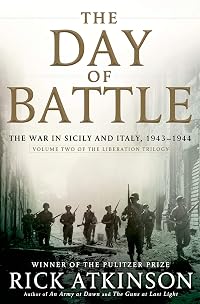
Rick Atkinson holds a master of arts degree in English literature from the University of Chicago and is a Pulitzer-Prize winning author and military historian Atkinson is the author of the highly-acclaimed Liberation Trilogy, The Long Gray Line, In the Company of Soldiers and Crusade. Atkinson received the Pulitzer Prize for the first volume of show more the Liberation Trilogy, An Army at Dawn: The War in North Africa, 1942-1943. The second volume, The Day of Battle: The War in Sicily and Italy, 1943-1944, drew praise as well. Atkinson also received the 1982 Pulitzer Prize for national reporting; and the 1999 Pulitzer Prize for public service, awarded to the Washington Post for a series of investigative articles directed and edited by Atkinson on shootings by the District of Columbia police department. He is winner of the 1989 George Polk Award for national reporting, the 2003 Society for Military History Distinguished Book Award, the 2007 Gerald R. Ford Award for Distinguished Reporting on National Defense, and the 2010 Pritzker Military Library Literature Award for Lifetime Achievement in Military Writing. Atkinson has served as the Gen. Omar N. Bradley Chair of Strategic Leadership at the U.S. Army War College. In 2014 his title The Guns at Last Light made The New York Times Best Seller List. (Bowker Author Biography) show less
Awards and Honors
Awards
Distinctions
Work Relationships
Common Knowledge
- Canonical title
- The Long Gray Line: The American Journey of West Point's Class of 1966
- Original publication date
- 1989
- Important places
- West Point, New York, USA; Fort Benning, Georgia, USA; Fort Campbell, Kentucky, USA; Ia Drang Valley, Vietnam; Grenada
- Important events
- Vietnam War (1959 | 1975)
- Epigraph
- We few, we happy few, we band of brothers;
For he today that sheds his blook with me Shall be my brother; be he ne'er so vile, This day sheall gentle his condition. Shakespeare, Henry V - Dedication
- For Jane and Rush and Sarah
- First words
- Even on the Sabbath dawn Penn Station was a busy place.
- Last words
- (Click to show. Warning: May contain spoilers.)I loved these men, Jim Ford thought. I loved Peter Lantz. I loved Buck Thompson. I loved these men with all my heart.
(Click to show. Warning: May contain spoilers.)Afterword: For those who survived, the odds of living to middle age and beyond are excellent. Wars are like that. - Blurbers
- Woodward, Bob; Fallows, James; Flemming, Thomas
- Original language
- English
Classifications
- Genres
- History, Nonfiction, General Nonfiction, Biography & Memoir
- DDC/MDS
- 355.0092 — Society, government, & culture Public administration & military science The Military - Land, Air & Sea / Warfare Biography And History Biography
- LCC
- U410 .N1 — Military Science Military science (General) Military education and training
- BISAC
Statistics
- Members
- 742
- Popularity
- 37,881
- Reviews
- 10
- Rating
- (4.19)
- Languages
- English, French, Swedish
- Media
- Paper, Audiobook, Ebook
- ISBNs
- 15
- ASINs
- 15