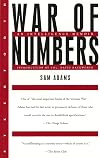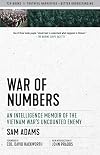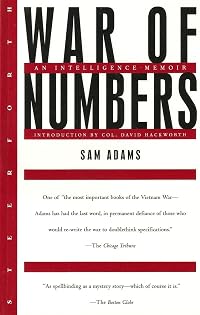
War of Numbers: An Intelligence Memoir
by Sam Adams
On This Page
Description
After he left the CIA in 1973, Adams sat down to write an account of his years in the agency. Adams loved intelligence work and that enthusiasm shines throughout the unfinished book he left when he died suddenly of a heart attack in 1988. He had planned ... to write a definitive account of the numbers controversy and the failure of American intelligence during the Vietnam war. Scholars will regret that Adams did not live to carry out his plan, but what he left is perhaps more precious still show more - a book wonderfully alive, full of vivid characters, crisp dialogue, and a special feel for the strange world of intelligence analysis, where the only thing worse than being right too late is being right too soon. There have been many accounts of the Vietnam war by the soldiers who fought it and the Washington officials who ran it. Adams watched the war from a unique vantage point; for years the secret intelligence documents all crossed his desk. By the end of 1967 Adams knew the war was unwinnable, and he spent the next fifteen years explaining what had gone wrong to anyone who would listen. With the exception of a few brief editors' notes, War of Numbers is exactly the way Adams put it down on paper - as readable as a novel, and perhaps the best single account yet written about the politics of intelligence. show lessTags
Recommendations




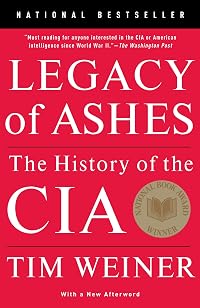
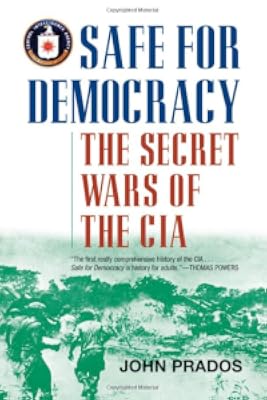


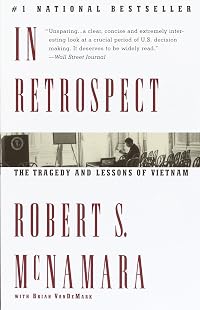




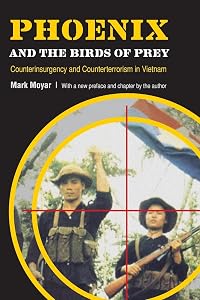






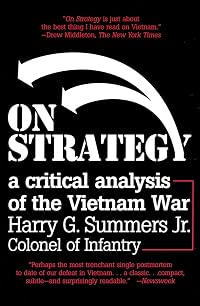
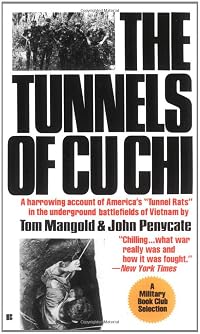
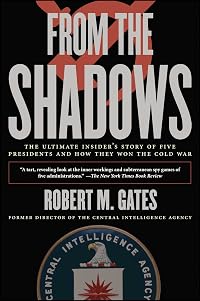
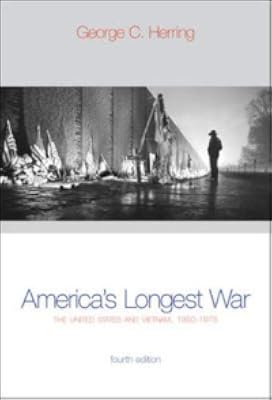


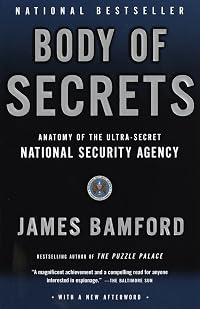


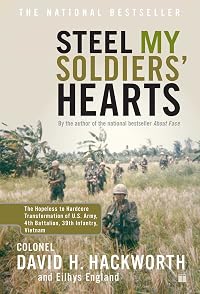


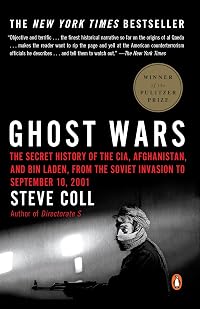

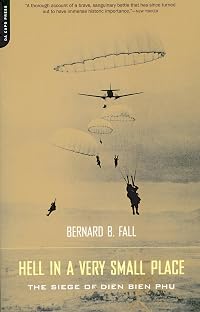
Member Recommendations


LamontCranston McGehee cites Adams as running into the same problems he did.
Member Reviews
Sam Adams had a problem. The numbers just didn't make sense. As a low level CIA analyst in 1966 working on a study on Viet Cong morale, his numbers of defections and desertions suggest the enemy would be gone in a year--a trend at odds with their growing strength on the ground. As he tracked down the source of this discrepancy, he realized that the MACV Order of Battle Estimate, the official count of the enemy at about 250,000, was a fiction based on the flimsiest of evidence. Adams struggled for years to get the right numbers out-his own estimate was that there were at least 250,000 more Viet Cong than on the list. In 1968 he was proven right, when during the Tet offensive 250,000 enemy soldiers that officially did not exist swarmed show more over American positions and dealt the greatest political blow of the war. But Adams was not vindicated, he was an embarrassment, and after five more years of spinning his wheels he quit the CIA for good in 1973.
War of Numbers somehow makes bureaucratic infighting as exciting as any battle. The OBE was the cornerstone of Westermoreland's strategy of attrition; the number upon which all other assessments of logistics and destruction were based. The clash between Adams' evidence based methods (even if the statistical inferences would make a professional cry) and MACV; who ignored small units, large numbers of logistics troops, and even entire classes of the enemy (guerrilla-militia) responsible for the mines and scouting that wore American forces down tactically, is a great story of deceit and failure in American leadership. The perpetrators shift; General Westmoreland (Adams was later the target of a libel suit by Westmoreland for his role in a CBS documentary), CIA Director Richard Helms, MACV J-2, other parties in the White House. Ultimately, Adams comes down to the conclusion that it was a mass collective delusion. A whole group of people responsible for running the war decided to run it on what was politically tenable rather than what was true.
Along with that grand narrative, War of Numbers has some great anecdotes about the life of a spy in the 60s and 70s. Its a lot of overstuffed arm-chairs, endless cables, 5x8 index cards, meetings with people trying to bury you. Two incidents stick out--one where Adams ran all over town looking for a Vietnam expert who worked at the next desk (he had started with her), and a second where he had to specially request a Viet Cong map of South Vietnam for one of his reports (the Viet Cong and government maps had different districts). How could we win if we we're not even on the same map? There's also a lot of black humor: parody songs in the Cosmos Lounge, quotes from Giap in the Saigon office. Adams would probably be the first to admit that he had an easy war, all he staked was his reputation, but his attempts to inform strategy with actual numbers were as a brave of a contribution as anything else. show less
War of Numbers somehow makes bureaucratic infighting as exciting as any battle. The OBE was the cornerstone of Westermoreland's strategy of attrition; the number upon which all other assessments of logistics and destruction were based. The clash between Adams' evidence based methods (even if the statistical inferences would make a professional cry) and MACV; who ignored small units, large numbers of logistics troops, and even entire classes of the enemy (guerrilla-militia) responsible for the mines and scouting that wore American forces down tactically, is a great story of deceit and failure in American leadership. The perpetrators shift; General Westmoreland (Adams was later the target of a libel suit by Westmoreland for his role in a CBS documentary), CIA Director Richard Helms, MACV J-2, other parties in the White House. Ultimately, Adams comes down to the conclusion that it was a mass collective delusion. A whole group of people responsible for running the war decided to run it on what was politically tenable rather than what was true.
Along with that grand narrative, War of Numbers has some great anecdotes about the life of a spy in the 60s and 70s. Its a lot of overstuffed arm-chairs, endless cables, 5x8 index cards, meetings with people trying to bury you. Two incidents stick out--one where Adams ran all over town looking for a Vietnam expert who worked at the next desk (he had started with her), and a second where he had to specially request a Viet Cong map of South Vietnam for one of his reports (the Viet Cong and government maps had different districts). How could we win if we we're not even on the same map? There's also a lot of black humor: parody songs in the Cosmos Lounge, quotes from Giap in the Saigon office. Adams would probably be the first to admit that he had an easy war, all he staked was his reputation, but his attempts to inform strategy with actual numbers were as a brave of a contribution as anything else. show less
Ratings
Members
- Recently Added By
Author Information
1 Work 62 Members
Sam Adams was a graduate of Harvard College and spent ten years as an analyst for the CIA. He was completing this memoir when he died of a heart attack in 1988. Col. David Hackworth was the author of About Face and the youngest full colonel in the US Army when he resigned in protest over the Vietnam War. Dr. John Pradas is a senior research fellow show more at the National Security Archive, where he also directs the Archive's Iraq Documentation Project and its Vietnam Project. His books Vietnam: The History of an Unwinnable War, 1945-1975, Keepers of the Keys and Combined Fleet Decoded were each nominated for the Pulitzer Prize. show less
Some Editions
Classifications
- Genres
- Nonfiction, History, General Nonfiction, Biography & Memoir
- DDC/MDS
- 959.704 — History & geography History of Asia Southeast Asia: Myanmar, Thailand, Laos, Cambodia, Vietnam Vietnam 1949-
- LCC
- DS559.8 .M44 .A33 — History of Europe, Asia, Africa and Oceania Asia History of Asia Southeast Asia French Indochina Vietnam. Annam Vietnamese Conflict
- BISAC
Statistics
- Members
- 64
- Popularity
- 479,936
- Reviews
- 1
- Rating
- (4.33)
- Languages
- English
- Media
- Paper, Ebook
- ISBNs
- 6
- ASINs
- 1