On This Page
Description
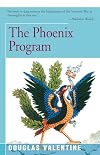
"This shocking expose of the CIA operation aimed at destroying the Vietcong infrastructure thoroughly conveys the hideousness of the Vietnam War" (Publishers Weekly).In the darkest days of the Vietnam War, America's Central Intelligence Agency secretly initiated a sweeping program of kidnap, torture, and assassination devised to destabilize the infrastructure of the National Liberation Front (NLF) of South Vietnam, commonly known as the "Viet Cong." The victims of the Phoenix Program were show more Vietnamese civilians, male and female, suspected of harboring information about the enemy—though many on the blacklist were targeted by corrupt South Vietnamese security personnel looking to extort money or remove a rival. Between 1965 and 1972, more than eighty thousand noncombatants were "neutralized," as men and women alike were subjected to extended imprisonment without trial, horrific torture, brutal rape, and in many cases execution, all under the watchful eyes of US government agencies.
Based on extensive research and in-depth interviews with former participants and observers, Douglas Valentine's startling exposé blows the lid off of what was possibly the bloodiest and most inhumane covert operation in the CIA's history.
The ebook edition includes "The Phoenix Has Landed," a new introduction that addresses the "Phoenix-style network" that constitutes America's internal security apparatus today. Residents on American soil are routinely targeted under the guise of protecting us from terrorism—which is why, more than ever, people need to understand what Phoenix is all about. show less
Tags
Recommendations



















Member Recommendations

LamontCranston The more things change the more they stay the same.

LamontCranston The epilogue concludes in El Salvador

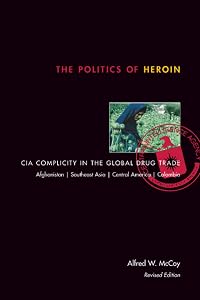
LamontCranston Phoenix was not unique, the US was training security forces from numerous countries in torture.
Member Reviews
"This is a political war and it calls for discrimination in killing. The best weapon for killing would be a knife, but I'm afraid we can't do it that way. The worst is an airplane. The next worst is artillery. Barring a knife, the best is a rifle — you know who you're killing"
--USAID advisor Lt. Col John Paul Vann
War is an atrocity. Murder is an atrocity. The Phoenix Program, as documented in this book, is an atrocity. And unfortunately, it is one which undergirds the present national security state. As we've all learned since 9/11, the political terrorist does not fit neatly into the categories of Westphalian order. The terrorist does not wear a uniform or fight in ranks, so he is not a soldier. And while acts of violence are crimes, show more an ideology of violence is not, making judicial convictions difficult to obtain. Phoenix is about the gray area between war and crime, and America's complicity in both in Vietnam.
Writing about the Phoenix Program is difficult for several reasons. First is one of bureaucratic confusion over the 20 year stretch of the Second Indochina War, with dozens of paramilitary action groups and even more diversity in funding and organizations. The best thing to do is to avoid hair-splitting and unwarranted precision; the Phoenix Program was an effort to eliminate individual civilians in South Vietnam as communist agents, and support for communism as a political phenomenon. The second difficulty is one of official evasion. Much of the program is and was classified. Official testimony, particularly by CIA director William Colby, is full of obfuscation and outright lies. The third difficult is one of conspiracy. Valentine alleges that records have been doctored to make some of his sources look insane, to say that they were never even in Vietnam. Still, even discounting the conspiratorial, there is plenty in the public record and his on-the-record interviews to document Phoenix.
As Ngo Dinh Diem tightened his grasp on power in the late 1950s, the basic problem his regime confronted was one of unpopularity. Guerrilla warfare experts, most notably Ed Lansdale, suggested an aggressive program of counter-terror. Small forces would attack pro-Communist villages dressed in VC black pajamas and make public spectacles of murder. Assisted by intelligence from the rural grievance survey, these programs attempted to dislocate the Viet Cong. Of course, getting people for these units was a problem. The Viet Cong could rely on large numbers of ardent nationalists and Party members for their squads. The government turned to the dregs of society, Nung mercenaries and the sweepings of hardened criminals in Saigon jails.
As the war expanded after 1965, the Phoenix Program fell victim to the characteristic American mistake of the war: bad metrics and short-term careerism. Robert "Blowtorch" Komer used all his powers to organize a national system of Provincial Reconnaissance Unit (PRU) assassination teams, and district and province interrogation centers. Interrogation centers were rated on prisoners taken in and processed, frequently involving torture, while collating usable intelligence took a backseat. The overburdened South Vietnamese judicial system couldn't process thousands of detainees, who languished in jail on flimsy pretexts. US advisors varied wildly in quality, with the unconventional warfare experts of the early years pushed out in favor of junior counter-intelligence lieutenants and CIA case officers.
The Phoenix Program also suffered from the typical South Vietnamese weakness of public corruption. PRUs were used as the personal goon squads of province governors to eliminate business and political rivals. Diversion of materials into the black market and drug trafficking were rampant. The detention system became a source for bribes and shakedowns.
Money, primarily from the CIA black budget, poured into the system, but to little effect. There were dozens of agencies and informer networks, and rather than combining information, most officials assumed that the South Vietnamese internal security system was thoroughly riddled with Viet Cong agents (it was), and so acted unilaterally. One branch of Phoenix would assassinate a man which another branch of Phoenix had been cultivating as an internal source.
In my favorite "fractally fucked up" story from this book, Komer spent months pushing the phrase 'Viet Con Infrastructure', which got befuddlement from South Vietnamese partners to his endless frustration. This was because when translated, 'infrastructure' means roads, bridges, canals. This was not South Vietnamese incompetence, their secret police understood the enemy, but they called them 'cadres'.
Valentine was writing in the mid-1980s, at the height of dirty wars in Latin America. This book has aged like wine. Maybe Vann is right, and killing with a knife is better than killing from the air. I wouldn't know. But the creation of secret kill lists is anathema to liberty. The fact that when pressed, the American government and American people will take the kill lists over 'disorder' is an enduring indictment of the evils of empire, and how its corruption always returns home. show less
--USAID advisor Lt. Col John Paul Vann
War is an atrocity. Murder is an atrocity. The Phoenix Program, as documented in this book, is an atrocity. And unfortunately, it is one which undergirds the present national security state. As we've all learned since 9/11, the political terrorist does not fit neatly into the categories of Westphalian order. The terrorist does not wear a uniform or fight in ranks, so he is not a soldier. And while acts of violence are crimes, show more an ideology of violence is not, making judicial convictions difficult to obtain. Phoenix is about the gray area between war and crime, and America's complicity in both in Vietnam.
Writing about the Phoenix Program is difficult for several reasons. First is one of bureaucratic confusion over the 20 year stretch of the Second Indochina War, with dozens of paramilitary action groups and even more diversity in funding and organizations. The best thing to do is to avoid hair-splitting and unwarranted precision; the Phoenix Program was an effort to eliminate individual civilians in South Vietnam as communist agents, and support for communism as a political phenomenon. The second difficulty is one of official evasion. Much of the program is and was classified. Official testimony, particularly by CIA director William Colby, is full of obfuscation and outright lies. The third difficult is one of conspiracy. Valentine alleges that records have been doctored to make some of his sources look insane, to say that they were never even in Vietnam. Still, even discounting the conspiratorial, there is plenty in the public record and his on-the-record interviews to document Phoenix.
As Ngo Dinh Diem tightened his grasp on power in the late 1950s, the basic problem his regime confronted was one of unpopularity. Guerrilla warfare experts, most notably Ed Lansdale, suggested an aggressive program of counter-terror. Small forces would attack pro-Communist villages dressed in VC black pajamas and make public spectacles of murder. Assisted by intelligence from the rural grievance survey, these programs attempted to dislocate the Viet Cong. Of course, getting people for these units was a problem. The Viet Cong could rely on large numbers of ardent nationalists and Party members for their squads. The government turned to the dregs of society, Nung mercenaries and the sweepings of hardened criminals in Saigon jails.
As the war expanded after 1965, the Phoenix Program fell victim to the characteristic American mistake of the war: bad metrics and short-term careerism. Robert "Blowtorch" Komer used all his powers to organize a national system of Provincial Reconnaissance Unit (PRU) assassination teams, and district and province interrogation centers. Interrogation centers were rated on prisoners taken in and processed, frequently involving torture, while collating usable intelligence took a backseat. The overburdened South Vietnamese judicial system couldn't process thousands of detainees, who languished in jail on flimsy pretexts. US advisors varied wildly in quality, with the unconventional warfare experts of the early years pushed out in favor of junior counter-intelligence lieutenants and CIA case officers.
The Phoenix Program also suffered from the typical South Vietnamese weakness of public corruption. PRUs were used as the personal goon squads of province governors to eliminate business and political rivals. Diversion of materials into the black market and drug trafficking were rampant. The detention system became a source for bribes and shakedowns.
Money, primarily from the CIA black budget, poured into the system, but to little effect. There were dozens of agencies and informer networks, and rather than combining information, most officials assumed that the South Vietnamese internal security system was thoroughly riddled with Viet Cong agents (it was), and so acted unilaterally. One branch of Phoenix would assassinate a man which another branch of Phoenix had been cultivating as an internal source.
In my favorite "fractally fucked up" story from this book, Komer spent months pushing the phrase 'Viet Con Infrastructure', which got befuddlement from South Vietnamese partners to his endless frustration. This was because when translated, 'infrastructure' means roads, bridges, canals. This was not South Vietnamese incompetence, their secret police understood the enemy, but they called them 'cadres'.
Valentine was writing in the mid-1980s, at the height of dirty wars in Latin America. This book has aged like wine. Maybe Vann is right, and killing with a knife is better than killing from the air. I wouldn't know. But the creation of secret kill lists is anathema to liberty. The fact that when pressed, the American government and American people will take the kill lists over 'disorder' is an enduring indictment of the evils of empire, and how its corruption always returns home. show less
Morley Safer of CBS, writing in the New York Times:
Mr. Valentine - the author as well of ''The Hotel Tacloban,'' about life in a Japanese prisoner of war camp - has written as turgid and dense and often incomprehensible a book as I have ever had the misfortune to open. Somewhere in those almost 500 gray pages there is stuff of great importance: examples of human folly, courage, stupidity and greed.
Mr. Valentine handles these epic themes as so much fodder from a database - not unlike the paper end of the Phoenix program itself. He has interviewed scores of participants in Phoenix, but instead of putting the interviews into some kind of historical (or even logical) framework - it's called editing - he has simply transcribed them. And if show more Phoenix acted like Phoenix talked, then the American intervention in Vietnam was even more inept than those of us who were witnesses believed. ... show less
Mr. Valentine - the author as well of ''The Hotel Tacloban,'' about life in a Japanese prisoner of war camp - has written as turgid and dense and often incomprehensible a book as I have ever had the misfortune to open. Somewhere in those almost 500 gray pages there is stuff of great importance: examples of human folly, courage, stupidity and greed.
Mr. Valentine handles these epic themes as so much fodder from a database - not unlike the paper end of the Phoenix program itself. He has interviewed scores of participants in Phoenix, but instead of putting the interviews into some kind of historical (or even logical) framework - it's called editing - he has simply transcribed them. And if show more Phoenix acted like Phoenix talked, then the American intervention in Vietnam was even more inept than those of us who were witnesses believed. ... show less
Ratings
Members
- Recently Added By
Author Information

8+ Works 379 Members
Douglas Valentine is an American journalist and author of The Hotel Tacloban, The Phoenix Program, The Strength of the Wolf (winner of the Choice Academic Library Award), and The Strength of the Pack His articles have appeared regularly in CounterPunch, Consortium News, and elsewhere. Portions of his research materials are archived at the National show more Security Archive, Texas Tech University's Vietnam Center, and John Jay College. show less
Awards and Honors
Series

Common Knowledge
- Original publication date
- 1990
- People/Characters
- William Colby; Edward Lansdale; William Westmoreland; Theodore Shackley
- Important places
- Vietnam
- Important events
- Cold War; Vietnam War; Phoenix Program
- Dedication
- This book is dedicated to my darling wife Alice. Special thanks to my father for his editorial assistance; the Fitchburg Fine Arts Council for its financial aid; Adria Henderson, Bill McCoy, Jack Madden, John Kelly, and Nick ... (show all)Proffitt for their comradeship; Sandy Kelson, Larry Hill, and Andy McKevitt for their generosity; Dave Coggeshall, Ian Fleming, the Fat Angel, and Robert Graves for their inspiration; Lucy Nhiem Hong Nguyen, Lien Johnson, and Pham Thi Ngoc Chan for their efforts on my behalf; Larry Tunison for the night on the town; and all those who contributed to the book.
- First words
- It was well after midnight.
- Quotations
- "Now everyone knows about the airborne interrogation-taking three people up in a chopper, taking one guy and saying, 'Talk,' then throwing him out before he even gets the chance to open his mouth. Well, we wrapped det [detona... (show all)tor] cord around their necks and wired them to the detonator box. And basically what it did was blow their heads off. The interrogator would tell the translator, usually a South Vietnamese intelligence officer, 'Ask him this.' He'd ask him, 'Who gave you the gun?' And the guy would start to answer, or maybe he wouldn't-maybe he'd resist-but the general idea was to waste the first two. They planned the snatches that way. Pick up this guy because we're pretty sure he's VC cadre-these other two guys just run errands for him. Or maybe they're nobody; Tran, the farmer, and his brother Nguyen. *But bring in two.* Put them in a row. By the time you get to your man, he's talking so fast you got to pop the weasel just to shut him up."
After a moments silence he added, "I guess you could say that we wrote the book on terror." - Last words
- (Click to show. Warning: May contain spoilers.)But most of all, look for Phoenix in the imaginations of ideologues obsessed with security, who seek to impose their way of thinking on everyone else.
- Blurbers
- Prados, John; McCoy, Alfred W.
Classifications
- Genres
- Nonfiction, History, General Nonfiction
- DDC/MDS
- 959.704 — History & geography History of Asia Southeast Asia: Myanmar, Thailand, Laos, Cambodia, Vietnam Vietnam 1949-
- LCC
- DS558.92 .V35 — History of Europe, Asia, Africa and Oceania Asia History of Asia Southeast Asia French Indochina Vietnam. Annam
- BISAC
Statistics
- Members
- 156
- Popularity
- 210,503
- Reviews
- 2
- Rating
- (4.20)
- Languages
- English
- Media
- Paper, Ebook
- ISBNs
- 7
- ASINs
- 2