
David Corn
Author of Russian Roulette
About the Author
David Corn is the Washington bureau chief for Mother Jones magazine and an analyst for MSNBC and NBC News. He is the author of the New York Times bestsellers Hubris (with Michael Isikoff) and The Lies of George W. Bush, and regularly provides commentary on National Public Radio.
Image credit: BloggingHeads.tv
Works by David Corn
Hubris: The Inside Story of Spin, Scandal, and the Selling of the Iraq War (2006) 465 copies, 8 reviews
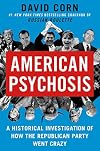
American Psychosis: A Historical Investigation of How the Republican Party Went Crazy (2022) 153 copies, 5 reviews
Showdown: The Inside Story of How Obama Fought Back Against Boehner, Cantor, and the Tea Party (2012) 77 copies, 1 review
The Climate Syndrome 1 copy
Associated Works
Unusual Suspects: A New Anthology of Crime Stories from Black Lizard (1996) — Contributor — 39 copies, 1 review
The Year's 25 Finest Crime and Mystery Stories: Sixth Annual Edition (1997) — Contributor — 5 copies, 1 review
Tagged
Common Knowledge
- Birthdate
- 1959
- Gender
- male
- Education
- Brown University
- Occupations
- journalist
- Organizations
- The Nation
Mother Jones - Nationality
- USA
- Associated Place (for map)
- USA
Members
Reviews
Psychosis, clinically speaking, is a mental disorder characterized by a disconnection from reality. The individual suffering from psychosis has major disruptions to their thoughts and perceptions that prevent them from distinguishing what is real from what isn’t.
This incapacitating psychological state is typically characterized by delusions, paranoia, and conspiratorial thinking. Left untreated, psychosis is detrimental to both the individual and to those around them. But what if this show more state of psychosis infected an entire political party? Imagine the type of damage that could be done if politicians found a way to encourage and exploit, on a mass scale, widespread delusive and conspiratorial ideas.
Well, we’re frankly living through that nightmare scenario currently. Welcome to the Republican Party, a party where, according to an Economist/YouGov poll, 49 percent of Republicans believe that it is definitely or probably true that “top Democrats are involved in elite child sex-trafficking rings.” (Remember Pizzagate?)
In American Psychosis, journalist David Corn investigates, in painstaking detail, the history of the unholy alliance between extremist views like the one above and the Republican Party that leverages these views—views conservative political leaders often disagree with but turn a blind eye to—for political gain and votes.
Honestly, there are simply too many historical examples to summarize in this review, but the reader—especially one unfamiliar with the history—will realize that the era of Trump is no aberration from the general direction the Republican Party has been moving for quite some time. It’s simply the apotheosis of the party’s natural movement towards outright insanity.
Corn does a tremendous job of documenting this progression, which happens to be one of history’s greatest tragedies: namely, how the party of Lincoln—which was founded on the noble principle of halting the expansion of slavery—became the party of Trump and the economic elite. It’s also the story of how respectable, moderate conservatives have been overtaken by the lunatic fringe.
The biggest lesson we can learn from this book is that far-right conservatism appears most ridiculous only in hindsight. A prominent case in point is McCarthyism. Led by Senator Joseph McCarthy, McCarthyism was a vociferous campaign against alleged communists that were believed to have infiltrated the US Government and other institutions (McCarthy even accused President Dwight Eisenhower of being a Communist asset). In hindsight, we can now confidently say that McCarthy was a paranoid lunatic and that McCarthysim was an utter embarrassment, grounded in baseless accusations and irrational and overblown fears. But at the time, Joseph McCarthy was revered, even idolized, as the “savior of the country.”
Examples like this beg the question: In 50 to 100 years time, what are we going to think about Donald Trump, a president who, by one estimate, uttered an unprecedented 30,573 false or misleading statements, including the statement that he “handled the coronavirus masterfully.” Do we really believe the historical pattern of the Republican Party successfully exploiting extremist views and conspiracies for political gain has been broken by a man that suggested to scientists that they look into treating the coronavirus by injecting people with UV light and disinfectant?
In all likelihood, based on the history outlined in this book, Trump is destined to be viewed, historically, in a similar manner as McCarthy—essentially, as a semi-deranged, narcissistic laughingstock. And this view is not simply an example of unchecked political bias; I don’t know what else to label a president that betrays his oath to the country and Constitution by inciting domestic terrorists to violently invade the Capitol based on the complete fabrication—with no credible supporting evidence whatsoever—that the 2020 election was “stolen” from him. (Claims that were thrown out in court by conservative judges Trump himself appointed.)
Whatever faults the Democratic Party may have—and there are more than a few—there is simply no Democratic equivalent to this virulent conspiracy-mongering, which has become the staple characteristic of Trump’s GOP. For Trump, truth is simply beside the point; the only thing that matters to him is loyalty. As Ruth Ben-Ghiat, an autocracy expert and history professor at New York University observed, “[Trump] changed the party to an authoritarian party culture. So not only do you go after external enemies, but you go after internal enemies. You’re not allowed to have any dissent.”
The only remaining question is whether or not you really want to be associated with this. After reading this book, I would hope that you’d want to stay as far away from this paranoid style of politics as possible. Nothing less than the sanity of the country is at stake. show less
This incapacitating psychological state is typically characterized by delusions, paranoia, and conspiratorial thinking. Left untreated, psychosis is detrimental to both the individual and to those around them. But what if this show more state of psychosis infected an entire political party? Imagine the type of damage that could be done if politicians found a way to encourage and exploit, on a mass scale, widespread delusive and conspiratorial ideas.
Well, we’re frankly living through that nightmare scenario currently. Welcome to the Republican Party, a party where, according to an Economist/YouGov poll, 49 percent of Republicans believe that it is definitely or probably true that “top Democrats are involved in elite child sex-trafficking rings.” (Remember Pizzagate?)
In American Psychosis, journalist David Corn investigates, in painstaking detail, the history of the unholy alliance between extremist views like the one above and the Republican Party that leverages these views—views conservative political leaders often disagree with but turn a blind eye to—for political gain and votes.
Honestly, there are simply too many historical examples to summarize in this review, but the reader—especially one unfamiliar with the history—will realize that the era of Trump is no aberration from the general direction the Republican Party has been moving for quite some time. It’s simply the apotheosis of the party’s natural movement towards outright insanity.
Corn does a tremendous job of documenting this progression, which happens to be one of history’s greatest tragedies: namely, how the party of Lincoln—which was founded on the noble principle of halting the expansion of slavery—became the party of Trump and the economic elite. It’s also the story of how respectable, moderate conservatives have been overtaken by the lunatic fringe.
The biggest lesson we can learn from this book is that far-right conservatism appears most ridiculous only in hindsight. A prominent case in point is McCarthyism. Led by Senator Joseph McCarthy, McCarthyism was a vociferous campaign against alleged communists that were believed to have infiltrated the US Government and other institutions (McCarthy even accused President Dwight Eisenhower of being a Communist asset). In hindsight, we can now confidently say that McCarthy was a paranoid lunatic and that McCarthysim was an utter embarrassment, grounded in baseless accusations and irrational and overblown fears. But at the time, Joseph McCarthy was revered, even idolized, as the “savior of the country.”
Examples like this beg the question: In 50 to 100 years time, what are we going to think about Donald Trump, a president who, by one estimate, uttered an unprecedented 30,573 false or misleading statements, including the statement that he “handled the coronavirus masterfully.” Do we really believe the historical pattern of the Republican Party successfully exploiting extremist views and conspiracies for political gain has been broken by a man that suggested to scientists that they look into treating the coronavirus by injecting people with UV light and disinfectant?
In all likelihood, based on the history outlined in this book, Trump is destined to be viewed, historically, in a similar manner as McCarthy—essentially, as a semi-deranged, narcissistic laughingstock. And this view is not simply an example of unchecked political bias; I don’t know what else to label a president that betrays his oath to the country and Constitution by inciting domestic terrorists to violently invade the Capitol based on the complete fabrication—with no credible supporting evidence whatsoever—that the 2020 election was “stolen” from him. (Claims that were thrown out in court by conservative judges Trump himself appointed.)
Whatever faults the Democratic Party may have—and there are more than a few—there is simply no Democratic equivalent to this virulent conspiracy-mongering, which has become the staple characteristic of Trump’s GOP. For Trump, truth is simply beside the point; the only thing that matters to him is loyalty. As Ruth Ben-Ghiat, an autocracy expert and history professor at New York University observed, “[Trump] changed the party to an authoritarian party culture. So not only do you go after external enemies, but you go after internal enemies. You’re not allowed to have any dissent.”
The only remaining question is whether or not you really want to be associated with this. After reading this book, I would hope that you’d want to stay as far away from this paranoid style of politics as possible. Nothing less than the sanity of the country is at stake. show less
American Psychosis by David Corn is the story of the Republican Party, from its conflicted beginning to its current state of insatiable power hungriness at the cost of all that is ethical, moral, or even remotely logical.
First, since you'll see people make asinine complaints, the history here is of the Republican Party, so that is the party being looked at and analyzed. Seems pretty simple to understand but some are incapable. Also, he doesn't pretend other parties and/or individuals are show more without responsibility for what has happened to the country. But, again, the focus here is on the GOP, so their issues are the ones examined. And, since the GOP is the party that is currently anti-democracy (ignore or overturn the voters, just do what we say), the split between what has come to be known as liberal and conservative is explored from the party's inception. This shouldn't all have to be said, but these are the kinds of empty "issues" some "readers" come up with.
The history is intriguing, especially the early history of the GOP. Almost from the beginning, they took what politicians and those seeking to either rule or govern have always done and taken it to unethical extremes. If an issue is deemed important, some level of fear about what might happen is a part of making people act. While there has been rational reasons for curbing the climate change, it wasn't until some level of fear finally sank in that we have even considered doing anything. Though less obvious, fear is a part of why we may vote one way rather than another. The problem is when that fear is overblown and/or generated around known falsehoods. Gingrich is largely responsible for how the GOP now regularly creates a lie, spreads it, then blows it up into a full-fledged catastrophe. In a nutshell, that has always been the GOP.
There were a lot of things I didn't realize about their history, and, like a lot of people, even the things I knew I hadn't put together in a chronological narrative but saw them simply as isolated incidents. They largely weren't so isolated.
While I would recommend this to anyone who cares about this country remaining a democracy, I know that would leave out the GOP readers, since they have long since sold their souls. But, I do highly recommend it for the rest of us with functioning brain cells and some compassion for our fellow human beings.
Reviewed from a copy made available by the publisher via NetGalley. show less
First, since you'll see people make asinine complaints, the history here is of the Republican Party, so that is the party being looked at and analyzed. Seems pretty simple to understand but some are incapable. Also, he doesn't pretend other parties and/or individuals are show more without responsibility for what has happened to the country. But, again, the focus here is on the GOP, so their issues are the ones examined. And, since the GOP is the party that is currently anti-democracy (ignore or overturn the voters, just do what we say), the split between what has come to be known as liberal and conservative is explored from the party's inception. This shouldn't all have to be said, but these are the kinds of empty "issues" some "readers" come up with.
The history is intriguing, especially the early history of the GOP. Almost from the beginning, they took what politicians and those seeking to either rule or govern have always done and taken it to unethical extremes. If an issue is deemed important, some level of fear about what might happen is a part of making people act. While there has been rational reasons for curbing the climate change, it wasn't until some level of fear finally sank in that we have even considered doing anything. Though less obvious, fear is a part of why we may vote one way rather than another. The problem is when that fear is overblown and/or generated around known falsehoods. Gingrich is largely responsible for how the GOP now regularly creates a lie, spreads it, then blows it up into a full-fledged catastrophe. In a nutshell, that has always been the GOP.
There were a lot of things I didn't realize about their history, and, like a lot of people, even the things I knew I hadn't put together in a chronological narrative but saw them simply as isolated incidents. They largely weren't so isolated.
While I would recommend this to anyone who cares about this country remaining a democracy, I know that would leave out the GOP readers, since they have long since sold their souls. But, I do highly recommend it for the rest of us with functioning brain cells and some compassion for our fellow human beings.
Reviewed from a copy made available by the publisher via NetGalley. show less

truly this is so interesting. i had no idea the crazy ran so deep in the gop, that it's been for so long that the party members who most pander to the extremists on the right are the ones who are rewarded. that a few republicans started out more morally moderate and lost election after election, until they embraced the racist and extreme rhetoric and wacko conspiracy theories. then they won their races and found themselves moving further and further to the right to court and keep those show more votes. (even newt gingrich didn't start out anti-abortion!!) they allowed people spouting truly wild things legitimacy, and those people and beliefs have become more and more foundational to the party we see today. but plenty of them started out that bad. like reagan. i knew he was awful but i didn't really realize how terrible he always was, and how much of a truly right-wing nut he started out as, and continued to embrace being. a good part of this book talks about him and his success, and who he relied on (it's always the craziest, the ones that the gop insiders literally called 'the kooks'). how extremist his views were at the time (how moderate george hw bush was, to start out with) and how they only got more entrenched. there's a lot here about mccarthy, too, and how he literally just made up things to accuse people he didn't want to work with. it's a wild (but totally predictable and understandable) line from them to trump. truly nothing in this book makes trump sound any worse than any of the others, except that he was more vocal about saying what everyone else was keeping closer to their chest. if i hadn't lived through the recent years, i honestly would think worse of the other gopers that corn discusses in this book, which just really makes it clear how truly awful they've been.
he addresses something in the epilogue that i wish he'd talked about a little more a little earlier. throughout the book i'd been wondering about the democrats, who i don't think are angels or automatically right or worthy. i feel like i'd be interested in a book about the ways they've deceived and pandered and the times they've made deals with devils as well. he does finally address this, to say that while the democrats aren't blameless through history, haven't been innocent in lying and scandal, that they literally haven't done anything like what the republicans have done. that their missteps tend to be personal while the gop's tend to be more constitutional, or are about/affect the country and their constituents. i know that this was all about the history of the craziness in the gop, not the craziness in the democrats, but it was nice to have a small comparison, and to know that it's not even remotely comparable.
seeing the concessions that people made to the extremists, just to get their votes, just to stay in power, and then to see that extremism seep its way into the core of the party, is fascinating and horrible. people like john boehner, who saw the only way to gain power was to embrace positions further and further right, and more and more dangerous, but who was willing to do it, and then complained that those people were impossible to work with, impossible to please. the soul of the republican party died ages ago, and it doesn't seem possible to resurrect it now that we've reached this point. the point where it's all out in the open, and it's become the gop in an obvious way - the way where the people now expect it (and often want it).
there are dozens of quotes and sections worth quoting, but i think this one sums them all up:
"No national Democrat in recent decades has openly courted voters with explicit bigotry and enmity. No Democratic president has made direct common cause with extremists, spread so many lies, and bolstered conspiracism. Trump's style of politics was a hopped up version of the paranoid style of politics. He found a home for it in the Republican party. What does it say about the GOP that it could be subsumed by a demagogic political novice who played to bigots, racists and other extremists?" show less
he addresses something in the epilogue that i wish he'd talked about a little more a little earlier. throughout the book i'd been wondering about the democrats, who i don't think are angels or automatically right or worthy. i feel like i'd be interested in a book about the ways they've deceived and pandered and the times they've made deals with devils as well. he does finally address this, to say that while the democrats aren't blameless through history, haven't been innocent in lying and scandal, that they literally haven't done anything like what the republicans have done. that their missteps tend to be personal while the gop's tend to be more constitutional, or are about/affect the country and their constituents. i know that this was all about the history of the craziness in the gop, not the craziness in the democrats, but it was nice to have a small comparison, and to know that it's not even remotely comparable.
seeing the concessions that people made to the extremists, just to get their votes, just to stay in power, and then to see that extremism seep its way into the core of the party, is fascinating and horrible. people like john boehner, who saw the only way to gain power was to embrace positions further and further right, and more and more dangerous, but who was willing to do it, and then complained that those people were impossible to work with, impossible to please. the soul of the republican party died ages ago, and it doesn't seem possible to resurrect it now that we've reached this point. the point where it's all out in the open, and it's become the gop in an obvious way - the way where the people now expect it (and often want it).
there are dozens of quotes and sections worth quoting, but i think this one sums them all up:
"No national Democrat in recent decades has openly courted voters with explicit bigotry and enmity. No Democratic president has made direct common cause with extremists, spread so many lies, and bolstered conspiracism. Trump's style of politics was a hopped up version of the paranoid style of politics. He found a home for it in the Republican party. What does it say about the GOP that it could be subsumed by a demagogic political novice who played to bigots, racists and other extremists?" show less
Russian Roulette: The Inside Story of Putin's War on America and the Election of Donald Trump by Michael Isikoff

Trying to make sense of the l'affaire Russe is enough to make anyone a conspiracy theorist, and this book should come with a skein of red yarn to help readers connect the dots.
The basic facts are clear enough: in 2016, as part of a longstanding intelligence operation against the United States, Russia hacked into servers controlled by the DNC and the gmail account of longtime Clinton staffer John Podesta. The hacked documents trickled out to the media through the twitter persona Guccifer 2.0 show more and Wikileaks, and on Nov 9, 2016, we woke up and Donald Trump was President. Welcome to the darkest timeline.
The story is complex, and there are a lot moving parts. One part is Putin's campaign against the United States, and the nature of Russian intelligence operations and hybrid warfare. The authors point to the "Gerasimov doctrine", and longstanding animus between Putin and Clinton personally, but don't have the space to make a really good case about the nature of Russia's foreign policy, it's strategies of ambiguity and tension, and the role of Putin.
The second story is the hacks and the leaks. Isikoff reveals a decidedly lackluster cybersecurity effort at the DNC and in the Federal government. The DNC cyber people didn't take FBI warnings seriously. The Federal government dragged its feet on coordinating a response, done in by a belief that this could be resolved once Hilary was inevitably elected, Obama's desire to appear non-partisan, and the absolute refusal of Senate Major Leader Mitch McConnell to be part of a response (Turtle Mitch is dirty as fuck). This story matters, and a bunch of people in charge of state level election security need to be doing much better than they currently are, but the story of the leaks has an almost impossible job to do. We have to understand the weirdness of the race, both as it felt in fall of 2016, and knowing what we know now.
The third and final story can be summed up by that phrase from Watergate. "What did the President know? And when did he know it?" Collusion, the actions of Paul Manafort, who showed up after a decade long career repping pro-Russian plutocrats to work for Trump for free, Roger Stone and his history of dirty tricks, the idea that Russians have had compromat on Trump for years if not decades, linked to his desire to build a hotel in Moscow, along with the Steele dossier and The Pee Tape. This is the part of the story that is evolving the fastest, with the Mueller investigation ongoing, and Trump shitting himself in public constantly. And it's also the part where nothing is yet proven.
I think about who should read this book. Political junkies probably know all this already, and the material isn't organized, or linked with enough value insight to be really worth it. My Left-skeptic friends would dismiss the whole thing as CIA CYA. And as for the C.H.U.Ds, well, nothing will convince a C.H.U.D.
Wait for the final verdict. show less
The basic facts are clear enough: in 2016, as part of a longstanding intelligence operation against the United States, Russia hacked into servers controlled by the DNC and the gmail account of longtime Clinton staffer John Podesta. The hacked documents trickled out to the media through the twitter persona Guccifer 2.0 show more and Wikileaks, and on Nov 9, 2016, we woke up and Donald Trump was President. Welcome to the darkest timeline.
The story is complex, and there are a lot moving parts. One part is Putin's campaign against the United States, and the nature of Russian intelligence operations and hybrid warfare. The authors point to the "Gerasimov doctrine", and longstanding animus between Putin and Clinton personally, but don't have the space to make a really good case about the nature of Russia's foreign policy, it's strategies of ambiguity and tension, and the role of Putin.
The second story is the hacks and the leaks. Isikoff reveals a decidedly lackluster cybersecurity effort at the DNC and in the Federal government. The DNC cyber people didn't take FBI warnings seriously. The Federal government dragged its feet on coordinating a response, done in by a belief that this could be resolved once Hilary was inevitably elected, Obama's desire to appear non-partisan, and the absolute refusal of Senate Major Leader Mitch McConnell to be part of a response (Turtle Mitch is dirty as fuck). This story matters, and a bunch of people in charge of state level election security need to be doing much better than they currently are, but the story of the leaks has an almost impossible job to do. We have to understand the weirdness of the race, both as it felt in fall of 2016, and knowing what we know now.
The third and final story can be summed up by that phrase from Watergate. "What did the President know? And when did he know it?" Collusion, the actions of Paul Manafort, who showed up after a decade long career repping pro-Russian plutocrats to work for Trump for free, Roger Stone and his history of dirty tricks, the idea that Russians have had compromat on Trump for years if not decades, linked to his desire to build a hotel in Moscow, along with the Steele dossier and The Pee Tape. This is the part of the story that is evolving the fastest, with the Mueller investigation ongoing, and Trump shitting himself in public constantly. And it's also the part where nothing is yet proven.
I think about who should read this book. Political junkies probably know all this already, and the material isn't organized, or linked with enough value insight to be really worth it. My Left-skeptic friends would dismiss the whole thing as CIA CYA. And as for the C.H.U.Ds, well, nothing will convince a C.H.U.D.
Wait for the final verdict. show less
Lists
Blue Books (1)
Awards


You May Also Like


Associated Authors
Statistics
- Works
- 10
- Also by
- 2
- Members
- 1,535
- Popularity
- #16,762
- Rating
- 4.0
- Reviews
- 38
- ISBNs
- 49
- Languages
- 2
- Favorited
- 1