The Myth of Sanity: Divided Consciousness and the Promise of Awareness
by Martha Stout
On This Page
Description
Why does a gifted psychiatrist suddenly begin to torment his own beloved wife? How can a ninety-pound woman carry a massive air conditioner to the second floor of her home, install it in a window unassisted, and then not remember how it got there? Why would a brilliant feminist law student ask her fiancé to treat her like a helpless little girl? How can an ordinary, violence-fearing businessman once have been a gun-packing vigilante prowling the crime districts for a fight? A startling new show more study in human consciousness, The Myth of Sanity is a landmark book about forgotten trauma, dissociated mental states, and multiple personality in everyday life. In its groundbreaking analysis of childhood trauma and dissociation and their far-reaching implications in adult life, it reveals that moderate dissociation is a normal mental reaction to pain and that even the most extreme dissociative reaction-multiple personality-is more common than we think. Through astonishing stories of people whose lives have been shattered by trauma and then remade, The Myth of Sanity shows us how to recognize these altered mental states in friends and family, even in ourselves. show lessTags
Recommendations












Member Reviews
Dissociation is the ability to mentally depart from reality. It's something that we all do to a greater or lesser degree, like when we deaden ourselves to physical pain after a car accident or become so absorbed in a movie that we lose our conscious selves. This process is an outgrowth of our imaginations and a natural device for escape and self-protection. The Myth of Sanity outlines both normal and abnormal dissociation, focusing especially on how childhood trauma warps our ability to form memories, assess danger and live in reality. The patients Dr. Stout describes are heartbreakingly absent from their lives. Some appear to be absent-minded professors who zone out of conversations at unpredictable intervals. Some dissociate from show more reality so strongly that they cannot remember anything of their childhoods and forget large pieces of their old lives. Others develop dissociative identity disorder, or multiple personality disorder. I found this book fascinating. Technical psychological and neurological information is conveyed in an interesting and easy-to-understand way. I feel far better informed about the symptoms, causes and effects of mental illness than I ever have been. What I've learned about how childhood trauma affects with the brain will stick with me for a long time. This book does have some writing problems, like overly grandiose language and a superabundance of irrelevant details. Still, the core material was sufficiently intriguing that I was able to overlook these flaws. I did skim occasionally, but the book's 235 pages went by fast. I'd recommend it to anyone who's curious about how the human brain works or who wants a better understanding of mental illness. show less
Speaking as someone who lives with the effects of PTSD, I thought this was an amazing book. What stunned me was Dr. Stout's creative and effective use of language to describe emotional states. It is so rare to find anyone who is capable of viscerally understanding this hell without having been through some version of it. She even helped me put into words some of my fears that I didn't have words for before. Reading her book gave me so much comfort and helped me understand not only myself, but also my mother, and a friend of mine. I don't feel as crazy anymore.
I loved reading the stories because in them I could see demonstrated the concepts that she was talking about. Some things I could relate to, some not - but it gave me concrete show more pictures through which to understand her intellectual theories (or hypotheses?).
I think she has a good point when she writes that there is a lot of unrecognized dissociation in 'normal' society; I also like her pointing out that dissociation is a normal part of human life and can be just pleasant (daydreaming) or downright life enhancing (when used in creative endeavors). show less
I loved reading the stories because in them I could see demonstrated the concepts that she was talking about. Some things I could relate to, some not - but it gave me concrete show more pictures through which to understand her intellectual theories (or hypotheses?).
I think she has a good point when she writes that there is a lot of unrecognized dissociation in 'normal' society; I also like her pointing out that dissociation is a normal part of human life and can be just pleasant (daydreaming) or downright life enhancing (when used in creative endeavors). show less
Explores the prevalence of Dissociative Identity Disorder, popularly known in its most extreme form as multiple personality disorder. Dr. Stout, a psychological trauma specialist, conveys how small things we interpret as distraction, spacing out, or situational fatigue are physiologically and behaviorally not different from an abused individual’s experience of dissociation or hypnotic trance. Events in our life that we may not quantify as abusive or traumatic affect us; our brains catalog traumatic experiences and trigger "dissociative" coping strategies even for things we may label as insignificant. The “severity” of an event is irrelevant; the presence of fear, for whatever reason, and a desire to escape it causes our brain to show more develop coping mechanisms. Future feelings of fear that our brain processes as similar trigger those mechanisms and, consequently, end those feelings. Stout’s explanation and accounts of this idea are fascinating reading. show less
As a clinical psychologist, Stout draws upon twenty years experience with trauma survivors to explain, in clear, easy-to-understand prose, the spectrum of dissociative disorders—from the everyday experience of being completely absorbed in a movie to the most well-known of the dissociative disorders, dissociative identity disorder (DID), previously known as multiple personality disorder (MPD). Her story-telling approach, using individual cases and composite characters, has the air of a good novel. What sort of dissociative events have you experienced? Is there someone in your life who never seems to remember something they said just yesterday, just an hour ago? Stout is helpful and hopeful to those who suffer and those who know someone show more who suffers from any of the various dissociative disorders. Awareness and self-responsibility, she writes, are the first steps to a return to normalcy, even for victims of the more extreme dissociative disorders. show less
Like most books written by professionals, academics, and clinicians, this one would certainly have done better had some understanding and loving editor gone through the manuscript with a heavy blue pencil. But though the written dialogs are often clumsy and amateurish, the meat of this book is substantial.
Early in the text, Stout explains how the human brain processes traumatic events differently than it processes other events, and the memories that result are consequently stored in very different ways. For the most part, traumatic events bypass the cerebral cortex, go straight to the amygdala and are stored in the limbic brain system. The lovely ability of the cerebral cortex to weave events into narratives and storylines just doesn't show more come much into play. Thus the memories of these events are experienced as disconnected flashes, sensory impressions and images, fleeting and profoundly emotional experiences that don't seem to have any storyline to make sense of them.
Dissociative disorder used to be called "multiple personality disorder", but that term became so politicized that the mental health industry--and I use the word in it's most commercial sense--decided that multiple personalities were nothing but a scam being played by criminals or neurotics desperate for attention or pity or escaping responsibility for their actions.
And that information got poured into the river of General Perceptions just as much by mental health professionals as it did by law enforcement, judiciary, and political professions eager to "make people pay for what they do".
And it was poison.That terrible cooperation among these various professional fields brought us once again to the Theater of Denial.
Dissociation is not an uncommon problem. Moreover, for people who suffered traumas that were so terrible the brain simply could not process them through normal channels, the resulting denial has been yet another avenue through which horrific experiences are simply disregarded as fantastic and imaginery.
For a while there, it seemed as if practioners oin the field of mental health were finally breaking through the hundred-years of denial that Freudian analytical theory had instituted. But a lot of mangled therapy by a lot of incompetent therapists in the 1980s and 1990s lead to a great deal of damage being done to patients and their families. The very profession to which people in terrible pain turned for relief or solace became an arena of destruction itself. So, there was a backlash. And the damage done through incompetence and misguided memory retreival lead to the minefield of what is now labeld False Memory.
But childhood sexual, physical, and emotional abuse is all too real. And the unspeakable horrors it creates in the human mind stay just that--unspoken, unacknowledged, but NOT non-existent.
Stout is a specialist in Post Traumatic Stress Disorder and treats mostly victims of unremembered trauma. She lays such theories of denial to waste. She fully accepts that trauma does indeed cause the personality to split itself up so that the victim has some hope of survival.
But the person who "survives" is certainly not the one who was born into that original body. The terrible trials-by-fire that one endures to get to adulthood once these traumas have occured peels off one aspect after another of the individual's personhood, and each bit of that personhood gets relegated to some dark space where, s/he hopes, s/he will become invisible enough not to be detected so s/he may survive.
Dissociation is a common experience. Most people dissociate at certain times with out much harm coming from it. Sometimes we call it distraction, sometimes we throw it off as just being spaced out, or the result of too much caffeine or not enough sleep. And most of the time it problaby is. But for survivors--and I use the term grudgingly--these periods of being removed from present reality are far more insidious in nature, and far more profound.
Stout recounts the experience of patients who become so dissociated from their surroundings they can lose days at a time, or have no clear memory of outbursts or rages into which they fly without any control.
If you or someone you know is prone to spacing out frequently or flying into rages, do both yourselves a favor-- read this book. It will finally make sense of what has always seemed incomprehensible. show less
Early in the text, Stout explains how the human brain processes traumatic events differently than it processes other events, and the memories that result are consequently stored in very different ways. For the most part, traumatic events bypass the cerebral cortex, go straight to the amygdala and are stored in the limbic brain system. The lovely ability of the cerebral cortex to weave events into narratives and storylines just doesn't show more come much into play. Thus the memories of these events are experienced as disconnected flashes, sensory impressions and images, fleeting and profoundly emotional experiences that don't seem to have any storyline to make sense of them.
Dissociative disorder used to be called "multiple personality disorder", but that term became so politicized that the mental health industry--and I use the word in it's most commercial sense--decided that multiple personalities were nothing but a scam being played by criminals or neurotics desperate for attention or pity or escaping responsibility for their actions.
And that information got poured into the river of General Perceptions just as much by mental health professionals as it did by law enforcement, judiciary, and political professions eager to "make people pay for what they do".
And it was poison.That terrible cooperation among these various professional fields brought us once again to the Theater of Denial.
Dissociation is not an uncommon problem. Moreover, for people who suffered traumas that were so terrible the brain simply could not process them through normal channels, the resulting denial has been yet another avenue through which horrific experiences are simply disregarded as fantastic and imaginery.
For a while there, it seemed as if practioners oin the field of mental health were finally breaking through the hundred-years of denial that Freudian analytical theory had instituted. But a lot of mangled therapy by a lot of incompetent therapists in the 1980s and 1990s lead to a great deal of damage being done to patients and their families. The very profession to which people in terrible pain turned for relief or solace became an arena of destruction itself. So, there was a backlash. And the damage done through incompetence and misguided memory retreival lead to the minefield of what is now labeld False Memory.
But childhood sexual, physical, and emotional abuse is all too real. And the unspeakable horrors it creates in the human mind stay just that--unspoken, unacknowledged, but NOT non-existent.
Stout is a specialist in Post Traumatic Stress Disorder and treats mostly victims of unremembered trauma. She lays such theories of denial to waste. She fully accepts that trauma does indeed cause the personality to split itself up so that the victim has some hope of survival.
But the person who "survives" is certainly not the one who was born into that original body. The terrible trials-by-fire that one endures to get to adulthood once these traumas have occured peels off one aspect after another of the individual's personhood, and each bit of that personhood gets relegated to some dark space where, s/he hopes, s/he will become invisible enough not to be detected so s/he may survive.
Dissociation is a common experience. Most people dissociate at certain times with out much harm coming from it. Sometimes we call it distraction, sometimes we throw it off as just being spaced out, or the result of too much caffeine or not enough sleep. And most of the time it problaby is. But for survivors--and I use the term grudgingly--these periods of being removed from present reality are far more insidious in nature, and far more profound.
Stout recounts the experience of patients who become so dissociated from their surroundings they can lose days at a time, or have no clear memory of outbursts or rages into which they fly without any control.
If you or someone you know is prone to spacing out frequently or flying into rages, do both yourselves a favor-- read this book. It will finally make sense of what has always seemed incomprehensible. show less
Sometimes too grandiose in the descriptive passages, these stories of trauma and their impact on the victims lives are touching and poignant.
If you or someone you know has survived trauma, I strongly recommend this book. I found it both engaging and informative.
Members
- Recently Added By
Author Information

5 Works 2,672 Members
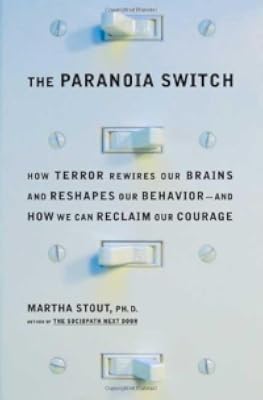
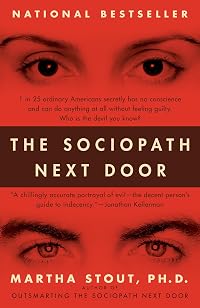
Martha Stout, Ph.D., served on the faculty in psychology in the department of psychiatry at Harvard Medical School for more than twenty-five years and was a clinical associate at the Massachusetts General Hospital in Boston. She practiced as a clinical psychologist specializing in recovery from psychological trauma and PTSD. Dr. Stout has taught show more psychology at the graduate faculty of the New School for Social Research in New York, the Massachusetts School of Professional Psychology, and Wellesley College. She is the author of, among numerous other publications, The Sociopath Next Door, The Paranoia Switch, and The Myth of Sanity. show less
Common Knowledge
- Quotations
- In my capacity as a therapist for trauma survivors, I have spent twenty years listening to people's stories, to the recounting of experiences so nightmarish, so abusive, and so abhorrent that one might well wish never to have... (show all) known about them.
Then it has been my privilege to know these same people as they recovered from their past experiences, and learned how to live in the present. And I believe that their stories contain meaningful lessons in how to leave behind some of our own long-ago terrors. There are possible solutions that come as gifts to the rest of us from the old souls, the exceptional survivors.
I began my practice by specializing in the treatment of people suffering from medically threatening anorexia and intractable depressive disorders. Also, for better or not, I developed a professional reputation as someone willing to take on individuals who were on the edge, patients whose potential for suicide or other self-destructive behavior had placed them at high risk.
Gradually, I began to notice that, too consistently to be ignored, most of the people I was treating were survivors of extreme psychological trauma, and that their symptoms tended to match the phenomenon of post-traumatic stress disorder just as closely as the more traditional diagnoses.
Sometimes I think of my lifework as overall lessons learned, themes, discoveries. But much more instructively and frequently, I think in terms of the individual human beings whom my profession has brought to me. On a certain level, I feel tied to many of these people with a knot so tight that I readily understand the appeal of notions such as fate, or even karma.
I believe I was drawn to them for their fire. The honest, purposeful sef-examination of a traumatized life creates a heat so exquisite that it burns away the usual appeasements, self-deceptions, and defenses. "What is the meaning of this life?" becomes a very personal question, and demands an answer. Some of the people I have known have burned so fiercely that they have gone all-stop, have quit their jobs, even endured temporary poverty, because answering the question consumed more energy than can reasonably be generated by a solitary individual. There is something electric in the eyes, a little wild.
But paradoxically-and yet, I think, for all the same reasons - these same people often reveal an irresistible sense of humor, an ironic angle on life that has dispensed with the polite and the guarded, and this tends to get right to the core of things. And so, though it may sound odd, when I am with my patients, I laugh out loud a lot.
Many trauma patients are detached and objective when they speak of extraordinary events, such as the particulars of failed suicide attempts, that most other people, if they speak of such matters at all, tend to cushion with lengthy introductions and euphemisms. As I listen to the telling of a personal history, more often than overt "symptoms," it is just such Faulkneresque understatement of the sometimes macabre, along with the burning light in the eyes and the cunning humor, that makes me begin to suspect extreme trauma in the individual's history.
As a psychologist, and as a human being, I am impressed with the irony that these severely traumatized patients, people who have been through living nightmares, people who might blamelessly choose death, often emerge from successful treatment by constructing lives for themselves that are freer than most ordinary lives from what Sigmund Freud, a century ago, labeled as "every-day misery." They become true keepers of the faith and are the most passionately alive people I know.
Or maybe it is more necessity than irony. I have been told more than once by the survivors of trauma that it would not be worth the struggle merely to go on surviving. And that is exactly what most of the rest of us do: we do not choose to die, or to live; we go on surviving. We do not choose nonexistence, nor do we choose complete awareness. We slog on, in a kind of foggy cognitive middle-land we call sane, a place where we almost never acknowledge the haze.
Over the years, what my trauma patients have taught me is that this compromise with reality and its traumas is simply not sanity at all. It is a form of madness, and it befuddles our existence. We lose parts of our thoughts in the present, we sabotage the closeness and comfort in our relationships,and we misplace important pieces of ourselves.
Classifications
Statistics
- Members
- 218
- Popularity
- 150,277
- Reviews
- 9
- Rating
- (3.76)
- Languages
- English
- Media
- Paper, Audiobook, Ebook
- ISBNs
- 3
- ASINs
- 2