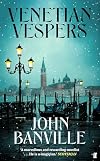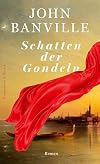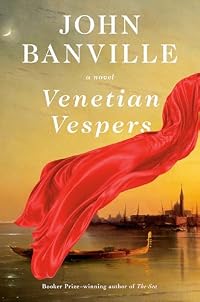
Venetian Vespers
by John Banville
On This Page
Description
Everything was a puzzle, everything a trap set to mystify and hinder me ... 1899. As the new century approaches, struggling English writer Evelyn Dolman - a hack, by his own description - marries Laura Rensselaer, daughter of an American oil tycoon. Evelyn anticipates that he and Laura will inherit a substantial fortune and lead a comfortable, settled life. But his hopes are dashed when a mysterious rift between Laura and her father, just before the patriarch's death, leads to her show more disinheritance. The unhappy newlyweds travel to Venice to celebrate the New Year at the Palazzo Dioscuri, ancestral home of the charming but treacherous Count Barbarigo. From their first moments in the mist-blanketed floating city, otherworldly occurrences begin to accumulate. Evelyn's already jangled nerves fray further. Where has Laura disappeared to? How to explain the increasingly sinister circumstances closing around him? Could he be losing his mind? Venetian Vespers is a haunting, atmospheric noir from one of the most sophisticated stylists of our time. show lessTags
Recommendations









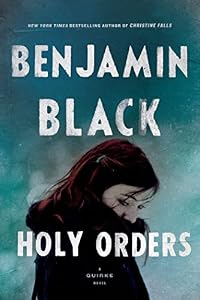


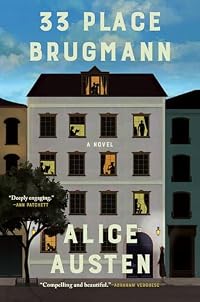
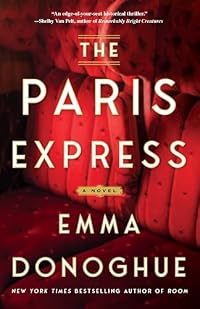
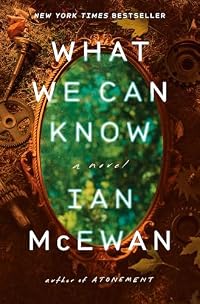

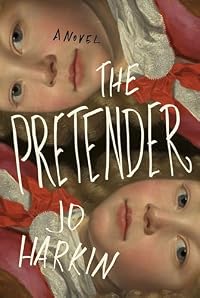
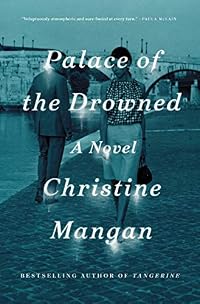
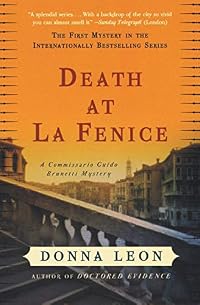



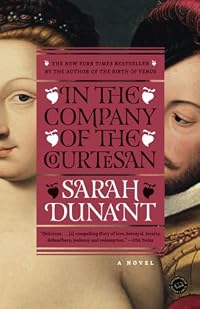




Member Recommendations
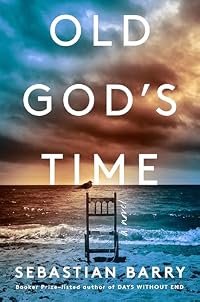
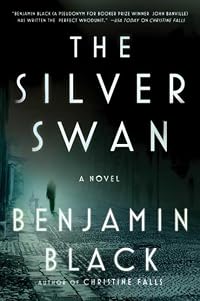
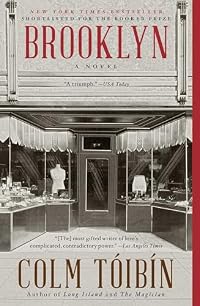
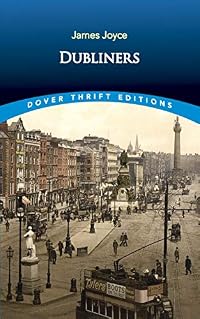
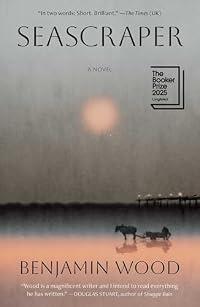
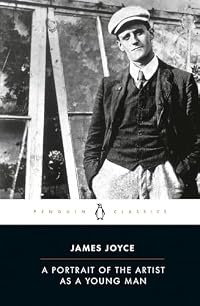
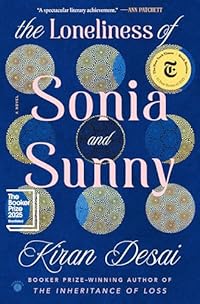
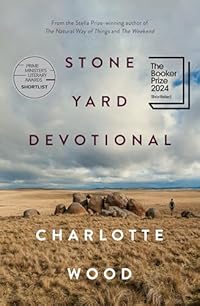
kjuliff Both involved, conflicted men, and I said in Italy. Both have interesting plots and our page journey. Both eloquently written.
Member Reviews
At the very start of the twentieth century, an Englishman travels to Venice with his bride of less than a year. Venice is cold and foggy and he doesn't speak the language or understand what's going on around him. His wife is distant, she's always been distant, and when he runs into a man who says he went to school with him, who has an attractive and flirtatious sister, things become more complicated and dangerous.
This is a novel that revels in ambiguity and hazy atmosphere. Evelyn Dolman is telling the story, we know he survives, but is he a reliable narrator, just confused as to what is going on around him, or is he changing the story to make himself look better? As Evelyn bumbles around Venice and justifies his own behavior, the show more reader is left peering through the story as though through a dirty window, trying to make sense of the inexplicable events swirling around Evelyn. It's a fascinating read, all the more satisfying for how Banville eventually puts the seemingly random pieces together. show less
This is a novel that revels in ambiguity and hazy atmosphere. Evelyn Dolman is telling the story, we know he survives, but is he a reliable narrator, just confused as to what is going on around him, or is he changing the story to make himself look better? As Evelyn bumbles around Venice and justifies his own behavior, the show more reader is left peering through the story as though through a dirty window, trying to make sense of the inexplicable events swirling around Evelyn. It's a fascinating read, all the more satisfying for how Banville eventually puts the seemingly random pieces together. show less
Writer Evelyn Dolman has recently married the daughter of an American tycoon but after his death discovers that she has been disinherited. As the turn of the century looms, he and Laura go to Venice on their honeymoon but almost immediately Dolman starts to feel disoriented. He encounters a man claiming to be an old school friend, and his alluring sister, then assaults his wife. She subsequently disappears and Dolman is at the mercy of the brother and sister that he doesn't really trust.
What a brilliant story. I loved the claustrophobic setting in Venice in the dead of winter with fog and cold, it really heightened what is a wonderfully gothic tale which turns out to be far more prosaic. Dolman is a pompous and unlovable character but show more the plotting is fantastic - the reader realises the inevitable almost at the same time as the protagonist. Banville is a superb writer of clever stories that appear laid-back yet wind their way to gripping, here there are hints of 'Don't Look Now' in the setting and the psychological twists. show less
What a brilliant story. I loved the claustrophobic setting in Venice in the dead of winter with fog and cold, it really heightened what is a wonderfully gothic tale which turns out to be far more prosaic. Dolman is a pompous and unlovable character but show more the plotting is fantastic - the reader realises the inevitable almost at the same time as the protagonist. Banville is a superb writer of clever stories that appear laid-back yet wind their way to gripping, here there are hints of 'Don't Look Now' in the setting and the psychological twists. show less
I loved this novel set in Venice at the turn of the twentieth century.
Evelyn Dolman, a self-described “Grub Street hack,” is married to Laura Rensselaer, daughter of an American oil baron. Though they have been married for about six months, theirs is really a mariage blanc. The trip to Venice is their honeymoon, delayed because of the sudden death of Laura’s father.
The first night in the city, Evelyn goes for a walk and stops for a drink at the Caffè Florian. There he encounters a man, Frederick FitzHerbert, who claims to have attended the same boarding school, though Evelyn has no recollection of him. When Evelyn is introduced to Cesca, Frederick’s sister, he is immediately smitten. The next morning, Laura disappears. Other show more strange things happen and Evelyn suspects that he is a pawn being manipulated by someone, but he doesn’t know by whom or for what reason.
Evelyn is the narrator of his own story, and he reveals at the beginning that “In telling my tale I am trying to be as I was then, still happily ignorant of all that I know now.” So the reader struggles, like Evelyn, “to penetrate through successive veils of obfuscation.” He describes his time in Venice as a “time of confusion, fear, and ultimate disaster” during which “a woman died.” He experiences doubts and more than one “tremor of misgiving” and wonders whether he has been spotted “as someone who would be easily gulled,” yet he acknowledges that he rushed “forward heedlessly to embrace my own destruction.” So the reader’s interest is grasped: What exactly happened? Who died? And what were Evelyn’s “worst miscalculations . . . [and] most calamitous errors”?
Since Evelyn is the narrator, there is always the question of his reliability. Can his version of events be trusted? What there is little doubt of is his unlikeability. He is self-absorbed, self-important, self-satisfied, self-righteous, self-pitying, self-serving, and self-justifying. What he is not is self-aware. There is one episode in particular, with Laura the night before she goes missing, during which Evelyn behaves in an unforgivable way, but he constantly makes excuses for his actions. Before beginning his story, Evelyn adds, “There is no doubt of it, I deserved all I got.” At the end, the reader must consider if this is true.
The author certainly plays fair, providing many clues. In dialogue, a motif emerges: “appearances are deceptive” and “one never can tell what’s going on behind one’s back” and “this is Italy, remember, where there’s hardly a person who is what he claims to be.” There is repeated reference to twins: Laura’s sister is Thomasina, which means “twin”; Frederick and Cesca are twins; Laura and Cesca look like twins; and the palazzo in which Laura and Evelyn take residence is the Palazzo Dioscuri which refers to Castor and Pollux, the legendary twins from mythology. Evelyn even speaks of himself as two people: “on the outside manly and self-satisfied while the inner midget seethed with unquenchable ressentiment and spleen.” Even the name Evelyn, a gender-neutral name, may be significant.
Banville excels at creating an atmosphere with strong gothic elements. There’s a decaying palazzo that “might have been Bluebeard’s Castle,” which wallows “in the noisome shallows of the Canal Grande, that sluggish waterway coiling itself like a fat, grey-green worm through the very bowels of the city.” “The night was foggy, and there was a sulphurous glow that seemed the breath of some ghoulish thing” and during the day, “a low, seamless stretch of cloud laid upon the city like a soiled cotton bandage.” Venice itself is described as “this most elusive, this most crafty, of cities,” a place “of glancing lights, distorting reflections, looming shadows” and a “pestilential town lodged in the fetid crotch of the Adriatic.”
I enjoyed the book for many reasons. Besides the creepy atmosphere of the setting and the constant doubts surrounding characters and events, I love Banville’s writing style with its lush, poetic language. I had to pause to look up certain words like quondam and Latin phrases like vade mecum, but the book was a page turner for me. And the ending provides resolution, but had me thinking that, like Evelyn, “I didn’t yet know the half of it.”
Note: Please check out my reader's blog (https://schatjesshelves.blogspot.com/) or substack (https://doreenyakabuski.substack.com/) for over 1,200 of my book reviews. show less
Evelyn Dolman, a self-described “Grub Street hack,” is married to Laura Rensselaer, daughter of an American oil baron. Though they have been married for about six months, theirs is really a mariage blanc. The trip to Venice is their honeymoon, delayed because of the sudden death of Laura’s father.
The first night in the city, Evelyn goes for a walk and stops for a drink at the Caffè Florian. There he encounters a man, Frederick FitzHerbert, who claims to have attended the same boarding school, though Evelyn has no recollection of him. When Evelyn is introduced to Cesca, Frederick’s sister, he is immediately smitten. The next morning, Laura disappears. Other show more strange things happen and Evelyn suspects that he is a pawn being manipulated by someone, but he doesn’t know by whom or for what reason.
Evelyn is the narrator of his own story, and he reveals at the beginning that “In telling my tale I am trying to be as I was then, still happily ignorant of all that I know now.” So the reader struggles, like Evelyn, “to penetrate through successive veils of obfuscation.” He describes his time in Venice as a “time of confusion, fear, and ultimate disaster” during which “a woman died.” He experiences doubts and more than one “tremor of misgiving” and wonders whether he has been spotted “as someone who would be easily gulled,” yet he acknowledges that he rushed “forward heedlessly to embrace my own destruction.” So the reader’s interest is grasped: What exactly happened? Who died? And what were Evelyn’s “worst miscalculations . . . [and] most calamitous errors”?
Since Evelyn is the narrator, there is always the question of his reliability. Can his version of events be trusted? What there is little doubt of is his unlikeability. He is self-absorbed, self-important, self-satisfied, self-righteous, self-pitying, self-serving, and self-justifying. What he is not is self-aware. There is one episode in particular, with Laura the night before she goes missing, during which Evelyn behaves in an unforgivable way, but he constantly makes excuses for his actions. Before beginning his story, Evelyn adds, “There is no doubt of it, I deserved all I got.” At the end, the reader must consider if this is true.
The author certainly plays fair, providing many clues. In dialogue, a motif emerges: “appearances are deceptive” and “one never can tell what’s going on behind one’s back” and “this is Italy, remember, where there’s hardly a person who is what he claims to be.” There is repeated reference to twins: Laura’s sister is Thomasina, which means “twin”; Frederick and Cesca are twins; Laura and Cesca look like twins; and the palazzo in which Laura and Evelyn take residence is the Palazzo Dioscuri which refers to Castor and Pollux, the legendary twins from mythology. Evelyn even speaks of himself as two people: “on the outside manly and self-satisfied while the inner midget seethed with unquenchable ressentiment and spleen.” Even the name Evelyn, a gender-neutral name, may be significant.
Banville excels at creating an atmosphere with strong gothic elements. There’s a decaying palazzo that “might have been Bluebeard’s Castle,” which wallows “in the noisome shallows of the Canal Grande, that sluggish waterway coiling itself like a fat, grey-green worm through the very bowels of the city.” “The night was foggy, and there was a sulphurous glow that seemed the breath of some ghoulish thing” and during the day, “a low, seamless stretch of cloud laid upon the city like a soiled cotton bandage.” Venice itself is described as “this most elusive, this most crafty, of cities,” a place “of glancing lights, distorting reflections, looming shadows” and a “pestilential town lodged in the fetid crotch of the Adriatic.”
I enjoyed the book for many reasons. Besides the creepy atmosphere of the setting and the constant doubts surrounding characters and events, I love Banville’s writing style with its lush, poetic language. I had to pause to look up certain words like quondam and Latin phrases like vade mecum, but the book was a page turner for me. And the ending provides resolution, but had me thinking that, like Evelyn, “I didn’t yet know the half of it.”
Note: Please check out my reader's blog (https://schatjesshelves.blogspot.com/) or substack (https://doreenyakabuski.substack.com/) for over 1,200 of my book reviews. show less
Not what you think
Ah, Venice. An ancient and beautiful city. Flooded with art, churches, carnival, masks, music, restaurants, bars, and, of course, water. A maze of deep history, with mystery in the shadows.
And vespers: the quiet and reassuring service at the close of day. Almost onomatopoeic.
This is not that Venice. It’s this one:
“That pestilential town lodged in the fetid crotch of the Adriatic.”
Image: Black and white image of The Ponte dei Sospir, with a shadowy figure in the foreground (Source)
Evelyn Dolman is a typical Banville protagonist, albeit set more than a century ago: an entitled, unapologetic, self-absorbed old man, who doesn’t treat women well, but is an oddly compelling raconteur on the page. He is looking back show more at his winter honeymoon in the 1890s, in that “fabricated, dreary, water-logged city”. But this is darker than Ian McEwan’s On Chesil Beach, which I reviewed HERE. Dolman is clearly an unreliable narrator, and his account is full of teasers about what’s to come, as well as pre-emptive justification of things he later tells us.
This novel is not quite one of Banville’s thrillers (initially published under the nom de plume, [author:Benjamin Black|116405]), but it demonstrates his skill in that genre, and conjures something of the mood of Gothic mysteries of the time, such as Wilkie Collins’, The Woman in White.
Luck and paranoia
Dolman was a “Grub Street hack” with literary aspirations who somehow marries a US heiress. Her father gives them Rakes Manor. “Who chose whom?” Dolman ponders early on. The possibilities, reasons, and consequences are deliciously, darkly tangled.
After a long train journey, they arrive at the huge, dingy Palazzo Barbarigo, owned by a count he describes as playful, malevolent, and a charlatan - but is that hindsight?
Image: The Palazzo Barbarigo Minotto on the Canal Grande in Venice (Source)
Laura is fluent in Italian. Her husband knows none:
“I chafed sorely in my imposed and impotent muteness.”
He feels as if he’s been put on a stage in a play where everyone else knows the plot and script.
Unsettling things happen. Individually inconsequential, but cumulatively alarming:
A face at a window.
A forgotten acquaintance from school.
A lavender cushion, lost - then found.
Fever from a splinter-induced infection.
Strange temptations.
Rape. A missing person. A telegram. A death.
Dolman starts to doubt his sanity and consider conspiracies and the supernatural.
Myriad little things seem worth noting, but turn out to be nothing at all. An armoury of Chekhov's guns, almost none of them fired. For instance, just the names: Dolman is a sad name, Rakes Manor feels like an omen, and Francesca Ransome should be a warning. But Freddie Fitzherbert, and Thomasina and Laura Rensselaer seem devoid of significance.
Like Dolman:
“I was left with more questions than I could ever hope to answer.”
Unlike Doman, I enjoy that.
Not for tourist brochures
• “Venice, that place of glancing lights, distorting reflections, looming shadows.”
• “The putrid jade-green waters of the Grand Canal.”
• “I was afraid of Venice, afraid of losing myself there, not only physically but spiritually also.”
• “Everything stank of stagnant water.”
• Entering St Mark’s Basilica, “The air within was heavy with an oppressive, sanctified hush, and the light coming in at the many small windows seemed soiled.”
• “St Mark’s struck me as a peculiar blend of the gloomy and the gaudy.”
• “No one in Venice is what they claim.”
• “Venice… was its own ghost.”
• “That maze of islets and sinister waterways.”
• “A noble family reduced to renting out rooms… Don’t you sometimes feel you’re present at an endless bankruptcy sale?”
• “The venality of the place makes folk such as my brother and I feel we’re the essence of respectability.”
• “It had snowed… It gave the city an aspect of devastation, as in the wake of a natural catastrophe, or some terrible, annihilating battle from which the warring armies had long since retreated in bloodied exhaustion.”
• “A triumphant sun came out and shone on the [snowy] city with a king of vengeful glitter.”
Other quotes
• “The smoky candle, the chief function of which… seemed not to be the shedding of light but only the casting of shadows.”
• “The light of dawn fingering the edges of the curtains.” show less
Ah, Venice. An ancient and beautiful city. Flooded with art, churches, carnival, masks, music, restaurants, bars, and, of course, water. A maze of deep history, with mystery in the shadows.
And vespers: the quiet and reassuring service at the close of day. Almost onomatopoeic.
This is not that Venice. It’s this one:
“That pestilential town lodged in the fetid crotch of the Adriatic.”
Image: Black and white image of The Ponte dei Sospir, with a shadowy figure in the foreground (Source)
Evelyn Dolman is a typical Banville protagonist, albeit set more than a century ago: an entitled, unapologetic, self-absorbed old man, who doesn’t treat women well, but is an oddly compelling raconteur on the page. He is looking back show more at his winter honeymoon in the 1890s, in that “fabricated, dreary, water-logged city”. But this is darker than Ian McEwan’s On Chesil Beach, which I reviewed HERE. Dolman is clearly an unreliable narrator, and his account is full of teasers about what’s to come, as well as pre-emptive justification of things he later tells us.
This novel is not quite one of Banville’s thrillers (initially published under the nom de plume, [author:Benjamin Black|116405]), but it demonstrates his skill in that genre, and conjures something of the mood of Gothic mysteries of the time, such as Wilkie Collins’, The Woman in White.
Luck and paranoia
Dolman was a “Grub Street hack” with literary aspirations who somehow marries a US heiress. Her father gives them Rakes Manor. “Who chose whom?” Dolman ponders early on. The possibilities, reasons, and consequences are deliciously, darkly tangled.
After a long train journey, they arrive at the huge, dingy Palazzo Barbarigo, owned by a count he describes as playful, malevolent, and a charlatan - but is that hindsight?
Image: The Palazzo Barbarigo Minotto on the Canal Grande in Venice (Source)
Laura is fluent in Italian. Her husband knows none:
“I chafed sorely in my imposed and impotent muteness.”
He feels as if he’s been put on a stage in a play where everyone else knows the plot and script.
Unsettling things happen. Individually inconsequential, but cumulatively alarming:
A face at a window.
A forgotten acquaintance from school.
A lavender cushion, lost - then found.
Fever from a splinter-induced infection.
Strange temptations.
Rape. A missing person. A telegram. A death.
Dolman starts to doubt his sanity and consider conspiracies and the supernatural.
Myriad little things seem worth noting, but turn out to be nothing at all. An armoury of Chekhov's guns, almost none of them fired. For instance, just the names: Dolman is a sad name, Rakes Manor feels like an omen, and Francesca Ransome should be a warning. But Freddie Fitzherbert, and Thomasina and Laura Rensselaer seem devoid of significance.
Like Dolman:
“I was left with more questions than I could ever hope to answer.”
Unlike Doman, I enjoy that.
Not for tourist brochures
• “Venice, that place of glancing lights, distorting reflections, looming shadows.”
• “The putrid jade-green waters of the Grand Canal.”
• “I was afraid of Venice, afraid of losing myself there, not only physically but spiritually also.”
• “Everything stank of stagnant water.”
• Entering St Mark’s Basilica, “The air within was heavy with an oppressive, sanctified hush, and the light coming in at the many small windows seemed soiled.”
• “St Mark’s struck me as a peculiar blend of the gloomy and the gaudy.”
• “No one in Venice is what they claim.”
• “Venice… was its own ghost.”
• “That maze of islets and sinister waterways.”
• “A noble family reduced to renting out rooms… Don’t you sometimes feel you’re present at an endless bankruptcy sale?”
• “The venality of the place makes folk such as my brother and I feel we’re the essence of respectability.”
• “It had snowed… It gave the city an aspect of devastation, as in the wake of a natural catastrophe, or some terrible, annihilating battle from which the warring armies had long since retreated in bloodied exhaustion.”
• “A triumphant sun came out and shone on the [snowy] city with a king of vengeful glitter.”
Other quotes
• “The smoky candle, the chief function of which… seemed not to be the shedding of light but only the casting of shadows.”
• “The light of dawn fingering the edges of the curtains.” show less
Typical Banville language: amazing. Intrigue in Venice Husband marries for love and money. The inheritance does not come through. The wife disappears and an enchanting woman appears in her place. What could be going on?
It took me a while to get into Banvile’s Venetian Vespers. It was a slow start but I persevered, and ended up really appreciating it.
John Banville is a great writer and though at the start of the novel I was a bit worried that it was on the road to being another Benjamin Black - (the two faces of Banville have been close to morphing at times), it was in fact Banville at his best
It exudes all those feelings of apprehension that are so common in many art forms depicting the haunting atmosphere of the city of Venice.
I’ll always remember the film, Don’t Look Now, books such as Death in Venice, the play The Merchant of Venice, the paintings such as Turner’s “Venice, the Dogana and San Giorgio Maggiore” and Monet’s “San show more Giorgio Maggiore at Dusk”
Unlike other Italian cities. Venice is an apt background for Banvile’s subtly haunting new book.
Read it. show less
John Banville is a great writer and though at the start of the novel I was a bit worried that it was on the road to being another Benjamin Black - (the two faces of Banville have been close to morphing at times), it was in fact Banville at his best
It exudes all those feelings of apprehension that are so common in many art forms depicting the haunting atmosphere of the city of Venice.
I’ll always remember the film, Don’t Look Now, books such as Death in Venice, the play The Merchant of Venice, the paintings such as Turner’s “Venice, the Dogana and San Giorgio Maggiore” and Monet’s “San show more Giorgio Maggiore at Dusk”
Unlike other Italian cities. Venice is an apt background for Banvile’s subtly haunting new book.
Read it. show less
The book was beautifully written and there were clues along the way that suggested relationships/motives. I just felt that the first half didn’t take the reader into its confidence somehow (I didn’t know what was going on … 🤔).
Members
- Recently Added By
Lists

Books Read in 2025
4,090 works; 97 members

Books Read in 2026
1,737 works; 62 members
Author Information

90+ Works 27,960 Members
Some Editions
Awards and Honors
Common Knowledge
- Canonical title
- Venetian Vespers
- Original title
- Venetian Vespers
- Original publication date
- 2025
- People/Characters
- Evelyn Dolman; Laura Rensselaer; Frederick FitzHerbert; Cesca Ransom; Thomasina Rensselaer
- Important places
- Venice, Italy
- Epigraph
- I remember the whole beginning as a succession of flights and drops, a little seesaw of the right throbs, and the wrong.
Henry James, The Turn of the Screw - First words
- Dusk, a deserted room, a scrap of black silk on a marble table, darkening waters beyond.
- Last words
- (Click to show. Warning: May contain spoilers.)Dusk, a deserted room, a scrap of black silk on a marble table, a darkening sea beyond.
Classifications
Statistics
- Members
- 221
- Popularity
- 147,046
- Reviews
- 14
- Rating
- (3.75)
- Languages
- English, German
- Media
- Paper, Audiobook, Ebook
- ISBNs
- 10
- ASINs
- 4