On This Page
Description
When a young woman threatens to expose a damaging secret from his former life, Axel Vander, an elderly scholar and master liar, is forced to examine his past to uncover the truths that he has so carefully hidden.Tags
Recommendations













Member Recommendations
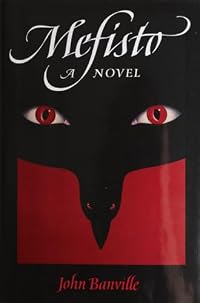
JuliaMaria In beiden Romanen ist der Literaturwissenschaftler Paul de Man Vorbild.
kjuliff Both involved, conflicted men, and I said in Italy. Both have interesting plots and our page journey. Both eloquently written.
Member Reviews
“Media vita in morte sumus”
Shroud. White and pristine. Or soiled with blood and other bodily secretions.
Shroud. Perhaps a bed-sheet, on which life has been created, delivered, or ended.
Shroud. For binding, putting away, and death.
Shroud. Separation or disguise: everything hazy, faded, muffled, and detached.
Cass Cleave often detaches - from Axel Vander, from her father, and from reality.
The main narrative is set in Turin, home of the famous Shroud, and site of Shelley’s drowning. It is the second of Banville’s trio about the Cleaves (see the final section of this review), but despite overlaps and similarities, it pushes the boundaries of the recurring themes harder, challenging the reader to find some sympathy for Vander, show more some redeeming qualities. I found little of either, and think Banville takes it too far - even down to the blind eye and dodgy leg of a comedy villain, on top of heavy drinking, petty theft, identity theft, mental and physical cruelty, and a relationship with a vulnerable young woman. The echoes of Lolita are strong, though the language is less bewitching .
Masks
“Rip the mask from his face to find - another mask. Father father father.”
“Verisimilitude is in the details. She had learned at the knee of a master.”
Shrouds are not just for the dead; the living adopt masks of various kinds: for deliberate deception, anonymity, social convention, or because they cannot help it.
Cass is the daughter of an actor: a man of many faces, roles, and voices. She hears voices. And Vander…? He plays more than one role: “I wanted to be him. And yet, I despised him.”
That is the crux of this story: an elderly literature professor is contacted by a young amateur researcher who may unmask unsavoury secrets about his past.
Unreliable Confession
“All this I remembered, even though it never happened.”
Vander narrates his past and present in explicitly confessional and increasingly self-serving terms, often distancing himself from the causes and consequences of his actions.
“There is not a sincere bone in the entire body of my text.”
After initially claiming to “speak only of what I know, or what I can vouch for”, Vander rambles, fully aware of the inadequacy of his memory, his flights of imagination, and that “all my life I have lied… even when there was no need”
Regular, shorter passages are described from Cass’s point of view, but why should we trust them, plausible though they are? Her delusions make her inherently confused, and Vander's motives and thus inferences can't be trusted either.
“History is a hopscotch of anecdotes, neither true nor false, and what does it matter where it is supposed to have taken place?”
Mental Health and Identity
“So often the train of her thoughts carried her far beyond herself, or went off on its own way, without her. Did she think, or was she thought? She could get no steady hold on things.”
Cass has the fictitious Mandelbaum’s Syndrome: since childhood she’s heard voices and been prone to seizures and blackouts. She is “fully conscious, but… conscious somewhere else”. Afterwards, she retains a sensation “of being afloat, dulled and motionless… while everything rushed past her on all sides, the world itself and all that was in it, dense, clear and swift.”
At other times, her attention to minutiae is akin to hyperaesthesia, akin to the narrator of Nicholson Baker’s Mezzanine (my review HERE). She sees the details, but struggles to connect them into the portents she craves.
“In her version of the world everything was connected; she could trace the dissolution of empires to the bending of a blade of grass, with herself at the fulcrum of the process. All things attended her. The farthest-off events had a direct effect on her, or she had an effect on them. The force of her will, and all her considerable intellect, were fixed upon the necessity of keeping reality in order. This was her task, and hers alone.”
Vander is a WW2 refugee now living in Arcady, California, where “everyone had been someone else”. He has written about the “inexistence of self” and views identity as fragmentary and mouldable. “Am I not, like everyone… thrown together from a legion of selves?”. But that is no excuse. Although an intelligent adult, Cass is almost as unable to consent as Lolita. Vander is not only aware of the fact - he explicitly relishes it.
Names
“To name another is somehow to unname oneself.”
Banville plays with names, as is his wont. We have a trio of alliterative women: Cass Cleave, Kristina Kovacs, and Lady Laura. Meanwhile, Axel Vander, (grand)father figure, is a near acronym of Alexander, the actual father of Cass, who is properly Catherine, although Cass, redolent of sign-seeking prophetess, Cassandra, is more apt.
The distinction between Axel Vander and just Vander echoes the issue of identity and selfhood. The firstrefers to the real original young Axel Vander, beautiful son of a rich diamond merchant. The second refers to the friend, now old, who took on his identity . Similarly, there is Cass and Cass Cleave. The former is used in Vander’s first person narration. The second is used in the third person sections told from her point of view.
Cleave is ripe with contradictory meanings, exploited to the full, and various forms of the word recur, not just as a surname. A symbolic vase spontaneously cleaves when its owner dies, triggering the analogy that Cass is “another tall, tense, fissile vessel waiting to be cloven in two”, but meanwhile, she clings.
Sacred and Profane
There are many nods to holy ritual and iconography, often soiled by sin: a pen is a “sacred sceptre… with its profane relics wrapped safely inside”; a waiter proffers a drink as if it were a chalice; a couple stand like an altarpiece; a doctor gives a blessing, and a protruding lower lip is “in permanent expectation of receiving some drop of sacred distillate from above”. And until Cass finds the key that unlocks the connections and meaning in everything she studies so meticulously, “she must simply perform the rites”. When Vander is unwell, she nurses him with “an almost sanctified sense of purpose… He was her vocation now”.
Vander’s distancing from events hints at a visceral desire for excuse, if not expiation. “Everything had been taken from me, therefore everything was to be permitted.”
And sex, of course, can be both, though Vander makes it sound ugly: “To thrust a limb of one’s living flesh into the living flesh of another, how can that be other than a sacred or sacrilegious act?”
Fathers and Daughters
Banville’s obsession. Lines are blurred, and dark things implied. Is it better to keep such things wrapped and buried?
Cass tells someone that Vander is her father, though he’s actually old enough to be her grandfather. It is strongly, regularly hinted here, and in the other two books, that her relationship with her own father is more intimate than it should be: “She had always been fascinated by her father’s mouth”, including his breath and bristles. And “there were times when she would feel shy of him… almost revulsion, and more even than that”. When her mother says in a phone call that he has gone “to live with the ghost of his Mammy” (the plot of Eclipse), Cass is glad that he has gone. Yet she tells Vander she was in love (note the preposition) with her father, and when she dies, she imagines her father behind her, telling her to jump .
Quotes about Light
As with all the Banvilles I’ve read, there are many beautiful descriptions of light. (There are also numerous mentions of smells and stinks, and in this story, Cass’s blackouts are preceded by the smell of almonds - which is also (though it's not mentioned) the smell of cyanide.)
Hidden for brevity; no plot spoilers.
• “The cone of gold-dusted light that bathes me in its underserved benevolence.”
• “Phantoms of shadow hung about, trying not to be noticed.”
• “The neuralgic light of early morning.”
• “How uninsistent was the sunlight in this part of the world, a matt radiance, unvarying and calm.”
• “At the corner, where an angled block of buttery sunlight leaned.”
• “The sun was being stealthily swallowed by a fat, bare moving cloud, putty-grey and burning silver all along its forward edge.”
• “Gauzy folds of shadow.”
• “Scintillas of rain were sprinkled through it [hair], an incongruous jewelling.”
• “The moon’s scurfy silver face gloating over the city.”
• “An English spring all sleet and spiked, wet sunlight.”
• “In the spiked sunlight of morning the place had a slightly sweaty, panting atmosphere.”
Quotes About Relationships
Hidden for brevity; no plot spoilers.
• “My life with her was a special way of being alone… [living] in a state of mutual incomprehension.”
• “Smiling at me with angry brightness… he murmured with honeyed bitterness.”
• “Is not love the mirror of burnished gold in which we contemplate our shining selves?”
• “Those bloated prototypes” - older siblings!
• “Only someone incapable of love could love so selflessly.” (Said of Vander.)
Miscellaneous Quotes
Hidden for brevity; no plot spoilers.
• “The dead, though, have their voice. The air through which I move is murmurous with absences. I shall soon be one of them.”
• “Weaving through the lies a few, fine, shining threads of truth.”
• “Her black eyes bright with fond malice and amusement.”
• “Her skin was warm and dry, and seemed to vibrate tinily all over its surface.”
• “A faint breeze… put its ineffectual hands against her face.”
• “In the frost smoke of winter mornings their [chimneys’] upper reaches would crumble into dreamy insubstantiality.”
• “Dressed with the studied negligence of the true dandy.”
• “The stolen object… takes on a mysterious weight.”
• “Anyone can die, of course, at any moment… Afterwards… we seem to discern in even the unlikeliest extinction an inevitability… This is where ghosts come from.”
• “Tyranny triumphs by offering its helpers the freedom to fulfil their most secret and most base desires... its victims too can be made free men.”
• “Grown old, the imagination… tends to play unnerving tricks. Visions that in youth or even middle age would seem no more than daydreams… reify into what feel overwhelmingly like actual and immediate experiences. The familiar will shift and slide… A known face will turn into that of a stranger.”
Vander at his Vilest
Hidden for brevity, good taste, and minor plot spoilers.
• Vander realises from first meeting that Cass is “one of the crazed ones”. That just stokes his libido, “For certain, I would have fun with this one” and “The chaos and violence of her mind… fascinated me”. He knows what he has done: “She was demented, and hardly more than a child… I betrayed that trust.”
• He claims to love Cass, but thinks “Love is only an urge to isolate and be in total possession of another human being”. Who would want “love” on those terms?
• “Deep down it is all I have ever wanted, really, to step out of myself and clamber bodily into someone else.” He says this when writing about desire for Cass, but it applies less literally to the original Axel Vander.
• “I would open up her flesh itself like a coat, unzip her from instep to sternum and climb bodily into her, feel her shocked heart gulp and skip, her lungs shuddering, clasp her blood-wet bones in my hands.” Yuk.
• He’s physically repellent, too: “the pot belly and the shrunken acorn below and its bag suspended by an attenuated string of yellowed skin like a head of garlic on its stalk”.
• Sex and death, the “little death”. Inextricably linked in Vander’s mind. He imagines - in detail - a dying woman having sex, and sucks the soiled knickers of a dead woman, her “profane relics”.
Image and Latin Sources
Hidden for brevity; no plot spoilers.
Veiled women by Antonio Corradini: http://www.lionesswomansclub.com/1902-antonio-corradinis-veiled-women/
“Media vita in morte sumus” means “In the midst of life we are in death”. Cranmer’s English translation is in the burial service in the Anglican Book of Common Prayer.
Or as T S Eliot extrapolated a similar idea, "I am dying in my own death and the deaths of those after me."
The Cleave Trilogy
The ancient light of the past illuminates the present and future.
The publication order of the Alex and Cass Cleave father/daughter trilogy is Eclipse, then Shroud, and finally, Ancient Light.
However, there’s no need to read them in sequence, as they all have a current storyline intertwined with reflections of earlier events. (My reading order was 3, 1, 2.) The middle one is more about Cass, and the other two focus on Alex.
Hidden for brevity.
Read the additional spoilers below only if you have read the book and want to jog your memory. Links are to my reviews, where any further spoilers are hidden.
• Eclipse, 5*: The main narrative is set in 1999, when Alex, the narrator, is ~50, and returns to his abandoned childhood home, after a catastrophic episode of stage-fright. The reminiscences are of his childhood, and that of his daughter, Cass, who has blackouts and hears voices. He develops a friendship with the caretaker’s teen daughter that hints beyond the mere paternal. It ends shortly after Cass’s death.
• Shroud, 3*: The main narrative is set over a few months in 1999, narrated by literature professor, Axel Vander (in his late 70s), who meets adult Cass in Turin. Aspects of her story are told in the third person, probably by Vander, though with implausible omniscience. Vander wrote a famous essay about the play which was her father’s most successful role. She is now an amateur researcher who has discovered secrets about Vander’s past, so the reminiscences are primarily about his teen and young adult years. Vander and Cass have a brief and disturbing relationship, and the book ends shortly after her death in 1999.
• Ancient Light, 5*: The main narrative is set around 2009, when Alex, narrating again, is ~60. The reminiscences are of his teen relationship with his best friend’s mother, of Cass’s teen years, and the aftermath of her death a decade ago. Things are muddied when he takes on the role of Axel Vander (Cass’s lover in Shroud) in a biopic. The woman playing Cass has recently lost her father. She and Alex become close: another father/daughter relationship, with sexual undertones.
Oedipus, meet Humbert. show less
Shroud. White and pristine. Or soiled with blood and other bodily secretions.
Shroud. Perhaps a bed-sheet, on which life has been created, delivered, or ended.
Shroud. For binding, putting away, and death.
Shroud. Separation or disguise: everything hazy, faded, muffled, and detached.
Cass Cleave often detaches - from Axel Vander, from her father, and from reality.
The main narrative is set in Turin, home of the famous Shroud, and site of Shelley’s drowning. It is the second of Banville’s trio about the Cleaves (see the final section of this review), but despite overlaps and similarities, it pushes the boundaries of the recurring themes harder, challenging the reader to find some sympathy for Vander, show more some redeeming qualities. I found little of either, and think Banville takes it too far - even down to the blind eye and dodgy leg of a comedy villain, on top of heavy drinking,
Masks
“Rip the mask from his face to find - another mask. Father father father.”
“Verisimilitude is in the details. She had learned at the knee of a master.”
Shrouds are not just for the dead; the living adopt masks of various kinds: for deliberate deception, anonymity, social convention, or because they cannot help it.
Cass is the daughter of an actor: a man of many faces, roles, and voices. She hears voices. And Vander…? He plays more than one role: “I wanted to be him. And yet, I despised him.”
That is the crux of this story: an elderly literature professor is contacted by a young amateur researcher who may unmask unsavoury secrets about his past.
Unreliable Confession
“All this I remembered, even though it never happened.”
Vander narrates his past and present in explicitly confessional and increasingly self-serving terms, often distancing himself from the causes and consequences of his actions.
“There is not a sincere bone in the entire body of my text.”
After initially claiming to “speak only of what I know, or what I can vouch for”, Vander rambles, fully aware of the inadequacy of his memory, his flights of imagination, and that “all my life I have lied… even when there was no need”
Regular, shorter passages are described from Cass’s point of view, but why should we trust them, plausible though they are? Her delusions make her inherently confused, and Vander's motives and thus inferences can't be trusted either.
“History is a hopscotch of anecdotes, neither true nor false, and what does it matter where it is supposed to have taken place?”
Mental Health and Identity
“So often the train of her thoughts carried her far beyond herself, or went off on its own way, without her. Did she think, or was she thought? She could get no steady hold on things.”
Cass has the fictitious Mandelbaum’s Syndrome: since childhood she’s heard voices and been prone to seizures and blackouts. She is “fully conscious, but… conscious somewhere else”. Afterwards, she retains a sensation “of being afloat, dulled and motionless… while everything rushed past her on all sides, the world itself and all that was in it, dense, clear and swift.”
At other times, her attention to minutiae is akin to hyperaesthesia, akin to the narrator of Nicholson Baker’s Mezzanine (my review HERE). She sees the details, but struggles to connect them into the portents she craves.
“In her version of the world everything was connected; she could trace the dissolution of empires to the bending of a blade of grass, with herself at the fulcrum of the process. All things attended her. The farthest-off events had a direct effect on her, or she had an effect on them. The force of her will, and all her considerable intellect, were fixed upon the necessity of keeping reality in order. This was her task, and hers alone.”
Vander is a WW2 refugee now living in Arcady, California, where “everyone had been someone else”. He has written about the “inexistence of self” and views identity as fragmentary and mouldable. “Am I not, like everyone… thrown together from a legion of selves?”. But that is no excuse.
Names
“To name another is somehow to unname oneself.”
Banville plays with names, as is his wont. We have a trio of alliterative women: Cass Cleave, Kristina Kovacs, and Lady Laura. Meanwhile, Axel Vander, (grand)father figure, is a near acronym of Alexander, the actual father of Cass, who is properly Catherine, although Cass, redolent of sign-seeking prophetess, Cassandra, is more apt.
The distinction between Axel Vander and just Vander echoes the issue of identity and selfhood. The first
Cleave is ripe with contradictory meanings, exploited to the full, and various forms of the word recur, not just as a surname. A symbolic vase spontaneously cleaves when its owner dies, triggering the analogy that Cass is “another tall, tense, fissile vessel waiting to be cloven in two”, but meanwhile, she clings.
Sacred and Profane
There are many nods to holy ritual and iconography, often soiled by sin: a pen is a “sacred sceptre… with its profane relics wrapped safely inside”; a waiter proffers a drink as if it were a chalice; a couple stand like an altarpiece; a doctor gives a blessing, and a protruding lower lip is “in permanent expectation of receiving some drop of sacred distillate from above”. And until Cass finds the key that unlocks the connections and meaning in everything she studies so meticulously, “she must simply perform the rites”. When Vander is unwell, she nurses him with “an almost sanctified sense of purpose… He was her vocation now”.
Vander’s distancing from events hints at a visceral desire for excuse, if not expiation. “Everything had been taken from me, therefore everything was to be permitted.”
And sex, of course, can be both, though Vander makes it sound ugly: “To thrust a limb of one’s living flesh into the living flesh of another, how can that be other than a sacred or sacrilegious act?”
Fathers and Daughters
Banville’s obsession. Lines are blurred, and dark things implied. Is it better to keep such things wrapped and buried?
Cass tells someone that Vander is her father, though he’s actually old enough to be her grandfather. It is strongly, regularly hinted here, and in the other two books, that
Quotes about Light
As with all the Banvilles I’ve read, there are many beautiful descriptions of light. (There are also numerous mentions of smells and stinks, and in this story, Cass’s blackouts are preceded by the smell of almonds - which is also (though it's not mentioned) the smell of cyanide.)
Hidden for brevity; no plot spoilers.
• “The cone of gold-dusted light that bathes me in its underserved benevolence.”
• “Phantoms of shadow hung about, trying not to be noticed.”
• “The neuralgic light of early morning.”
• “How uninsistent was the sunlight in this part of the world, a matt radiance, unvarying and calm.”
• “At the corner, where an angled block of buttery sunlight leaned.”
• “The sun was being stealthily swallowed by a fat, bare moving cloud, putty-grey and burning silver all along its forward edge.”
• “Gauzy folds of shadow.”
• “Scintillas of rain were sprinkled through it [hair], an incongruous jewelling.”
• “The moon’s scurfy silver face gloating over the city.”
• “An English spring all sleet and spiked, wet sunlight.”
• “In the spiked sunlight of morning the place had a slightly sweaty, panting atmosphere.”
Quotes About Relationships
Hidden for brevity; no plot spoilers.
• “My life with her was a special way of being alone… [living] in a state of mutual incomprehension.”
• “Smiling at me with angry brightness… he murmured with honeyed bitterness.”
• “Is not love the mirror of burnished gold in which we contemplate our shining selves?”
• “Those bloated prototypes” - older siblings!
• “Only someone incapable of love could love so selflessly.” (Said of Vander.)
Miscellaneous Quotes
Hidden for brevity; no plot spoilers.
• “The dead, though, have their voice. The air through which I move is murmurous with absences. I shall soon be one of them.”
• “Weaving through the lies a few, fine, shining threads of truth.”
• “Her black eyes bright with fond malice and amusement.”
• “Her skin was warm and dry, and seemed to vibrate tinily all over its surface.”
• “A faint breeze… put its ineffectual hands against her face.”
• “In the frost smoke of winter mornings their [chimneys’] upper reaches would crumble into dreamy insubstantiality.”
• “Dressed with the studied negligence of the true dandy.”
• “The stolen object… takes on a mysterious weight.”
• “Anyone can die, of course, at any moment… Afterwards… we seem to discern in even the unlikeliest extinction an inevitability… This is where ghosts come from.”
• “Tyranny triumphs by offering its helpers the freedom to fulfil their most secret and most base desires... its victims too can be made free men.”
• “Grown old, the imagination… tends to play unnerving tricks. Visions that in youth or even middle age would seem no more than daydreams… reify into what feel overwhelmingly like actual and immediate experiences. The familiar will shift and slide… A known face will turn into that of a stranger.”
Vander at his Vilest
Hidden for brevity, good taste, and minor plot spoilers.
• Vander realises from first meeting that Cass is “one of the crazed ones”. That just stokes his libido, “For certain, I would have fun with this one” and “The chaos and violence of her mind… fascinated me”. He knows what he has done: “She was demented, and hardly more than a child… I betrayed that trust.”
• He claims to love Cass, but thinks “Love is only an urge to isolate and be in total possession of another human being”. Who would want “love” on those terms?
• “Deep down it is all I have ever wanted, really, to step out of myself and clamber bodily into someone else.” He says this when writing about desire for Cass, but it applies less literally to the original Axel Vander.
• “I would open up her flesh itself like a coat, unzip her from instep to sternum and climb bodily into her, feel her shocked heart gulp and skip, her lungs shuddering, clasp her blood-wet bones in my hands.” Yuk.
• He’s physically repellent, too: “the pot belly and the shrunken acorn below and its bag suspended by an attenuated string of yellowed skin like a head of garlic on its stalk”.
• Sex and death, the “little death”. Inextricably linked in Vander’s mind. He imagines - in detail - a dying woman having sex, and sucks the soiled knickers of a dead woman, her “profane relics”.
Image and Latin Sources
Hidden for brevity; no plot spoilers.
Veiled women by Antonio Corradini: http://www.lionesswomansclub.com/1902-antonio-corradinis-veiled-women/
“Media vita in morte sumus” means “In the midst of life we are in death”. Cranmer’s English translation is in the burial service in the Anglican Book of Common Prayer.
Or as T S Eliot extrapolated a similar idea, "I am dying in my own death and the deaths of those after me."
The Cleave Trilogy
The ancient light of the past illuminates the present and future.
The publication order of the Alex and Cass Cleave father/daughter trilogy is Eclipse, then Shroud, and finally, Ancient Light.
However, there’s no need to read them in sequence, as they all have a current storyline intertwined with reflections of earlier events. (My reading order was 3, 1, 2.) The middle one is more about Cass, and the other two focus on Alex.
Hidden for brevity.
Read the additional spoilers below only if you have read the book and want to jog your memory. Links are to my reviews, where any further spoilers are hidden.
• Eclipse, 5*: The main narrative is set in 1999, when Alex, the narrator, is ~50, and returns to his abandoned childhood home, after a catastrophic episode of stage-fright. The reminiscences are of his childhood, and that of his daughter, Cass, who has blackouts and hears voices.
• Shroud, 3*: The main narrative is set over a few months in 1999, narrated by literature professor, Axel Vander (in his late 70s), who meets adult Cass in Turin. Aspects of her story are told in the third person, probably by Vander, though with implausible omniscience.
• Ancient Light, 5*: The main narrative is set around 2009, when Alex, narrating again, is ~60. The reminiscences are of his teen relationship with his best friend’s mother, of Cass’s teen years, and the aftermath of
Oedipus, meet Humbert. show less
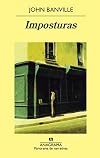
John Banville raya a gran altura en este libro. Con una escritura hipnótica y sofisticada, en 'Imposturas' nos ofrece una historia inteligente, ingeniosa, con momentos crudos y de desesperación, en la que disecciona dos mentes, las de los dos protagonistas, Alex Vander y Cass Cleave. De manera muy habilidosa, Banville crea una nueva novela dándonos a conocer a Cass Cleave, la hija de Alex Cleave, el protagonista de su anterior novela, 'Eclipse'; pero esto no supone que se tenga que leer necesariamente una novela antes que otra, son de lectura totalmente independiente. Es como si las dos novelas hubiesen sido escritas al mismo tiempo, y cuyos argumentos también transcurriesen paralelamente, para desembocar en un mismo final.
En show more 'Importuras' hay dos voces narrativas. Una es la de Alex Vander, un anciano filósofo de origen europeo afincando en California, cuyos libros lo han hecho célebre. Su mal genio y acritud son habituales en él. Un buen día recibe una carta de una desconocida. Dice que está en Amberes, ciudad natal del escritor, y asegura haber descubierto su verdadera indentidad. En la carta dice que quiere encontrarse con él, y, aprovechando una conferencia que ha de impartir en Turín, acepta. No cabe duda de que está preocupado; oculta secretos que no quiere que salgan a la luz. Vander espera encontrarse a alguien que desea vengarse de él, pero le espera una sorpresa...
La otra voz narrativa del libro es la de Cass Cleave, cuyo padre (que curiosamente también se llama Alex, al igual que Vander), ya conocimos en 'Eclipse', una joven que está de viaje por Europa recabando información para su tesina. Es una chica compleja e inteligente, pero con problemas mentales: oye voces en su cabeza que intenta no escuchar y sufre ataques de vez en cuando. Decir que mantiene una relación difícil con su padre, es quedarse corto. Y también es una ferviente lectora de los libros de Alex Vander...
Como comentaba en la reseña de 'Eclipse', la crítica adora a John Banville, comparándolo con Navokov, Beckett o Roth. Pienso que tienen, salvando las distancias, algo de razón, y el personaje de Vander tiene ciertas similitudes con el Humbert Humbert de 'Lolita', en las pasiones y en ese querer huir de sí mismos.
'Imposturas' es una novela que te arrastra a los oscuros abismos del alma humana, en un viaje de dolor, desesperación y humanidad.
"[...] soy un ser hecho completamente de poses. Es posible que en esto no sea único, puede que le pase lo mismo a todo el mundo, no lo sé ni me importa. Lo que sé es que tras haber vivido en la conciencia, o aunque fuera sólo en la ilusión, de estar constantemente bajo la observación, soy todo fachada; mirad detrás de mí y sólo encontraréis un poco de serrín, unos cuantos pavoneos y una confusión de cables. No hay un hueso sincero en todo el cuerpo de mi texto. [...]" show less
En show more 'Importuras' hay dos voces narrativas. Una es la de Alex Vander, un anciano filósofo de origen europeo afincando en California, cuyos libros lo han hecho célebre. Su mal genio y acritud son habituales en él. Un buen día recibe una carta de una desconocida. Dice que está en Amberes, ciudad natal del escritor, y asegura haber descubierto su verdadera indentidad. En la carta dice que quiere encontrarse con él, y, aprovechando una conferencia que ha de impartir en Turín, acepta. No cabe duda de que está preocupado; oculta secretos que no quiere que salgan a la luz. Vander espera encontrarse a alguien que desea vengarse de él, pero le espera una sorpresa...
La otra voz narrativa del libro es la de Cass Cleave, cuyo padre (que curiosamente también se llama Alex, al igual que Vander), ya conocimos en 'Eclipse', una joven que está de viaje por Europa recabando información para su tesina. Es una chica compleja e inteligente, pero con problemas mentales: oye voces en su cabeza que intenta no escuchar y sufre ataques de vez en cuando. Decir que mantiene una relación difícil con su padre, es quedarse corto. Y también es una ferviente lectora de los libros de Alex Vander...
Como comentaba en la reseña de 'Eclipse', la crítica adora a John Banville, comparándolo con Navokov, Beckett o Roth. Pienso que tienen, salvando las distancias, algo de razón, y el personaje de Vander tiene ciertas similitudes con el Humbert Humbert de 'Lolita', en las pasiones y en ese querer huir de sí mismos.
'Imposturas' es una novela que te arrastra a los oscuros abismos del alma humana, en un viaje de dolor, desesperación y humanidad.
"[...] soy un ser hecho completamente de poses. Es posible que en esto no sea único, puede que le pase lo mismo a todo el mundo, no lo sé ni me importa. Lo que sé es que tras haber vivido en la conciencia, o aunque fuera sólo en la ilusión, de estar constantemente bajo la observación, soy todo fachada; mirad detrás de mí y sólo encontraréis un poco de serrín, unos cuantos pavoneos y una confusión de cables. No hay un hueso sincero en todo el cuerpo de mi texto. [...]" show less
In this thirteenth of the Irish author’s novels, central character Axel Vander is a valetudinarian professor who is—at first appearance—derived fairly directly from the posthumously unveiled Paul de Man. A writer and lecturer of savvy charisma emerged as an apparent refugee from Nazi Europe and rose to celebrity in the American academic establishment. In 1987, four years after his death, De Man’s actual complicity in Nazi anti-Semitism was revealed through the recovery of scores of articles that he had written for the pro-Nazi press in occupied Belgium. In Shroud, it first appears that the same scenario is being replayed with a slight variation: the exposure is threatened while Vander is still alive. A young Irish woman, Cass show more Cleave, has contacted him to let him know that she has discovered the compromising newspaper articles.
Banville eventually reveals that the old professor did not write the articles. He was in fact a Jew who had been a schoolmate and friend of the original Axel Vander, who did write them. He adopted the Vander identity after the original (was) disappeared, and he needed a name under which to flee the country. “And yet…” Vander himself tells the reader, as he confesses to Cleave, "In my heart, I too wanted to see the stage cleared, the boards swept clean, the audience cowed and aghast. […] We would have, I would have, sacrificed anything to that transfiguring fire. I whisper it: and I still would. The people who turned my people to ash, they were the ones I hoped would win; I regret it yet that they lost" (223). And still that is not the bottom of the rabbit-hole of Professor Vander’s self. (Banville never provides the character’s original name.)
Cass Cleave is not a simple character either. She is prone to hallucinations, and she is working out her own complicated biographical plot. Vander meets Cleave in Turin, where the Holy Shroud provides one meaning of the “shroud” of the title, with an aura of mystery and magic. But it proves less important than the many biographical and psychological shrouds that are described throughout the novel. The great significance of Turin is that it is the town of the twilight of Nietzsche, whom Vander simply calls N. Vander and Cleave do not manage to visit the Shroud, but they do attempt to see the former apartment of “Il grande filosofo.” The prophetic alter ego of Nietzsche even appears in the minor role of “Dr. Zoroaster,” a local physician. Nietzsche’s writing is a preferred object of study for Vander just as it was for de Man.
De Man quotes Nietzsche’s “On the Use and Misuse of History for Life”: “[W]e try to give ourselves a new past from which we should have liked to descend instead of the past from which we descended. But this is also dangerous, because it is so difficult to trace the limit of one’s denial of the past, and because the newly invented nature is likely to be weaker than the previous one…” (Nietzsche in de Man, Blindness and Insight, 149-150).
Vander ruefully entertains “a tale I had thought to think of no more until you brought it back.” He dispenses to Cleave, whom he designates as his biographer, not only memories of his old life but of his recent dreams. Banville’s novel does not promise any sense of esoteric mystery, but it reveals a startling depth in the anamnesia of personal secrets, and ultimately, an awareness that individuals are separated from each other by a chasm as deep as death--a divide that love simply makes visible. The shroud of the title is thus a display of false history, a shroud of concealment, and a funereal shroud. show less
Cass Cleave is not a simple character either. She is prone to hallucinations, and she is working out her own complicated biographical plot. Vander meets Cleave in Turin, where the Holy Shroud provides one meaning of the “shroud” of the title, with an aura of mystery and magic. But it proves less important than the many biographical and psychological shrouds that are described throughout the novel. The great significance of Turin is that it is the town of the twilight of Nietzsche, whom Vander simply calls N. Vander and Cleave do not manage to visit the Shroud, but they do attempt to see the former apartment of “Il grande filosofo.” The prophetic alter ego of Nietzsche even appears in the minor role of “Dr. Zoroaster,” a local physician. Nietzsche’s writing is a preferred object of study for Vander just as it was for de Man.
De Man quotes Nietzsche’s “On the Use and Misuse of History for Life”: “[W]e try to give ourselves a new past from which we should have liked to descend instead of the past from which we descended. But this is also dangerous, because it is so difficult to trace the limit of one’s denial of the past, and because the newly invented nature is likely to be weaker than the previous one…” (Nietzsche in de Man, Blindness and Insight, 149-150).
Vander ruefully entertains “a tale I had thought to think of no more until you brought it back.” He dispenses to Cleave, whom he designates as his biographer, not only memories of his old life but of his recent dreams. Banville’s novel does not promise any sense of esoteric mystery, but it reveals a startling depth in the anamnesia of personal secrets, and ultimately, an awareness that individuals are separated from each other by a chasm as deep as death--a divide that love simply makes visible. The shroud of the title is thus a display of false history, a shroud of concealment, and a funereal shroud. show less
So...a reread of this, it turns out, second book in a trilogy--now that ANCIENT LIGHT has arrived 10 years after this one's publication. SHROUD--about death, about being shrouded in secrecy, shrouded by false identity (and by identity itself). The fairly detestible, but spectacularly complex, main character, Axel Vander, is a Paul de Man-like Romantics scholar (among his works being a highly influential essay on Shelley...) with a dodgy past as, like de Man, Vander wrote some anti-Semitic articles during the rise of Hitler. And it's true that Axel Vander wrote them. What is not true is that the main character is in fact Axel Vander. Vander was a casual friend that the main character (never actually named) envied deeply. When the real show more Vander dies under mysterious circumstances and the main character must flee the forces that destroy his family, he adopts the name. (Later, the realization that the Vanders themselves were in danger and may, too, have been Jewish, and that the real Vander may have died as a Resistance fighter adds yet another layer to the already dizzyingly complex issue of identity in this novel.) When Cass Cleave contacts him with imprecisely revealed knowledge of his past, the question for him is what does she know? Is she threatening to reveal the anti-Jewish tracts and ruin his illustrious career as Axel Vander, or to unmask his identity? (Which is what, exactly--he didn't write the tracts, did write the essays that have made him famous, didn't really need to keep the name after he'd escaped to London....) The degraded facts of his existence--as whomever--also include murder (of his lost-to-dementia wife Magda), his supposed war wounds actually got in a beating arranged by his London girlfriend after he stole money from her, his petty thievery (an accompaniment to his much larger identity theft and constant dissembling), and his taking the mentally deranged, excruciatingly vulnerable, and very young Cass Cleave to bed. That she adopts him as her cause and care and, he believes, kills herself when he drops her, and that he claims to love her (an old friend calls him on this one) add this novel's plot elements to the mayhem he has wrought in his one lifetime. He "gets away" with it all in the end, along with a cache of stolen pills in a stolen case with which he plans to end his life. He sees himself as Harlequin, the dubious figure with whom Banville has been engaged for years.
(On the plot point side in light of Alex Cleave's return in ANCIENT LIGHT, he had let down his desperate daughter in many ways, one of which was telling her not to try to figure out how to live--just act, the old thespian advised. Cass also claims to have been "in love" with her father, and her disjointed discourse--and involvement with Vander--is addressed to him. And it is Vander who drunk-dials Cleave in ECLIPSE. These two books, written within a year of each other, bookend neatly.) show less
(On the plot point side in light of Alex Cleave's return in ANCIENT LIGHT, he had let down his desperate daughter in many ways, one of which was telling her not to try to figure out how to live--just act, the old thespian advised. Cass also claims to have been "in love" with her father, and her disjointed discourse--and involvement with Vander--is addressed to him. And it is Vander who drunk-dials Cleave in ECLIPSE. These two books, written within a year of each other, bookend neatly.) show less
Compulsive reading despite the ghastly characters, and the complex web of deception that Axel Vander builds around his identity.
Axel Vander is angry. He is also a self-described liar. In fact, as this fine novel by Banville unfolds, his entire life of falsehoods unravels. Banville does not disappoint, and he seems to prove himself one of the most consistently fluid and lyrical writers alive today. He has turned his talents to create one of the most despicable characters in all of literature.
Several years ago, I stumbled on a Noel Coward film from 1935 entitled The Scoundrel.
Never released on DVD or VHS, I cannot find out much about the film, and I have little hope of ever seeing it again. But I do remember vividly the despicable character Coward played. I always thought him the worst person in all of literature since Milton’s Lucifer. Now I have a new leader show more in the categories of rudeness, meanness, with an overall despicable character – Axel Vander.
When describing his siblings, Axel says, “my older brothers and sisters, those botched prototypes along the way to producing me” (132). He is also a snob. While visiting Italy, a native does not understand a request, and he thinks, “I learned my Italian from Dante” (22).
Banville has given Axel a voice that drips of egotism, boorishness, and misery. For example, Banville writes when Axel explains why he did not go to the funeral of a friend, he thinks, “in some ancillary ventricle there still lodged a stubborn clot of doubt” (154). Echoes of Noel Coward!
Twenty times or more, I was driven to the dictionary to look up arcane words, such as gallimaufry, instauration, and apocatastasis. Banville is a first-rate wordsmith.
Vander is also a character I call a “topper.” No matter what anyone says, Axel, must top with a better story, a bigger experience, or a more important acquaintance. Boy does THAT get under my skin.
Despite all this, Banville has told a much more than interesting story. On one occasion, about a quarter of a grain of sympathy for Vander crept into my reading, and at one point (page 95 of 257) he does show the tiniest shred of kindness. But I had to find out what happens to him. You will, too. 4-1/2 stars because I can’t give the devil a perfect score.
--Jim, 5/23/09 show less
Several years ago, I stumbled on a Noel Coward film from 1935 entitled The Scoundrel.
Never released on DVD or VHS, I cannot find out much about the film, and I have little hope of ever seeing it again. But I do remember vividly the despicable character Coward played. I always thought him the worst person in all of literature since Milton’s Lucifer. Now I have a new leader show more in the categories of rudeness, meanness, with an overall despicable character – Axel Vander.
When describing his siblings, Axel says, “my older brothers and sisters, those botched prototypes along the way to producing me” (132). He is also a snob. While visiting Italy, a native does not understand a request, and he thinks, “I learned my Italian from Dante” (22).
Banville has given Axel a voice that drips of egotism, boorishness, and misery. For example, Banville writes when Axel explains why he did not go to the funeral of a friend, he thinks, “in some ancillary ventricle there still lodged a stubborn clot of doubt” (154). Echoes of Noel Coward!
Twenty times or more, I was driven to the dictionary to look up arcane words, such as gallimaufry, instauration, and apocatastasis. Banville is a first-rate wordsmith.
Vander is also a character I call a “topper.” No matter what anyone says, Axel, must top with a better story, a bigger experience, or a more important acquaintance. Boy does THAT get under my skin.
Despite all this, Banville has told a much more than interesting story. On one occasion, about a quarter of a grain of sympathy for Vander crept into my reading, and at one point (page 95 of 257) he does show the tiniest shred of kindness. But I had to find out what happens to him. You will, too. 4-1/2 stars because I can’t give the devil a perfect score.
--Jim, 5/23/09 show less
I read this as part of The Mookse and the Gripes group's project to revisit the 2002 Man Booker longlist. This was one of the longlisted books that missed the cut. It is also the second part of a trilogy that includes [b:Eclipse|984210|Eclipse|John Banville|https://images.gr-assets.com/books/1320538847s/984210.jpg|2621487] and [b:Ancient Light|13414604|Ancient Light|John Banville|https://images.gr-assets.com/books/1345767732s/13414604.jpg|18713717], which are both books I have read, but too long ago to remember clearly.
This one is a complex story full of allusions, and I suspect I missed many of them. Most of the book is narrated by "Axel Vander", an elderly widowed academic who was born in Belgium and has spent most of his life working show more in America. He travels to Turin, where he meets and falls in love with Cass Cleave, a much younger Irish woman who has been researching his life and work. His past is shrouded in secrecy - Axel Vander was actually the name of the narrator's dead friend, and he assumed it as part of his escape plan when his family were arrested by the Nazis. From time to time the focus shifts to Cass's perspective, and these sections are told in the third person.
As always Banville's writing is fluent, but he does use a lot of obscure words (the most memorable of which is pococurantish), and his paragraphs can be very long, so it is a book that demands concentration, but it is ultimately quite a rewarding read and it does have plenty of lighter moments, even as it builds towards a tragic conclusion. show less
This one is a complex story full of allusions, and I suspect I missed many of them. Most of the book is narrated by "Axel Vander", an elderly widowed academic who was born in Belgium and has spent most of his life working show more in America. He travels to Turin, where he meets and falls in love with Cass Cleave, a much younger Irish woman who has been researching his life and work. His past is shrouded in secrecy - Axel Vander was actually the name of the narrator's dead friend, and he assumed it as part of his escape plan when his family were arrested by the Nazis. From time to time the focus shifts to Cass's perspective, and these sections are told in the third person.
As always Banville's writing is fluent, but he does use a lot of obscure words (the most memorable of which is pococurantish), and his paragraphs can be very long, so it is a book that demands concentration, but it is ultimately quite a rewarding read and it does have plenty of lighter moments, even as it builds towards a tragic conclusion. show less
Members
- Recently Added By
Lists

1001 Books You Must Read Before You Die
1,448 works; 1,132 members

Dark Academia Novels
59 works; 11 members

Booker Prize
491 works; 62 members

EU Fiction: 1950-2022
223 works; 70 members

Man Booker Prize Longlist 2002
20 works; 2 members
Author Information

90+ Works 27,960 Members
Awards and Honors
Awards
Notable Lists
Series

Work Relationships
Is contained in
Common Knowledge
- Canonical title
- Shroud
- Original title
- Shroud
- Original publication date
- 2002
- People/Characters
- Axel Vander; Cass Cleave; Kristina Kovacs; Franco Bartoli
- Important places
- Turin, Piedmont, Italy
- Epigraph
- We set up a word at the point at which our ignorance
begins, at which we can see no further, e.g., the word
"I," the word "do," the word "suffer": these are per-
haps the horizon of our knowledge, but not "truths.... (show all)" - First words
- Who speaks?
- Last words
- (Click to show. Warning: May contain spoilers.)She.
- Original language
- English
Classifications
Statistics
- Members
- 776
- Popularity
- 35,563
- Reviews
- 19
- Rating
- (3.46)
- Languages
- 8 — Dutch, English, Estonian, French, German, Italian, Portuguese, Spanish
- Media
- Paper, Ebook
- ISBNs
- 25
- UPCs
- 1
- ASINs
- 7