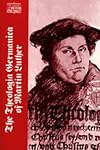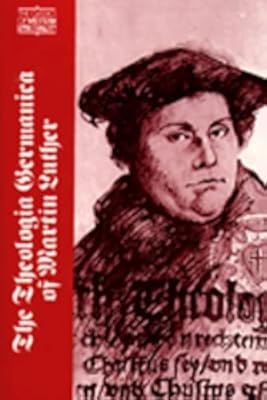
The Theologia Germanica of Martin Luther
by Martin Luther
On This Page
Description
Luther popularized this work by an unknown 14th-century German author who focuses on the "divine life," which is directed or guided by the "true light" of God. A primer in Catholic mysticism, it offers an abundance of insightful spiritual advice, written in simple language and relevant to all Christian denominations.Tags
Recommendations




Member Reviews
The Theologia Germanica of Martin Luther is a treatise translated from German to English by Susanna Winkworth was which was believed to have been written in the mid 14th century by an anonymous author. In 1516 Martin Luther discovered and published this work by an anonymous fourteenth-century German author who focuses on the “divine life,” which is directed or guided by the “true light” of God. Theologia Germanica proposes that God and man can be wholly united by following a path of perfection, as exemplified by the life of Christ, renouncing sin and selfishness, ultimately allowing God’s will to replace human will. The book influenced Martin Luther who published editions in 1516 and 1518, before his full break with the show more Catholic faith.
Although unknown, the author is thought to have been a member of a pious cult known as the Friends of God. Distinguished for their belief in the presence of God’s spirit in all Christians, laity and clergy alike, this secret association carefully observed all the precepts of the church. Their chief doctrines consisted of self-renunciation–the complete submission of self-will to the will of God–and the continuous activity of God in all believers. They further maintained a conviction in the possibility of an intimate union between God and humans and denied the value of religions based on fear or the hope of reward. The Theologia Germanica of Martin Luther offers an abundance of insightful spiritual advice, written in simply language and relevant to all Christian denominations. This edition also features an informative historical introduction by Susanna Winkworth.
Martin Luther said “Next to the Bible and St. Augustine, no book has ever come into my hands from which I have learnt more of God and Christ, and man and all things that are.” So for those interested in further study of Luther and the writings that played a great part in forming his theology this would be a good read. show less
Although unknown, the author is thought to have been a member of a pious cult known as the Friends of God. Distinguished for their belief in the presence of God’s spirit in all Christians, laity and clergy alike, this secret association carefully observed all the precepts of the church. Their chief doctrines consisted of self-renunciation–the complete submission of self-will to the will of God–and the continuous activity of God in all believers. They further maintained a conviction in the possibility of an intimate union between God and humans and denied the value of religions based on fear or the hope of reward. The Theologia Germanica of Martin Luther offers an abundance of insightful spiritual advice, written in simply language and relevant to all Christian denominations. This edition also features an informative historical introduction by Susanna Winkworth.
Martin Luther said “Next to the Bible and St. Augustine, no book has ever come into my hands from which I have learnt more of God and Christ, and man and all things that are.” So for those interested in further study of Luther and the writings that played a great part in forming his theology this would be a good read. show less
Ratings
Members
- Recently Added By
Lists

The ESOTERICA Library by Dr. Justin Sledge (Western Christian Mysticism)
16 works; 1 member
Author Information

2,224+ Works 41,866 Members
Martin Luther (1483-1546) was the Father of the Reformation. Most famous possibly for his 95 theses, he wrote many works which sparked debate and helped shape thinking - not only in his own time, but ours as well.
Some Editions
Series
Belongs to Publisher Series
Common Knowledge
- Canonical title
- The Theologia Germanica of Martin Luther
- Original title
- Der Franckforter; Theologia Deutsch; Teutsch
- Original publication date
- cir 1350
- Disambiguation notice
- "Written around 1350 by an anonymous author, this is a simple yet profound book about life in God as it translates into life in the world. This translation was based on the Reformer's [Martin Luther] edition of 1518."
... (show all)Martin Luther is not the author of this work. This translation is based upon the edition of this anonymous work that Luther helped publish and that is why he is listed as a person of primary responsibility for the Paulist Press edition of Theologica Germanica. https://en.wikipedia.org/wiki/Theologia_Germanica.
Martin Luther is the author of "Theologia Germanica". In the Paulist Press edition, this work was translated by Bengt Hoffman.
Actually, NO. Luther had it printed but it was written in the 14th cetury, and the author is not known. See http://de.wikipedia.org/wiki/Theologi...
Classifications
- Genres
- Religion & Spirituality, Nonfiction, History
- DDC/MDS
- 248.4 — Religion Christian practice & observance Christian experience, practice, life Christian Living
- LCC
- BV4831 .F7 — Philosophy, Psychology and Religion Practical Theology Practical Theology Practical religion. The Christian life Works of meditation and devotion
- BISAC
Statistics
- Members
- 243
- Popularity
- 134,386
- Reviews
- 1
- Rating
- (3.80)
- Languages
- English
- Media
- Paper, Ebook
- ISBNs
- 9
- ASINs
- 2